‘Give us our day in court.’ Fort Worth officers hope for jury trial in case against city
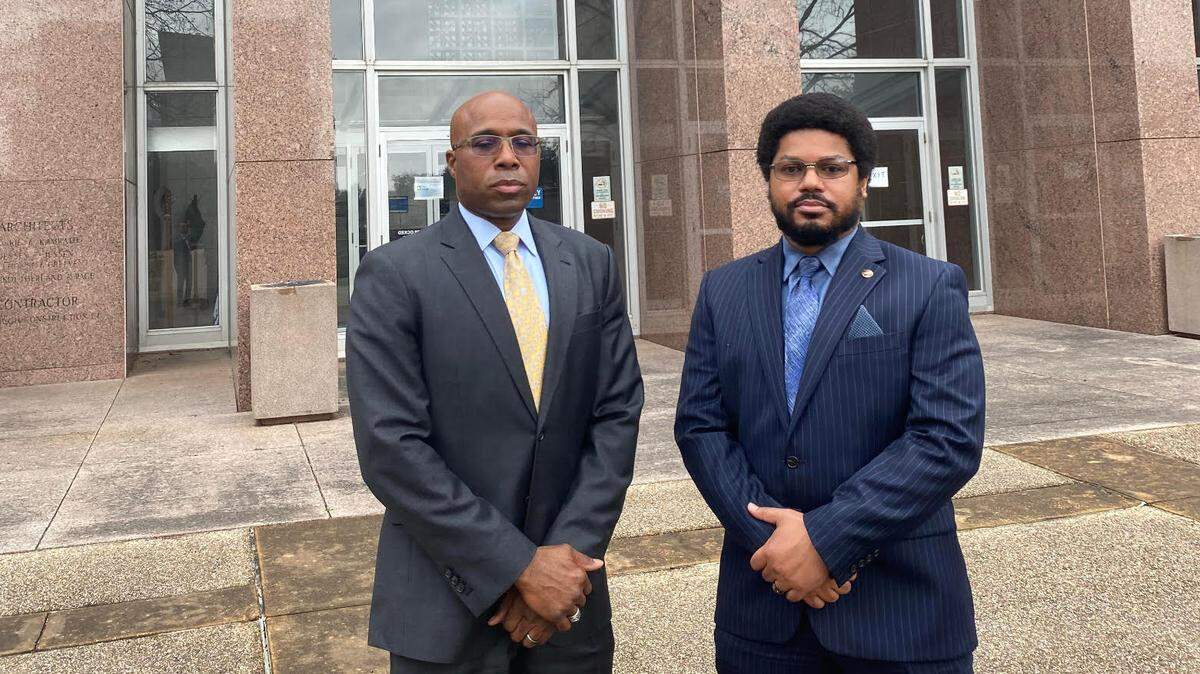
The Texas Supreme Court heard arguments Tuesday in a case that could exemplify whether or not the law protects police officials who call attention to wrongdoing within police departments, two of the Fort Worth officers involved in the case said.
The case between the officers and the city of Fort Worth stems from leaked video and the internal investigation into the arrest of a Black family outside their Fort Worth home in 2016. Capt. Abdul Pridgen, a former assistant chief, and Capt. Vance Keyes, a former deputy chief, were accused of leaking the video. Former Chief Joel Fitzgerald subsequently demoted them.
In 2017, Keyes and Pridgen sued the city over what they allege was retaliation and say they should have been protected under the Whistleblower Act.
In December 2016, Jacqueline Craig called the police to report her son was being choked by a neighbor. Fort Worth Officer William Martin responded to the scene, but instead of speaking to the neighbor, he arrested Craig and her 19-year-old daughter after arguing with them and throwing her 15-year-old daughter to the ground. Livestream video of the arrests gained national attention and led to widespread criticism of Martin and the Fort Worth Police Department. As punishment, Martin was suspended for 10 days.
Pridgen and Keyes reported to Fitzgerald that Martin had committed perjury in his arrest report of the Craigs, and Pridgen and Keyes were demoted. The city contends they were “properly demoted” because the chief believed they leaked the confidential body cam video of the arrests.
The officers sued Fort Worth in 2017 over the demotions, seeking reinstatement to their former positions and recovery of wages.
“We just hope that the law protects police who stand up for integrity in policing,” Keyes said Tuesday. “And that’s what we did in this case, and we hope that the law is on our side.”
After nearly five years of battling with the city in courts, the case might finally go before a jury — if the Texas Supreme Court rules in favor of Keyes and Pridgen. The court is likely to make its decision before July.
“I think it will just support and encourage officers who want to do the right thing but are fearful of retaliation and repercussions,” Pridgen said. “To report misconduct, understanding that the system will support their actions.”
Keyes said the legal process has been exhausting and draining, but absolutely worth it if the case “inspired not just police officers, but others, to stand up for what is right.”
“Give us our day in court,” Keyes said, “And let the facts come to light.”
The Whisteblower Act argument
The arguments in the case involve an analysis of when someone is protected under the Whistleblower Act. According to state law, a state or local entity — such as a police department — cannot retaliate against an employee who “in good faith reports a violation of law by the employing governmental entity or another public employee to an appropriate law enforcement authority.”
After Martin’s arrest of the Craig family, Pridgen and Keyes reported to Fitzgerald that Martin had used excessive force and racial motivations in the arrests and that Martin had misstated what happened in the Craigs’ arrest report. Their report accused Martin of criminal wrongdoing, including perjury and false arrest. According to the lawsuit, Fitzgerald reacted with hostility toward Keyes and Pridgen when they reported the information.
Fitzgerald subsequently demoted Pridgen and Keyes in May 2017.
The officers said in their suit their demotion was not legal because the Whistleblower Act protects them from retaliation. However, the city argues Pridgen and Keyes were not whistleblowers — and thus not protected by the Whistleblower Act — because they did not make a report in “good faith.”
Kelly Albin, an attorney with the city of Fort Worth, said Tuesday in court that “good faith” reporting only occurs when someone reports previously unknown information about a violation of law.
Keyes and Pridgen reported to Fitzgerald that Martin committed perjury, but Albin said in the hearing that Fitzgerald already knew that information, and Keyes and Pridgen were aware of that. If the officers knew Fitzgerald was aware of the information, their report was not made in “good faith,” Albin argued. The city also contends Keyes and Pridgen merely expressed their opinion to Fitzgerald about Martin, which is not a factual report.
“All they did was bring their view to the chief about whether there was criminal culpability for the officer,” Albin said in the hearing.
However, the officers’ attorney, Jason Smith, argued on Tuesday that the officers could not have known how much information the chief had, and there is no evidence that the information the officers brought to Fitzgerald was something the chief already knew about.
“The Texas Whistleblower laws should protect good cops who report the crimes of bad cops,” Smith said.
Who leaked the video?
The second prong of the case is the question of whether Fitzgerald had the legal right to demote Keyes and Pridgen. Albin argued even if the Whistleblower Act applies in the case, the city should still win because Fitzgerald believed Keyes and Pridgen leaked confidential documents.
The city says Fitzgerald demoted Pridgen and Keyes because he believed they leaked body cam video of the Craigs’ arrest, not because of the report they made to Fitzgerald alleging Martin violated the law. However, a Dallas appeals court ruled in 2020 that the city did not prove that Keyes and Pridgen actually leaked the information.
Fitzgerald previously testified that he did not have evidence the two leaked the video, but he lost faith in Pridgen because he failed to keep the information secure.
The current legal fight is not technically over who is right or wrong, but instead is based on the officers’ demand for a trial and the city’s motion to stop that from happening. After hearing arguments, the nine Texas Supreme Court judges will now decide whether Keyes’ and Pridgen’s case will go before a jury.
“We patiently will wait for a ruling from the Texas Supreme Court and we hope they listened to the facts of the case,” Pridgen said. “I think it’s really clear that the facts are on our side.”
This story was originally published February 2, 2022 at 5:30 AM.