
Tarrant water district votes to approve potential settlement for former general manager
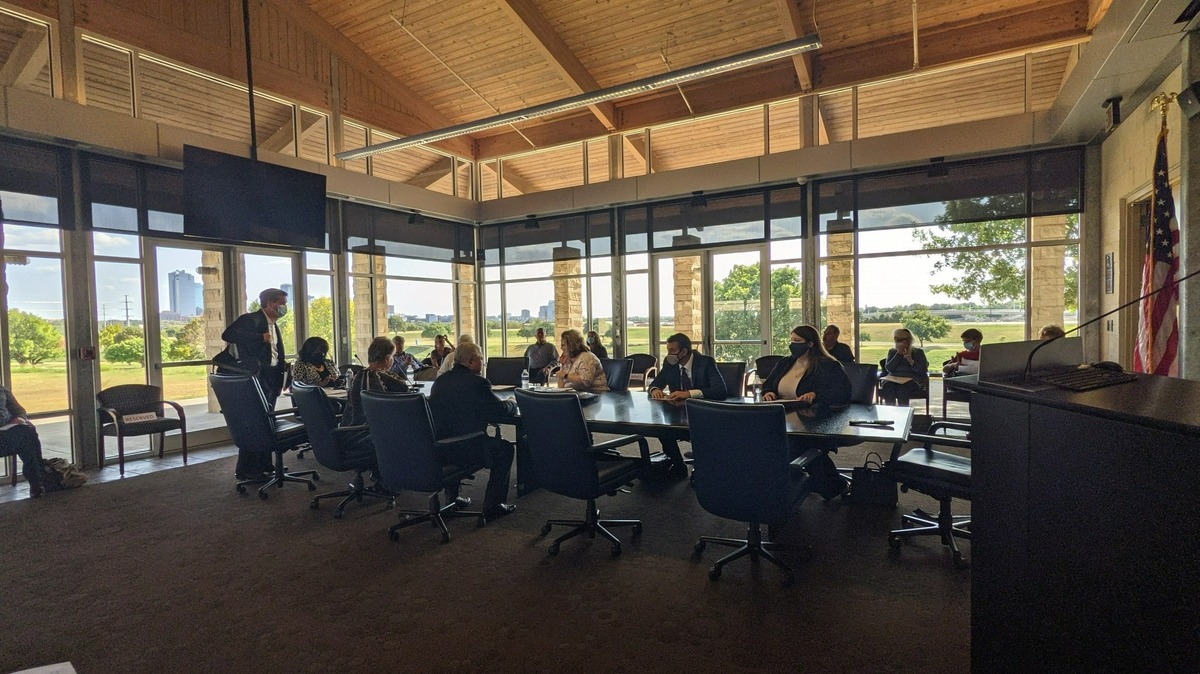
The Tarrant Regional Water District board Wednesday voted 4-1 to approve the terms of a potential settlement with former general manager Jim Oliver.
Board member Mary Kelleher voted against, saying she could not approve any settlement.
In a statement given to reporters, Kelleher blasted the decision, saying Oliver and former board president Jack Stevens had “shamelessly used an exception clause in an outdated HR policy,” to gift Oliver thousands of dollars in public money.
In a statement, the board said it approved the potential settlement to avoid the risk of compounding legal fees as well as lost productivity from dedicating time to the dealing with the lawsuit.
Board president Leah King repeatedly told the board and the handful of onlookers that the board’s June 29 decision to revoke a $300,000 payment to Oliver was final and was not discussed as part of the settlement.
The terms of Oliver’s settlement were not made public in the meeting. Carlos Lopez, an attorney hired to advise the council, told the board that for legal reasons the terms must be kept confidential for seven days after Oliver signs them. Once that time has passed, the settlement becomes public record.
Lon Burnam, a former state representative who leads the Water District Accountability Project and Tarrant Coalition for Environmental Awareness, threatened during the public comment section at the start of the meeting to file a temporary restraining order to prevent the TRWD from paying any settlement to Oliver.
Jackee Cox, a retired lawyer and member of the Water District Accountability Project, said it’s difficult to know what action her group could take without seeing the terms of the settlement.
Stevens directed staff in March to award the outgoing general manager 2,000 hours of extra paid time off. This was roughly equivalent to a year of Oliver’s salary. Stevens lost his seat in the May election.
The newly elected board revoked that payment in June over concerns the payment may have been unlawful. Jason Smith, a lawyer representing Oliver, challenged the board, saying the arrangement was completely legal.
This story was originally published September 29, 2021 at 7:40 PM.
.jpg)