
Marking 500-year milestone in ‘one of history’s cataclysmic clashes of civilizations’
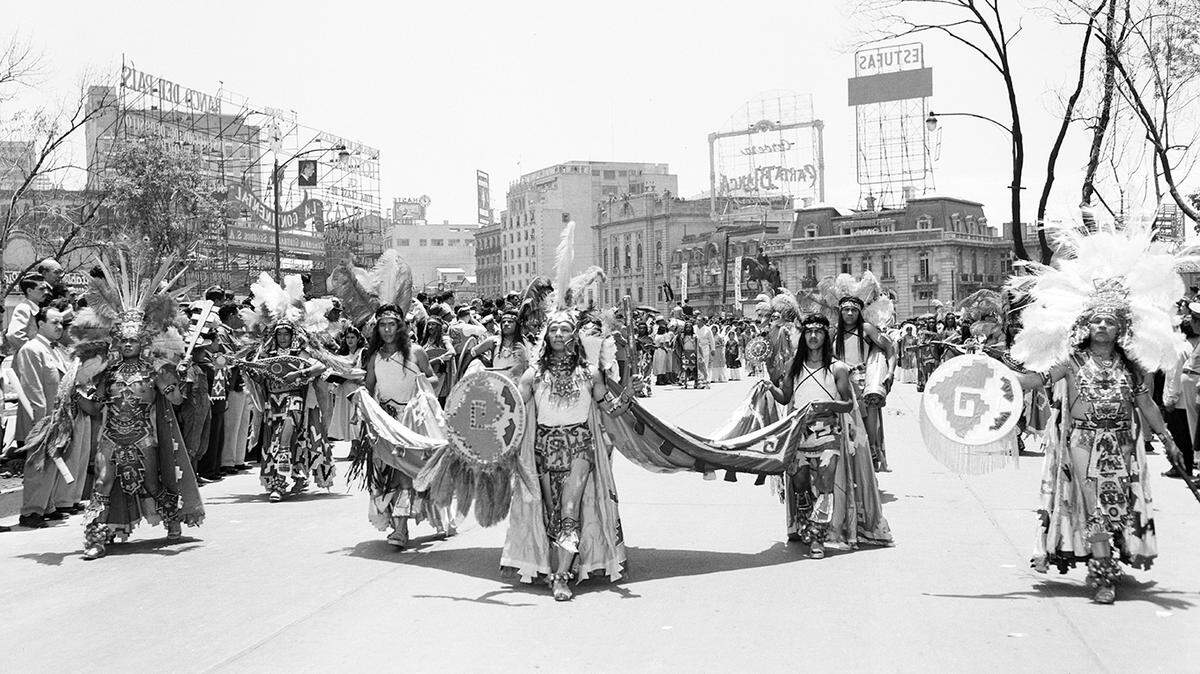
Five-hundred years ago, on Friday, August 13, 1521, Cuauhtémoc, the Tlatoani, or emperor, of the Mexicas (Aztecs), tried to escape with his family and friends the fall of Tenochtitlan, their island-capital. Surrounded by Spanish brigantines that blasted the city with cannons, assaulted by Hernán Cortés’ soldiers, and their Tlaxcalan allies for three months, trapped Mexicas fought a desperate battle for survival.
Racked by small pox, lacking potable water, food, and the dead mounting, Mexica leaders saw their only hope for their empire’s survival was for Cuauhtémoc to reach the mainland. Commemorations of the fall of the Mexicas will take place in Mexico City and Fort Worth.
Since the landing of Cortés and his 508 soldiers in 1519 at Cozumel, one of history’s cataclysmic clashes of civilizations started in central Mexico. On first sight of Tenochtitlan, Cortés and his men were awed by the Venice of the New World. Bernal Díaz del Castillo, a conquistador, wrote he thought he was dreaming as he beheld the island-capital loom in the middle of a lake, connected to the mainland by long causeways. White pyramids with red-stained stairs rose up over the city with a population estimated at 140,000. Surrounding the lake basin rose snow-capped mountains, the most noticeable, Popocatépetl, oozed smoke from its cone. Its companion Iztaccihuatl, or White Woman, lay adjoining the active volcano.
Cortés promised his men riches and lands to stoke their desire to continue. He had scuttled most of their ships, giving them little option but to follow their intrepid commander. He drew on cunning, steel sword, horse, musket, cannon, disease, a Mayan woman, Malinche, but most importantly disgruntled indigenous subjects who chafed from years of Mexica domination. They had grown weary of paying tribute, fighting, and the loss of their young warriors to the Mexica priests who sacrificed them to their gods.
Captured in Lake Texcoco and taken to Cortés, Cuauhtémoc asked for death. The Spanish commander refused and instead burned his feet to reveal where more gold was hidden. On an expedition to Honduras, Cortés, fearing he could foment a revolt, hanged Cuauhtémoc.
For several days after the fall of Tenochtitlan, victorious Tlaxcalans tortured and slaughtered Mexica women and children. A once exquisite Mexica capital of canals, causeways, bridges, flower gardens, zoos, pyramids, ball fields, markets, temples, and palaces was burned and destroyed by the vengeful natives. Spaniards used rubble from the demolished pyramids and temples to build haciendas, streets, and churches.
Spanish priests learned Nahuatl and tried to convert the indigenous to Catholicism. Some, like Fray Bernardino de Sahagún, studied the Mexica glyphs and translated them into Spanish. He interviewed survivors and wrote books about Mexica culture, religion and life. The appearance in 1531 of the Virgen de Guadalupe to Juan Diego, a Mexica, convinced many to accept baptism.
The fall of Tenochtitlan is commemorated as the end of Mexica dominance and the start of Spanish colonization throughout South, Central, and large sections of North America. For 300 years, the Spaniards would claim a New Spain for the royal crown. This Hispanic legacy is reflected in the names of US states: California, Arizona, Nevada, New Mexico, Colorado, and Florida. Texas cities bear the mark of the Spaniards: San Antonio, El Paso, Corpus Christi, Galveston, Goliad, Gonzales, San Saba, Lampasas, Laredo, Lamesa, and Amarillo.
Spaniards explored the Americas in search of gold and to spread Christianity. Along the way, they discovered a pristine North American continent, teeming with wildlife, forests, plains, deserts, mountains, rivers and canyons. They mated with indigenous women, giving rise to mestizos or mixed blood children who drew on the strength and talent of European and Native blood.
Spaniards introduced cattle, horse, sheep, goats, and mules. They built presidios, missions, and vaquero ranching to the Southwest. Anglo settlers adopted the leather saddles, roping and cattle ranching. Spanish words such as lasso, rodeo, bronco, mustang, chaparral, and hacienda flowed into common parlance.
They also brought diseases to the New World: mumps, measles, influenza, and small pox, causing pandemics and the death of millions of Native Americans. They enslaved the natives in a system called encomienda and forced them to work at haciendas, mines, and fields. Over hundreds of years, the Spaniards and later the Mexicans never conquered the Comanches, Apaches, and other North American Indian tribes who proved too formidable, especially when they rode the horse.
Many historians, examining the conquest of the Mexicas, offer different theories for the reasons for the conquest. Some observe if Moctezuma had heeded the warnings of his more realistic military advisors, Mexica warriors could have defeated the bearded, metal men before they entered the Mexica valley.
Mexican priest Miguel Hidalgo in 1810 gave a grito, or shout, for rebellion, rousing Indios and mestizos to rise up. In 1821, the Mexicans successfully forced the Spaniards to surrender their empire that ended their 300-year reign.
Author Richard J. Gonzales writes and speaks about Fort Worth, national and international Latino history.
Lecture series on Mexican American history
On Friday evening, Gonzales will present the first of four lectures on Mexican American history at the Artes de la Rosa Cultural Center for the Arts at the Rose Marine Theater, 1440 N. Main St. Lecture topics are as follows:
- August 13: Conquest of Mexico.
- August 20: Latina activists.
- August 27: United Farm Workers Union movement.
- Sept. 3: Mexican Americans in U.S. wars.
All lectures begin at 7 p.m., with the doors opening at 6 p.m. for viewing of art exhibits and mingling. There is no charge for admission.
This story was originally published August 12, 2021 at 5:00 AM.
CORRECTION: This article has been updated to correct dates regarding the fall of Tenochtitlan and the Mexican American history lecture series.