Fort Worth mom begged for help before son’s jail death: ‘Why won’t they listen to me?’
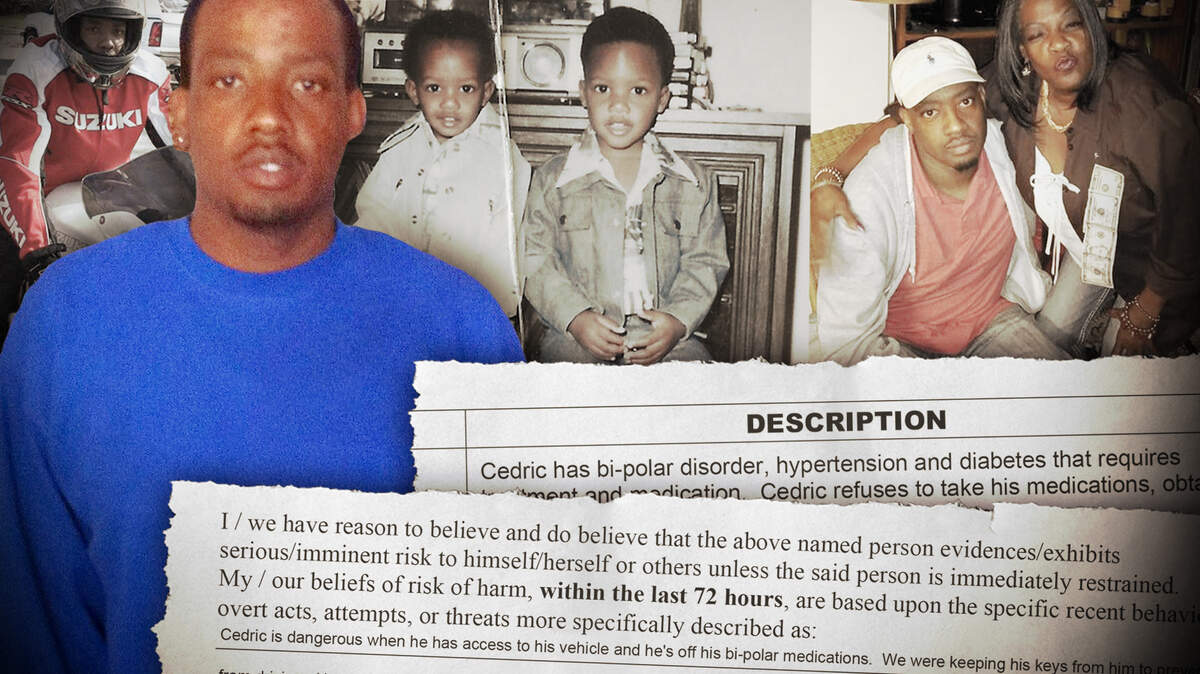
Vanessa Teal loved her son so much that even after he punched her in the face, she cried for him, not herself.
She spent the last year trying to get him help at a mental health center. She took him to one, but he signed himself out. She filled out mental health warrants asking for him to be evaluated and went in front of a judge to plead her case. She was later turned away. She called the police and asked their Mental Health Crisis Intervention Team to step in. They didn’t. She begged her son to take the medication his doctor prescribed to help control his bipolar disorder, but he wouldn’t.
So when 46-year-old Cedric Teal hit her in the face in September and the Fort Worth Police Department sent officers, Vanessa Teal begged them, again, to take him to a treatment center. Instead, he was taken to the Tarrant County Jail for the fourth time in one year. And just like the times before, she dutifully gathered $5,000 for bail, headed to the jail and hugged her son as he was released. He left with a GPS device strapped to his ankle and an order not to go back to his mom’s home.
They were instructions that he barely understood, Vanessa Teal said, but he was sent to stay with a relative. The next month, that relative’s plumbing went out and Cedric Teal knocked on his mom’s door. He had feces on him, according to court documents.
“What am I supposed to do?” Vanessa Teal asked, crying. “Of course I let him in.”
And soon after, his probation officer showed up.
“I’m explaining to the probation officer what happened, I’m telling them he’s ill, why would you lock him up? He just needed the bathroom,” she said. “They took him away … I’m the victim in the case, why won’t they listen to me?”
Cedric Teal, who was slowly dying of untreated kidney failure and hypertension, was booked back into jail for violating his parole. A judge denied bond and Cedric Teal was found incompetent to stand trial, according to case records. The judge ordered him to attend a jail-based incompetency program for 60 days before he could be evaluated again.
Vanessa Teal knew her terminally ill son wouldn’t survive that long in a jail where COVID-19 was waiting for its next victim.
She was right.
‘I could have helped him’
Cedric Teal’s story is a glaring example of the weakness of a mental health system meant to prevent people from being committed against their will: While it can protect the rights of the most vulnerable, the system can just as easily fail those who need help the most.
“This is a conundrum that families sometimes find themselves in,” said Susan Garnett, the chief executive officer for MHMR Tarrant County, which provides mental health services in the county. “A family feels strongly that they know what their loved one needs but their loved one, who is an adult, who has never been determined to be incompetent to make decisions, can make decisions on their own about what they want.”
Garnett said the system was built to protect the rights of patients who have mental health conditions, because decades ago, people could be placed into facilities for little reason and spend their lifetimes there.
“The remedy to that was to give mental health patients more autonomy over themselves and more rights,” she said.
The system left Vanessa Teal and her oldest son, Roy Teal, feeling helpless and wondering if they could have done more. And Vanessa Teal said she’s filled with regret. She called police for help that day in September and told the courts that she didn’t want to press charges against her son. Instead of dropping them, Roy Teal said the state picked up the charges anyway.
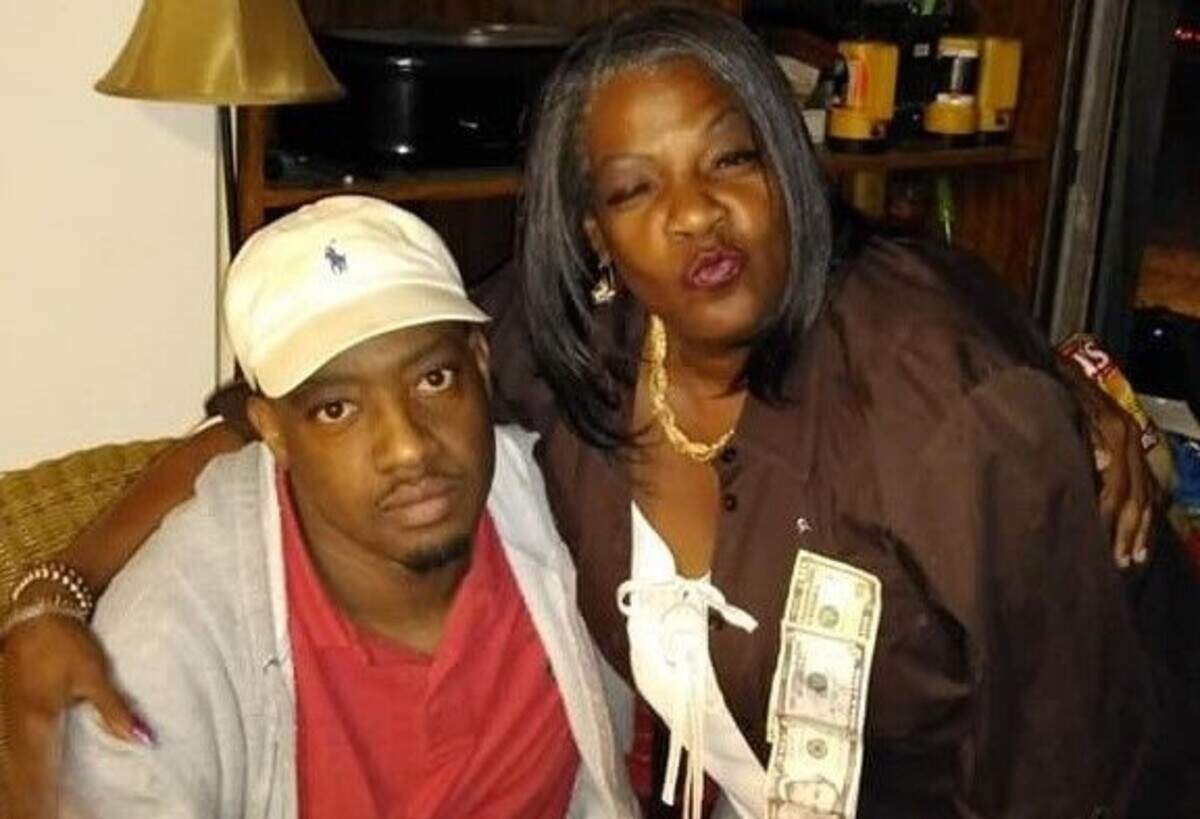
“I could have brought him home so he could be around family, so he could see that we love him, that we wouldn’t have abandoned him,” Vanessa Teal said. “They let it be like, ‘Well, he jumped on his mama, and we’re not gonna allow him to go back around her,’ but I told them I was his caretaker. So what if I got a black eye? I could have helped him. They didn’t need to do this to him.”
Even after her son’s death, Teal has continued to fight for him. Asked to describe what Cedric Teal was like, his personality, his hobbies, the side of him not revealed in court documents, Teal took a deep breath.
“I don’t really want you to do a biography on my son, I’m not here for that,” she said. “I just want to tell the story of how Tarrant County didn’t help me. The police department is supposed to be helping me but instead they took my son away.”
Roy Teal said he wanted to share his family’s story in the hopes that it helps others.
“There’s got to be a way to get people help when they’re refusing it but everyone knows they need it,” he said.
Fighting for help
Cedric Teal was diagnosed with bipolar disorder when he was about 18. He later became a father, and he was a respected mechanic who enjoyed working on cars and motorcycles. But around February 2020, Roy Teal said, his brother became depressed and his mom said he stopped taking his medication. He was diagnosed with kidney failure and also refused to get treatment for that.
“We were working to get him into a treatment hospital, just to get him some help,” Roy Teal said. “But every place we went wouldn’t help.”

Because Cedric Teal was an adult who had not yet been found to be incompetent, Roy Teal and his mom couldn’t get certain information about him from doctors and other health care providers. And they couldn’t have him sent to a mental health center against his will without an order from a judge and a mental evaluation by a doctor.
“It’s really frustrating that we couldn’t get him help, and we were restricted with what information we could be provided with,” Roy Teal said.
When Cedric Teal got angry and sometimes abusive, his family would call the Fort Worth Police Department’s Crisis Intervention Unit.
“There have been numerous instances of police saying they couldn’t do anything unless he hurt someone or himself,” Roy Teal said. “It’s mind boggling that he had to hurt someone for them to pick him up and take him to be evaluated.”
Fort Worth police Lt. Amy Ladd said the Crisis Intervention Unit only takes people to JPS or other mental health facilities. However, officers can make a decision on whether to arrest a person based on the circumstances at the scene.
“Arrest offenses go to jail where they are referred at the time of booking for a forensic mental health evaluation,” she wrote in an email. “If services are needed they receive those services through JPS. Those services are the same services they would receive at JPS if taken on a mental application for detention.”
If someone calls for help with a mental health crisis and no crime has been committed, Ladd said the crisis intervention team will take the call.
A request for records pertaining to their interactions with Cedric Teal wasn’t returned.
Cedric Teal’s family felt some relief the times he was arrested. If he was in jail, they knew where he was and believed he was being cared for. That was before jails became hot spots for COVID-19 infections.
Getting a mental health warrant
Vanessa and Roy Teal went to MHMR of Tarrant County for help in April and May. Both times they filled out a mental health warrant, the first step in families getting someone into a mental health facility against their will (referred to as court-ordered mental health services).
MHMR assisted in processing 334 applications for emergency detention in 2020 (this is not to say that all 334 of these patients were committed).
Vanessa Teal checked the boxes that indicated her son would likely cause harm to himself or others. She checked the box that indicated Cedric was unable to make rational and informed decisions about whether to submit himself for treatment.
“Cedric refuses to take his medications, obtain treatment or take dialysis due to his current mental state,” Vanessa Teal wrote. “Cedric is combative when not taking his bi-polar medications.”
She described times when Cedric assaulted her, when he was verbally abusive to staff at John Peter Smith Hospital and when he threatened someone by ramming his car into an acquaintance’s rear bumper.

“Cedric is an imminent risk to himself and others unless restrained and forced to take medications for his bi-polar disorder,” Vanessa Teal wrote.
If the county needed proof that Cedric was a danger to himself and others, the Teals hoped this would be enough.
So they went before Justice Court Judge Ralph Swearingin Jr. via a video conference to plead their case, and Swearingin ordered a 72-hour detainer on Cedric Teal so he could be evaluated by doctors, Roy Teal said.
Relief didn’t come.
“When he was being evaluated, we were told that he wasn’t incompetent, but we knew he was,” Roy Teal said. “Our experiences weren’t considered. We know him the best, and it felt like no one was listening to us, so he was released from JPS.”
It was the same outcome when they went back to MHMR in May.
Dying in jail
Cedric Teal was the first in-custody death of a Tarrant County jail inmate this year, following 17 deaths there in 2020. He was the fifth inmate to die at JPS after contracting COVID-19 in the jail.
Lt. Jennifer Gabbert said in a press release that a 46-year-old man was sent to the hospital on Dec. 27 “due to significant underlying medical issues” and was COVID-19 positive when he died on Jan. 2.
Teal wasn’t identified in the press release but when Roy Teal saw a short story in the Star-Telegram, he knew it was about his brother.
“It pained us to know that his health was deteriorating, he caught COVID and ultimately died while in custody while a medical facility is where he should have been,” Roy Teal wrote in an email to the newspaper. “My brother deserves more than to have him characterized as simply another criminal.”

When Teal was booked in, jailers filled out six pages worth of intake forms where Teal should have reported his kidney failure, his bi-polar diagnoses and any other mental or physical ailments. The paperwork includes questions such as:
▪ Have you ever attempted suicide?
▪ Do you hear noises or voices other people don’t seem to hear?
▪ Have you ever had a traumatic brain injury or concussion?
▪ Have you been in a hospital for emotional/mental health in the last year?
▪ Is the inmate incoherent, disoriented or showing signs of mental illness?
According to his family, Teal was housed on the medical floor, where MHMR said psychiatrists would have assessed him. Someone from MHMR is at the jail 24/7, Gabbert said.
Eighty-nine days after he was booked into jail, Cedric Teal grew sick enough to be transferred to JPS.
Vanessa Teal said she hadn’t talked to her son since September. She believes he wasn’t being allowed phone calls.
“I just can’t believe that they would treat him like that when the offense was nothing that serious,” she said. “It was assault on a family member, but it wasn’t like my child had shot somebody ... it was just a little fight. I didn’t get a chance to make amends with my son. I would have never called police if I would’ve known they’d lock him up and let him suffer in jail.”
Vanessa Teal received a call from JPS on Jan. 1 that let her know her son had been admitted. When she got to the hospital, she said he was in police custody and she wasn’t able to see him.
He was dead within 24 hours.
“I missed all that time with him because their so-called rules about visits,” she said. “My son didn’t have COVID when he went in there and that’s what I tried to tell them. With him having all these underlying health conditions, I said he could catch COVID and die and I didn’t want that to happen and that’s exactly what happened.”
This story was originally published February 5, 2021 at 6:00 AM.