
A different kind of Armistice Day. Truce declared between Fort Worth and Dallas in 1946.
Just a year after a ceremony on the USS Missouri ended six years of war among the world’s great powers, a ceremony was scheduled in Arlington to end a century of cold war between the two great powers of the Metroplex.
Yes, in 1946 Fort Worth and Dallas, through their diplomats (the Junior Chamber of Commerce of each town) were going to bury the hatchet.
And not in each other’s back, as had often been the case.
Fort Worth and Dallas are twins joined by the umbilical of the Trinity River, two siblings suffusing the Metroplex with their special brand of brotherly love (think Cain and Abel).
The two towns have competed with — and cussed at — each other from the git-go. For example, in the 1850s Dallasites supposedly warned migrants headed westward that they’d be scalped if they continued on to Panther City. Early Fort Worth booster B. B. Paddock supposedly once went to Dallas and escorted back to Fort Worth some eastern financiers, persuading them to invest their money in Fort Worth, not Dallas.
The two cities got crossways over railroads in the 1870s, packing plants in the 1900s, sewage in the 1910s, college football and the Texas centennial celebration in the 1930s.
And in the 1940s it was airports. After months of negotiation, Dallas and Fort Worth had agreed to build an airport midway between the two cities. But then, the Dallas Morning News groused in an editorial, Fort Worth, behind Dallas’ back, changed the airport blueprints to locate the administration building closer to Fort Worth. Fort Worth, the Morning News claimed, refused to revert to the original blueprints, so Dallas backed out of the deal.
But on Nov. 8, 1946, the Dallas Morning News reported that the Jaycees of each town had agreed to bury the hatchet.
Dallas Mayor Woodall Rodgers proclaimed Nov. 15 as “Bury the Hatchet Day”; Fort Worth Mayor Roscoe Carnrike proclaimed “Hatchet Armistice Day.”
To conduct the last rites on neutral ground, Fort Worth Jaycees had the Tarrant County surveyor determine that Arlington Downs, the former racetrack, was exactly midway between the two cities. (Fort Worth and Dallas always insist on midway.)
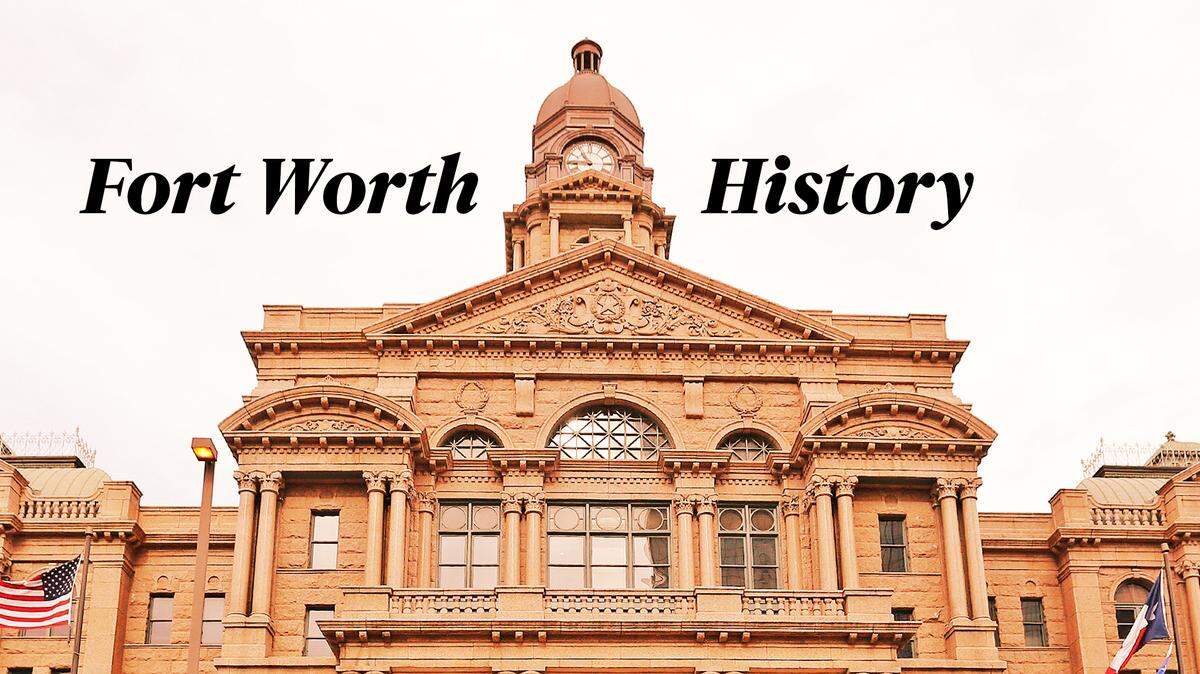
Then funeral processions conveying hatchets to the racetrack began from Dallas city hall and the Tarrant County courthouse.
At Arlington Downs the last rites included the signing of a pact by the Jaycees of the two cities. The pact included the proviso that “citizens of one city” should not “take their lunch when visiting in the other” — a jab at Star-Telegram publisher Amon Carter, who occasionally — as a joke — carried a sack lunch with him to Dallas rather than spend money in Dallas.
Then Bob McKinley, president of the Fort Worth Jaycees, and Ed Sammons, president of the Dallas Jaycees, placed a veritable arsenal of hatchets into a “casket.”
“North Texas is big enough for both Dallas and Fort Worth, serious minded young men of both cities agreed Friday afternoon,” the Morning News reported afterward.
But wait, dear reader! Don’t picture Fort Worth and Dallas holding hands and singing “Kumbaya” as they toast s’mores over a campfire just yet.
In that same article, the Morning News let the panther out of the bag: After the “casket” was placed in the grave and was about to be covered with dirt, the Jaycees retrieved the hatchets from the casket and did not bury them.
Why?
According to the Morning News, the Jaycees cited “a shortage of such implements.”
Carry on, Cain and Abel.
Mike Nichols blogs about Fort Worth history at www.hometownbyhandlebar.com.