
This historic around-the-world flight began and ended at Fort Worth’s Carswell AFB
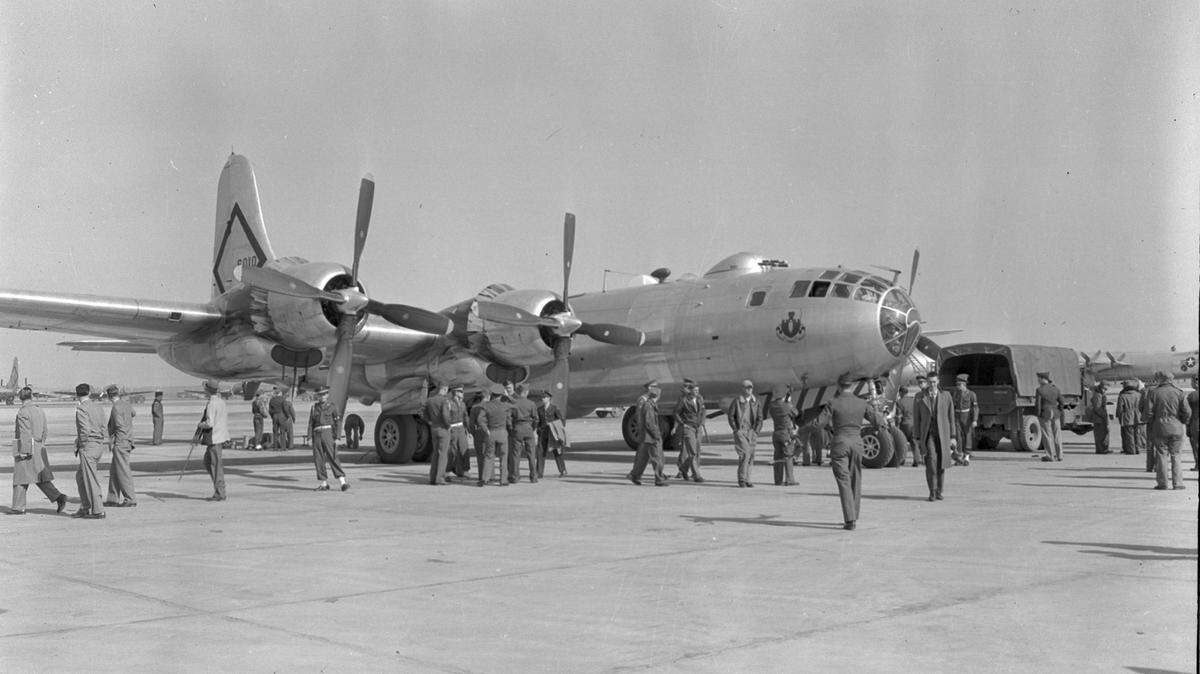
It was a top-secret mission of the Air Force — so secret that spouses of the 14 crew members of the B-50 Superfortress Lucky Lady II were not told the true nature of the flight. Foreign governments also were kept in the dark even as the bomber crossed their air space on what the Air Force insisted was a routine “training mission.”
Newspapers and radio stations were especially kept in the dark, until March 2, 1949, when reporters from around the country were summoned to Fort Worth’s Carswell Air Force Base, told only that “something big — one of the biggest things that has ever happened in aviation history — was about to break.”
That “something big” was revealed only after Lucky Lady II had passed El Paso, 500 miles away from Carswell. But for Lucky Lady II, 500 miles away was practically back home again compared with where the plane had been:
Around the world.
Nonstop.
That’s 23,452 miles without rubber touching runway.
On Feb. 26, the bomber had taken off from Carswell at 12:21 p.m. and headed east toward the Atlantic Ocean.
Ninety-four hours and one minute later, at 10:22 a.m. March 2, the bomber returned to Carswell, ending its around-the-world flight.
On page 1 of the Star-Telegram the banner headline read:
“Fort Worth-to-Fort Worth Trans-Global Feat of B-50 Proves ‘One World’ for Air Force”
Yes, on March 2, 1949, Fort Worth — already “where the West begins” — was where the world began and ended.
Upon landing, the crew members of Lucky Lady II showed no apparent physical exhaustion. They were clean shaven, if a bit wobbly on land legs as they answered questions from the media.
Lucky Lady II commander Capt. James Gallagher, 28, said the flight went without a hitch.
During the flight, the bomber was in constant communication with Carswell and Strategic Air Command headquarters at Omaha. The in-air refuelings were well executed, with the bomber never leaving its charted course or slowing its speed. The aircraft was refueled four times by modified B-29s over the Azores, Saudi Arabia, Clark Air Base in the Philippines and Hickam Air Force Base in Hawaii, proving that the Air Force could carry 10-ton bomb loads for days without interruption.
The bomber returned to Carswell two minutes ahead of the ETA that had been calculated when the plane took off from Carswell. One of the flight’s pilots said he gained four pounds “sitting in the driver’s seat with nothing to do — easy living.”
Crew members were greeted at Carswell by Air Secretary Stuart Symington and Gen. Curtis LeMay, head of the Strategic Air Command.
Symington called the flight “an epochal step in the development of air power. This flight turns medium-type bombers into intercontinental bombers.”
Gen. LeMay, asked if the flight showed that U.S. bombers could take off from the United States to drop nuclear bombs on Russia, was coy: “Let us say we can deliver an atom bomb to any place in the world that requires one.”
The next year, Lucky Lady II landed in the desert when its engines failed on a maintenance test flight. The aircraft was badly damaged and retired from service. Only the fuselage was preserved, on display today at Planes of Fame Museum in Chino, California, a reminder of the day when the world began and ended in Fort Worth.
Mike Nichols blogs about Fort Worth history at www.hometownbyhandlebar.com.