
Fort Worth’s Camp Bowie teemed with soldiers returning for WWI in the spring of 1919
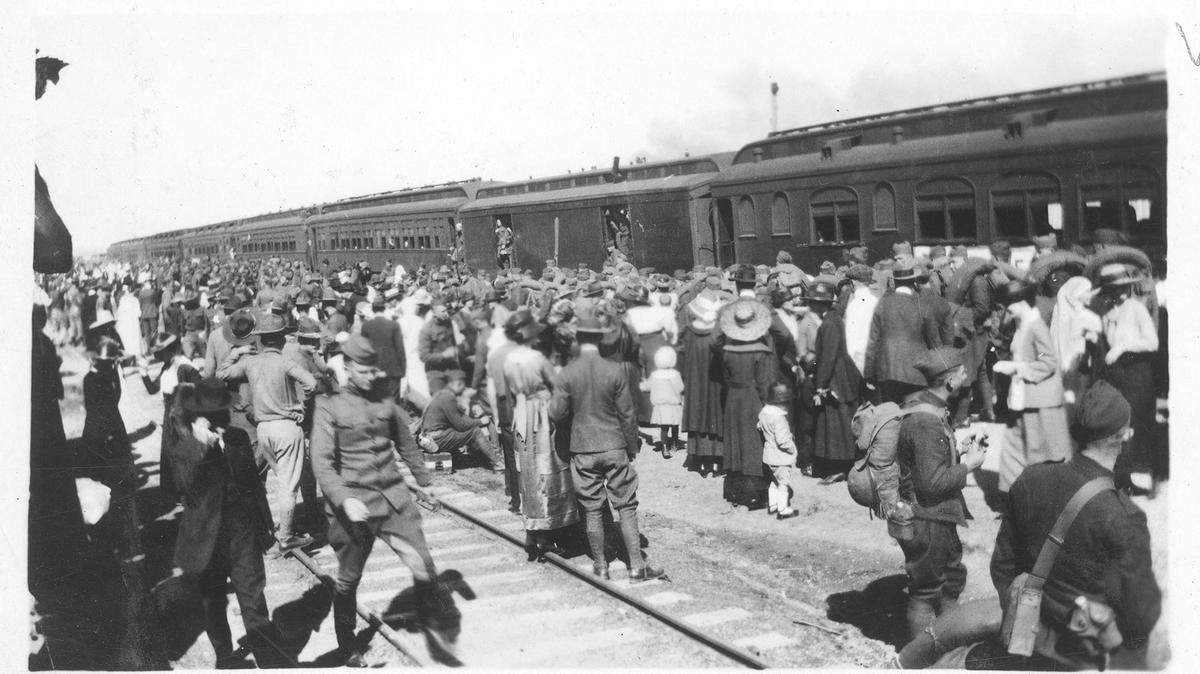
Communities were abuzz in the spring of 1919.
Hundreds of thousands of United States troops were still deployed across France and Belgium even though World War I had ended in November 1918.
Attention turned toward bringing them home, and the excitement was palpable. Despite the fact that soldiers from other countries had been in the field much longer and suffered unimaginable losses, America wanted to celebrate her heroes and give thanks that the conflict had ended.
Transport ships traveling from ports in France landed on the east coast, disgorging thousands of soldiers at a time. The men were then more or less divided into groups according to where they had lived before the war started (or their original military unit) and quickly put on trains to travel inland.
Military leaders did not want all of the troops to land – and stay – in a few large cities like New York or Boston. Parades scheduled along the train route helped the soldiers to stretch their legs and pace arrivals at the demobilization camps.
Camp Bowie, which had trained regiments of the 36th Division, was a major mustering out point for soldiers from Texas and Oklahoma. At first, troops trickled in, with a few wounded arriving in January and February, followed by brigades that came at the end of March and in early April. Then the would-be civilians arrived in torrents, with most troops reaching Camp Bowie during the first three weeks of June 1919.
No one had more interest in the arriving trains than the families of the returning soldiers. They wore their Sunday best and decorated their cars with American flags. Greeters were deployed, picnics and barbecues planned, baseball games scheduled, and a wild male panther dubbed “Texohoma” was rounded up to welcome returning soldiers.
Homecoming celebrations sprouted not only in Fort Worth and Dallas, but in smaller communities throughout Texas and Oklahoma.
It was the Army’s goal to process and discharge each returning soldier within 48 hours. Troops had already been deloused before boarding the ships, but they still had to be paid, undergo a health screening, and complete a stack of discharge papers.
Each soldier received a $60 bonus in addition to his regular pay and a travel stipend – all in cash. Reports noted that over $5.5 million was distributed at Camp Bowie during the demobilization.
Camp Bowie processed soldiers out at a lightning-fast pace, governmentally speaking. A total of 55,204 soldiers were discharged by July 15, although that number grew slightly by mid-August when a Sept. 1 closure date was announced.
Surplus buildings were auctioned off or demolished, and by early August hundreds of Arlington Heights homes were under construction on the former drill grounds. For Fort Worth, World War I had come to a close.
The memory of Camp Bowie lives on, especially through the boulevard that bears its name.
Carol Roark is an archivist, historian, and author with a special interest in architectural and photographic history who has written several books on Fort Worth history.