
Fort Worth’s Wesley Community House provided help for struggling immigrants, women
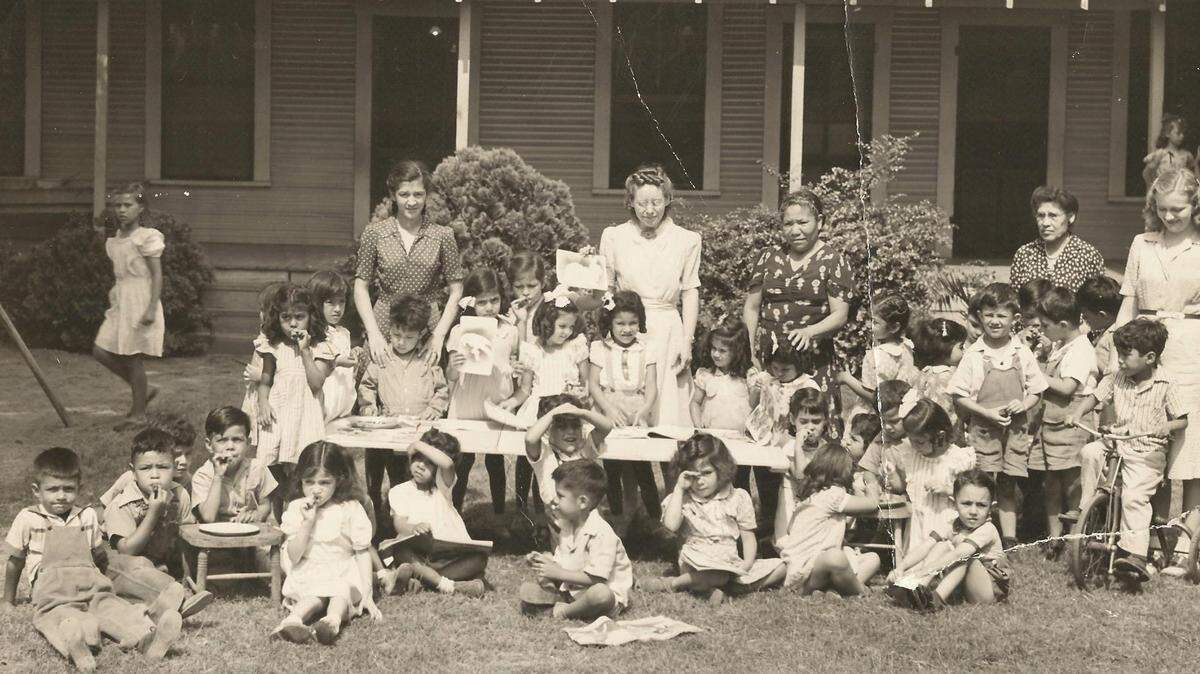
The Settlement House Movement blossomed in Fort Worth with the aim of improving the lives of the urban poor through the social work of Wesley Community House deaconesses.
As United States cities grew more industrialized, and job-hungry immigrants filled factories and plants in the late 19th and early 20th centuries, women and their children were vulnerable to exploitation and abuse. Non-denominational and religious Progressive Era leaders confronted the negative impacts on families.
In 1909-1913, the Fort Worth Methodist Church hired several social-religious workers to explore the needs of immigrants and women. Several field reports revealed rampant poverty, unsanitary conditions, lack of health clinics, tents, shanties, and flimsy homes for Russian, Greek, Czech and Mexican families. Deaconess Eugenia Smith, who worked in the North Side packing area, described it as “the most needy field I know.”
Methodist women raised funds and opened in 1914 the two-story Wesley Community House on 2131 N. Commerce. “Settlers,” mostly single, white women, graduates of Scarritt College for Christian Workers, Nashville, Tennessee, moved into the blighted neighborhood.
Paid $50 a month, early deaconesses wore black dresses with white cuffs and collars, black bonnets with white laces. They made home visits, held religious meetings at the T&P train offices, and stockyard packing companies and encouraged residents to participate in the Wesley Community House programs. Through their connections with middle and upper middle class residents, direct appeals to the churches, doctors, city government, and Fort Worth schools, they marshaled resources.
They offered kindergarten, childcare, cooking, sewing, English, Spanish, music, acting, religious, boy’s and girl’s programs. Through volunteers from Fort Worth churches, Junior League, Texas Wesleyan College and Texas Christian University students, they recruited teachers and maintenance helpers. Fort Worth Methodist societies would rotate “poundings” duties, donating food staples to the Wesley Community House.
By the 1920s, the area around the Wesley Community House had converted to a predominately Mexican community.
Head Resident Frances Mann, 1922-1924, in an interview said they performed multiple roles all hours, day and night. She recalled a one-legged, junk dealer came to the house one cold morning to report a mother and her baby needed shelter. On discovering the rag-covered pair in a shed sleeping on springs with a nearby pan of coal to keep them warm, they took them in.
In another occasion, a man requested help in milking his cow since he was going to be out of town and his wife was ill. Mann learned the skills of a milk maid.
Before the purchase of a car in 1926, the Wesley staff would take the ill to the hospital on street cars. Shortly after, as Deaconess Rena Murphy drove a woman to the hospital, the mother delivered her child in route.
Mexican families sought out the deaconesses for health care guidance for their seriously ill children. The lack of prompt medical care resulted in untimely deaths. Through deaconesses’ efforts, the city’s health department opened a well baby and immunization clinic at their house.
When North Side families were displaced by flooding in March, 1922, the deaconesses welcomed them to sleep in the Wesley House.
In its development, Wesley Community House hired Latino staff and provided scholarships to several youth to attend high school at Holding Institute in Laredo. Generations of North Side families harvested assistance from “settler” women who plowed the fields with good works.
Author Richard J. Gonzales writes and speaks about Fort Worth, national and international Latino history.