
Football star, WW II POW, Fort Worth teacher and coach. His name was Raúl Manríquez
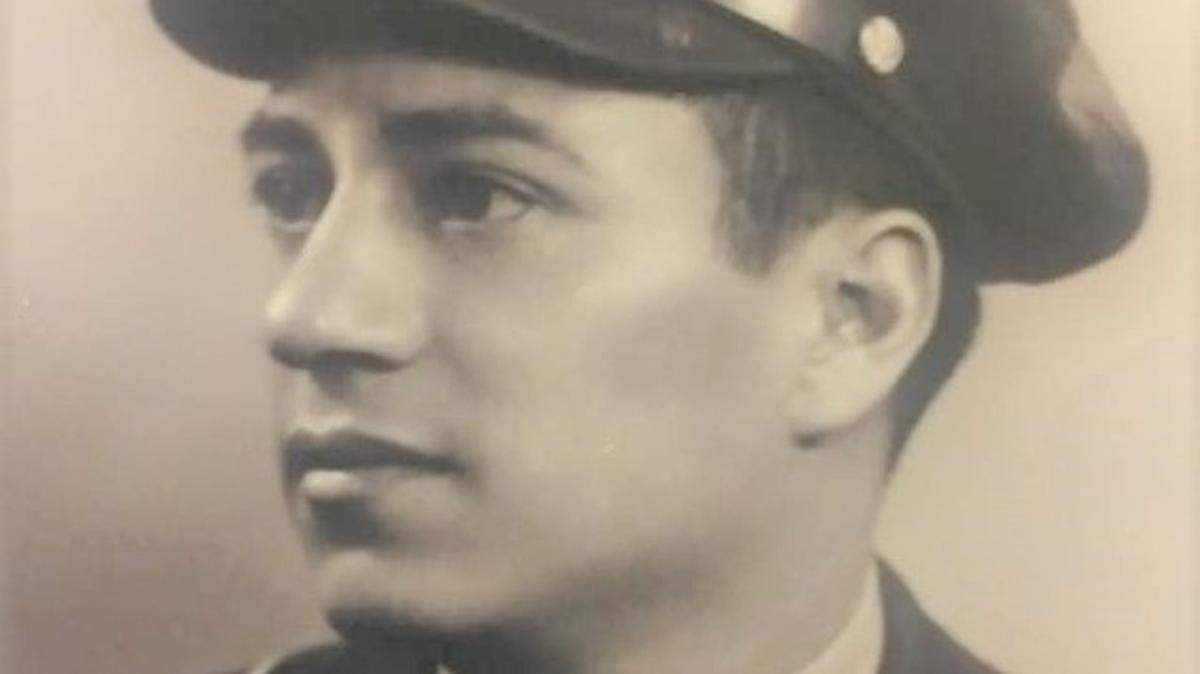
The crew of the B-17 named Myrtle flew through flak on their bombing mission, which punctured a gas line. When fighter planes attacked over Oschersleben, Germany, bombardier Raúl Manríquez and navigator Lester Moreland, seated in the nose, watched a plane zero in on them.
Then, on what was Manríquez’s tenth bombing mission, a 20 mm shell pierced the astrodome, bouncing in their compartment and wounding Moreland’s hand. As Manríquez bandaged the wound, he felt a shove from behind and heard the order to bail out.
During the crew’s parachute descent, the Myrtle exploded. Manríquez landed in a victory garden, but was soon surrounded by pitchfork-wielding farmers. The bombardier began a 21-month captivity on July 28, 1943, most of it at Stalag Luft III, Zagan, Poland.
Born in Bear Grass, Texas, on March 24, 1918, Manríquez and his family settled in North Side Fort Worth, where he excelled in track and football at J.P. Elder Junior and Northside High schools in the 1930s. Although he competed against bigger players, his running prowess and ball carrying finesse helped propel Northside High to victories and to the 1937 state playoffs.
Sportswriters of the time extolled his gridiron talents but tagged him with backhanded descriptions. Some labels included “pint-size Mexican speedster,” “ambling Aztec,” “mercury-footed Mexican backfield star.” Resentful residents expressed racially hostile remarks, one letter writer threatening to break his legs. At a game in Amarillo, he suffered a knee cartilage injury, requiring a cast.
The Fort Worth Latino community rallied behind the teenage Manríquez, holding a reception in December 1936 at the Recreation Building on Vickery Boulevard. Mexican Consul Adolfo G. Domínguez, the Northside football team, Principal O.D. Wyatt, Manríquez’s family and community members celebrated his winning ways.
Guillermo Walls, Presbyterian pastor, interpreted as speeches flowed. Trinidad Mancilla said, “Let us surround him this evening and tell him from the depths of our hearts: Raúl your work is magnificent, your brothers and sisters admire and bless you.”
After graduating from Northside in 1937, he eloped with Frances Boles, a Steer’s cheerleader. His sights still focused on sports and education, Manríquez enrolled at Texas Wesleyan College and played football for the Rams, 1938-1941. When war erupted in December 1941, Manríquez, along with eight others of the Wesleyan football team, enlisted at Hicks Field in the Army Air Corps.
In 1942, family, schoolmates, teachers and administrators gathered at the Fort Worth Central train station to bid farewell to the nine men. Tears flowed, kisses were planted and prayers rose for their safe return. The Rams didn’t resume varsity football until 2016, 75 years after the team’s departure.
Manríquez’s first child, Patsy Ann, was born in December 1940. Manriquez flew several missions in the Flying Fortress The Patsy Ann, which was named by his flight crew.
After General Patton liberated his prison camp in Moosberg, Germany, in 1945, Manríquez served 20 years in the Air Force, was honorably discharged as a major, completed his education at Texas Wesleyan, and earned a master’s degree at North Texas State. He taught math and coached 22 years at J.P. Elder Junior and Northside High schools, his educational and athletic start lines.
Texas Wesleyan University admitted him to its Sports Hall of Fame in 1989, and Northside High School named him Outstanding Alumnus in 1995. On finishing his race, retired Maj. Raúl Manríquez was buried with military honors at Mount Olivet Cemetery in 1997 next to his parents.
Author Richard J. Gonzales writes and speaks about Fort Worth, national and international Latino history.