
Today, most fireworks come from China. But plenty of them used to be made in Fort Worth
Fireworks have long been a staple of Texas holiday celebrations.
Kahn & Barro, confectioners located at Main and Second, sold fireworks during the Christmas and New Year season in 1876, (probably also celebrating the United States Centennial), and there was a Fourth of July fireworks show on the courthouse square in 1877.
Reports of festivities highlighted by fireworks displays alternated over the years with plans to ban pyrotechnics because of the danger of fire and explosions.
Houston based Texas Fireworks, established in 1921, was one of the first sizable fireworks manufacturers in the state. Within a decade or two, Fort Worth had its own plants.
William “Firecracker Bill” Engelke moved to Fort Worth in 1931. He produced fireworks shows at Casino Park on Lake Worth for a few years before he and his wife Delma established their own firm, Pan-American Fireworks.
Wilfong Fireworks, later Atlas Enterprises, was founded in 1942 by Walton Wilfong. Both firms were on the outskirts of the city – Pan-American on Lake Worth and Wilfong on Jacksboro Highway. Other smaller firms such as Unexcelled Manufacturing and Clipper Fireworks came and went quickly during the 1940s.
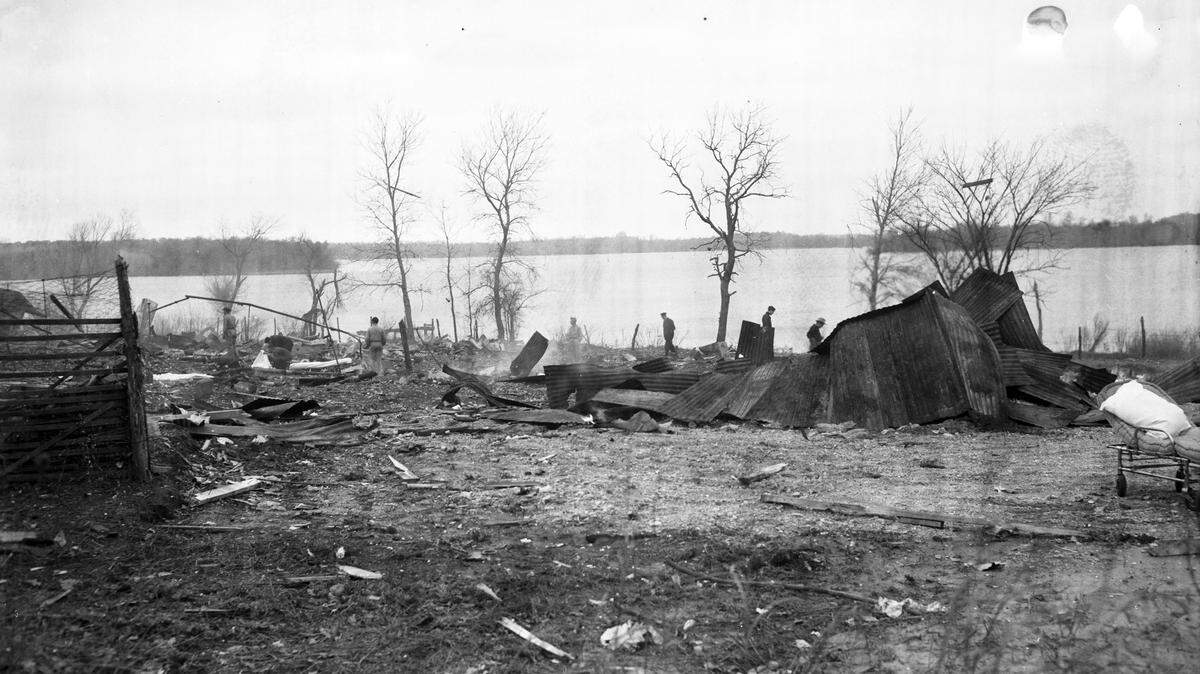
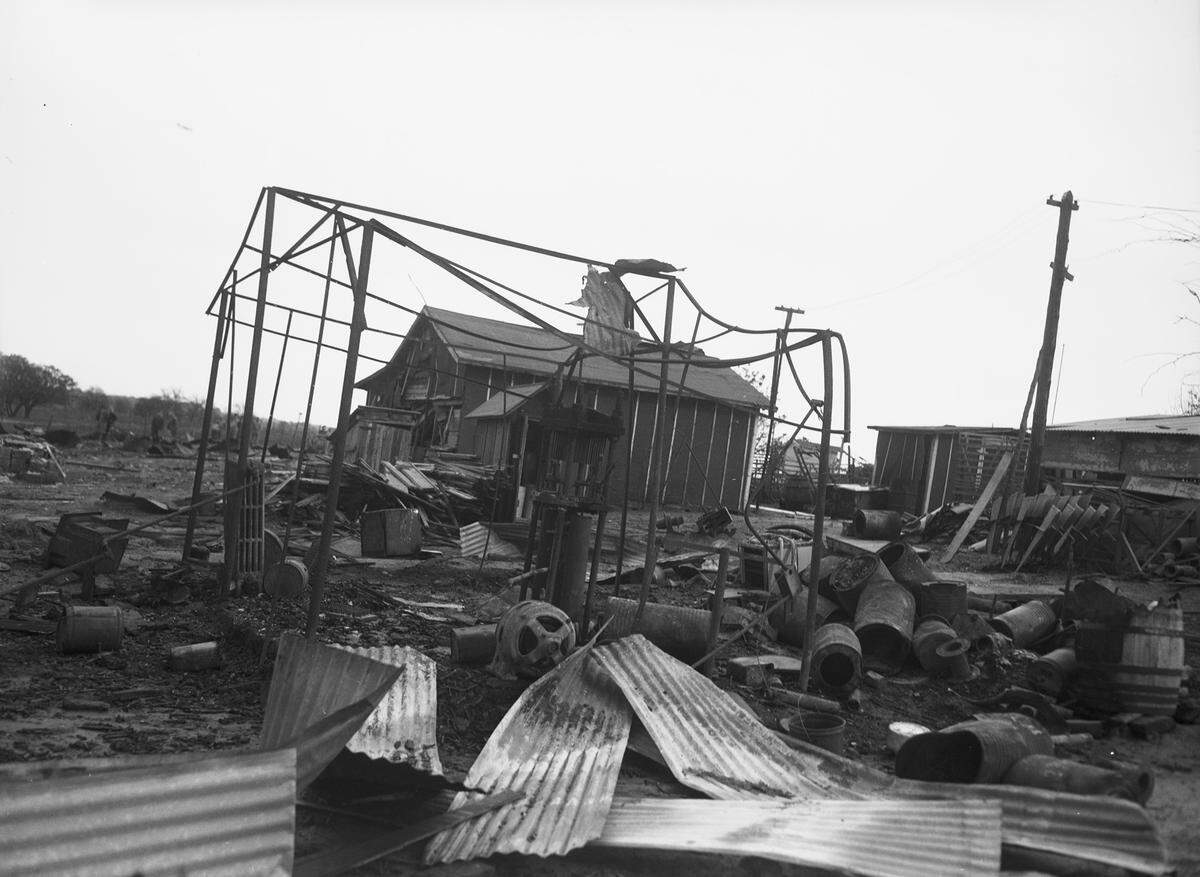
Concerns about fire and explosions caused most manufacturers to locate outside the city limits. There were several explosions at local fireworks plants, but they were contained with injuries, but no lives lost. The most deadly occurred on March 3, 1944, when Pan-American was producing faux land mines and grenades used to simulate battle conditions for troops training at Fort Hood.
Billy Engelke, William Engelke’s son, recalls that the initial explosion was attributed to a lightning strike, and that between eight and 10 buildings were destroyed. Five people, including his grandfather C. H. Baker, and plant workers Leona Dawson, Monnie Bradshaw, Kate Rosenberg, and Ethel Lassiter were killed. William Engelke was among those hospitalized, suffering from shock and a concussion. Military officials were fearful that the attack might have been sabotage, but that was ruled out.
More problematic than fireworks manufacturing was people shooting off fireworks on their own, and beginning in the 1910s, Fort Worth and school officials supported the “safe and sane” movement that sought to ban fireworks in town and advocated public fireworks displays over use by individuals. Opponents argued that “boys will be boys,” that fireworks were patriotic, and that regulation was better than prohibition.
The bill that eventually passed the Texas legislature in 1957 dramatically reduced the types of fireworks that could be sold in Texas and prohibited the manufacture of “any dangerous fireworks for any use or purpose” without a permit from the state fire marshal, effectively ending the manufacture of fireworks within the state.
Today, almost all fireworks are imported from China, including the smaller pyrotechnics sold at stands outside city limits leading up to the Fourth of July and New Year holidays.
The few companies that managed to remain in business switched from manufacturing to producing fireworks displays. Fort Worth’s Atlas Enterprises, which became Pyro Shows of Texas Inc., is one of these few survivors, still operating just off the Jacksboro Highway a few miles northwest of its original location.
Carol Roark is an archivist, historian, and author with a special interest in architectural and photographic history who has written several books on Fort Worth history.