Child care advocate, Tarrant native runs for office with focus on young Texans
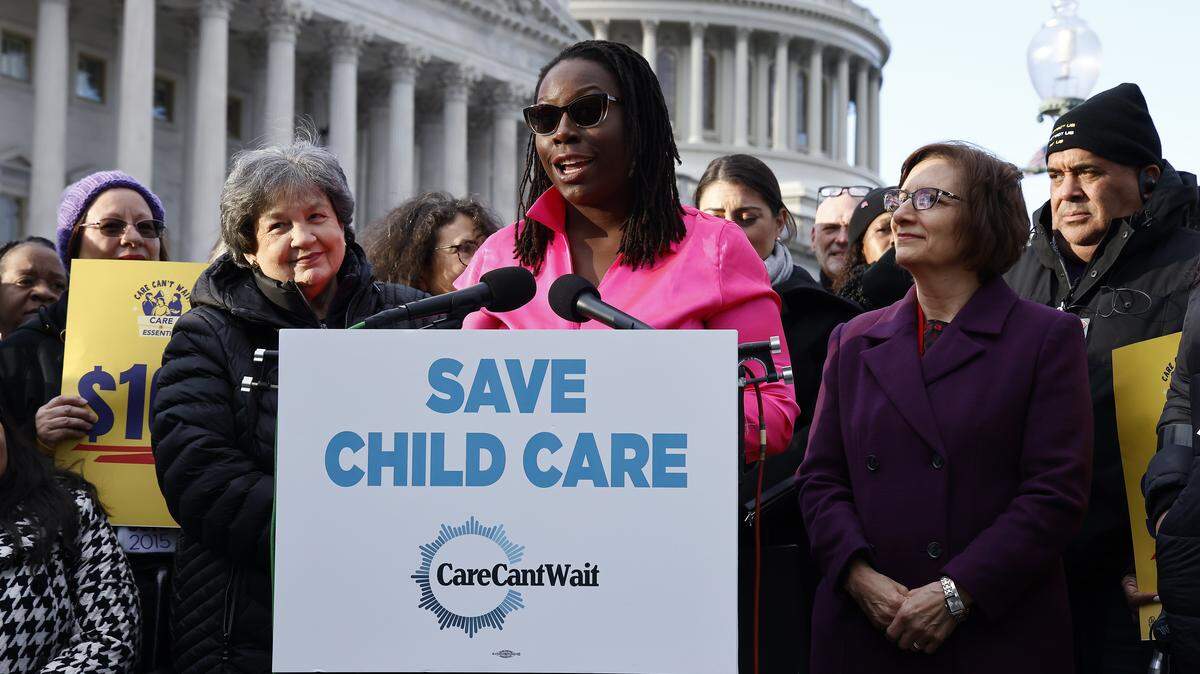
A Fort Worth native and former child care provider is running for office in the Abilene area in the hopes of bringing representation of early educators to the Texas Legislature.
BriTanya Brown, an independent candidate for Texas House District 71, has launched a campaign to represent the Abilene area, about 150 miles west of Fort Worth. Although Brown doesn’t want the only focus of her campaign to be child care, her role as a child care provider and advocate catalyzed her decision to run. A graduate of the Fort Worth Independent School District’s Green B. Trimble Technical High School, who was also dually enrolled at Tarrant County College, she’s passionate about addressing statewide child care issues that impact her hometown and her current community.
The state’s child care subsidy waitlist now exceeds 95,000 children. In Tarrant County, there are 14 ZIP codes considered to be child care deserts, or areas where the demand for care is at least three times greater than the supply of care. In Taylor and Jones counties, where Abilene is located, there are seven child care deserts, but there are less child care seats for every 100 children of working families — 57 seats compared to Tarrant’s 77.5, according to 2025 data from Children at Risk.
About 5,000 child care centers and licensed family homes across Texas closed between March 2020 and January 2023, causing a 27% drop in the number of programs compared to pre-COVID levels, according to a policy brief from the LBJ School of Public Affairs at The University of Texas at Austin.
“If we can figure out complex oil and gas financing, we should be able to keep child care centers from closing on our working families. Child care is not asking for a handout,” Brown said. “When child care dies, the economy dies with it.”
Brown operated a child care program and homeschool cooperative, both named Our Loving Village, in Stamford until a July 2023 fire put her out of business. Since then, she’s continued to advocate for local, state and national measures intended to strengthen the child care sector’s fragile footing. She worked with Sen. Royce West (D-Dallas) on Proposition 2, a ballot measure approved by more than 60% of Texas voters in 2023 allowing local governments to give property tax exemptions to qualifying child care centers. She also played a hand in the passage of Proposition A in Travis County in 2024, which implemented a 2.5-cent tax rate increase per $100 valuation to fund child care, after-school and summer programs; 60% of voters approved the measure.
“I had this conversation with myself in 2024, saying, ‘Child care was on the ballot (in Texas), and it won. So now, what if I could embody that and remind people that when we care for our people, our economy is going to take care of itself,’” Brown said.
“We saw (New York City Mayor) Zohran Mamdani run on child care, affordable child care, and other things that families want and need right now. And I believe that I’m someone with lived experience. Even though this is a really red district, I’m a trusted face. I’m a trusted caregiver, and people know I care,” she added, saying she’s neither a Republican nor a Democrat but simply a Texan.
As an independent, Brown’s name will not appear on voters’ primary ballots on March 3, but rather on the Nov. 3 general election ballot.
Kym Shaw, executive director of the Fort Worth-based Early Learning Alliance, said it’s encouraging to see candidates centering early childhood issues in their campaigns. She noted the high cost of child care for infants in Texas and its strain on family finances. The state’s average cost of infant care is about $10,700 per year, or $892 per month, according to the Economic Policy Institute.
“When individuals with direct child care experience step forward to run for public office, it brings a perspective that is often missing in policy conversations: the on-the-ground realities of providers, families and children,” Shaw said. “When candidates elevate these issues, it signals a growing recognition that early learning is not peripheral; it is essential. It also raises the likelihood that the real challenges faced by families and providers will be understood and meaningfully addressed in future legislative sessions.”
Child care as a voter issue in Texas, D.C.
Beyond the state’s Proposition 2 and Travis County’s Proposition A, child care providers have seen recent wins in Texas, including the $100 million investment in the state’s child care subsidy program approved by lawmakers last year. Although it was a bright spot in political will, inflation weighed down this investment that was intended to expand the program to more Texas families.
Child care has gained momentum in state and national political conversations since COVID-19, when the value of child care and its impact on the economy came to a head. Sara Johnson, a political science lecturer at Southern Methodist University, said the federal government’s infusion of relief funding toward child care during the pandemic also prompted the attention of parents and voters.
“States got used to more funds from the federal government that were targeted at these child care policies, which was somewhat unusual, and with those funds expiring now, states kind of have to figure out what they’re going to do,” Johnson said.
The expiration of this funding combined with inflation that’s required families to tighten their wallets, in addition to companies reinstating in-person work policies, has continued conversations around child care.
“Child care is always important. Child care is always needed. But this perfect storm coming out of this COVID era is really drawing it more to the forefront than it has been in the past,” Johnson said.
The Employers for Childcare Task Force, a group of more than 70 Texas businesses pushing for child care reform, said candidates addressing child care during the campaign season shows a broader recognition of how it’s tied to the state’s long-term economic growth. Grace, a downtown Fort Worth restaurant, is among the local members of the task force.
“Over the past several years, we’ve seen growing momentum to prioritize child care — not just as a family or education issue, but also as an economic and workforce issue — driven in part by Texans coming together through efforts like the Employers for Childcare Task Force to elevate the conversation with data and practical solutions,” said Kelsey Erickson Streufert, co-founder of the Employers for Childcare Task Force and chief public affairs officer of the Texas Restaurant Association.
“Sustained attention to these issues across parties and election cycles helps create the conditions for thoughtful, long-term policy solutions in future legislative sessions,” Erickson Streufert added.
Brandon Rottinghaus, a political science professor at the University of Houston, said policy focuses that come out of the state legislature typically take “years and several sessions” to build momentum before reaching their peak.
“I don’t think we’ve seen the last of the kinds of changes to child care policies in Texas, and it certainly provides opportunities politically for people who can address those issues head on,” he said.
Candidates on both sides of the aisle are looking for ways to address the core concerns of constituents, which typically begins at the kitchen table, Rottinghaus said.
“That’s where people pour over bills. It’s where they plan their weeks, where they meet with their families and talk about goals. This is the way that candidates are trying to direct the politics of the moment. They’re trying to find a way to help people. And that is something that the child care policy agenda can help,” he said.
This story was originally published January 22, 2026 at 6:00 AM.