‘No one has considered them’: Families fight schools over special ed services
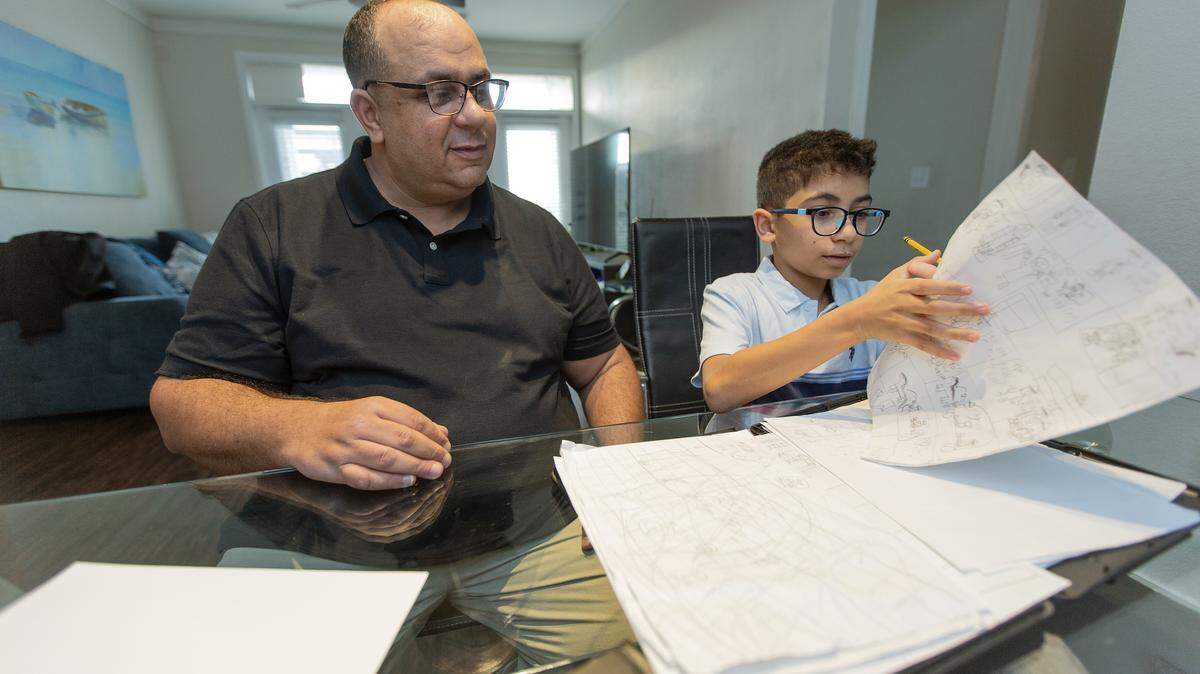
When Ryan Ben Alaya was in fourth grade, things seemed to be going well. He was doing well in his classes, his teachers described him as bright and motivated, and he loved going to school.
But the following year, when Ryan started fifth grade, things changed, said his dad, Hakim Ben Alaya. Ryan’s teachers said he was being physically aggressive in class. Ryan told his parents that teachers physically restrained him in his chair. At one point, Ryan was suspended five times in a span of 10 school days.
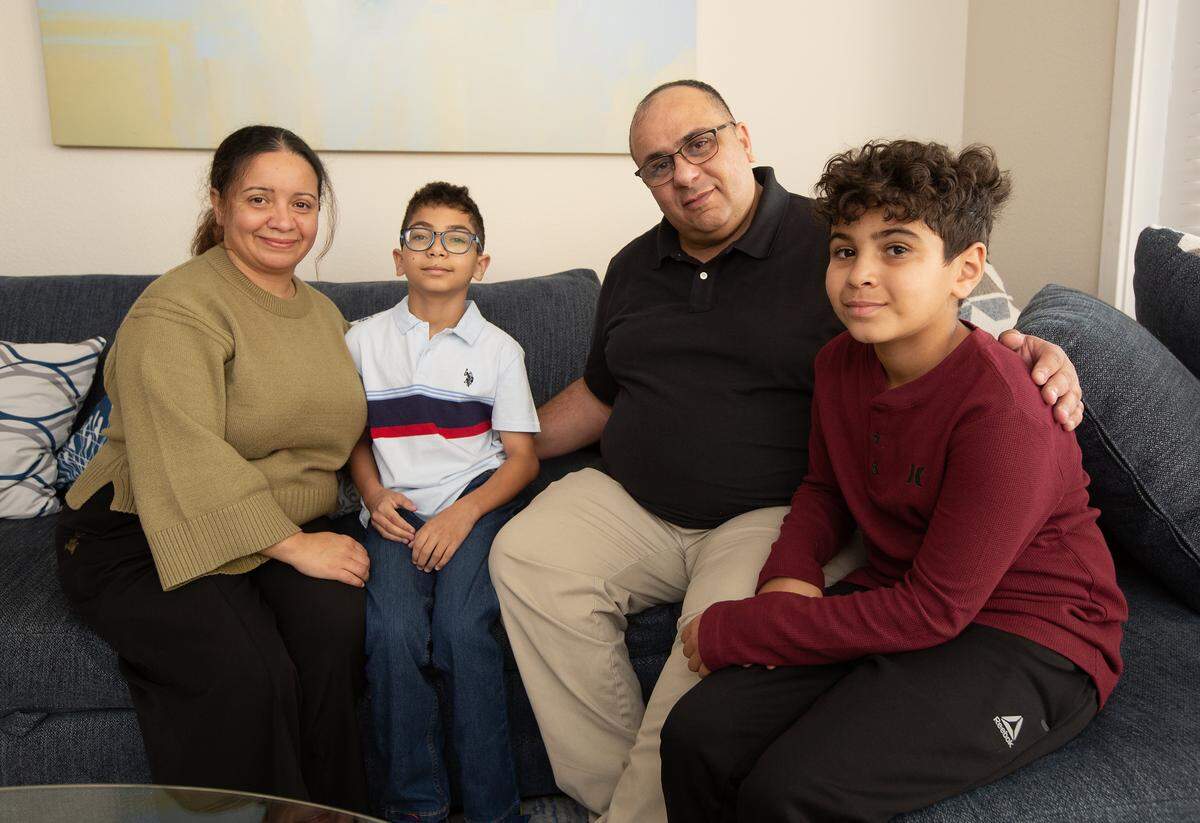
Ryan is what education researchers call a twice-exceptional student — he’s been identified as gifted, and he’s been diagnosed with autism. His individualized education programs, or IEP, states that he’s supposed to be in a regular classroom. But Ben Alaya says he worries school officials inflated his son’s disciplinary data in an effort to move him to a more restrictive classroom setting than he needs.
Under federal disability rights law, school districts are required to place students with disabilities in the least restrictive environment possible. But parents in North Texas schools say that doesn’t always happen. The parents of three students with disabilities in three separate districts told the Star-Telegram that school officials have pressured them to allow their kids to be placed in more restrictive environments, including self-contained special education classrooms.
But a special education expert said school districts that are trying to decide where to place a student with disabilities have a certain amount of leeway to consider other factors, including how that student’s presence in the classroom affects other students.
Birdville ISD family worries about special education placement
Ryan was a fifth-grader last year at W.A. Porter Elementary School in Birdville ISD. Early in the school year, Ben Alaya learned that teachers and aides at the school were using physical prompting, a technique in which a teacher physically guides the student’s hands when teaching them a new skill. It’s a common practice for educators and parents working with kids with autism, but Ryan’s family had communicated to school leaders that strategy caused emotional distress for Ryan. Teachers were also removing Ryan from class frequently, which also made him upset, Ben Alaya said.
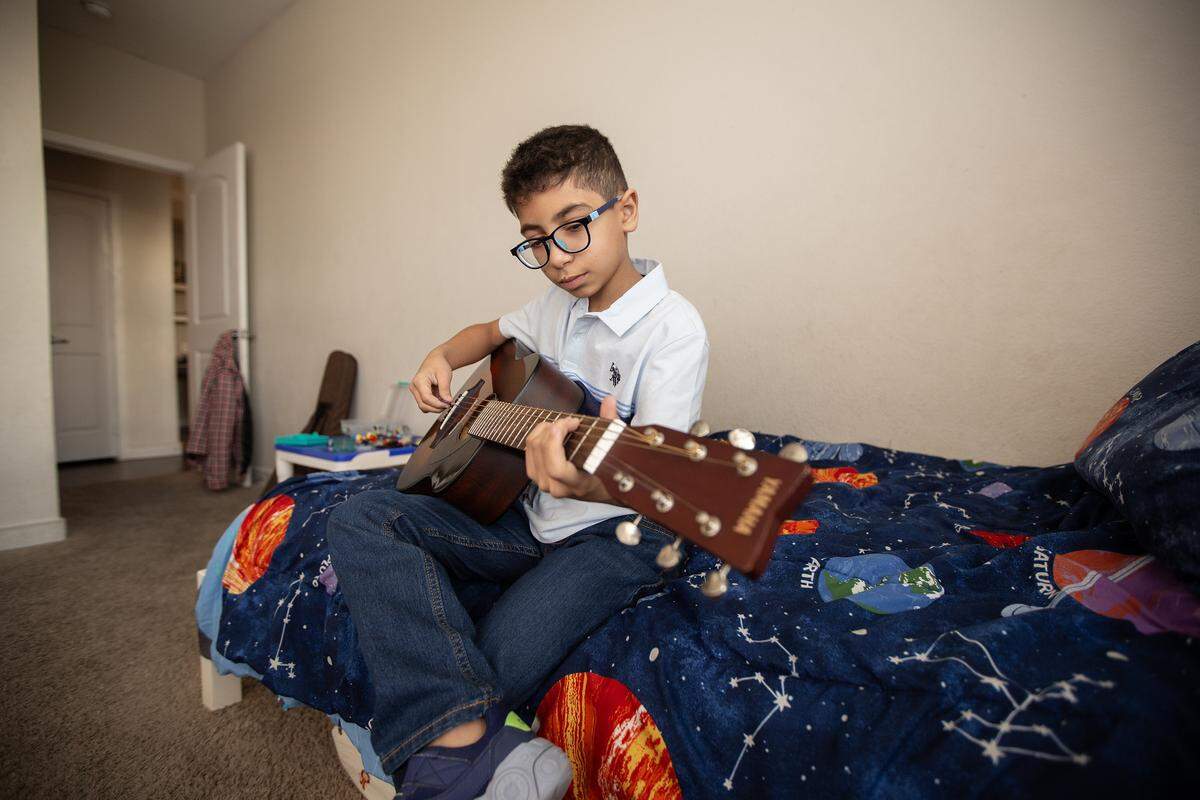
In September 2024, during an annual meeting with school officials about Ryan’s special education program, the school’s principal proposed moving Ryan to a more restrictive environment, saying he was too aggressive to be in a regular classroom, Ben Alaya said. During the meeting, the school’s principal said if Ryan’s aggressive behavior continued, he could be sent to an alternative school. At one point, the principal warned Ben Alaya’s wife that he could call the police if Ryan’s behavior didn’t change.
Part of the problem is that the district was using a definition of aggression that’s overly broad, Ben Alaya said. Major infractions like hitting or pushing another student are classified the same way as crumpling paper — something Ryan does when he’s feeling frustrated, he said. Ben Alaya worries that school leaders inflated disciplinary data in an effort to make Ryan look like an out-of-control student and justify placing him in an alternative school.
In Texas, decisions about where to place students with disabilities are made by a committee that’s made up of the student’s parents, special education and general education teachers, an educational diagnostician and a representative of the school, which is often a building administrator. Where appropriate, the student may be on the panel, as well. Such committees are known as admission, review and dismissal, or ARD, committees.
In a statement, Birdville ISD leaders said when concerns arise about a committee’s recommendations, the panel will pause its work and reconvene later “to continue working toward a solution that best supports the student.”
“Birdville ISD considers families and parents valued partners in their child’s education,” district leaders said. “Every ARD decision is grounded in the needs of the individual child and includes accommodations, supports, and services designed to help the student thrive. BISD’s goal is always to work collaboratively with families to create the most supportive and effective learning environment possible.”
Federal disability law requires least restrictive placement
The federal Individuals with Disabilities Education Act, or IDEA, requires schools to educate students with disabilities in the least restrictive environment possible. That’s important because, if students are placed in a setting that’s more restrictive than necessary, they miss out on instruction they’d get in a general education classroom, said Ambra Green, a professor in the College of Education at the University of Texas at Arlington. In addition to instruction, they also miss out on opportunities to form relationships with other students and teachers, and learn social skills by interacting with classmates, she said.
ARD committees look at diagnostic assessments to make decisions about the student’s educational future, Green said. For example, if a child is in fifth grade, but a diagnostic assessment shows they’re performing on a first-grade level in reading, the committee would work together to determine what setting the student should receive special education services in.
But ARD committees also look at other factors, like social skills, behavioral issues and life skills, Green said. If a student has the intellectual ability to succeed in a general education classroom, but they have social or behavioral issues that could cause disruptions in class, those committees sometimes find other solutions, like bringing in an aide who goes to class with the student. But before taking that step, school districts should gradually teach students skills like coping with stress or asking for breaks when they need them, she said.
The “least restrictive possible” language enshrined in federal law also gives school districts a certain amount of leeway in deciding where to place students with disabilities, Green said. If a student has behavioral issues that would disrupt a classroom to the point that the teacher can’t effectively work with other students, the district could reasonably argue that it isn’t possible to place that student in a general education environment, she said.
When a student is identified as needing special education services, there are a range of options school districts can try, Green said. In some cases, those students spend most of their time in a regular classroom, but go to a special education class, and spend part of the day working with a specialist, either in their regular classroom or in a special education classroom. In other cases, students spend their entire day in a self-contained special education classroom.
There are advantages and disadvantages to both solutions. Teachers in self-contained classes are trained to give individualized instruction to classes of students that matches the grade level each student is performing at, Green said, and they generally have help from paraprofessionals to make sure students get what they need academically. But students in self-contained classes don’t generally get the chance to interact with their non-disabled peers, so they may miss out on the chance to build social skills they’ll need after they graduate.
In cases where parents and school representatives can’t come to an agreement through the committee about where a child should be placed, either side has the right to take the matter to court, Green said. That isn’t a common outcome, she said — most disagreements get worked out in committee meetings — but it does happen.
One Fort Worth-area school district is currently embroiled in a court battle over its handling of a student with special needs. Aledo ISD is facing a lawsuit from parents Courtney and Spencer Morey, who say the district violated the Americans with Disabilities Act by denying special education services to their 4-year-old daughter, Annie, who has Down syndrome.
District leaders say Annie must go through a full battery of assessments, including an IQ test, to determine where she’ll be placed. But the Moreys say an IQ test would be inappropriate for a student of Annie’s age, and worry the district would use the results to place her in a self-contained special education classroom. A Dallas federal judge ruled in the district’s favor earlier this year. The family appealed the case to the 5th Circuit Court of Appeals, where it is pending.
The lawsuit comes as the district is under fire for how it handles special education placements more generally. In an investigation that wrapped up in July, Texas Education Agency officials concluded the district had broken state and federal law by not properly implementing students’ IEPs. The investigation came after a group of families of students with disabilities raised concerns, saying the district had segregated their children in self-contained classrooms, contrary to plans laid out in their IEPs.
GCISD mom struggles to get son services he needs
Paige Jones, a mom of three students in Grapevine-Colleyville ISD, said she’s had similar issues with trying to keep her middle son, Daniel, in a general education classroom. Daniel has a severe physical disability, and uses a power wheelchair that he can control by moving his head. He can’t speak, but he communicates using a device he controls with his eyes.
Daniel attended pre-K through second grade in Jenks Public Schools, in suburban Tulsa. Before the family moved to Texas, Daniel spent most of his school days in a regular classroom, with about 40 minutes of pull-out time in math per day and another 40 minutes in reading, Jones said. During regular class time, he was surrounded by a team of adults who understood that he was capable, despite his physical disability, she said.
But when Jones tried to enroll Daniel in Bransford Elementary School in Grapevine-Colleyville ISD, the district wanted him to go through a full battery of evaluations, including an IQ test. The problem is that Daniel can’t take an IQ test, Jones said. Daniel doesn’t speak, so he can’t participate in a verbal test. But he also can’t use his hands, she said, which means he can’t take a nonverbal test.
So school leaders found another assessment for Daniel to take. But it also wasn’t very helpful, Jones said, because it asked whether he could perform basic motor skills like clapping his hands or sitting up.
“The answers are no for him, but there’s nothing taken into consideration of, can he drive his 400-pound power chair with his head?” she said. “He does have mobility. This is giving him zero credit for the things that he has.”
After giving him the assessment, school staffers marked in his record that Daniel has a “suspected intellectual disability.” Jones said she suspects they gave him that designation to give themselves cover if he doesn’t make progress academically. Jones said she initially wanted Daniel to be placed in a regular classroom with pull-out services from a resource teacher, like he had in Oklahoma. But the resource teacher was resistant to the idea of working with a student with Daniel’s extensive physical needs.
So Jones eventually asked for Daniel to be placed in a self-contained classroom. That situation also isn’t what he needs, she said — the modified curriculum he’s on isn’t challenging enough for him — but she felt like it was her only option.
Since then, Jones has tried to make sure Daniel is included in activities like school musicals and field trips. But he understands when those activities haven’t been planned with him in mind. Lately, he’s been more vocal about it, she said. When he’s been left out of an activity, he’ll go to a teacher and ask why.
In a way, Jones is proud of Daniel for being able to advocate for his own needs as a person with disabilities. But it’s also heartbreaking to see him have to do it so often, she said.
“An 11-year-old shouldn’t have to be looking around the room and understanding that no one has considered them,” she said.
In a statement, Grapevine-Colleyville ISD officials said all decisions about where to place students are made by ARD committees, based on a review of student data and identified needs.
“When disagreements occur, the ARD committee follows all required procedural safeguards and engages in the appropriate resolution processes to reach an agreement that supports the student’s needs,” officials said. “All placement decisions and services are determined on an individual basis, with the ARD committee evaluating the student’s unique needs to identify the least restrictive environment appropriate for that student. GCISD is committed to working alongside our families to ensure our students are equipped to achieve success and reach his or her full potential.”
Birdville family ‘always on eggshells’ after move to middle school
Ryan, the Birdville ISD student, moved on to Smithfield Middle School at the beginning of the school year. Everyone thought it would be a hard change for him, said Ben Alaya, his dad. There are more transitions throughout the day, which can be hard for students with autism, he said.
But the move to middle school has gone better than anyone expected, Ben Alaya said. Ryan’s teachers at Smithfield are compassionate, and the principal seems more willing to work with the family to make sure Ryan gets what he needs. Ben Alaya suspects that part of the difference may be that school leaders at Smithfield knew Ryan was coming, and that his parents would advocate for him.
But even though things are going better for Ryan this year, Ben Alaya knows last year’s disciplinary data is still on his record. He worries the district could still use it to make a case for moving Ryan to an alternative school, or even getting police involved if something goes wrong. If that happens, Ben Alaya knows Ryan would be traumatized.
“It’s going better,” he said. “But we are walking always on eggshells.”