North Texas students need to put their phones away when they head back to school
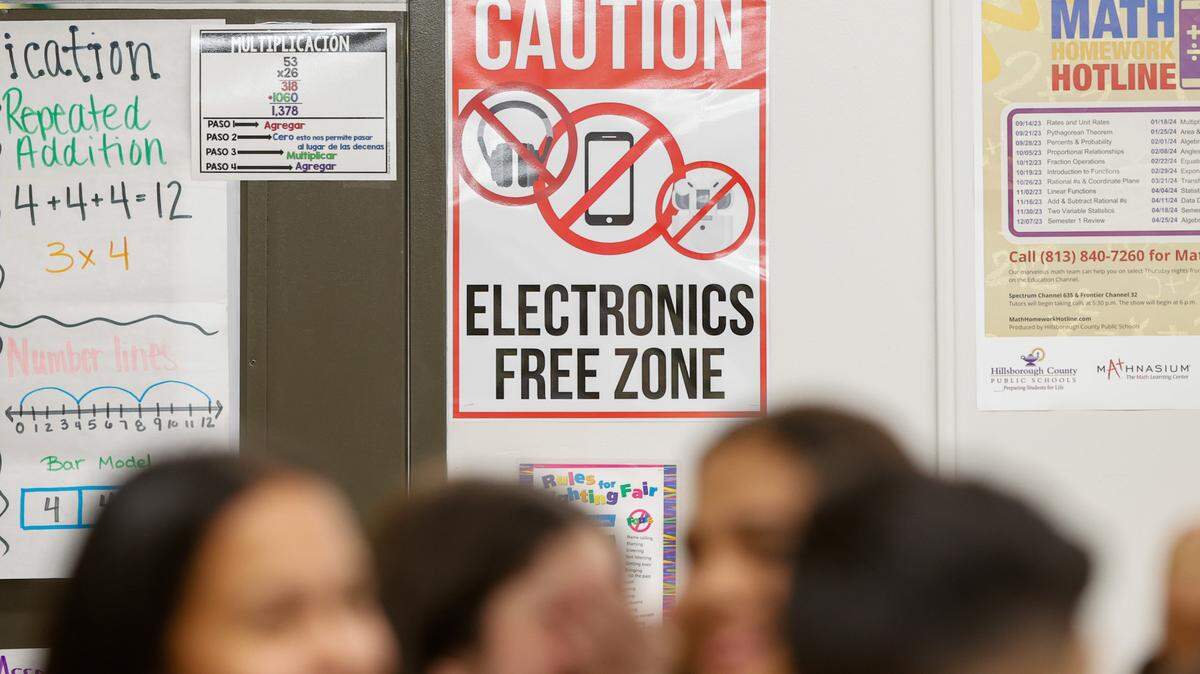
When students across Texas head back to school over the next few weeks, they’ll have to put their cellphones away before class begins.
Following the passage of a statewide school cellphone ban, districts in the Fort Worth area are adopting new policies restricting when students can use their phones and other devices. Although some details differ from one district to the next, the new state law requires that students keep their phones put away from the beginning of the school day to the final bell.
Texas school cellphone ban takes effect
Texas lawmakers passed a bill banning cellphone use in schools during this year’s regular legislative session. Following the passage of the bill, school districts that didn’t already have cellphone bans in place are required to adopt one.
School boards in several North Texas districts, including the Fort Worth, Arlington and Northwest independent school districts, have approved similar cellphone policies over the past few weeks. Under most of those new policies, students won’t be allowed to use cellphones or other devices like smartwatches or tablets at any point during the school day, including at lunch or periods between classes. Students are allowed to keep their devices with them during the day, but they must be turned off and put away. Students may only have those devices out before the school day begins and after the final bell.
The new state law outlines exceptions to the ban, including for students who need to use their devices as a part of an individualized education plan or 504 plan, or those who have a documented medical need.
The first time students violate the policy, they’ll get a verbal warning and teachers or school staff will confiscate their phones and hold them at the front office until the end of the day. Those who violate the rules several times could be sent to in-school suspension for up to five days.
In a July 22 school board meeting, Fort Worth ISD Superintendent Karen Molinar said there could be more severe consequences for students who consistently break the rules. Those who are caught using their devices repeatedly — “multiple offenses from multiple school days and multiple teachers,” she said — could be sent to alternative school.
Molinar said the district is asking parents to help make sure their kids understand why it’s important to comply with the new rules around cellphone use. She emphasized that the new policy comes from state law, not a set of rules the district adopted on its own.
District leaders want to make sure all of the responsibilities of enforcing the new policy don’t fall on teachers, Molinar said. When students violate the rules, school staff members, not teachers, will call parents to let them know, she said.
On Thursday, the Arlington ISD school board adopted a policy that’s largely similar to those in other Fort Worth-area districts. One key difference is a provision stating that the district’s administration could consider other exceptions to the ban “for the instructional benefit of teachers and students.”
A number of other North Texas school districts already had cellphone policies in place before the new state law went into effect. School boards in the Keller, Grapevine-Colleyville and Hurst-Euless-Bedford independent school districts approved district-wide cellphone policies last summer. A few other districts, including Mansfield and Richardson, implemented policies even earlier.
Most of those districts’ policies allow students to keep their phones with them but have them turned off during the school day. But some, including Richardson ISD, require students to leave their cellphones in special locked pouches at the beginning of the school day and pick them up before they leave in the afternoon.
Cellphones lead to distractions, challenges for teachers
Steven Poole, executive director of the United Educators Association, said teachers have reported that cellphones have been a major source of challenges for years. Until relatively recently, it was a problem that was mostly limited to middle and high school, he said. But over the past few years, cellphones and the distractions they create have become more common in elementary school classrooms, as well.
The problems caused by cellphones at school range from students not paying attention in class because they’re distracted by something on their phones to fights in hallways over something a student posted on social media, Poole said. Requiring students to keep their phones in their backpacks strikes a good balance, he said — it eliminates those distractions while still giving parents the assurance that they’ll be able to reach their kids if there’s an emergency at their school.
As school districts move forward with their new policies, Poole said it’s critical that they make sure the full responsibility of enforcing the policies doesn’t fall on teachers. He’s been pleased to see the conversations about those policies in most districts have spread that responsibility out among parents, teachers and school leaders. While he acknowledged that many students will find ways around the new rules, Poole said the fact that the phone bans are a state law and not just a district policy could give school leaders more credibility with students and their parents when they try to enforce it.
School phone bans are popular, but only with adults
School cellphone bans are gaining popularity among adults. In a report released last month by the Pew Research Center, 74% of U.S. adults said they would support banning middle and high school students from using their phones during class time, up from 68% last fall. A smaller but still growing percentage supported all-day bans. This year, 44% said they would support policies that barred students from using their phones for the entire school day, up from 36% last fall. Still, 46% of those polled this year said they wouldn’t support an all-day ban, and 10% said they weren’t sure.
Perhaps unsurprisingly, restrictive cellphone policies are less popular with students. In a survey of people aged 12 to 21 conducted last winter, just 86% of respondents said they didn’t think their schools should ban cellphones during class. Just 4% said they thought their school should ban cellphones in class, and 10% said they weren’t sure. Those findings were part of the RAND Corporation’s American Youth Panel survey.
But when given more options than an outright ban, students had more nuanced opinions. When asked if schools that serve the same grade levels as their school should ban cellphones in class, the largest share — 35% — still said no. But a majority of respondents said they’d support a policy restricting cellphone use, at least to some degree. Eleven percent said students should have to keep their phones in a safe locker during class, 18% said students should have to keep their phones in their bags for the entire class period, and 31% said students should have to keep their phones in their bags on some days or during some part of the class period.
Notably, the approach required by state law is also the least popular with students. When asked if schools that serve the same grade levels as theirs should ban cellphones for the entire school day, including at lunch and between classes, 78% said no.