Did parental activism, or lack thereof, save or doom certain Fort Worth schools?

On the afternoon of Feb. 11, Zach Leonard got a text from a friend: “Did you hear that North Hi Mount was on a list of possible school closures? They are speaking about it at the School Board meeting at 5:30 tonight.”
Leonard’s daughter, Lorelei, was in third grade at North Hi Mount Elementary School at the time. The news caught him flat-footed. He’d heard that the district had put together a task force to look at its future facilities needs, but he didn’t know that school closures were a part of that conversation, much less that his daughter’s school could be affected.
The meeting was the Fort Worth Independent School District board’s monthly workshop. Before the meeting, district leaders had released a list of about two dozen campuses they were considering for closure. North Hi Mount was one of them.
At first, Leonard was in disbelief. Parents and teachers have worked together for years to make the campus as strong as it could be, he said. North Hi Mount generally outperforms the rest of the district on state tests.
“The leadership and administration is very strong. Parent involvement is very strong,” he said. “The teachers are very dedicated. Many have worked there for 10, 15, 20 years.”
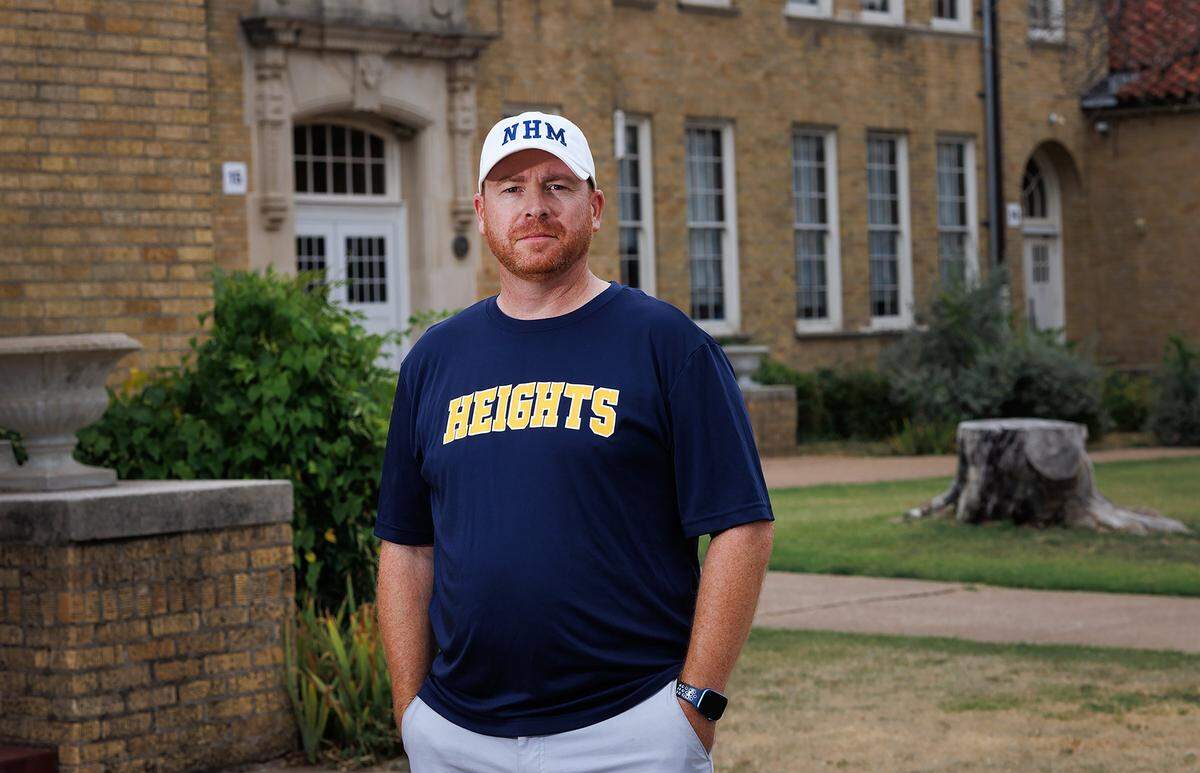
In response to declining enrollment, the Fort Worth school district has begun the process of closing 18 campuses over the next four years. According to the district, the decisions about which ones to shutter came down to facility conditions and capacity and attendance figures, but was it also a case of the loudest voices prevailing?
When preliminary discussions about which Fort Worth schools would close began in February, two of the 30 elementary schools under consideration were North Hi Mount, located near Fort Worth’s Cultural District, and Edward J. Briscoe Elementary School, in the relatively less affluent Morningside neighborhood, in the southeast part of the city.
When the final decision was made on May 20, North Hi Mount was spared, while Briscoe is scheduled to close in June.
North Hi Mount parents organize against school closure
After getting the news that North Hi Mount was on the potential closure list, Leonard left work early in hopes of speaking during the meeting’s public comment session, but he missed the deadline to sign up. During the meeting, the board discussed a number of possibilities for school consolidations. Besides North Hi Mount, three other schools in the Arlington Heights pyramid — Stripling Middle School, South Hi Mount Elementary School and Monnig Middle School — were also on the list of possible closures.
After learning the news, parents at North Hi Mount mobilized quickly, Leonard said. Two days after the board meeting, parents held a town hall meeting in the school’s auditorium. About 40 parents and others from the neighborhood showed up, he said.
“It wasn’t packed, but it was a good crowd,” he said.
During the meeting, parents put together a plan to explain to district leaders and school board members the reasons they thought North Hi Mount should stay open. That plan also included partnering with parents from South Hi Mount and Stripling to combine their resources and present a united front. North Hi Mount and South Hi Mount are only a little over a mile apart, and students from both schools go to Stripling once they reach sixth grade, so the partnership made sense, he said.
The prospect of organizing against proposed school closures seemed daunting, Leonard said, but parents looked at what happened at Westcliff Elementary School. Located just off Granbury Road in south Fort Worth, Westcliff was also on the list of potential closures that was presented at the Feb. 11 board meeting. But parents from Westcliff showed up to the meeting in large numbers to speak out against the closure, and a short time later, the school was off the list.
In the weeks after the announcement, parents from North Hi Mount, South Hi Mount and Stripling launched a website, printed banners and passed out yard signs around the neighborhood. Dozens of parents got involved in the ways that matched their skills the best, Leonard said — some spoke at school board meetings, others analyzed enrollment and campus usage data, and others connected with people in the neighborhood, getting them involved in the effort.
On the evening of Feb. 19, parents from the three schools convened a neighborhood meeting at Arlington Heights United Methodist Church, and invited district leaders to come speak with them. During the meeting, Kellie Spencer, the district’s deputy superintendent, emphasized the point that the district didn’t yet have a finalized list of schools that would be closed. Spencer also told parents that some of the options that had been discussed, including closing Stripling and South Hi Mount, weren’t viable.
The following week, North Hi Mount parents and students held a rally before a community meeting at Benbrook Middle-High School, where district leaders discussed school closure scenarios. Among the possibilities that came up at the meeting were shutting North Hi Mount down and sending its students either to an expanded South Hi Mount, or splitting them between South Hi Mount and Burton Hill Elementary School. But the possibility of closing North Hi Mount was still on the table.
How North Hi Mount’s role in neighborhood has changed
The Rev. Mary Spradlin, the former senior pastor of Arlington Heights United Methodist Church, said she thinks a decision to close North Hi Mount would have been harmful not only to the neighborhood, but also to the district. Many families in the neighborhood have the means to send their children to private schools, Spradlin said, but they choose not to because they’re happy with the education their kids get at North Hi Mount. If Fort Worth ISD had opted to shut the school down, she suspects many of those families would have transferred their kids out of the district. She also thinks it would have damaged the district’s reputation in the Arlington Heights area.
“I have no doubt it would have increased the negativity toward Fort Worth ISD specifically and public schools in general,” she said.
Spradlin saw North Hi Mount’s role in the community shift during the 14 years she worked in the neighborhood. Spradlin was the church’s senior pastor from 2011 until the beginning of July, when she was appointed district superintendent for the South District of the United Methodist Church’s Horizon Texas Conference. The church has a decades-long relationship with North Hi Mount that predates Spradlin’s time at the church, she said.
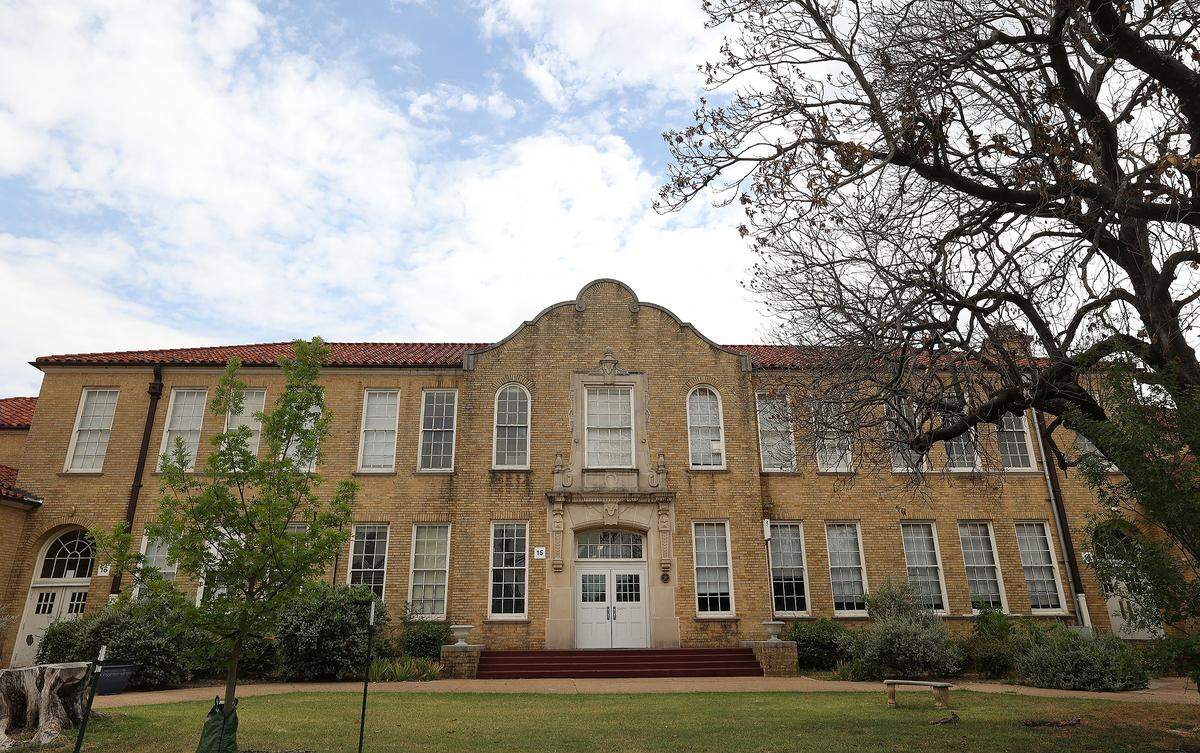
When Spradlin came to Arlington Heights, North Hi Mount seemed like a place that mainly served students who were bused in from outside the neighborhood, she said. Families in the neighborhood largely chose other options, like a private school or another campus in the district, she said.
Since then, that dynamic has changed, Spradlin said. North Hi Mount’s bilingual program still attracts large numbers of students from other parts of the city, she said. But families who live in the immediate area around the school are much more willing to send their children to school there, as well, she said. North Hi Mount’s PTA has also stepped up its support for the school over the past few years, she said.
Leonard, the North Hi Mount parent, said the fact that North Hi Mount has such an active PTA was critical to parents’ organizing efforts. Many of the school’s parents already knew each other through PTA meetings, so when the proposal showed up on a school board agenda, they were able to come together quickly.
Briscoe faced challenges in organizing against school closure
It took Briscoe Elementary families, on the other hand, more time to mobilize in their effort to keep their school open.
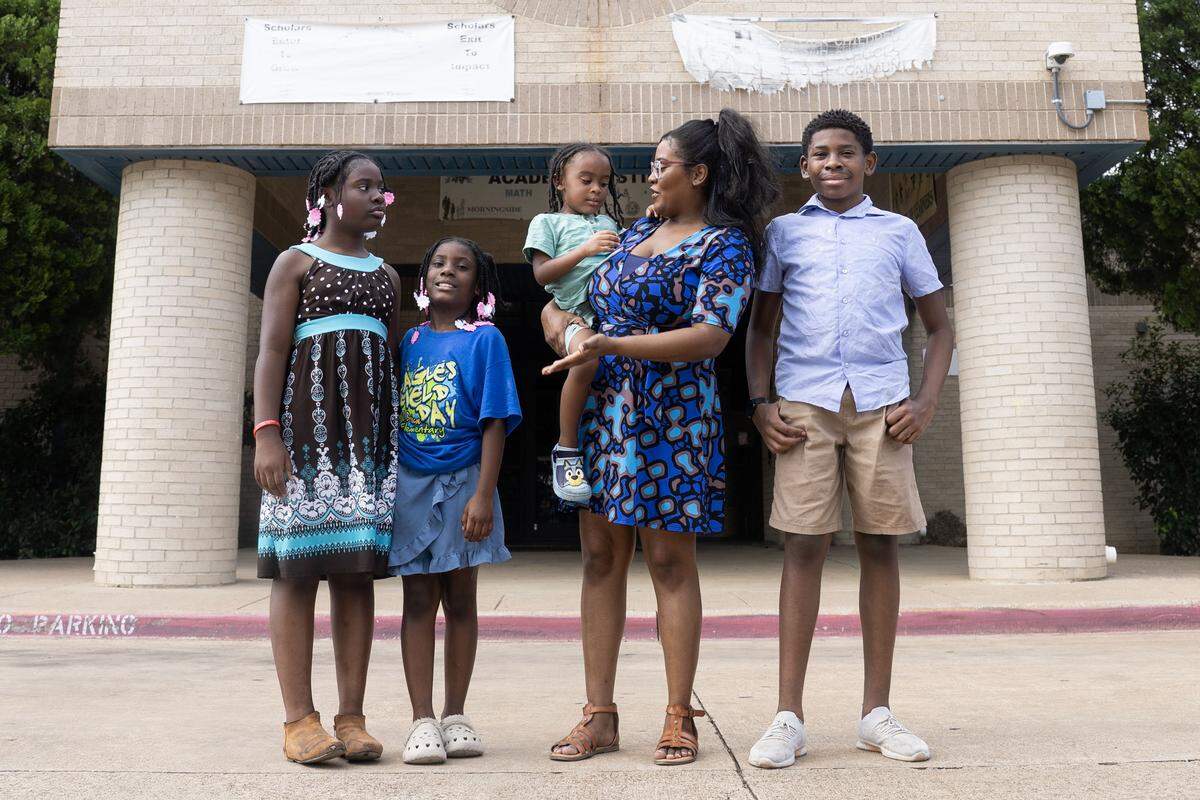
Pamela Bennett, the family engagement specialist at Briscoe, and Toyneisha Lomax, a substitute teacher and parent of three children who attend or have attended Briscoe, both said that families associated with Briscoe didn’t realize what was at stake, and therefore they didn’t act with the same sort of urgency as the North Hi Mount families.
Bennett pointed out that 27 languages are spoken at Briscoe. That includes English and Spanish, but also African and Asian languages and dialects. This, Bennett felt, contributed to fewer people speaking out in support of Briscoe at school board and community meetings over the past four months.
Both Lomax and Bennett believe the fact that Briscoe parents and community members took longer to respond cost them, though Spencer, the Fort Worth ISD deputy superintendent, disputed that.
Fort Worth ISD’s rationale for closing Briscoe
Spencer asserted that school closure decisions came down to numbers. In the Polytechnic High School feeder pyramid, of which Briscoe is a part, there is capacity for approximately 5,000 elementary students. The current elementary enrollment is only around 3,000, though.
In 2024-25, Briscoe had the lowest enrollment of the seven elementary schools in the Polytechnic pyramid, with 265 students. Briscoe also had the second-lowest seat utilization at 47%. The only school with lower utilization in the Polytechnic pyramid was Morningside Elementary, but that campus is larger than Briscoe’s and is set to receive Briscoe students beginning in 2026-27.
Additionally, Briscoe has the lowest elementary student population living within its boundaries, Spencer said.
In contrast, North Hi Mount, in the Arlington Heights High School feeder pyramid, was at 160% of seat capacity in 2024-25 with an enrollment of 384. Two other campuses in the pyramid, Ridglea Hills Elementary School and South Hi Mount Elementary School, were likewise full, operating at 116% and 95% of capacity, respectively. No elementary school in the Arlington Heights pyramid operated at lower than 66% of capacity last school year.
If Fort Worth had closed North Hi Mount, Spencer said, there would have been a shortage of elementary school seats in the Arlington Heights pyramid. That, not family activism, Spencer reiterated, led to the school district making the decisions it made.
FWISD board meeting on school closures draws dozens
During the board’s May 20 meeting, dozens of parents, students and other school supporters signed up to speak. Many were from Briscoe. Several told the board about why the school is such a special place, and implored them not to close it.
But at the end of the meeting, the board voted 8-0 to shut down 16 campuses over the next four years, in addition to two they’d already approved closing. Briscoe was one of the campuses scheduled to close. North Hi Mount wasn’t.
The fact that North Hi Mount escaped closure came as a relief, Leonard said. But he didn’t feel like celebrating. In the months leading up to the vote, Leonard heard parents from Briscoe, De Zavala and other schools speak at board meetings about how the decision to close those campuses will disrupt their kids’ lives. The impact that the closure plan will have on those families is heartbreaking, he said.
But Leonard agreed with Spencer that enrollment numbers, not parent activism, was the main reason North Hi Mount came off the closure list. Parents and other school supporters got organized quickly to make their case, he said, but he thinks the data parents presented to the board, not the volume at which they did it, made the difference.
Closure expected to send ripples through community
Fort Worth may have hard data to support closing Briscoe Elementary, but that’s cold comfort to the students, faculty, staff members and families who will be impacted.
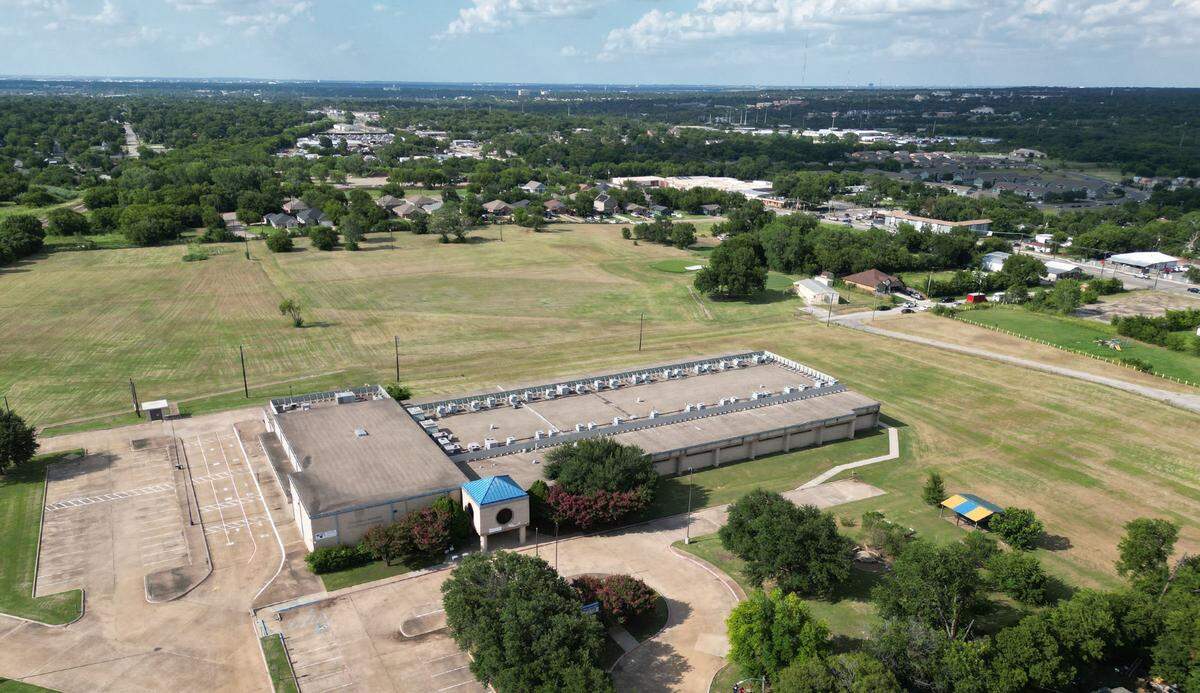
Surrounded by green space, including a golf driving range for the students, Briscoe is an oasis among the houses and apartments along Glen Garden Drive, east of Interstate 35.
Bennett was instrumental in working with an organization called First Tee to construct the driving range, and she’s cultivated gardens on the campus grounds. In a flower garden built to attract monarch butterflies, Briscoe students have left impressions of their handprints in cement.
Bennett told the students they could always come back and see those prints and remember their time at Briscoe. Now, she’s not so sure.
“We were destroyed,” Bennett said of the reaction to the news that Briscoe would close.
“It was hard,” Lomax added. “I don’t think it’s the best decision. I don’t think it’s in the best interest of the students or the teachers.”
One of the biggest reasons why, said Lomax and Bennett, is that you can’t replicate the sense of community that exists at Briscoe. Parents have a direct line of communication with Bennett. At the end of the day, Bennett escorts students to the crossing guards so they don’t have to walk alone. When Fort Worth campuses were closed during the COVID pandemic, Bennett, who lives near the school, tutored Briscoe students on her front porch.
“I don’t send my kids to Fort Worth ISD,” said Lomax. “I send my kids to Briscoe.”
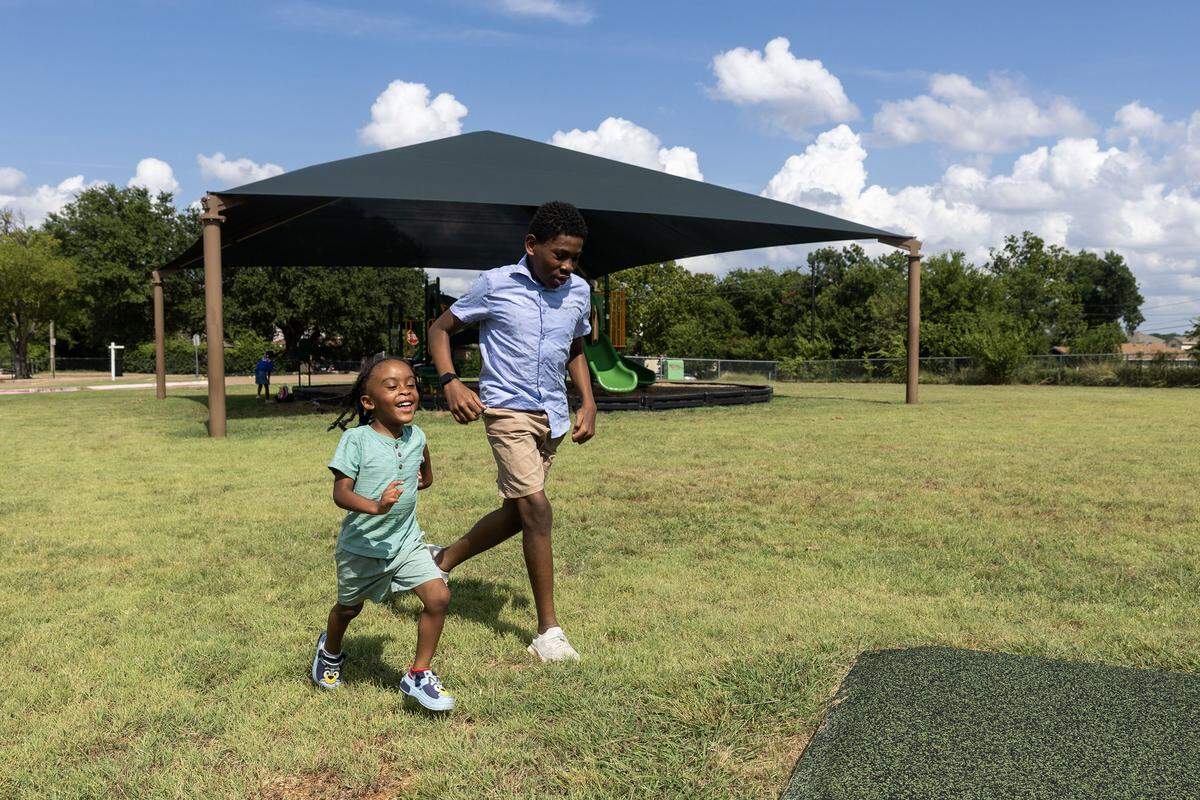
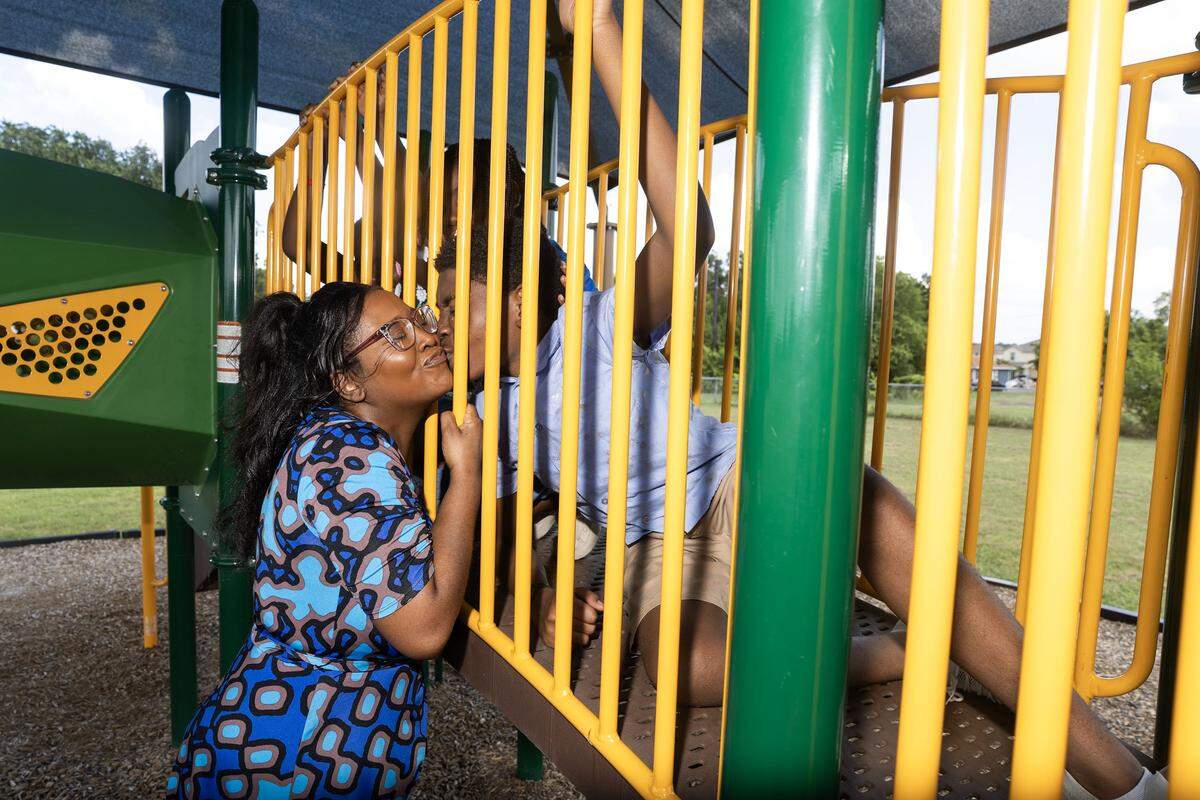
Bennett said about 75% of Briscoe students walk to school each day, so she worries about them having to walk farther to get to their new campuses. She also worries that they’ll have to leave home much earlier to get to school in time for a hot meal in the mornings. The majority of Briscoe’s students, Bennett said, eat breakfast on campus.
More than 96% of Briscoe students are categorized as economically disadvantaged. Approximately 70% qualify for free or reduced-price meals. To assist the families, Bennett helps run a food pantry at the school. Another faculty member, physical education teacher Cody Sowder, uses proceeds from an annual darts tournament to purchase gifts for students around the holidays.
Bennett said she hopes every day that the school district will change its mind and keep Briscoe open. Spencer said it’s not out of the question.
“If there was a resurgence in enrollment, we’ll evaluate how the decisions are made,” she said.
Since the spring, Bennett has been walking the blocks around Briscoe and knocking on doors, encouraging attendance and urging families to enroll their children if they haven’t already. Briscoe accepts students as young as 4 in its pre-kindergarten program.
“We’re not giving up,” Bennett said of her efforts to grow Briscoe’s enrollment, however modestly. “Until June 2026, we’re going to fight for our campus.”
This story was originally published August 7, 2025 at 4:45 AM.