Fort Worth ISD encourages community support for school staff; discusses plan for literacy
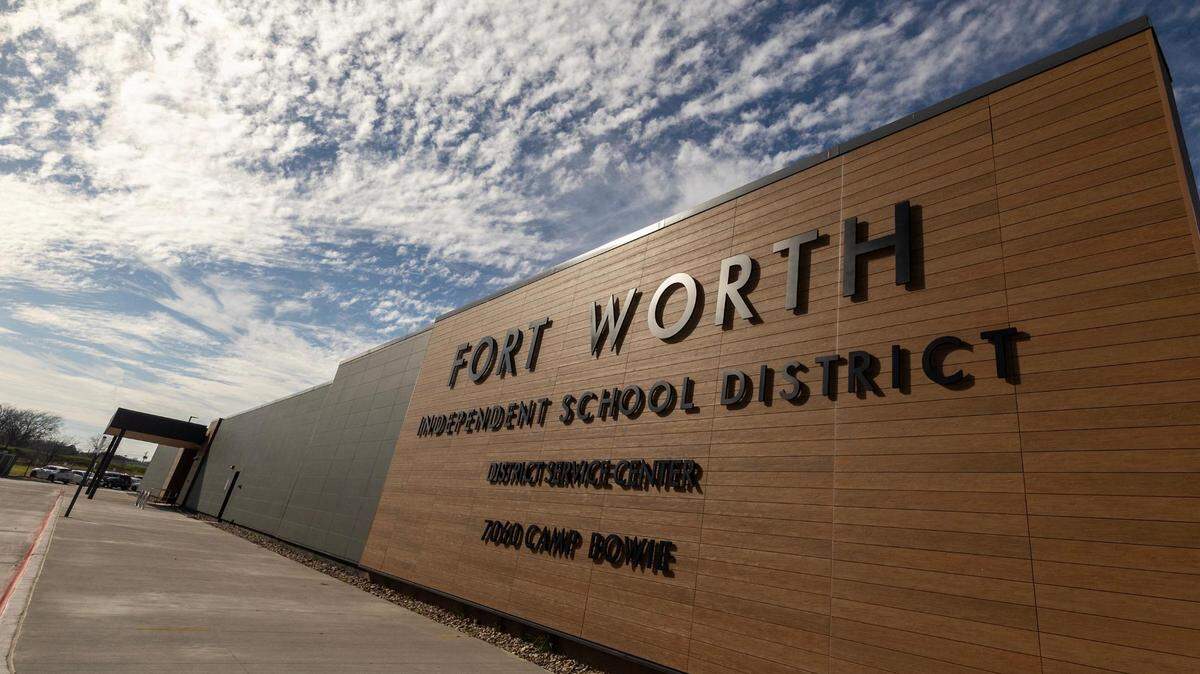
Fort Worth ISD’s interim superintendent revealed a plan during a school board meeting to facilitate local partnerships between the district and community organizations by urging them to support school staff as part of their New Year’s resolutions. The school board also discussed its approach to solving its literacy woes in connection to its partnerships.
Karen Molinar outlined an initiative to revive engagement with businesses and community and faith-based organizations during a presentation to the school board on Tuesday, Dec. 10. She encouraged organizations, businesses, churches and neighborhood associations to adopt a school staff for the next five months. This includes a monthly action from January to May of providing them with snacks and supplies, sponsoring staff recognition events, donating awards to recognized staff through restaurant certificates or new teachers lounge materials, and offering pro-bono services. Interested organizations can fill out a Google form or call 817-814-1900.
“This is different than adopt a school. When you adopt a school, you may lean into the student side by providing jackets and socks. We have been doing some very urgent and focused work the first semester, and it will only increase the second semester. The weight is really on our campus staff,” Molinar said. “This is my challenge, my New Year’s resolution challenge to the city of Fort Worth. The response has been overwhelming when we go out to the community… People want to lean in. People want to help. They need an avenue to help.”
Molinar noted that she will be highlighting an existing community partnership at each board meeting going forward. On Tuesday, she talked about the Children’s Vision Program with the Alcon Foundation. Students in pre-K through 12th grade receive vision screenings and referrals, eye exams, prescription glasses, in-school eye exams and more. A school-based eye clinic located between the Western Hills Elementary and Primary schools provides some of these services while staff also travel to elementary schools across the district to provide services on-site.
Molinar also shared numbers regarding district partnerships and parent engagement. There are 94 parent organizations, 125 adopt-a-school partners, more than 32,000 Parent Portal accounts, more than 42,000 students associated with those Parent Portal accounts and about 20,400 parent log-ins, according to Molinar. The district is focusing on adding parent organizations to more campuses that don’t have one.
“This priority is very important to me. How do we build our community strength for our district in all areas, (not just) student achievement?” Molinar said. “There’s two points of actions here that we’re focusing on the first semester going into the second semester. Strengthening the ties with our community partners, provide direct benefits to our students and families, and then, of course, focus on our early childhood to post-secondary success in all of our areas.”
School board member Anne Darr said she agreed that “our community is our strength” and she considers literacy to be a community issue. She applauded Molinar for bringing forward strategies around student achievement and community engagement.
“The instruction, and good instruction, has to take place in our classrooms, but strong communities are communities that rally around our schools and elevate our students and elevate our teachers. You have not only illustrated that, but you have provided tangible, real ideas — doable things — that will benefit our students, our teachers and our community as a whole. So thank you for that,” Darr said.
Student achievement
Molinar also gave school board members an update on the district’s focus to improve student achievement and to close gaps. Central administration staff have finished their first week of providing intervention and tutoring on campuses with more than 2,200 support hours across roughly 3,600 support sessions as of Dec. 9, Molinar said. The majority of support sessions, 67%, are focused on reading, and 29% are focused on math. English I, English II and Algebra 1 content areas account for the remaining smaller percentages of sessions.
The district is tracking the intervention data by each student and the standard they’re working on. This data will be evaluated alongside the district’s middle-of-year MAP data, which will be presented in February, to see how much academic growth has happened, Molinar said.
At a different point in the meeting, the school board unanimously approved an initial vote of a resolution assigning Molinar to create an evidence-based plan so all students can read at grade level, which includes utilizing city-wide partnerships. The plan will include specific benchmarks, strategies to support and replicate success across the district, and regular reports to parents about their child’s literacy progress. Officials did not say when the resolution would return to the board for a second reading or when the plan itself was expected to be completed.
“Achieving grade-level literacy for all students is not only an educational imperative but also a moral obligation to the students and families of the Fort Worth Independent School District,” the resolution reads. “The board is committed to an unwavering, long-term, sustained focus of time, essential resources, and work in support of this resolution without regard to changes in leadership at any level.”
Darr said she appreciated the section of the resolution that notes the support of the resolution regardless of who may be in district leadership positions, stating that it must be a long-term plan. The school board has yet to publicly discuss its plans for a new superintendent search.
Darr also listed multiple suggestions to add to the resolution as it was originally presented. She hopes the measurable benchmark aspect of the resolution does not translate to additional testing and assessments. Darr drew concern that the resolution doesn’t mention the need for adequate staffing and high-quality curriculum or how the district will measure its success. She also wants more than one data point to be used when measuring the literacy of the district.
“I fully support all students reading at grade level. Please know that. But there are just a couple comments I have, and I know this is the first reading, so now’s the time to make suggestions,” Darr said. “I would also just like to remind this board and this community that this is a piece of paper, and a resolution has no merit without implementation and becomes meaningless. So we’ve got to be willing to stand behind this resolution and implement this resolution.”
School board member Tobi Jackson said this was an opportunity for the community to solve a civic crisis with 43% of all students in each district or charter school within the city reading at grade level.
“As we correct this and make literacy the priority, we deliver the power to transform our community and deliver something our community can get behind to support our students. We can improve outcomes in poverty, crime, employment and the overall standard of living across our city. Literacy is the key to creating a more equitable society, driving health outcomes, the economy and delivering informed and engaged citizenry,” Jackson said.