This Fort Worth ISD school for refugees is moving into a new home — again
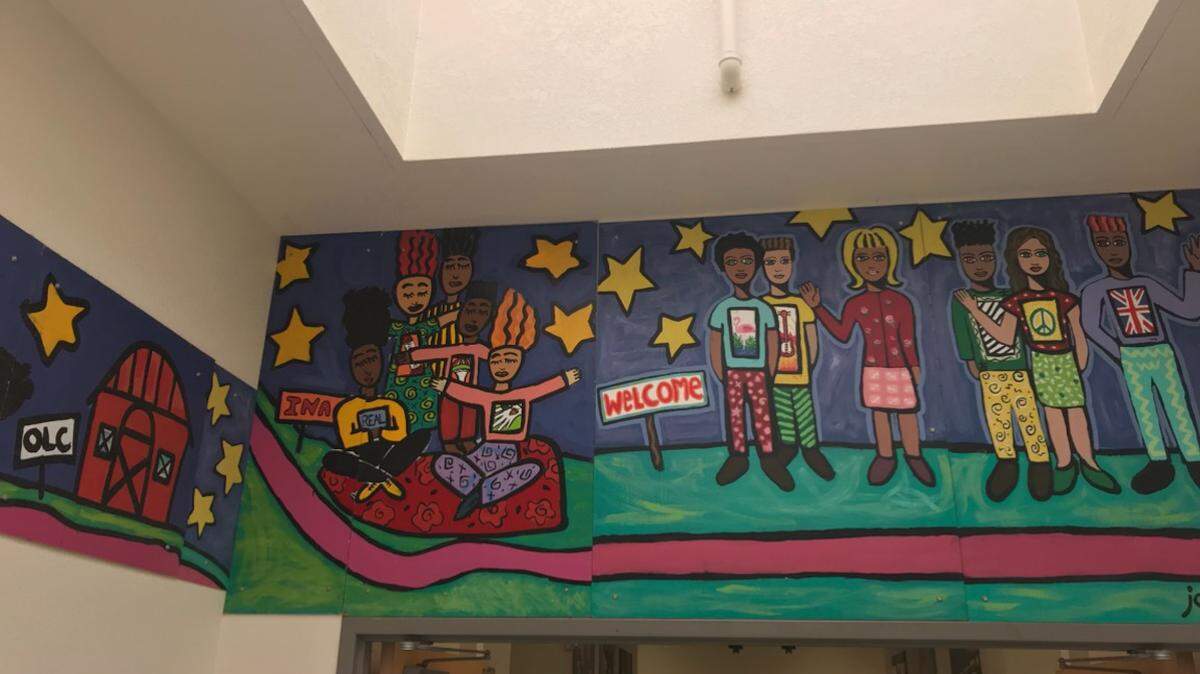
For the second time in three years, a Fort Worth school for refugee students is moving into a new home.
The International Newcomer Academy is a school in the Fort Worth Independent School District for students who are recent immigrants to the United States and have limited English skills. Many are refugees whose families came into the country fleeing conflict or persecution in their home countries.
For the past three years, the school has been located in a building that has less than half as much classroom space as it needs. But next month, the school will relocate across town, to a bigger building that was left empty when two other schools merged.
Academy offers specialized support for newcomers
Students in grades 6-9 come to the academy for a year or two after arriving in the United States. Specially trained teachers help them build up their English proficiency and work with them on course material they’ll need to understand before moving on to mainstream classrooms. Because of circumstances in their home countries, many students come to the academy with years-long gaps in their schooling. Some show up there having never been to school before.
Over Christmas break, district officials plan to move the academy from its current location on Valentine Street, about a mile east of Arlington Heights High School, into a building on Eastline Drive, about a third of a mile north of Mansfield Highway. The building was the former home of Forest Oak Sixth Grade Center, which was closed and consolidated with Forest Oak Middle School at the beginning of this school year.
The building will be the school’s third home in less than five years. Until 2021, the school was located in a converted department store building on Camp Bowie Boulevard in southwestern Fort Worth, a campus it shared with the Applied Learning Academy, a middle school of choice.
When district officials announced plans to turn that campus into Fort Worth ISD’s central administration building, the school’s teachers and supporters worried about its future — especially when conversations about those plans began to include the idea of splitting the academy up among two or more sites. But district leaders opted to keep the school intact and move it the Valentine Street building, which previously housed the Middle Level Learning Center, an alternative school for students in grades 6-8.
Although supporters cheered the move because it meant the school wouldn’t be split up, the Valentine Street building was never big enough to accommodate the academy. The building is designed with classroom space for 200 students. Currently, 431 students are enrolled at the school. Some teachers have been holding classes in the building’s cafeteria. Two classes meet on the stage in the auditorium. During a school board meeting earlier this month, Karen Molinar, the district’s interim superintendent, said about 200 students at the school go to class in portable classroom units.
Those capacity issues have also meant there wasn’t space to place some newcomers at the academy. Over the past year, the district has steered some students who might otherwise have ended up at the academy to language centers at campuses across the district. Those centers are programs located on larger secondary campuses, staffed by teachers certified to work with students who are learning English as a second language. While that meant those students got language instruction, the centers aren’t always equipped to offer the broader support students and their families get at the academy.
The Eastline Drive building, where the academy is moving next month, is built to accommodate 500 students, meaning there will be classroom space for every student, Molinar said. The school will still have portable classrooms on site for distributing supplies like donated clothes and furniture to families, she said.
Aside from the additional space, the Eastline Drive building also offers the advantage of being located closer to where more students’ families live, Molinar said. The school draws students from across the district. None of the academy’s students live within a mile of its current location, and just 2.4% live within three miles, she said. Once the academy moves into its new building, 36.8% of its students will live within three miles of their school.
That closer proximity means fewer students will have to contend with long bus rides to and from school, Molinar said. The move will make it easier to keep families engaged, she said. Because many of the school’s families came to the United States fleeing conflict in their home countries, most need help figuring out how to navigate life in the United States. That means parent outreach is even more important than it is at other schools.
Move to larger campus allows for expanded services
Faiha Al-Atrash, the academy’s community and parents coordinator, said the added space at the new campus will make that outreach more manageable. Before the school’s last move, Al-Atrash ran a food pantry where she distributed food the school received weekly from the Tarrant Area Food Bank. The food bank was a crucial resource for families at the school, many of whom came to the United States with little more than what they were carrying. But when the academy moved into the Valentine Street building, there wasn’t enough space, so she had to end that service, she said. She still distributed donated food when she could, but it was more sporadic, she said.
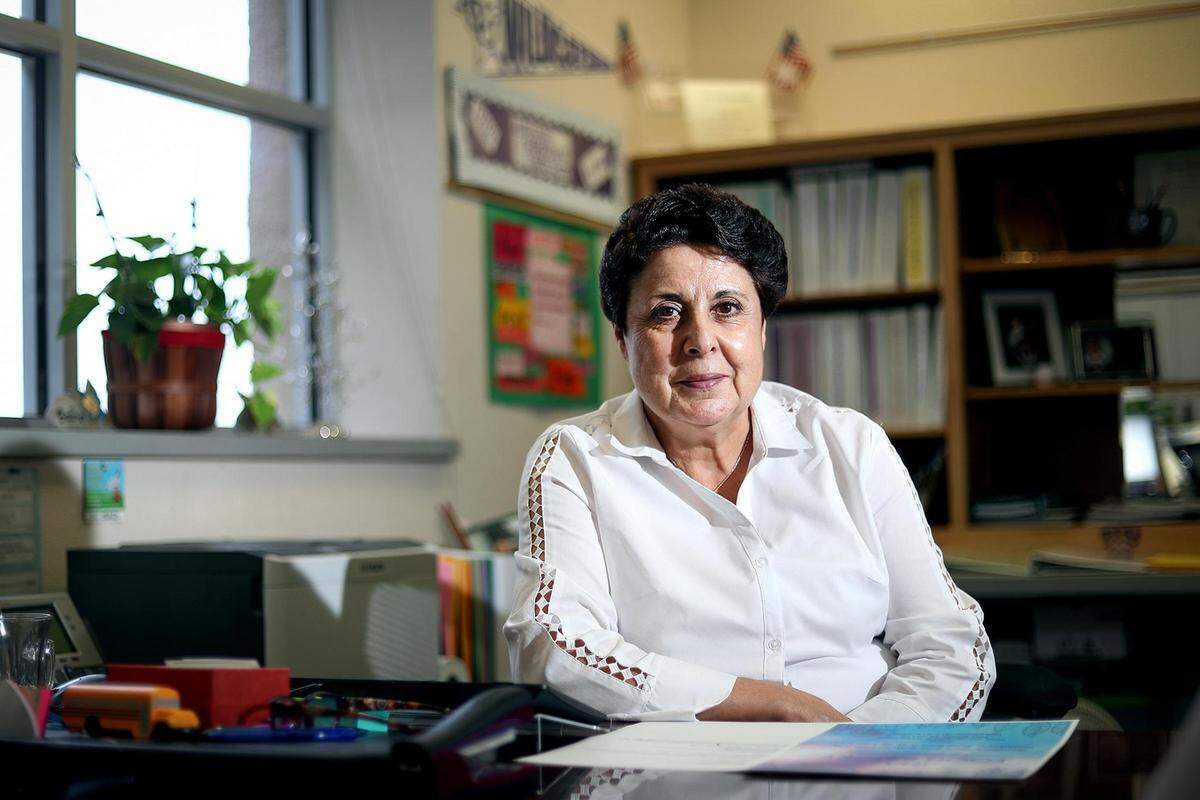
When school leaders told the academy’s staff that they’d be moving again, Al-Atrash requested two spaces in portable classrooms — one to house her office and an area to distribute school uniforms and school supplies, and a second for the food pantry. Giving families a place to come pick up groceries whenever they need it is a better option than handing out food on an ad-hoc basis, she said.
“It makes it more dignified for them than handing them bags here and bags there,” she said.
Although she’s happy about being able to restart the food pantry, Al-Atrash said the new location isn’t ideal. The Eastline Drive building is old, she said — although she noted the school’s current building is also showing its age, with air-conditioning issues in the summer and heat outages in the winter.
Al-Atrash also isn’t happy that the move is happening over Christmas break, rather than during the summer. A move like that is a major disruption, she said, and many families at the school still don’t understand what’s happening. If the district had waited to start the move over the summer, it would give teachers more time to pack up their classrooms, she said. It would also save a large number of students from having to navigate the change just months before they move on to another school at the end of the year.
December move leaves less time for planning
Kellie Spencer, the district’s deputy superintendent, said the choice to move the school at the semester break instead of waiting until summer came down to what’s best for the school’s students and families. District officials gave the academy’s leaders the option to make the move in December or wait until May, she said. They chose the option that would get the academy into a new building as quickly as possible.
Spencer acknowledged that making the move over Christmas break leaves district leaders with weeks instead of months to manage the process. That means there’s almost no time for planning, she said. But the district has managed a number of campus moves over the past few years — including the academy’s most recent move to Valentine Street and the merger of Forest Oak Middle School and the Forest Oak 6th Grade Center, which freed up the Eastline Drive building for the academy to move in. That means the district’s facilities workers have plenty of experience handling this kind of transition, she said.
Mike Naughton, the district’s facilities director, said the move will leave the academy better equipped for future growth. The school’s enrollment can fluctuate dramatically from year to year, its numbers influenced heavily by global conflicts and U.S. refugee admissions policy. The new building has more classroom space and nearly twice as much square footage, he said, which puts the school in a better position to manage any uptick in enrollment it might see in the future.
Once the move is done, the academy’s teachers and staff can likely count on staying put for a while, Naughton said. But the district is in the middle of a facilities planning process that will likely end with several schools being closed and consolidated in the coming years. There’s been no discussion of shutting the academy down. But district leaders can’t make promises about where any of its schools will end up at the end of that process.
“It’s going to be there for some time,” Naughton said. “But facility planning is an ongoing, ever-changing process.”
This story was originally published November 25, 2024 at 5:30 AM.