Fort Worth schools struggle to meet state tutoring requirements. They aren’t alone.
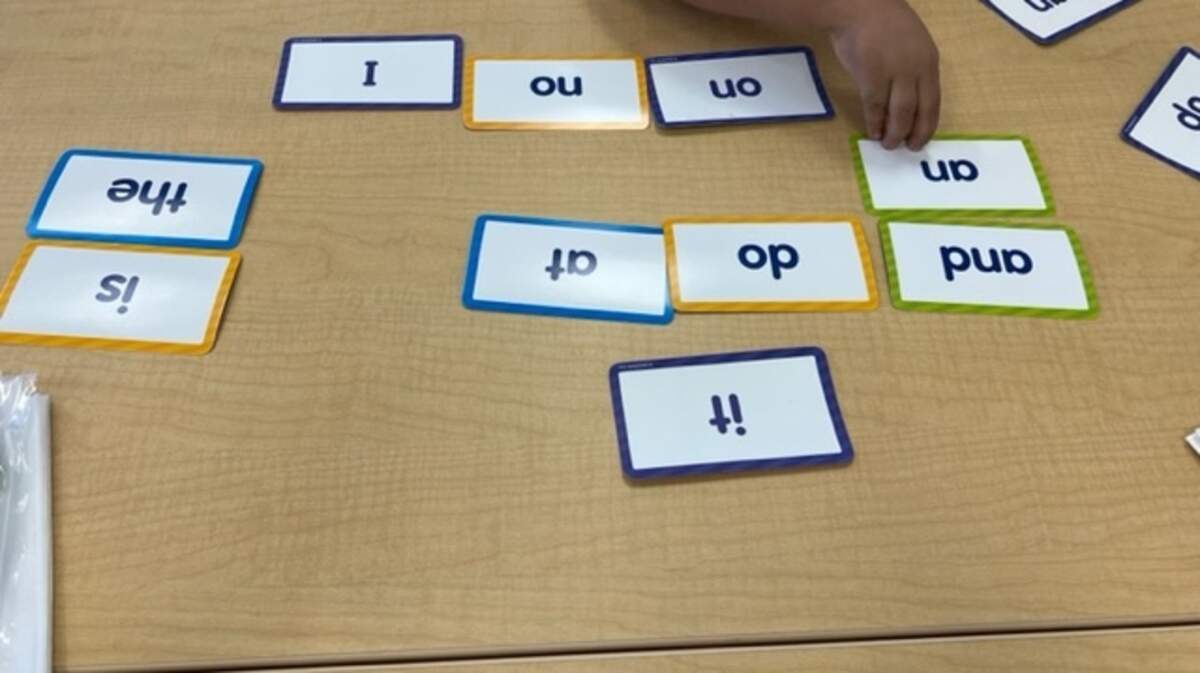
Every Monday afternoon, Melodi Faris leaves her job as a professor at TCU and goes to work with a pair of students who are considerably younger than the ones she usually teaches.
Faris volunteers as a tutor once a week, working with a pair of Fort Worth first-graders who fell behind in reading when schools shut down and switched to online learning.
“I go from Dr. Faris to Mrs. Faris, like a Ferris wheel, which is how my two first-graders know me,” she said.
Faris, who teaches courses in early childhood education in TCU’s College of Education, said she began volunteering as a tutor after reading a story in the Star-Telegram about how far behind Fort Worth students fell during school shutdowns. The two students she works with are good kids, she said. They just fell behind and need some extra help catching up. A former first grade teacher, Faris knows the 30 minutes a week she spends with them isn’t enough, but it’s something. The students have made incredible progress since she began working with them, she said.
Like many districts across Texas, the Fort Worth school district has invested heavily in tutoring in hopes of helping students recover the ground they lost as a result of the pandemic. But despite those efforts, district leaders say they won’t be able to get students the intervention time required under a new state law. An exhausted teacher workforce and a tight labor market have left the district struggling to come up with enough tutors to meet those requirements.
New state law requires small-group tutoring
The law, House Bill 4545, requires districts to provide 30 hours of small-group tutoring for each section that students failed on the State of Texas Assessments of Academic Readiness, or STAAR. Under the law, tutoring must take place in groups of no more than three students to one teacher.
State lawmakers passed the bill last year in an effort to help students regain the academic ground they lost during school closures and the shift to virtual learning. But many school districts, including Fort Worth, say they’re struggling to find enough staff to meet the bill’s requirements.
“That is just not a possibility in a district our size,” said Marcey Sorensen, chief academic officer for the Fort Worth school district.
Other districts struggle to meet Texas tutoring requirements
The Fort Worth school district isn’t alone. In February, Michael Hinojosa, superintendent of the Dallas school district, told The Dallas Morning News that it was “physically impossible” for the district to meet those requirements. Hinojosa said the district wouldn’t be able to meet that threshold during the school year, but he doubted others would, either.
In updated guidance released March 24, the Texas Education Agency advised districts it would begin enforcing the bill’s requirements during the upcoming school year. The agency previously advised districts that it wouldn’t begin enforcing the law’s full requirements for the first year as long as districts were making “reasonable efforts” to comply with the law.
In a statement, TEA officials said the compliance process would begin with a parent or other concerned person filing a grievance with their school district. If that grievance isn’t resolved at the local level, the person could file a complaint with TEA, which would then work with the district to bring them into compliance.
Fort Worth schools use COVID relief money to fund tutoring
The district is using federal COVID relief money to pay teachers $40 an hour to offer tutoring before and after school. Teachers in kindergarten through eighth grade provide extra tutoring in reading and math to students who need extra help. In high school, teachers are providing tutoring in courses with an end-of-course exam attached to them. The district is also partnering with community organizations, including Read Fort Worth and TCU, to provide volunteer tutors.
Beginning this fall, the district plans to begin contracting out some of its tutoring services, Sorensen said. Principals will decide whether to bring in outside tutors or continue offering teachers an extra stipend to work with students before and after school. District leaders understand how hard teachers work, Sorensen said, so they want to give principals the option of giving their teachers a break rather than asking them to work extra outside normal school hours.
But Sorensen said the bill’s three-to-one or one-to-one requirements were unworkable. The district simply can’t find enough tutors to fulfill that requirement, she said.
The work the district needs tutors to do is more involved than simply helping students with their homework. The instruction students get from tutors needs to be consistent with what they’re learning in the classroom, Sorensen said. That need makes district officials wary about putting out a broad call for help from the community.
The district is in the middle of a shift in its reading curriculum. The new literacy framework places greater emphasis on intensive phonics instruction and calls for teachers and principals to maximize the amount of time students spend working on reading with their teachers. The shift represents a move away from another instructional model called balanced literacy, which exposes students to books quickly but doesn’t include much systematic, explicit phonics instruction.
Sorensen said it’s important that the district’s reading tutors understand that model and are prepared to work with students in a way that aligns with how they learn during the school day.
“We didn’t want kids to come after school and they did something completely different,” Sorensen said.
Even if it were feasible, Sorensen said the goal of three-to-one or one-to-one tutoring isn’t necessarily helpful. She pointed to the district’s Saturday learning academies, where schools try to maintain a ratio of 15 students to one teacher. That ratio allows teachers to identify students’ skills gaps and work with them to close them, she said.
Expert: Scaling up tutoring programs is a challenge
Matthew Kraft, a professor of education and economics at Brown University, said instruction in a 15-to-one format couldn’t be considered tutoring. That ratio of students looks more like small-group classroom instruction, he said. That doesn’t necessarily mean it isn’t effective, he said, but it couldn’t be called individualized instruction.
Kraft said it makes sense that a district would want to ensure that the tutoring is consistent with classroom instruction. The best way to do that is to build a tutoring program that includes strong instructional materials and some amount of training for tutors to make sure they’re equipped to provide instruction that lines up with the district’s approach to teaching reading.
Much could be done to establish broad tutoring programs before the beginning of the next school year, Kraft said. But districts and states are learning that it’s difficult to come up with enough tutors to staff those programs, he said. Those programs also require a great deal of time and attention from schools’ administrative staff, he said. At a time when school leaders are often dealing with several competing priorities at once, it may be difficult to devote that level of attention and staff to tutoring programs, he said.
To build tutoring programs that work, districts need to think about how to build a sustainable supply of tutors, Kraft said. That likely means hiring paid tutors and not relying solely on volunteers, he said. But it also means taking what Kraft calls a “portfolio approach” — one that makes smart use of both community volunteers and paid tutors. That approach also involves rethinking the role of instructional support staff like paraprofessionals, and even district office staff, so that the district has the broadest possible group of tutors available, he said.
In a district as large as Fort Worth, a tutoring program that would fulfill the requirements of the new state law would have to provide tutoring for thousands of students. Most districts have struggled to provide those services at that kind of scale, especially on any kind of rapid timeline, he said.
Kraft said it may be possible to create a program that offers those services at that scale, but only if the district ramps up over several years.
“My hope is that we move steadily in that direction, rather than saying, well, we can’t get there today, so let’s just give up,” he said.
Fort Worth educators are worn thin, teacher says
Ale Checka, a seventh grade English teacher at Applied Learning Academy, said the high demand for teachers to provide extra tutoring reflects how exhausted teachers are this year. The academy’s school day ends at 4:30 p.m. But after that, she stays to work the school’s after-school program. Most days, she doesn’t leave school until about 6 p.m.
When she saw how much the district was offering teachers to provide after-hours tutoring, Checka thought hard about whether to participate. Ultimately, she realized she didn’t have the time or energy. This is the first year she hasn’t helped with extra tutoring. She thinks the fact that teachers like her are too worn out to participate in the tutoring program is a big reason the district can’t find enough help.
Classroom teachers are working hard during normal school hours to help students catch up, and those who signed up to help with tutoring are spending even more hours at school in the mornings, evenings, or on weekends, she said. Not everyone has the time or energy to make that commitment, she said.
“The kids are showing a tremendous, tremendous amount of growth, which is really encouraging,” she said. “But also, everybody is just worn so thin.”