‘We are seeing miracles.’ How Fort Worth horses are helping people with disabilities
Allison Gross’ son was born prematurely at 26 weeks. At 3, he was not talking or babbling. He tried speech and music therapy. A horse and the words walk on led him on the path of hitting developmental milestones.
Gross, an equine specialist and development director at Wings of Hope Equitherapy in Cleburne, said her son realized that when the words walk on and similar phrases were used, they made the horse move.
“When he said ‘walk on’ or whatever version of ‘walk on’ came out for him, that horse moved instantly. His words mattered,” Gross said. “His words were important and something happened when his words came out.”
The therapy helped ease his frustration when he didn’t understand how to express himself. He was able to find the skills and use them to express his needs.
Specialists are using horses in Fort Worth’s thriving equine industry to help people with disabilities, trauma, mental health issues, terminal illnesses and more.
Helping with those with disabilities
Many animals used for equine-assisted activities and hippotherapy are retired trained horses, but others come from different backgrounds.
Gross said when her son was born, her family knew it would have a tough journey.
“We had that roller coaster that so many of our parents here, at Wings of Hope, face,” she said.
Equine-assisted activities seemed like a natural fit for the family when other therapies were not working the way they had hoped. Gross said she didn’t expect to see the “night” and “day” results that occurred with her son’s development.
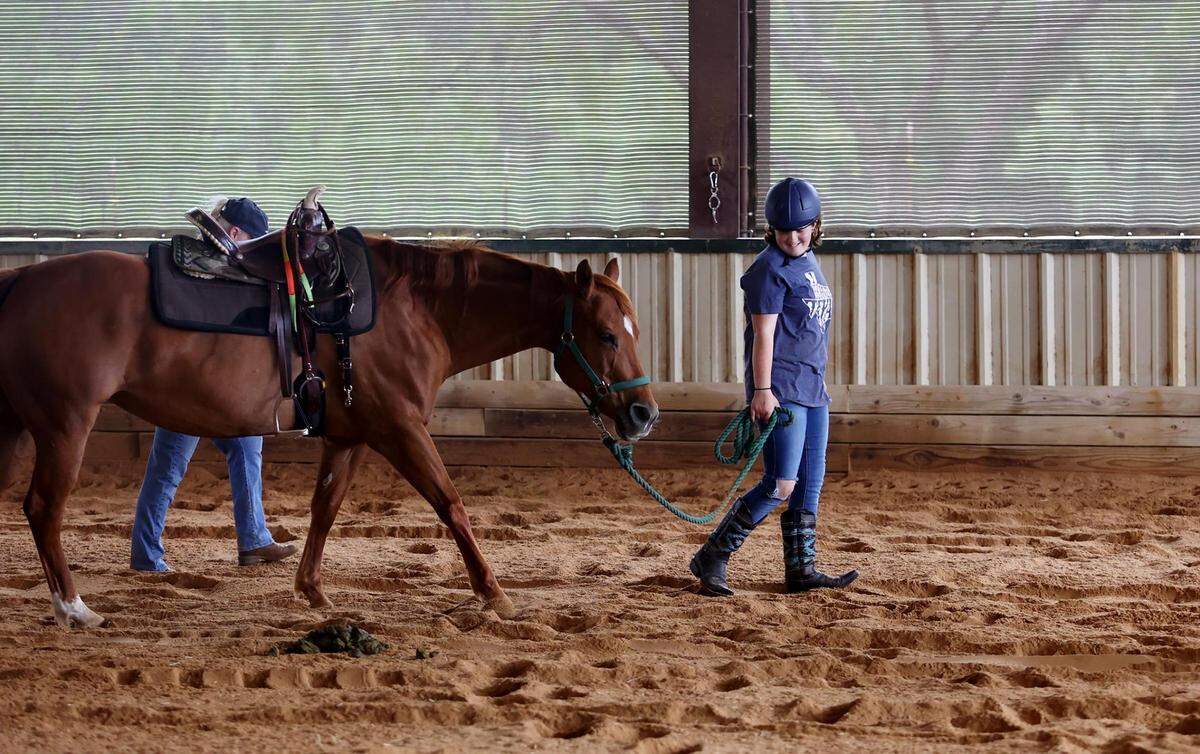
Wings of Hope Equitherapy was founded in 1996 with the initial thought it would focus on helping domestic violence survivors. One of its founders, Margaret Dickens, is in the National Cowgirl Hall of Fame.
“In true Wings of Hope fashion, we have always served the needs of our community,” Gross, its development director, said.
Wings of Hope helps people through therapeutic riding and ground-based equine-assisted learning. Gross said horses see people for who they are and don’t care if a person has a disability or is going through a problem.
“The wonderful thing about horses is that they don’t have judgments,” Gross said. They don’t have an agenda.
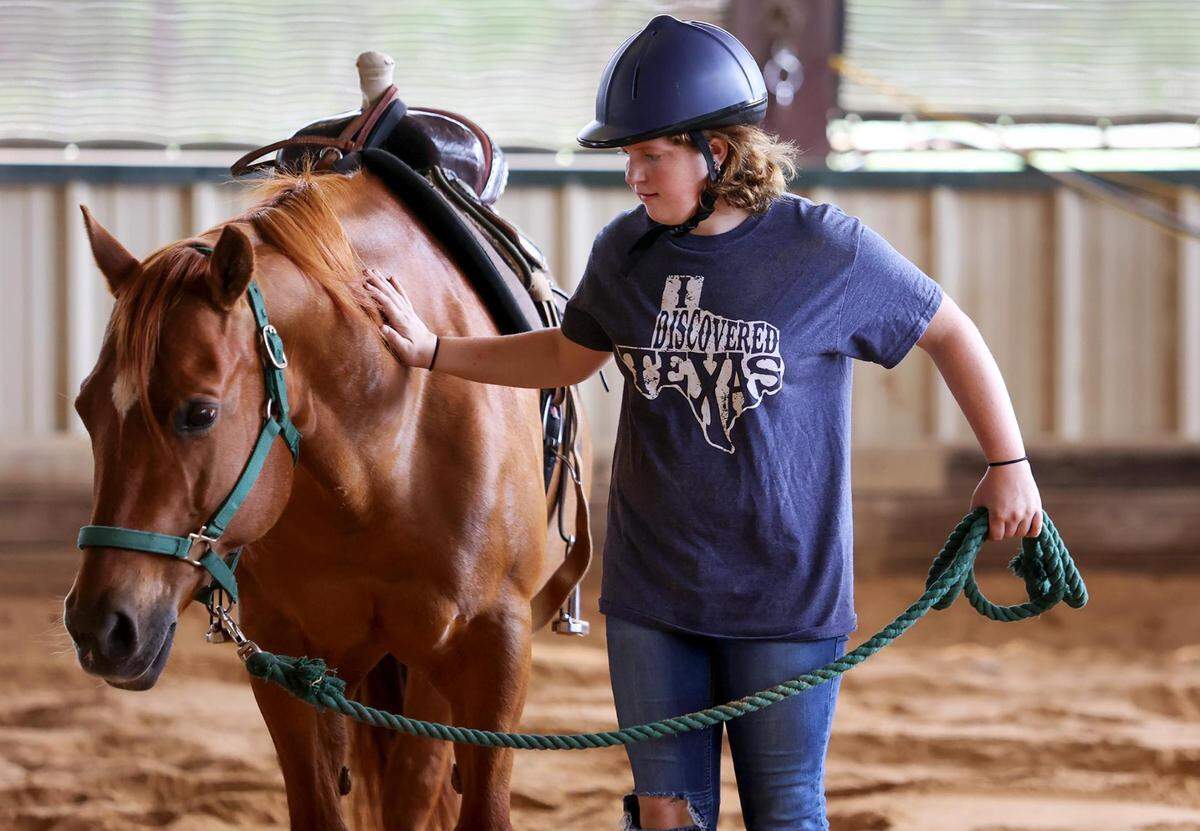
Victory Therapy Center in Roanoke, originally part of Rocky Top Center, uses mostly retired trained horses to help children, adults, veterans and first-responders with mental, physical and emotional needs.
“We are seeing miracles happen every day,” Becky Rasbeary said.
Rasbeary, managing director of development for the center, said clients can range from someone with spina bifida to a survivor of sex trafficking. The organization treats people with therapeutic riding, and physical therapy incorporating hippotherapy.
Physical therapy clients are able to perform stretches and other exercises on horses, which can help them restore balance, coordination and strength. This practice has helped riders who have paralysis and other medical issues.
“It’s working the hips, it is working their pelvis, it’s working their core,” Rasbeary said.”
One client started working with physical therapists when she was 4. She had spina bfida and scoliosis. Doctors told the child’s parents that she would never walk. Physical therapists helped the child gain strength.
She received leg braces and a gait trainer and made it a goal to walk with the horse when it was in the arena. When she was 7, she started to take steps in the arena. The child squealed after seeing her footprint.
“This little girl had never seen her footprint,” Raspberry. “Never. She’s never seen her footprint.”
Addressing mental health needs among college students
The COVID-19 pandemic caused mental health needs to rise for many, including college students.
A recent study by researchers at Boston University found that more than 60% of college students across the country met the criteria for at least one mental health problem from 2020-2021, an increase from previous years.
TCU’s Counseling and Mental Health Center uses a collaborative approach to improving the access of therapy options to students. Eric Wood, director of the university’s center, said its collaborative model allows students to get more access to resources.
The university started a partnership with Freedom Reigns Equine Assisted Counseling to provide students the opportunity to learn and receive the benefits of equine-assisted therapy.
Wood said many students have written letters about how much the equine-therapy program helped them. One student told the university that during the height of COVID-19 she was afraid to leave her house. The therapy helped her anxiety.
“A lot of students have learned skills to reduce panic attacks or respond,” Wood said.
Growing need for services
Victory Therapy Center has seen more needs since COVID. It has an average of over 130 riders, up from the 43 during the height of COVID.
“We have seen a lot of growth because of COVID,” Rasbeary said. “We are seeing that there’s a lot more anxiety, more high need for depression.”
Wings of Hope held 943 equine-assisted activities from 2020-2021 and 52% of those served were between 16 and 50. The oldest client was 78 and the youngest was 4. During that period, 55% had a cognitive or emotional challenge.
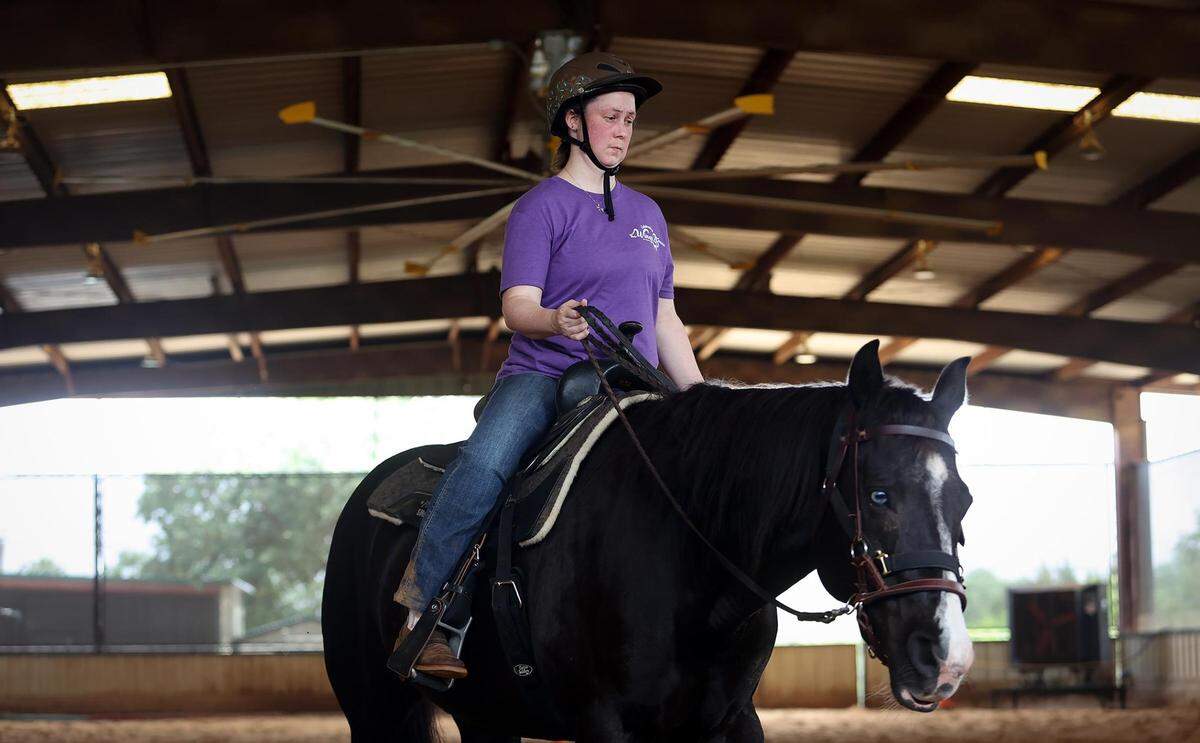
The North Texas Community Foundation has granted $2 million to 10 equine-assisted therapy groups over the years through its Anita Berry Martin Memorial Fund. Anita Berry Martin, who worked in computer systems engineering, ran Greystone Arabians, which was an Arabian breeding and show horse ranch.
The fund helps organizations working in equine therapy and welfare and provides funding for land conversation efforts. Equine organizations have received funding for food and medical care for the horses. Those in Tarrant, Parker, Johnson, Young, Jack, Denton, Wise, Hood, Somervell, Bosque, and Hill counties are eligible.
“A lot more people are recognizing what it is. I think our community at large is recognizing what it is or the importance of it,” Gross said.
This story was originally published May 10, 2022 at 5:00 AM.