Fort Worth lags in public pools. Here’s why Black, Hispanic people may be hurt the most
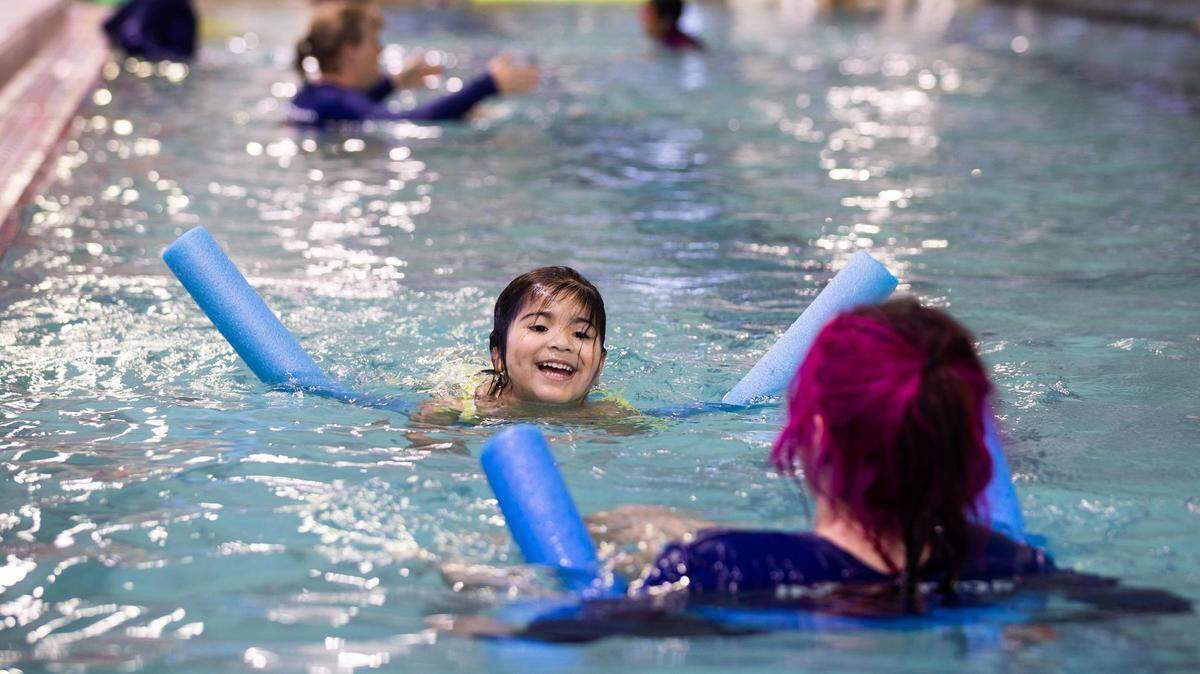
Lucille Williams remembers the reopening of Hillside Park Pool in 1994 as a celebration filled with plenty of food and hundreds of people excited to swim.
“It was a glorious day,” Williams said. “We were so proud to have something here in our nearby community that our young people could go to and give them something positive.”
Williams worked for two and a half years to get the signatures and funds necessary to make repairs to the pool, which is south of downtown on the east side of Interstate 35. The pool had been closed for 12 years. But the excitement was relatively short-lived. By 2010, the city had officially removed maintenance costs for Hillside Park Pool and five more of the city’s seven pools from the general fund budget. Those six pools were demolished in 2014.
“The city was not willing to put money into their old pools anymore,” Williams said. “It hurt me so bad because I knew how hard I had worked.”
The city Park and Recreation Department said the pools were past the point of restoration and that repairs would cost more than to replace the pools. Forest Park Pool, just south of the zoo and east of Park Hill, was the only one to survive the demolitions, after the Radley Foundation helped pay for its repairs.
Residents last year protested the planned replacement of the Forest Park Pool with a smaller pool, resulting in an additional $3 million being allocated for its restoration, with work to begin in October.
The city’s 2012 Aquatic Master Plan listed a timeline of five to 10 years to build five new pools. But only one has been built: Marine Park Pool, north of downtown, which replaced a larger pool. People in other areas of the city have been left with few options, many signing up for memberships at their local YMCA or driving 30 minutes to a water park.
Parents, experts and activists worry that Fort Worth’s lack of public pools influences Tarrant County’s drowning rate, which is among the highest in the state, because people have fewer public options to learn to swim. For the last five years, Tarrant County has been in the top three of all Texas counties in fatal pediatric drownings, according to the Texas Department of Family and Protective Services. On March 24, Cook Children’s Medical Center reported it has seen 12 drownings so far this year, an unusually high number.
CDC data suggests that Black children in the United States aged 10 to 14 die in swimming pools at 7.6 times higher rates than white children. And a 2017 USA Swimming Foundation study shows that 64% of Black children, 45% of Hispanic children and 40% of white children have no or low swimming ability. Experts say the racial disparities are linked to the cost of access to swimming areas and a generational fear of water. Strategies that have proven to reduce those numbers are access to low cost swimming lessons and accessible pools.
Most of Fort Worth’s predominantly Black and Hispanic neighborhoods don’t have nearby access to a public pool, which further limits their access to swimming lessons.
“The city of Fort Worth is probably not on par with other similar sized cities in providing aquatics facilities,” said Scott Penn, district superintendent with the Park and Recreation Department.
It’s been 12 years since Fort Worth has met the department’s benchmark of having seven pools. Pools in surrounding and comparable cities far outnumber Fort Worth:
Dallas - 16 public city pools for 1.3 million people
Austin - 32 public city pools for over 900,000 people
Arlington - 5 public city pools for almost 400,000
Fort Worth - 2 public city pools for over 900,000 people
Those statistics do no include splash pads, play pools or water parks without deeper water.
But Penn said aquatics are at the highest priority for the city parks department, citing the importance of pool access for drowning prevention, swimming instruction and summer recreation.
“We understand the need to reintroduce aquatics to the city. We understand that we had seven pools, and that now we have two,” Penn said.
Progress on pool construction didn’t meet projections in the Aquatic Master Plan because city leaders have prioritized other investments in the last two bond elections, Penn said. But he’s hopeful two pool constructions - Forest Park and Stop Six, southeast of downtown - will be covered in the May 7 bond election.
The ‘kiddie pool’
Gloria De La Paz, 79, grew up across the street from the Northside’s Marine Park pool.
“The park has always been in my life, and we would go there all the time swimming,” she said.
De La Paz jokingly calls the newer Marine Park pool, which opened in 2013, the kiddie pool. The old pool was demolished and replaced with a significantly smaller design. It’s the design the parks department hoped to use for all future pools, and the one that was intended for Forest Park’s remodel before residents protested.
De La Paz remembers the previous pool’s diving board and deep end. The new pool features less open pool space and more play areas with shallow water. She said she wished they would have replaced the pool with something comparable to what the community had before.
“I thought we had a wonderful thing going, I mean, it was always full,” De La Paz said. Now she doesn’t see as many people at the new pool.
Her younger brother drowned in the pool when she was young, but De La Paz said the pool was still an important part of her family’s life.
“Even though it had bad memories, at the same time, I really was not happy when they took it away,” De La Paz said.
She developed a fear of water after her brother drowned, but when she went to UTA for college, she signed up for a swimming course to overcome it. The Marine Park pool remained as a gathering place for her family. They routinely rented it out for birthday parties, and her daughter and grandkids all took swimming lessons there.
Segregated pools
Carol Irwin, public health professor at the University of Memphis was a researcher on one of the few studies on racial and ethnic disparities in swimming, the one previously mentioned that found a 24% difference in African American swimmers’ abilities to whites.
The same study also found that children of parents who don’t know how to swim well are 70% more likely to have the same or worse swimming ability.
“We found a legacy of fear, where the parents and grandparents and great-grandparents all did not know how to swim and all basically said, ‘Just stay away from the water,’” Irwin said.
Irwin and her colleagues also found racial disparities in swimming ability were affected by factors such as the financial constraints of accessing pools and a lack of pools in Black and Hispanic neighborhoods.
Michael Moore, president of the Historic Stop Six Neighborhood Association, said he and his family went to the Parkside Pool at the end of Fitzhugh Avenue in Stop Six most summer afternoons when he was growing up.
But Moore recognized that not everybody in his community felt that way about the pool. And now when there are even fewer pools around, many Black kids don’t have a pool within 10 miles of them.
“A lot of Black kids are terrified when it comes to the water because they haven’t had the exposure,” Moore said.
Fort Worth’s 10 community pools were segregated until the early 1970s. Lake Como, Bunche, Hillside Park and Lincoln Park were for Black swimmers only. Forest Park pool opened for Black residents each year only on Juneteenth. The next day, staff drained and refilled the pool.
With all of those pools closed for several decades, Fort Worth’s Black residents are still limited in access to public swimming options. Moore said many of his Stop Six neighbors don’t want to take the bus to the Forest Park Pool because of the long trek. And there aren’t many Black swimmers among Fort Worth’s high school teams because of a lack of high school pools, Moore said.
“It’s just not a real good mix for some of the people from predominantly Black communities,” Moore said.
Moore said he’s hopeful for change. The city parks department has planned to build a pool in the neighborhood as part of the Stop Six Choice Neighborhood Initiative that will likely be funded through this year’s bond election.
“That’s going to be exciting. It’s going to bring life into the community,” he said.
But he said the city is still behind with its pool construction, leaving many other communities without pools.
The city hoped to build four additional pools in its 2012 Aquatic Master Plan in the north, south, east and west parts of the city in 10 years. They use criteria such as develop-able park land and a dearth of pools in the area to decide where to build next.
The plan’s analysis listed three additional existing public pools apart from Fort Worth’s municipal pools within a 10 mile radius of the city center and another six within a 15 mile radius. Among the pools within 10 or 15 miles are the Fort Worth school district’s Wilkerson Greines Activity Center, which isn’t open for single swim admission, Ridglea Swimming Pool in Ridglea Hills, which is private but open for a yearly membership, two pools operated by the city of Hurst and North Richland Hills’ family water park. The list doesn’t account for HOA neighborhood pools or private residence, apartment complex or YMCA pools.
Drowning prevention
Esmeralda Aguirre, 44, decided to take her two daughters to the Ryan Family YMCA in far southwest Fort Worth for a series of swimming lessons on March 28. Before becoming members at the Y, Aguirre said, her daughters wouldn’t swim regularly, only at some of the North Texas area water parks. When she couldn’t find any public pool options near her home, the Y, which was within a 10-minute drive, seemed like the best option.
“They really like the water,” Aguirre said in Spanish. “The youngest one isn’t even afraid. Sometimes I’m the one who is more afraid for her than she is. She jumps and does somersaults.”
Aguirre never learned to swim, but she said she wanted her kids to have the opportunity to learn.
The YMCA of Metropolitan Fort Worth is one of the leaders in drowning prevention, in an attempt to reduce Tarrant County’s high drowning rate.
“Pool access is a challenge here in Tarrant County, which is one of the reasons why we see higher statistics,” said Teri McGuill, chief development officer at YMCA of Metropolitan Fort Worth.
The William M. McDonald YMCA pool, in southeast Fort Worth, partners with city aquatics to provide public access for people even if they aren’t members. YMCA staff also run several programs aimed at drowning prevention during the summer. They provide swimming lessons at several low income apartment complexes with pools to reach children and families who aren’t members at the YMCA or who have difficulty paying for or finding transportation for a swim lesson. They also provide drowning prevention lessons to several elementary schools and provide free swim lessons at the Y for each school’s first- and second-graders for a week.
Other organizations such as the Fort Worth Drowning Prevention Coalition also offer affordable drowning prevention training for children and parents.
Cook Children’s recommends that children never be around water unsupervised, that they wear a life vest, that parents install fencing around pools and that parents remove any toys from the water after swimming so children aren’t tempted to get back in.
Irwin, the University of Memphis professor, said she thinks every child should learn to swim.
“It’s a life skill. It’s like teaching your child to look both ways before you cross the street,” Irwin said.