
Last chance for a swim? Fort Worth’s Forest Park Pool to be demolished, replaced.
As word seeped out over the summer that Forest Park’s historic Olympic-length pool was slated for demolition, a wave of nostalgia engulfed swimmers who cherish memories of sunrise workouts, sunset swims, dive-in movies, poolside concerts, statewide swim meets, and a teen named Dana Vollmer, a future Olympian, who practiced four-and-a-half hours a day while lions roared at the zoo across the road.
Under the city’s 2022 bond proposal, the Forest Park Pool — the region’s only outdoor, 50-meter public pool — will be replaced with a 23-meter lap pool, a water slide, and a wading pool with a splash pad in the middle.
“We are growing. Why would you scale down the pools?” asked Dorothy DeBose, a west-side precinct chair and former president of the Lake Como Neighborhood Advisory Council.
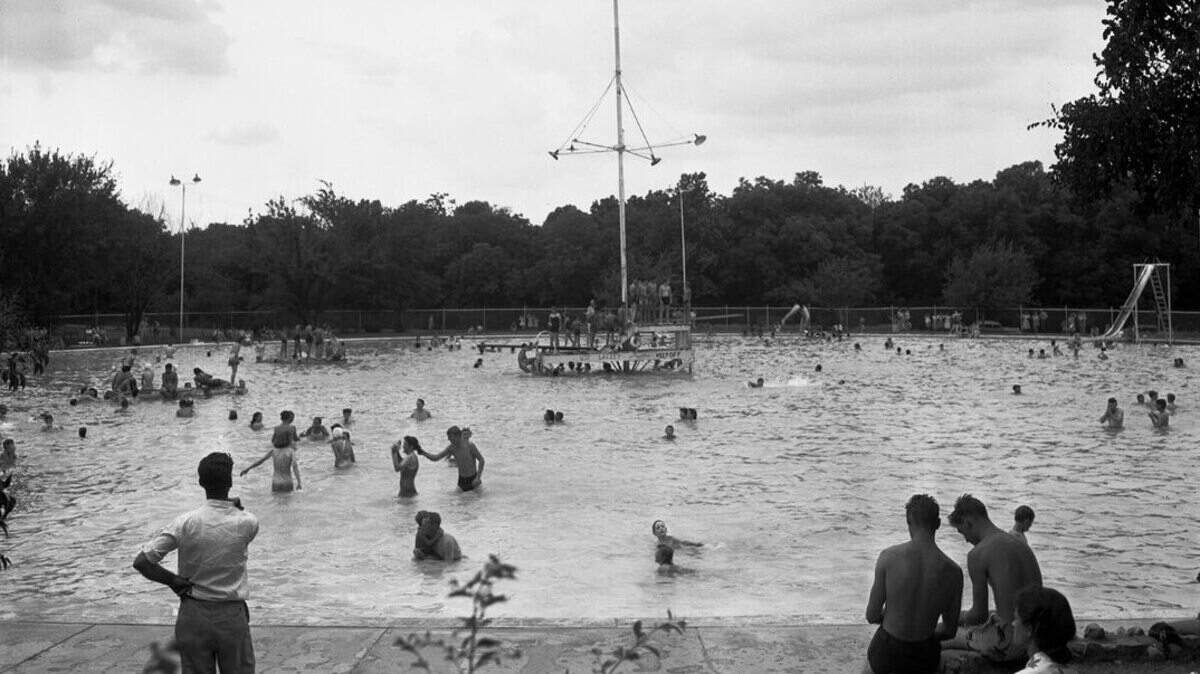
Nestled in a hollow below the 2800 block of Forest Park Boulevard, the 4.4-acre swimming complex was heralded as a recreational oasis when the city opened its first public pool June 17, 1922. Mayor E.R. Cockrell’s opening-day greeting ended with the word “Go,” the signal for 250 kids in bathing suits to splash into the circular pool and race toward the center island.
Described as a “giant saucer,” the pool was 250 feet in diameter with a beach entry that reached a depth of 8 feet at the center. A platform in the middle had diving boards, a water slide, a flagpole resembling a ship’s mast, and a fountain with colored lights that sprayed water 75 feet. Attendance in the 1920s exceeded 1,000 a day. Admission fees (15 to 20 cents per person) covered maintenance costs and helped pay off banknotes on the $60,000 complex.
Park Superintendent George C. Clarke dubbed the pool the “Fort Worth Plunge” and declared it “one of the most modern and sanitary in the South.” It held 1.9 million gallons yet had no filtration system. To kill algae and bacteria, the maintenance staff relied on sunlight and water circulation. A 3-inch stream flowed in one side of the pool and out the other. Every two weeks, a 12-inch drain was unplugged, and the empty pool scrubbed with copper sulphate “to control growth of larva and moss.” According to front-page stories in the Star-Telegram, it took eight hours to drain and 24 hours to refill the pool. A bonus was the harvest of lost wristwatches, earrings and class rings recovered from the bottom.
The transition in 1967 to a $120,000, OIympic-style pool with a chlorinated filtration system and the aura of a resort came a year before the summer Olympics in Mexico City. USA Swimming dominated at those games, leading to more demand for lap lanes at home. The city met the need with free competitive swimming and diving programs. Forest Park hosted the Texas Age Group Swimming championships, recalled Carol Jackson Standerfer, who spent summers at the pool and competed on the University of Texas swim team in the 1970s.
The redesigned pool with eight wide lanes and a diving well, opened in an era when the city had 10 municipal pools — compared with two this summer. Smaller pools were at Kellis Park, Marine Creek Park, Meadowbrook, Sycamore, Sylvania, Lake Como, Bunche, Hillside Park, and Lincoln Park. The latter four were for Blacks only.
Until the early 1970s, Fort Worth’s swimming pools were segregated — except on Juneteenth, when Forest Park opened to Black swimmers. The staff drained the pool the next day. As city schools gradually integrated in the early 1970s, so did the pools, and Forest Park attracted swimmers from across the county.
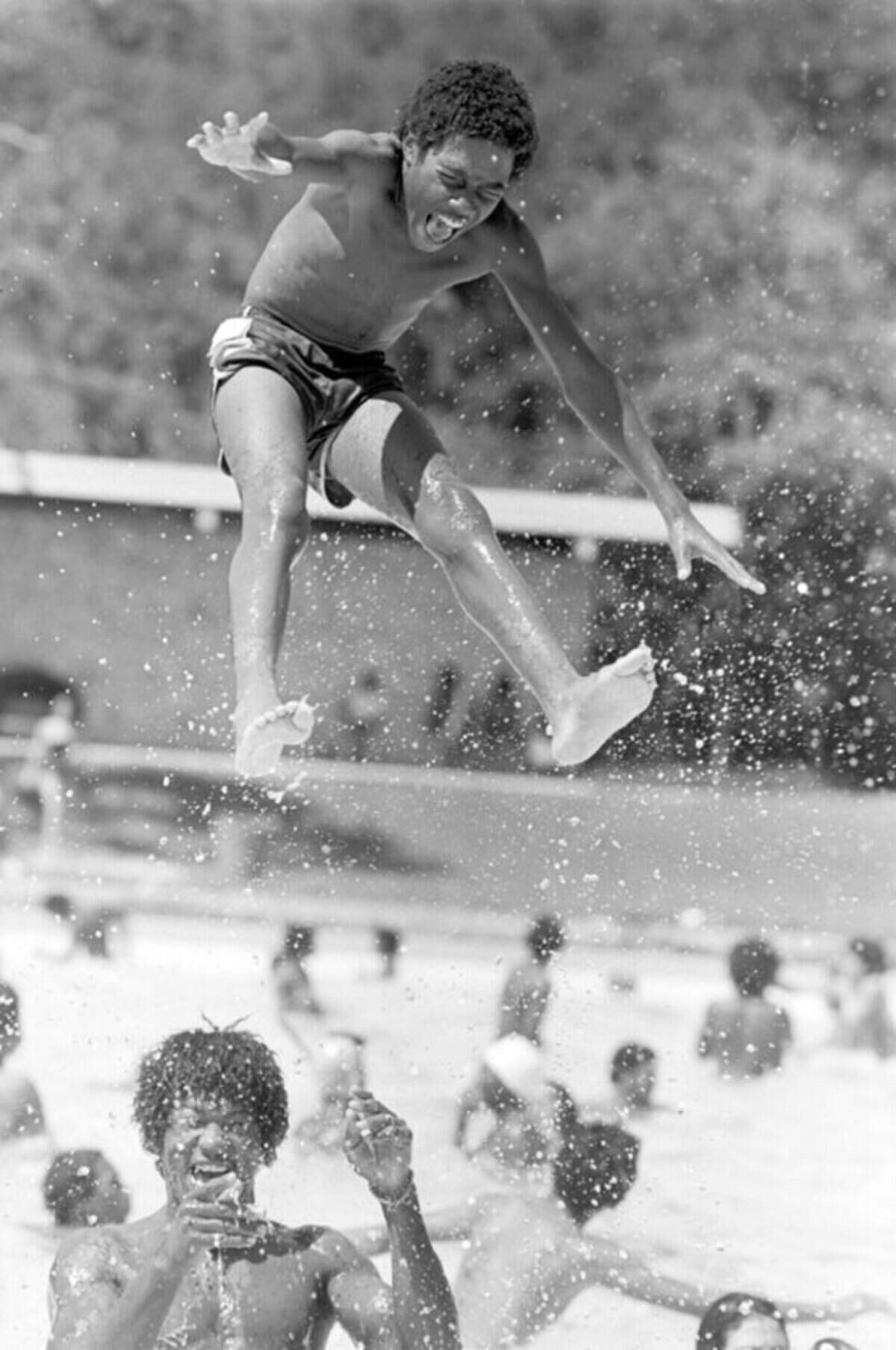
The heyday of swimming in Fort Worth lasted until the 1980s when budget woes led the city to shut most public pools. Neighborhood swimming pools were deemed too costly to operate, much less upgrade. The Lake Como Pool, constructed in 1957, closed in 1982. Twelve years later, it reopened due to a grassroots effort and fundraising from the neighborhood. Several other pools reopened, although on borrowed time. At the end of the 2009 swim season, the city permanently closed Como, Sylvania, Kellis, and Hillside.
“We fought even after the second closing to keep it open,” said Ella Burton, president of the Lake Como Neighborhood Advisory Council. “They just completely sealed it up. I wish everybody had the luxury of access to a pool. It’s not just for sun but for safety. Every child should learn to swim.”
During the summer of 2010, only the Forest Park Pool remained open. Then in mid-August, the pool’s PVC liner detached, forcing the pool’s abrupt closure two weeks before Labor Day. For swimmers, the next two years brought a veritable drought.
The election of Mayor Betsy Price in 2011 gave swimmers an advocate at City Hall. The mayor, who had learned to swim at Forest Park, had the drive and the moxie to pull together a $661,000 public-private partnership that reopened the pool in 2013. “It’s ... not a money loser,” the mayor said, “because it keeps kids off the streets.” Since that Band-Aid fix, the TCU swim team, among others, has rented the pool for morning workouts. The Fort Worth Drowning Prevention Coalition has taught water safety to 2,000 people who lack access to pools.
Nonetheless, in the words of the bond proposal, the pool’s pipes and machinery are “obsolete.” Demolition was initially slated for July 2022, the centennial of the swimming complex. The bond election, likely scheduled for a May 2022 vote, would allocate $7.5 million to replace the Olympic-size pool with a scaled-down facility, too small and shallow for water-safety training and competitive swimming.
Labor Day 2021 may be the last chance for a dip into Fort Worth’s swimming history.
Hollace Ava Weiner is an author, archivist, and historian.