Taking a COVID-19 test in Tarrant County? Here’s how to understand your results
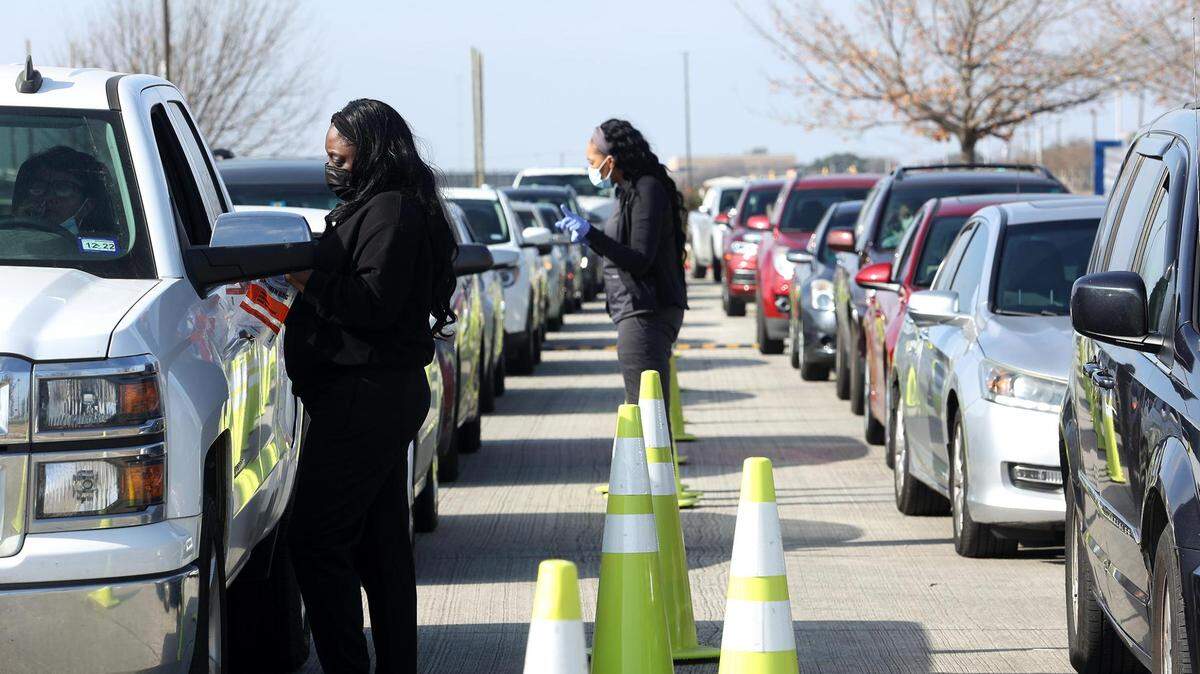
As the new variant of the coronavirus, known as omicron, spreads throughout Fort Worth, more people will become exposed and infected. As has been the case throughout the pandemic, slowing the spread of new cases is essential to protecting the most vulnerable and to prevent overcrowding of hospitals.
To slow the surge in new infections, people who have been exposed to a COVID or who have symptoms need to get tested and isolate if they test positive. But to get an accurate test result, you need to know what the different tests mean, and when best to take them. The Star-Telegram consulted testing experts for the latest information on how to use tests during the omicron surge.
What tests will tell me if I’ve been infected with COIVD?
There are two tests that can diagnose you with an infection of the coronavirus.
A molecular test looks for the genetic material of the virus. The most common type of molecular test for COVD-19 are PCR tests. It will usually take at least 24 hours to get a result from a PCR test.
An antigen test, sometimes called a rapid test, looks for proteins on the virus. Rapid tests can usually provide results within 30 minutes.
In general, a PCR test can find a smaller signal that the virus is in your body, said Gigi Gronvall, a senior scholar at the Johns Hopkins Center for Health Security and an expert on COVID testing. That means that PCR tests could give you a positive result before, during, and after you are infectious. PCR tests are more sensitive than rapid tests, because they can detect much smaller amounts of the virus than a rapid test could. A rapid antigen test, however, is better at telling you if you’re infectious and shedding the virus at the exact moment you take it.
“As long as you’re positive with a rapid antigen test, you are probably infectious,” Gronvall said. “Rapid antigen tests have an advantage there in that you are able to test at the moment when you are wondering, ‘Am I at risk of being contagious or not?’”
When should I take a COVID test?
Both types of tests can miss infections if you take them too soon.
After you get infected with the coronavirus, the virus will try to make copies of itself inside your body, Gronvall said. But it will take time — for most people, several days — before there are enough copies of the virus that a test can detect it.
“After you get infected, the virus might be trying to gain a foothold and making lots of copies of itself,” Gronvall said. “But it still may be below the limits of detection of the test. So it might be that there will be a period of time where you’re infected, but you’re not going to be able to tell with any measure that we have.”
For the delta variant of the virus, the U.S. Centers for Disease Control and Prevention recommended waiting at least five days after being exposed to the virus before getting a test. For the omicron variant, scientists believe that the incubation period could be a little shorter, possibly as little as three days from when you are infected with the virus to the point at which a test could detect its presence.
If you have access to rapid antigen tests, Gronvall recommends taking a test three days after exposure and then again five days after exposure, just to make sure you don’t miss an infection.
Are COVID tests ever wrong?
Sometimes. Like with any test that is used to diagnose health conditions, there is always a chance of false positives or false negatives. There have been some reports in the U.S. of patients getting false negative tests — meaning a test gave an inaccurate diagnosis and said a patient did not have COVID-19, when they did. False positive reports are much less common.
But the tests can also give incorrect results when samples are taken incorrectly. Dr. Amy Karger, a clinical pathologist with the College of American Pathologists based in Minneapolis, said in a media briefing that patients should follow instructions carefully when using an at-home rapid test to avoid a false result.
“It’s really important to read those directions very carefully and I advise people to actually pre-read them, so read them before you start the testing process, and read them multiple times just to make sure you understand each step, that there’s no confusion, that you know what’s going to come next,” Karger said.
In particular, Karger recommended using a timer for the portions of a test that require a specific amount of time to elapse, like how long you need to swirl the swab in your nasal cavity or how long you need to wait before looking at the test result.
Have other questions about COVID tests, vaccines, or the virus itself? Email cmccarthy@star-telegram.com.
This story was originally published January 3, 2022 at 2:05 PM.