Allergies, cold or COVID? Symptoms and other ways to tell the difference
Is your fever, runny nose and congestion just allergies in March, or a cold? Or could it be COVID-19?
“The unfortunate thing about COVID is a lot of the symptomatology that we’ve seen with this particular infection tends to overlap with very common issues – cold, influenza, seasonal allergies,” said Shane Fernando, clinical epidemiologist at the UNT Health Science Center. “And I am sure that a lot of people are confused and worried whenever they start to exhibit symptoms that sound or feel like they could be COVID-related. The good thing is, there are some things that are hallmarks toward COVID compared to the cold or allergies or influenza.”
Want to know if your symptoms align with allergies, coronavirus or the flu? Here are some tips to help you tell the difference.
Cedar Fever in Texas
Throughout the state, pollen released by mountain cedar trees triggers allergies during the winter, according to the Texas A&M Forest Service. They begin pollinating in mid-December, reach peak production in mid-January and taper off toward the beginning of March.
“Cedar fever is the worst west of I-35, where you have primarily juniper mixed in with oaks and some other species,” said Jonathan Motsinger, Texas A&M Forest Service Central Texas Operations head. “And because all of those junipers are producing pollen at the same time, you’re going to get a higher concentration of pollen in the air.”
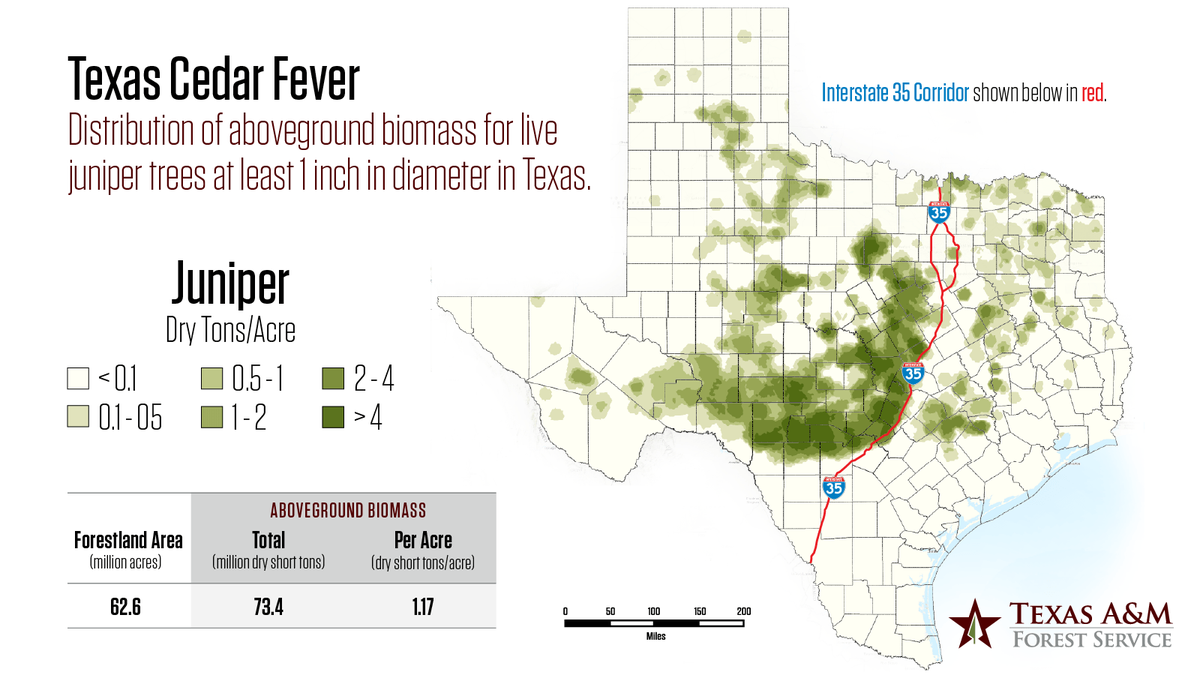
In Central Texas, the Ashe juniper variety is often to blame for cedar fever because it’s most common. Its pollen spreads easily with wind, so it can affect you even if you don’t live in an area with a high concentration of juniper trees. Pollen from junipers isn’t particularly allergenic or harmful, it’s just so concentrated that it could still affect you even if you aren’t susceptible to allergies, says Karl Flocke, Texas A&M Forest Service woodland ecologist.
“There are millions of junipers out there, all releasing pollen at the same time,” Flocke said. “You can’t help but breathe it in. And when you do, your body reacts as it would to any perceived threat – it tries to fight it.”
In East Texas, eastern red cedars pollinate around the same time and can also trigger allergies.
How can you tell that there’s more pollen in the air?
Pressure changes, dryness and wind before and after a cold front make pollen cones open and release pollen grains, Flocke said. When you see the pollen billowing off a tree that has just popped, it’ll look like smoke coming from a fire.
Because the pollination period of mountain cedar trees is in the middle of cold and flu season, as well as a COVID-19 surge, you might mistake your cedar fever symptoms for another illness.
.png "Cedar Fever VS COVID(1).png")
So, how do you know that it’s cedar fever, and not coronavirus?
Here are the symptoms of cedar fever that are typically not linked to coronavirus:
Itchy, watery eyes
Itchy nose, throat or ears
Blocked nose
Sneezing.
On the other hand, how can you rule out cedar fever?
If you have any of these symptoms, it’s likely not seasonal allergies:
- A fever, especially if it’s higher than 101.5°F
- Muscle aches and pains
- Vomiting
- Diarrhea
- Extreme exhaustion
- Loss of taste
- Sore throat
Shortness of breath, unless you have asthma or another respiratory condition.
The clearest difference, Flocke says, is that mucus from allergies is clear and runny, while other infections lead to thicker colored mucus.
To prevent cedar fever, keep track of pollen counts in your area. On a high pollen day, try to:
- Keep windows and doors closed
- Limit your time outside
- Change air conditioning filters in your car and home.
To treat cedar fever, you can take allergy medications and antihistamines, but consult with your physician before taking new medications.
Cold and flu
COVID-19 and the flu are both contagious and share a long list of symptoms, so it can be hard to tell the difference.
One indication that it’s COVID-19 is loss of taste or smell, according to the Centers for Disease Control and Prevention. You’re much less likely to experience that symptom with the flu.
Another way to tell is when you first start exhibiting the symptoms after being around a group; it can take longer for COVID-19 symptoms to show. COVID-19 symptoms generally appear two to 14 days after exposure, while flu symptoms usually appear about one to four days after exposure.
If you have less severe symptoms, you might be wondering if you have the common cold or COVID-19. While they have some symptoms in common, vomiting or diarrhea could indicate that you have COVID-19 or flu and not a cold. Then, you can rule out the flu if you have a loss of taste or smell.
To test whether you’ve lost your taste, Fernando recommends having some food that’s pungent or spicy.
Sneezing is a telltale sign that you have a cold, flu or allergy, because that symptom is rare with COVID-19, Fernando says.
Because COVID-19 spreads more easily and can be more serious, the safest way to tell is to get tested within a day of experiencing symptoms, according to Fernando. That’s especially important because of the omicron variant, which Fernando says can feel like a mild to moderate cold or flu.
This story was originally published December 31, 2021 at 6:00 AM.