
Shooter sentenced to 100 years in Prairieland ICE terrorism case; others get max
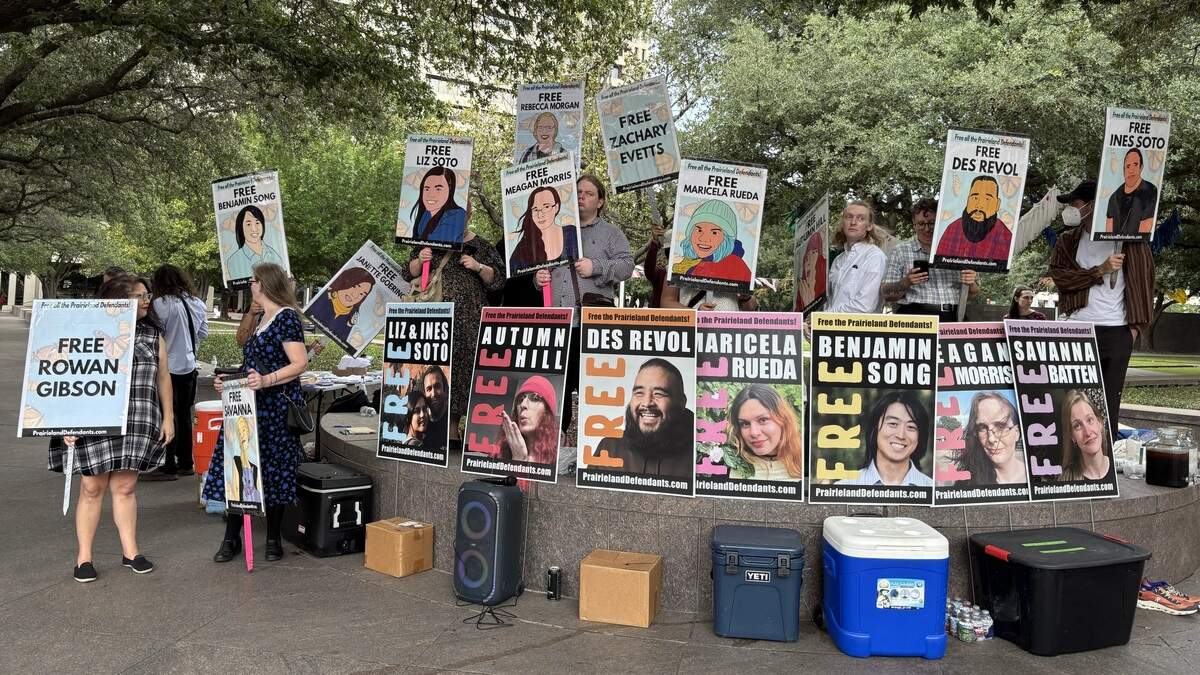
Eight defendants from North Texas received the maximum possible sentences Tuesday for their roles in a domestic terrorism case in which they were found guilty of charges including rioting and attempted murder of a police officer at the Prairieland ICE Detention Center in Alvarado.
The defendants, whom federal prosecutors described as antifa operatives, were convicted after a 12-day trial in March and were sentenced in hearings with two judges in U.S. District Court in Fort Worth on Tuesday morning.
Benjamin Hanil Song, the defendant who was convicted of attempted murder for shooting and wounding an Alvarado police lieutenant during the July 4, 2025, incident, received a 100-year federal prison sentence.
Maricela Rueda was sentenced to 70 years, and Elizabeth Soto and Meagan Morris were each sentenced to 50 years.
Those four defendants were sentenced by Judge Mark Pittman, who oversaw the trial, and four others — Autumn Hill, also known as Cameron Arnold; Zachary Evetts; Savanna Batten; and Daniel Rolando Sanchez-Estrada — were sentenced by Chief District Judge Reed O’Connor.
Batten, Evetts and Hill received 50-year sentences, and Sanchez-Estrada was given 30 years.
Another defendant, Ines Soto, is scheduled to be sentenced at a later date.
Defense attorneys argued during the trial that the defendants planned a peaceful protest and noise demonstration with fireworks to show support for people detained by Immigration and Customs Enforcement.
Prosecutors have described the case as the first domestic terrorism trial to lead to convictions of alleged antifa cell members. The defendants denied having connections to antifa.
Prosecutors called Song the group’s ringleader. He fled after the shooting and was captured over a week later.
At Tuesday’s sentencing hearing, Song thanked his family and friends for their support and said he doesn’t hate anyone, including police officers or President Donald Trump. He said his main belief is that people should help each other.
“I tried my best not to hurt anyone,” Song said. “This is the kind of thing I feared for a long time, but fear is not hate.”
Song said he fired his rifle after he thought he saw the police officer, Lt. Thomas Gross, aiming a gun at the back of a fellow protester who was running away. Song described that scenario as his worst nightmare and said he’s grateful the group isn’t mourning a death like that of Renee Good or Alex Pretti, who were shot after confrontations with ICE agents earlier this year in Minneapolis, Minnesota.
Song said the case was stacked against him, evidence was covered up, and he wasn’t allowed to argue self-defense. “The government is blinded by hate,” he said.
Judge Pittman told Song that the hearing wasn’t the time to make a political speech and asked whether he had anything else to say about himself other than that he’s afraid of the government.
Morris was the only other defendant who spoke during the hearing with Pittman. Through sobs, she said, “All I’ve ever wanted to do is help people. I didn’t want what happened that night to happen.”
This story was originally published June 23, 2026 at 11:30 AM.