Jury in Prairieland ICE shooting finds 8 guilty of rioting, supporting terrorists
In a victory for federal prosecutors pursuing a novel domestic terrorism case packed with political entanglements, a jury in U.S. District Court in Fort Worth on Friday found the investigation’s primary target guilty of attempted murder of a police officer and eight defendants guilty on charges of rioting, providing material support to terrorists and using explosives.
The jury of seven men and five women at the joint trial of nine defendants was persuaded by prosecutors’ argument that the defendants were members of an antifa cell connected to an ideology that calls for the overthrow of the government and were furious at its immigration enforcement efforts.
The 12-count indictment in the case focused on the U.S. Attorney’s Office theory of the underpinning of a July 4 shooting of an Alvarado police lieutenant outside the Prairieland Detention Center, a facility in Johnson County operated by a private company with a contract with ICE at which immigrants awaiting deportation are held.
The indictment contained charges of riot, using weapons and explosives, providing material support to terrorists, obstruction, and attempted murder of the police lieutenant and two correctional officers.
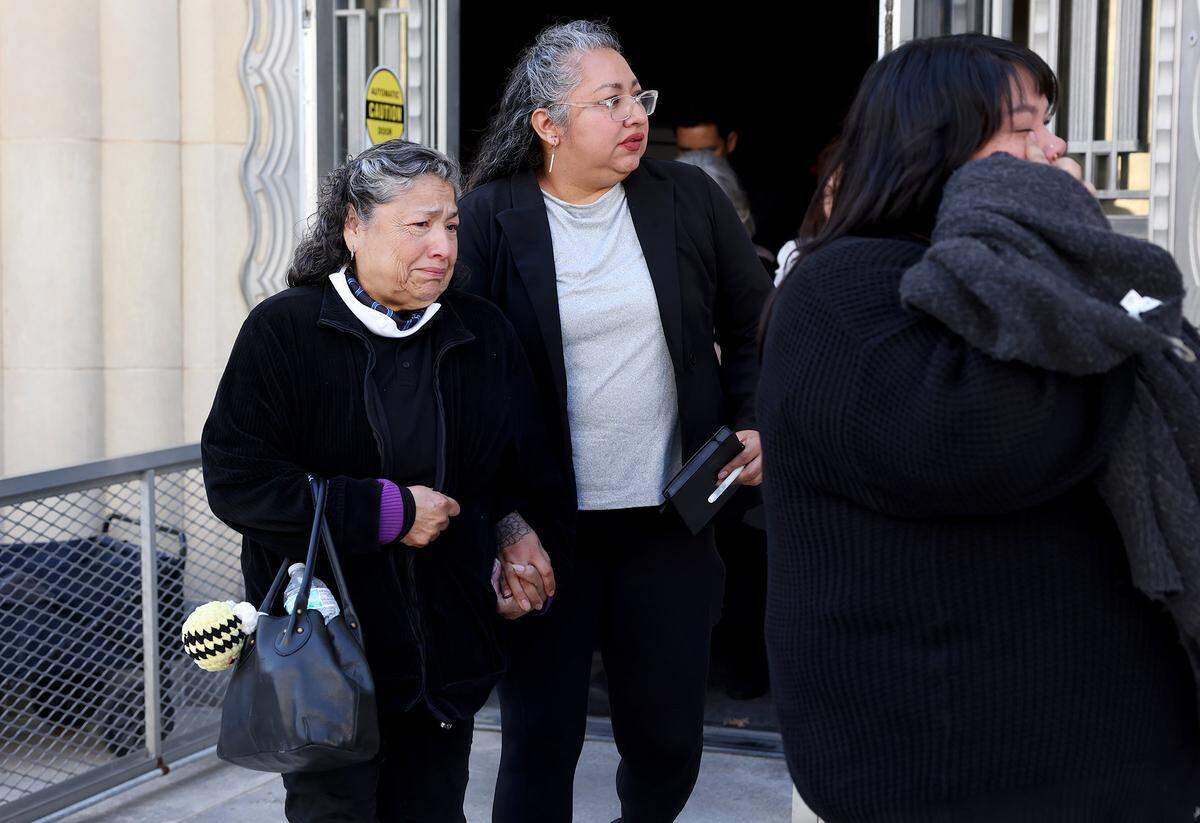
Benjamin Song, the shooter accused of wounding the Alvarado lieutenant, was the only defendant who was found guilty of attempted murder and discharging a firearm during, in relation to and in furtherance of a crime of violence. Four other defendants were found not guilty on those counts.
The defendants are Song, Meagan Morris, Elizabeth Soto and Ines Soto, Autumn Hill, Savanna Batten, Maricela Rueda, Zachary Evetts and Daniel Rolando Sanchez Estrada.
The jury found Song, Morris, the Sotos, Hill, Batten, Rueda and Evetts guilty of rioting, providing material support to terrorists, conspiracy to use and carry an explosive, and using and carrying explosives during a riot.
Evetts, Hill, Morris and Rueda were found not guilty on three counts of attempted murder and three counts of discharging a firearm.
Sanchez Estrada was the only defendant not present at the detention center in Alvarado on the night of the July 4, 2025, shooting. Sanchez Estrada was found guilty of corruptly concealing a document or record, and he and his wife, Rueda, were found guilty of conspiracy to conceal documents. Prosecutors allege that while she was in jail, Rueda asked her husband to hide a box of “insurrectionary, anarchist, hating-the-government material,” Assistant U.S. Attorney Shawn Smith told the jury.
U.S. District Judge Mark Pittman, who presided at the trial, will sentence the defendants at hearings on June 18. The U.S. Attorney’s Office in Dallas-Fort Worth said in a statement Friday that Song faces between 20 years and life in prison. Batten, Evetts, Hill, Morris, Rueda, Elizabeth Soto and Ines Soto face prison sentences ranging from 10 years to 60 years. Sanchez Estrada faces up to 40 years.
As he denied a defense motion for a directed verdict of not guilty at the close of evidence presentation in the trial, Judge Pittman mused on whether it had been essential for prosecutors to offer evidence on antifa.
What element of what offense in the indictment is proved by arguing the possible membership of the defendants in antifa groups, the judge explored in a question, after the jury had left for the day, that he asked of Smith, the case’s lead prosecutor.
Whether it was antifa or the “Methodist Women’s Auxiliary of Weatherford,” what was the value of presenting to the jury evidence of group ties to the defendants, Pittman wondered.
Smith said the antifa-directed black clothing the defendants wore at Prairieland to provide anonymity was a central component of the charge of providing material support to terrorists. In the view of government prosecutors, the shooting and its connection to antifa are inextricable.
After hearing testimony and argument over 11 days, the jury began to deliberate at 9 a.m. Thursday and resumed Friday morning. It reached its verdict in midafternoon.
Song, a 32-year-old former Marine Corps reservist, shot Lt. Thomas Gross in his upper shoulder with a rifle. The projectile avoided vital organs and exited through the back of his neck, Gross testified. Gross was shot as he arrived after being dispatched on a call reporting an attempted breach at the detention center. Song fired after Gross drew and pointed his pistol at a person dressed in black tactical gear running away.
The government called to the witness stand Texas Department of Public Safety forensic scientists who testified that they had concluded that Song’s right thumbprint was on cartridge cases in the rifle’s magazine and his DNA was a contributor to the profile found on a neck gaiter at the scene.
Prosecutors showed the jury Signal app messages, including a message Song wrote before the shooting to Evetts referring to a “confrontation” Song expected at Prairieland. Prosecutors also displayed a surveillance photo of Evetts at a Waxahachie bank ATM at which he withdrew $160 to purchase fireworks. Some of the defendants in the case ignited fireworks in the direction of the detention center in the minutes before the shooting, which was the basis for the explosives charges.
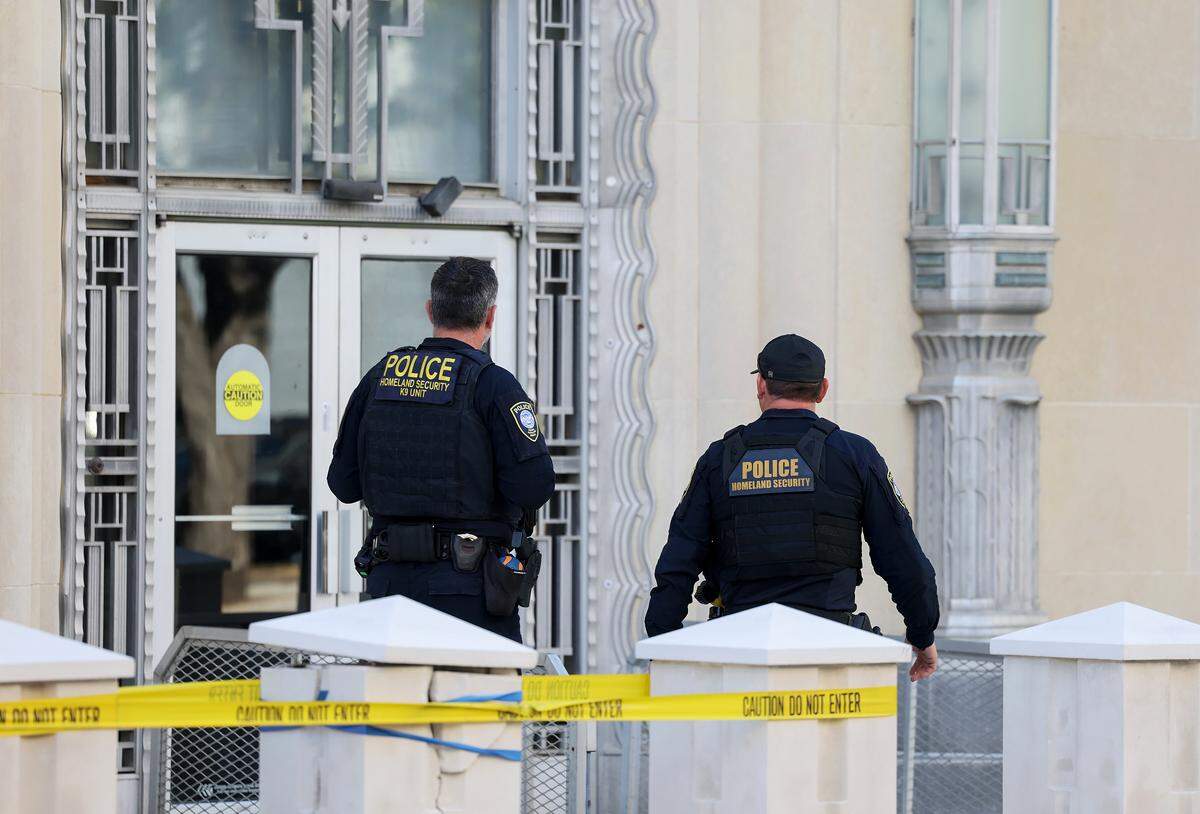
Seven additional defendants in the case pleaded guilty last year to one count of providing material support to terrorists, and five of them testified at the trial, including two who said they helped Song escape after the shooting. Song was arrested about a week later.
The defendants who pleaded guilty — Seth Sikes, Nathan Baumann, Joy Gibson, Susan Kent, Rebecca Morgan, Lynette Sharp and John Thomas — face prison sentences of up to 15 years, according to the U.S. Attorney’s Office. They hope their testimony may yield a recommendation from prosecutors that they receive a sentence that acknowledges their cooperation.
Just after the shooting, Song slunk through the thick grass of rural Johnson County, crawling on damp ground through the night, Sharp testified.
Song was dehydrated and hallucinating, she said. He prayed to the tall sunflowers that he hoped would obscure his body.
Sharp testified that she was involved in the effort to pick up Song in a car and that Song confessed to her the next day that he shot Gross.
FBI special agents searched the Sotos’ home in the days after the shooting.
Two months later, the agents, assigned to the bureau’s counterterror squad, returned to the couple’s house in Fort Worth for a second time to pursue items they missed during the first search.
The agents were looking for evidence of mass production of propaganda, FBI Special Agent Morris Boatner testified at the trial.
In the garage, the agents found a commercial copy machine, paper cutting equipment and a book binder. The FBI seized the printer and other equipment.
The government alleged the Sotos were part of a group of people who created and distributed insurrectionary materials called zines.
Prosecutors did not present direct evidence that the material was duplicated by the Sotos’ printer, but in questioning of Special Agent Boatner, Assistant U.S. Attorney Smith said of the Sotos that it “stands to reason ... they were the printers.”
Defense attorneys probed the relevance of the printing equipment.
In a statement to the press after the verdict, Dallas-Fort Worth U.S. Attorney Ryan Raybould wrote, “These guilty verdicts and convictions rightly reflect the vicious, armed attack that these Antifa cell members planned and executed against law enforcement and detention center officers on the night of July 4 last year. Their terrorist acts, attempted murder, vandalism, and explosives launched at a detention facility were a far cry from some peaceful protest or First Amendment expression.”
Attorney General Pamela Bondi said, “Today’s verdict on terrorism charges will not be the last as the Trump administration systematically dismantles Antifa and finally halts their violence on America’s streets.”
Attorneys debated terrorism vs. peaceful protest
Defense attorneys sparred with prosecutors during emotional closing arguments over the defendants’ alleged roles in the shooting.
Smith spoke to the jury for nearly 50 minutes, asserting that the defendants showed up at the center with the intention to kill and to cause havoc. Smith said eight of the nine defendants were at the facility in Alvarado with fireworks and rifles, dressed in all black to organize an ambush and to destroy government property.
Attorneys for the defendants argued that it was supposed to have been a peaceful noise demonstration.
Smith told the jury that the defendants orchestrated an “attack” in an attempt to liberate the detained immigrants. Smith said they shot fireworks at the building, slashed tires of government vehicles, trespassed on private property and brought first-aid kits and body armor — all examples of criminal conduct or intent beyond peaceful protest, he argued.
The prosecution displayed dozens of exhibits, including rifles and what an FBI special agent testified was antifa flags that were found during searches of some of the defendants’ vehicles and homes. Antifa is short for anti-fascist.
Last year President Donald Trump issued an executive order designating antifa as a domestic terrorist organization. The government has described the Prairieland case as the first against an alleged antifa cell.
Defense attorneys argued that antifa is an ideology and not a formal organization to which the defendants belong.
The defendants elected not to testify and the defense did not call witnesses, instead focusing on making their case through cross-examination of government witnesses and closing arguments.
“They’re here asking you guys to put protesters in prison as terrorists,” Blake Burns, a defense attorney for Elizabeth Soto, said to the jury.
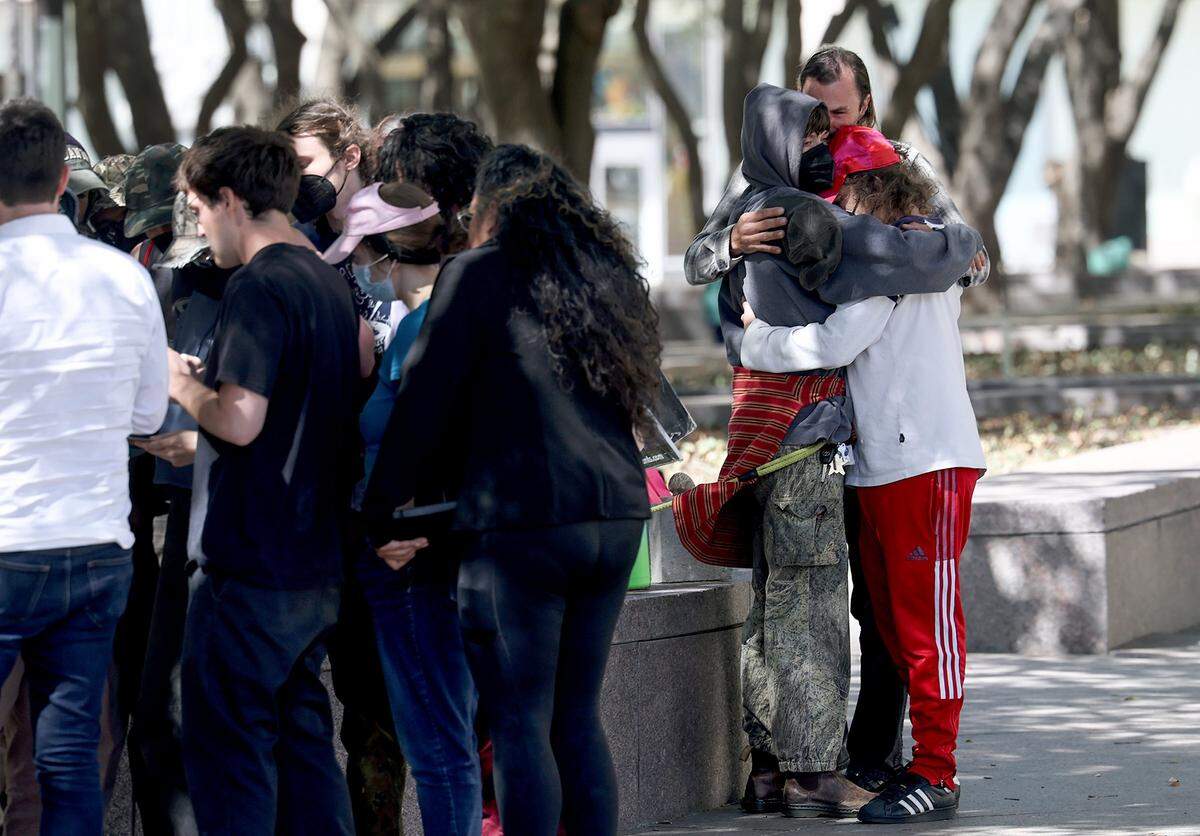
Warren St. John, a defense attorney for Meagan Morris, shared a similar sentiment with the jury. He asked his client to stand for the jurors to see her emotion. The defense has said that Morris never got out of her van parked near the detention center.
“People who are guilty don’t cry,” St. John said. “She cries because she’s scared of getting punished for something she didn’t do. I know my client will be found not guilty.”
Smith played a video in which the prosecutor said Song is twice heard shouting, “Get to the rifles!” when Gross gets out of his vehicle. Phillip Hayes, an attorney for Song, said there was evidence that showed the projectile that struck Gross could have been a ricochet and Song did not have a gun in his hands until one was pointed at him.
“Ben was scared of the police officers but did not have any intent to hurt or shoot anyone that night,” Hayes said. “Intent to murder is a clear attempt to end a life. This is not what this was.”
Attorneys for each of the defendants implored the jury to find that the night of July 4 began as a way to peacefully support the people detained at the detention center.
Another key matter for the defense was a social media account the government said went from an Antifa DFW account to a book club page, claiming it was changed as a disguise. But Burns, the attorney for Elizabeth Soto, said that determination only came about because of a post-it note with log-in information found in Soto’s apartment.
“Elizabeth Soto has a book club that everybody hates,” Burns told the jury. “They want to associate this Antifa DFW Twitter account to the book club account because of a post-it note. The book club account was started in 2016. The last post on the DFW account was posted in 2023. So what else does the prosecution have wrong?”
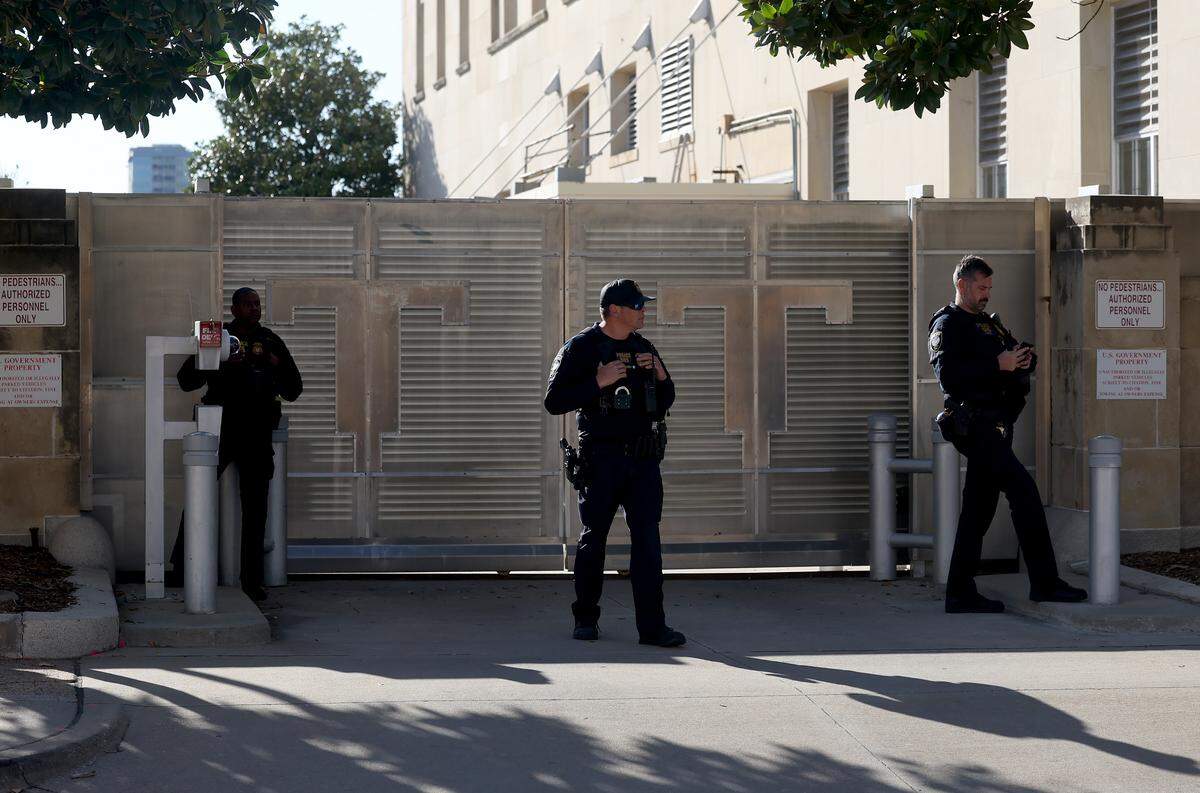
The government described the defendants’ participation in a “July 4 planning” group chat on Signal, a messaging app where text exchanges are encrypted. Smith said the government was lucky to even get access to the messages given the app’s security measures.
Smith also said the defendants arrived at the facility on July 4 wearing all black clothing and practiced antifa techniques to avoid detection when leaving the scene. Defense attorneys pushed back on that notion, saying most of the protesters left when they were told it was private property.
Police stopped a group of defendants as it left the facility, and to the jury Smith described the group as “cool as a cucumber” for people who just witnessed the shooting of a police officer. Defense attorneys said the group left before the shooting and had no idea that anyone was hurt.
“Well, most people are cool as a cucumber when they haven’t done anything wrong,” said Leigh Davis, the defense attorney for Ines Soto, who is among the defendants who were stopped by police officers after leaving the facility.
Staff writers Lillie Davidson and Samuel O’Neal contributed to this report.
This story was originally published March 13, 2026 at 3:14 PM.