
‘Eyes in the sky’: Fort Worth police use drones to get first look at emergency scenes
Fort Worth police are partnering with Flock Safety on a drone first-responder program intended to provide safer outcomes for officers, victims, suspects and the public.
The program aims to give officers and first responders information faster, “so they can make better decisions when seconds matter,” Police Chief Eddie Garcia said during a news conference on Thursday.
Garcia said the drones provide real-time aerial information during emergency calls and critical incidents. “This program gives us eyes in the sky during rapidly evolving situations,” he said.
The department currently has two active drones deployed and a team of eight officers and two sergeants running the program.
In some situations, Garcia said, the drones have arrived before officers were even dispatched, creating a “negative response time” that gives officers additional time to “assess situations before any other officer physically arrives on scene.”
The drones can assist in a variety of situations, including missing persons, barricaded subjects, searching for fleeing suspects, large disturbances, major vehicle crashes, hazardous scenes, disaster response, major public events, and areas unsafe for officers to immediately enter, Garcia said.
The deployments follow “FAA regulations, department policy, legal standards, accountability measures, and privacy protections,” Garcia said. “Drones are the most cost-effective public safety tool compared to traditional aircraft operations,” he added.
The current program, which began on May 8, is a one-year, no-cost trial partnership with Flock Safety, Garcia said. The department’s long-term vision is coverage across all six patrol divisions throughout the city of Fort Worth, he said.
“The Fort Worth Police Department is committed to using technology responsibly, transparently, and most importantly, in ways that improve public safety,” Garcia said.
Flock addresses privacy concerns
The program is designed to give first responders real-time situational awareness, when seconds count, Flock Safety spokesperson Paris Lewbel said.
Lewbel said trust is an important aspect in any conversation around public safety technology, which must include privacy, accountability, and responsible use; “those principles are core to how these programs are built and operated by Flock,” he said.
“The drone’s camera points at the horizon when it’s flying to an incident and only points down when it arrives on the scene,” Lewbel said.
Each flight is logged and information is available in a public transparency portal, “so the community can better understand how the technology is actually being used,” Lewbel said.
“The Fort Worth Police Department is demonstrating what responsible innovation can look like, adopting modern tools in a way that are focused on emergency response, officer safety, transparency and community safety,” Lewbel said.
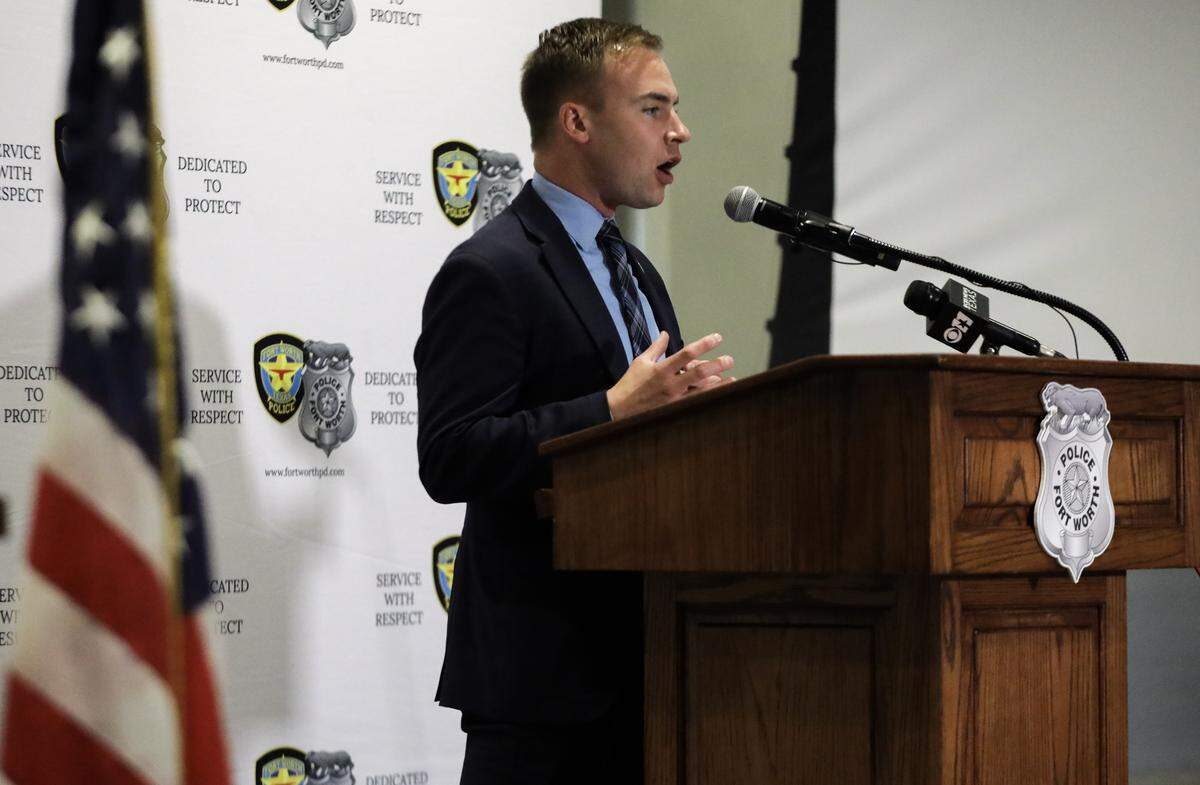
Addressing privacy concerns, Lewbel stated that all data captured by the company’s technology —including license plate readers and drones — is owned entirely by the Fort Worth Police Department.
Flock Safety provides a full-service platform to first responders, including the drone dock, the aircraft and the software required for department operations. Lewbel said that the company would have access to the footage only in “support circumstances.”
Garcia said that such technology saves residents’ and officers’ lives and brings justice to victims quicker — “We would be back to 1992 without this type of technology.”
All things drone
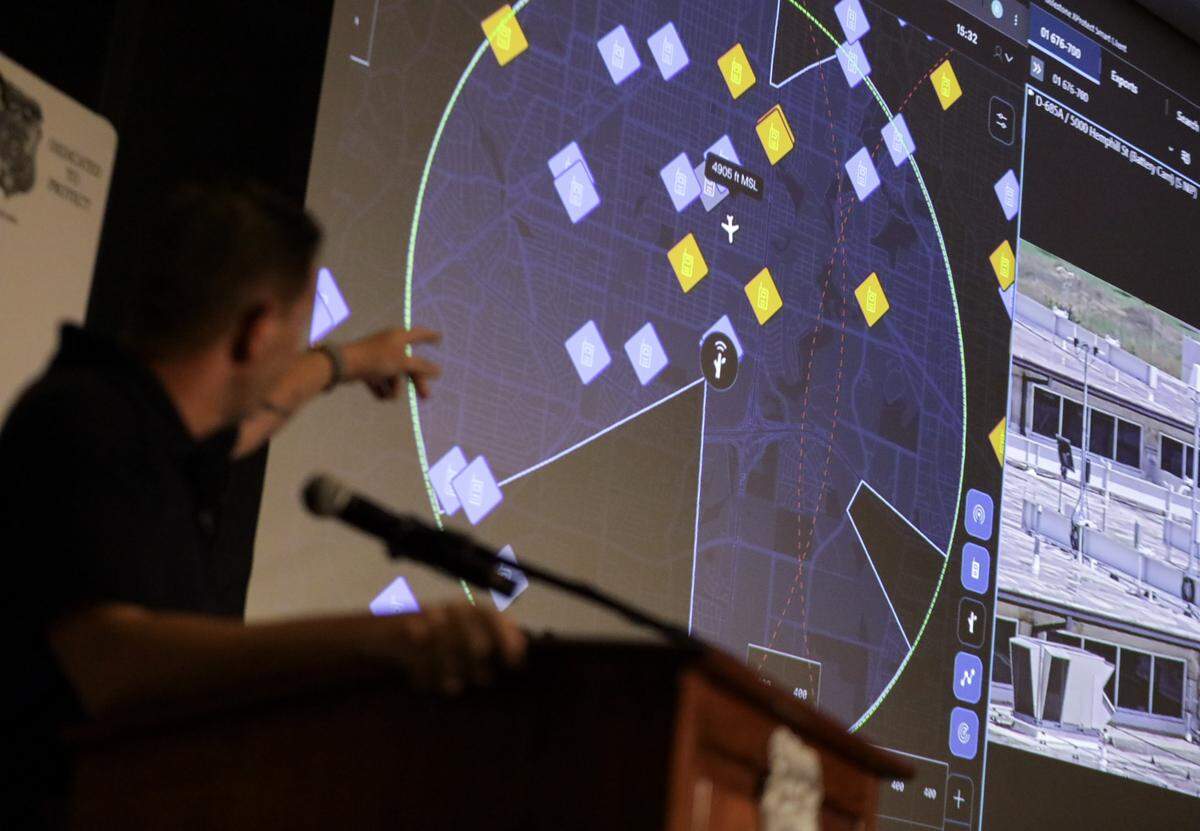
During a live demonstration of the drone deployment on Thursday, Real Time Crime Center Sgt. Erik Lavigne explained the features of the drone including designated no-fly zones that are programmed in the system and if a drone’s battery is low, it automatically returns to its dock.
The devices come with a live camera feed that allow officers to monitor the area for obstructions, debris or other safety concerns before launch, during flight and while the drone is landing. Lavigne said the radar can track nearby aircraft in real time and displays incoming calls for service on a color-coded map based on priority.
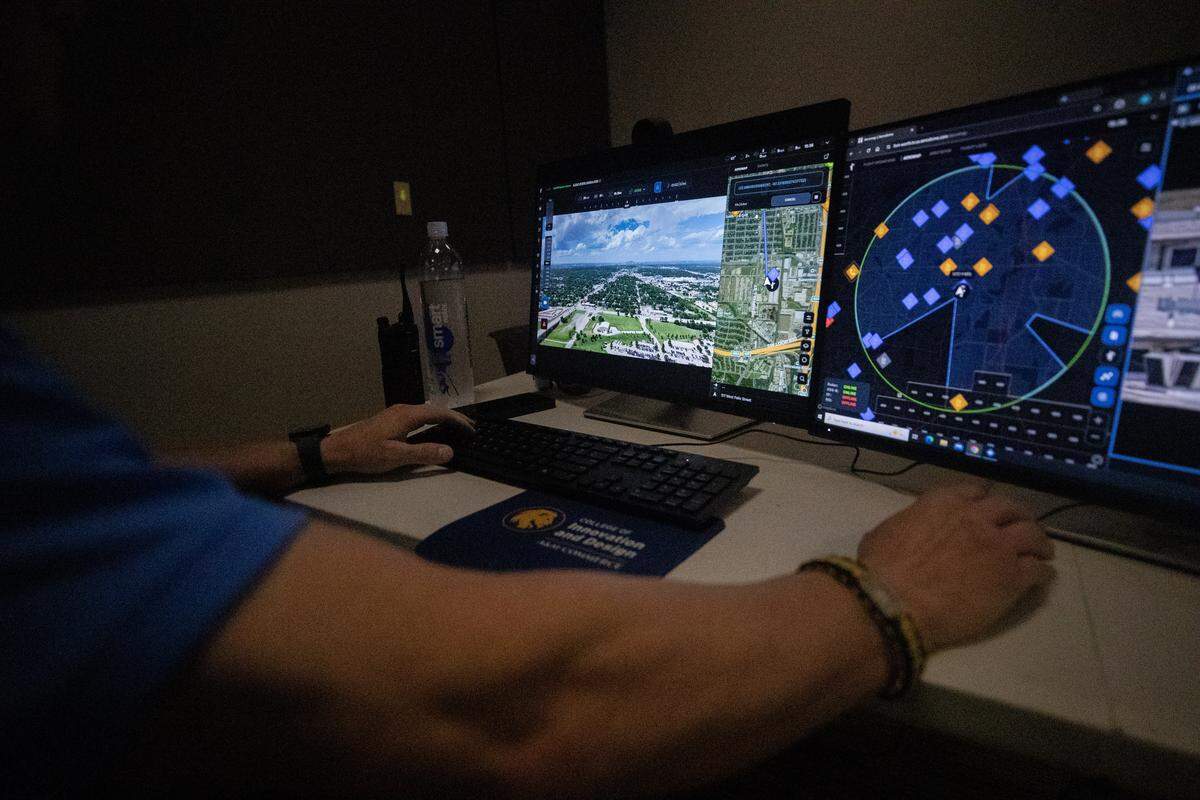
The department operates drones up to 400 feet under an FAA waiver that allows flights at higher altitudes. Lavigne said a radar system helps reduce the risk of midair collisions by tracking low-flying aircraft, helicopters and other drones.
If an aircraft enters the area, the system alerts pilots, who can lower the drone’s altitude or land it if necessary. Manned aircraft always have priority, and drone operators remain in communication with the department’s Air One helicopter to avoid conflicts in the airspace, Lavigne said.
Lavigne said the drone operators are required to complete several layers of training before they can fly these systems. First, all pilots must be FAA Part 107 certified. In addition, the department requires a 40-hour internal certification program; pilots must also complete platform-specific training for the particular drone system they are using — in this case, the Flock drone training system, he said.
The team can fly the drones in a range of weather conditions, but they carefully balance safety and call priority before launching, the sergeant said. Operations are limited when winds exceed about 27 mph or when the cloud ceiling is too low, since both factors reduce safety and visibility.
The drones can fly in light rain, but the pilots weigh how serious the call is — accepting slightly more risk for a high-priority incident while avoiding unnecessary flights for routine calls, Lavigne said.
The drone system can assist the Fire Department by scanning the horizon for smoke, and visually confirming whether a reported fire or incident is real and how severe it is. By doing this, Lavigne said, operators can tell the Fire Department when they see heavy smoke, so crews know to step up their response, or report that no smoke is visible, so resources can be reallocated or downgraded.
“I’ve been a cop for 20 years and this has been one of the most exciting things that I’ve been a part of,” Lavigne said.