Tanner Horner’s teacher recounts his school challenges at capital murder trial
Tanner Horner’s former fifth-grade teacher and a retired speech pathologist testified about his challenges at school as defense attorneys continued presenting their case at Horner’s capital murder trial Friday in Tarrant County.
Horner has already pleaded guilty to kidnapping and killing 7-year-old Athena Strand after delivering a package to her family’s Wise County home on Nov. 30, 2022. His attorneys are trying to convince the jury that the 34-year-old defendant should receive life in prison without the possibility of parole instead of the death penalty.
The fifth-grade teacher, who was not publicly identified in court, said Horner struggled socially. He was only in her class for a few months, and she doesn’t remember much about his home life or what his grades were that school year.
She said other children “thought he was odd,” and he had a tendency to blurt out things he was thinking. She remembers he loved playing the word game Mad Libs.
The teacher testified that Horner responded positively to the structure she had in place in the classroom.
“When he left, the school he went to called us pretty quickly to ask what were some things that we were doing to help with classroom management,” she said.
The teacher started to get emotional when defense attorney Steve Goble asked if she remembered what her relationship with Horner had been like.
“I enjoyed being Tanner’s teacher,” she said.

A retired speech pathologist who worked with Horner when he was in school at Azle ISD took the stand next. The woman, identified only as Beth, served as an in-home facilitator for the school’s special education program.
Beth said that Horner, who was diagnosed with autism spectrum disorder as a child, needed help with behavioral and social skills. She took him to parks and restaurants in the community to teach him how to behave in public. She also visited Horner’s home and spoke with his grandparents, who were his primary caregivers.
The jurors saw Beth’s notes from the time she worked with Horner, including her observations that his mother was in and out of his life. Melissa Horner’s inconsistent presence in the home seemed to upset her son’s routines.
“She just wasn’t a mother,” Beth told the jury. “She didn’t have motherly instincts. She had problems of her own, and Tanner was put on the back burner.”
Melissa Horner testified in court Wednesday about her son’s troubled childhood and her own struggles with addiction.
Beth said she saw Tanner Horner improve during his time in the program. She tried to teach him to take turns with other children and foresee the consequences of his actions.
“He had learned to stop what he was doing if it didn’t feel like it was right,” she said, referring to his behavior. “In the beginning, he could not do that.”
Beth never knew Horner as an adult, but she thought he was “a great kid” who was very polite.
When asked what she knew about the case, Beth mentioned early news reports that included Horner’s initial story to law enforcement. The defendant claimed he hit Athena with his FedEx truck and then kidnapped and killed her because he panicked.

On April 16, jurors heard chilling video and audio evidence showing Horner lured Athena into his truck and initiated a string of lies to conceal what he did to the 7-year-old.
Prosecutors have said Horner made multiple attempts to kill the girl as Athena fought back. She died from blunt force trauma, smothering and strangulation, according to the medical examiner. Horner dumped her naked body in the water along the Trinity River, stopped at a truck stop to clean the vehicle, and then continued on to the FedEx station to drop off the truck for the night.
Wise County District Attorney James Stainton told Beth that Horner’s version of the story wasn’t true, and asked what she thinks now.
“It doesn’t change my opinion, ‘cause my opinion will always be he should have had another adult ... in the vehicle with him,” Beth said. “What it does, it makes me wonder what the whole thing was about. Why?”
Beth agreed with Stainton that Horner’s autism did not cause him to kidnap and murder Athena.
Jurors also heard from Dr. Jeffrey David Lewine, a PhD neuroscientist who evaluated Horner. The witness presented MRI and EEG scans of Horner’s brain, which he said showed significant abnormalities and general dysfunction in areas that deal with social cognition, emotional regulation of behavior, and short-term memory.
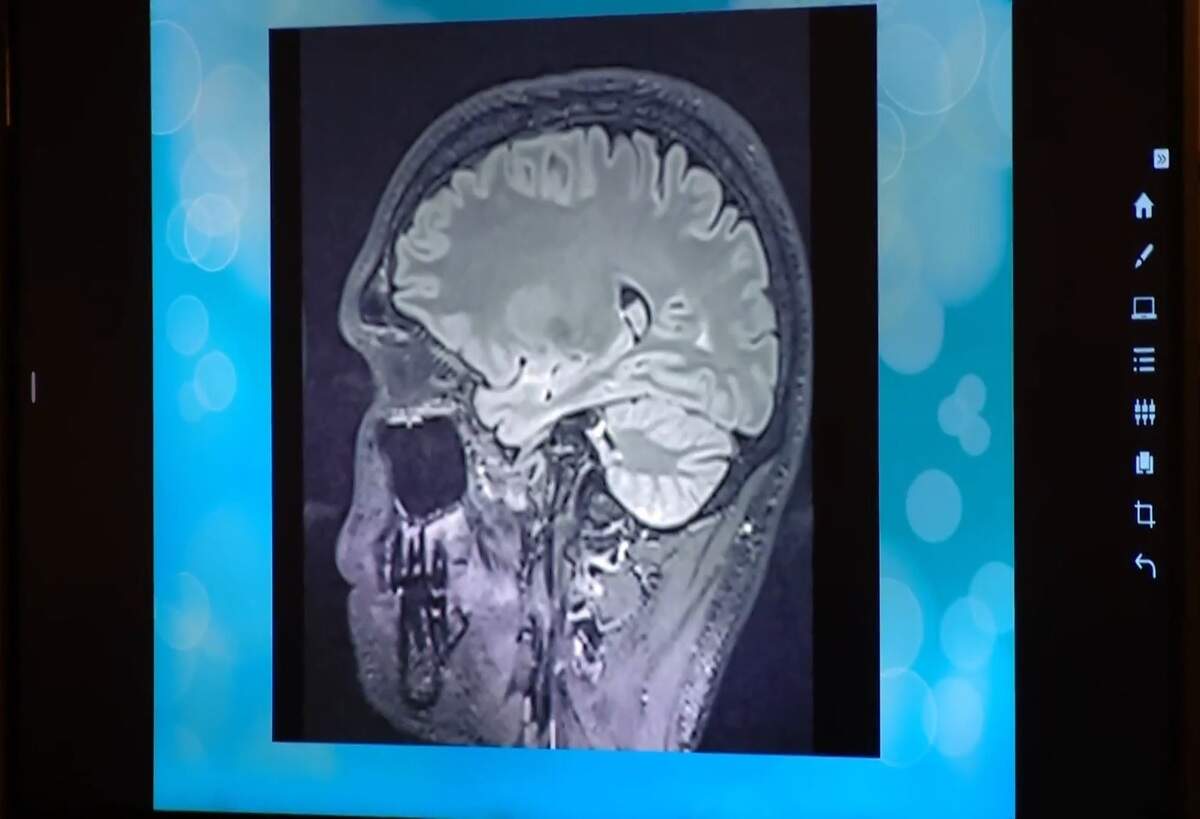
When Stainton asked why Horner wasn’t incapacitated by all the issues the scans revealed, Lewine testified that “this profile of abnormalities is still on the relatively mild side.”
This story was originally published April 24, 2026 at 9:56 PM.