Day 11 recap: Tanner Horner’s defense case in Athena Strand murder trial
Defense attorneys continued presenting their case Friday in the trial of Tanner Horner, who has pleaded guilty to killing 7-year-old Athena Strand.
Horner’s mother was one of the first witnesses to testify as the defense tries to convince the jury that Horner should be sentenced to life in prison without parole instead of the death penalty. Witnesses Thursday focused on Horner’s childhood, including discussion of autism, and lead exposure after he ate coins as a toddler.
At the start of the prosecution’s case on April 7, Horner pleaded guilty to capital murder in the course of kidnapping. The jury will decide his punishment.
The former FedEx driver abducted and killed Athena on Nov. 30, 2022, after delivering a package to her rural Wise County home. Horner told a false story about hitting the little girl with his van and then strangling her in a panic, according to testimony of the case’s lead investigator, Texas Ranger Job Espinoza. Investigators believe Horner planned to kidnap and murder Athena.
Last week, the prosecution showed the jurors chilling video and audio evidence that included Athena’s last moments after Horner lured her inside the FedEx van. She died from blunt force trauma, smothering and strangulation, and Horner dumped her naked body in the water along the Trinity River. Horner could not be excluded as the source of male DNA found on swabs in the victim’s sexual assault kit, a DNA analyst testified.
In interviews with investigators, Horner blamed an alter ego called “Zero” for the girl’s death.
The trial is being held at the Tim Curry Criminal Justice Center in Fort Worth and is expected to continue into early May.
Watch Friday’s video of the trial here with analysis from WFAA-TV, and follow Star-Telegram.com for updates.
1:45 p.m. Testimony of clinical neuropsychologist
Dr. Erin Bigler, PhD, a retired professor of psychology and neuroscience from Brigham Young University, is testifying. He is a licensed and certified clinical neuropsychologist.
He did not examine or meet Horner, and he testified about brain function in general.
After Bigler’s testimony, the trial ended for the day about 2:30 p.m. It will continue with more witnesses on Monday.
1:15 p.m. Cross-examination of neuroscientist
District Attorney James Stainton questioned Dr. Lewine.
The neuroscientist said he cannot make a diagnosis of Horner and that cognitive testing would be needed to determine any mental deficits he has.
“People in general with these profiles have deficits in social cognition,” he said.
Lewine agreed that he can’t predict how a person will act or whether they will commit a crime based on the types of reports and scans he reviewed.
11 a.m. Neuroscientist testifies
Dr. Jeffrey David Lewine, a PhD neuroscientist who is not a medical doctor, is testifying.
Lewine is the CEO and chief scientific officer of the Center for Advanced Diagnostics, Evaluation, and Therapeutics in Albuquerque, New Mexico.
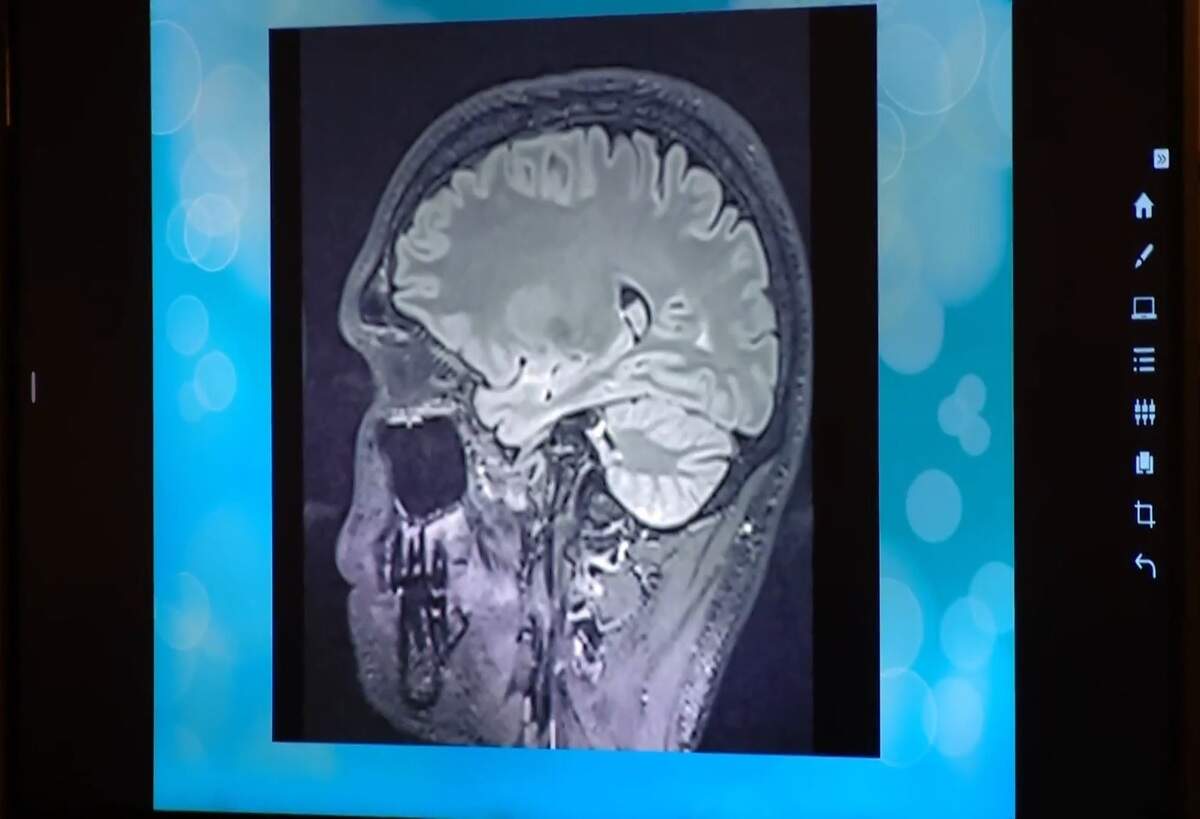
Lewine examined records and test results for Tanner Horner and testified that the development of the defendant’s brain could have been affected by issues including fetal alcohol syndrome, lead exposure, a “toxic stress environment,” autism, ADHD and head trauma.
Lewine showed the jury MRI and EEG scans of Horner’s brain, which he said showed significant abnormalities and general dysfunction in areas that deal with social cognition, emotional regulation of behavior, and short-term memory.
He noted “evidence of either structural or functional disruption in many, many areas of the brain.”
The trial is on a lunch break until about 1:15 p.m.
9:45 a.m. Speech pathologist testifies about home visits
A retired in-home facilitator and speech pathologist who worked with Tanner Horner when he was in school in Azle ISD is testifying. The attorneys called the witness by her first name, Beth.
While Horner was receiving special education services for autism, she visited Horner at his home, spoke with his family, and took him out into the community to work on his behavior and social skills. She also observed his behavior with other students. According to her notes, this was in 2002, when Horner would have been 10 or 11 years old.
“He was definitely bullied through school,” she said. “That was aggravating to him. And he got angry, of course.”
She said “his anger would be pretty bad at times” when other students played jokes on him because he didn’t understand. But she said she never saw him lash out at other students.
During the home visits, she testified, she saw that Horner was mostly being raised by his grandparents, who were a stable influence in his life. She met his mother once or twice and said his mother’s inconsistent presence in the home upset Tanner’s routines.
“She just wasn’t a mother. She didn’t have motherly instincts. She had problems of her own, and Tanner was put on the back burner.”
She also worked with Horner on his problems with foreseeing the consequences of his actions. “He had learned to stop what he was doing if it didn’t feel like it was right,” she said. “In the beginning, he could not do that.”
She said she liked Tanner and thought he was “a great kid.” She did not know him as an adult.
Defense attorney Susan Anderson asked Beth if she understood that Horner has pleaded guilty to kidnapping and murdering Athena. Anderson asked if autism is an excuse or defense for Horner’s crimes, and the witness said no.
“I’ll tell you where it comes in, in my mind, is this young man should have never been in that truck by himself,” she said.
On cross-examination, Wise County District Attorney James Stainton asked Beth what she knew about the case, and the witness referenced early news reports that included Horner’s story to law enforcement. Horner had claimed he hit Athena with the FedEx truck and that he kidnapped and killed her because he panicked.
Stainton informed the witness that Horner’s story wasn’t true and that he didn’t hit Athena with the truck. Asked what she thinks now knowing that, she said, “It makes me wonder what the whole thing was about. Why?”
The witness agreed with the prosecutor that Horner had the capacity to change his behavior and make the right decisions. “Whether or not he applies it, that’s up to him,” she said.
This story was originally published April 24, 2026 at 8:43 AM.