Amid shifts in police leadership, Fort Worth homicides spiked 8 percent in 2025
Eighty-one people in Fort Worth were killed by another person last year, according to annual statistics released by the Fort Worth Police Department
While overall crime and other types of violent crime decreased, six more people were killed in the city over the course of 2025 than in the previous year, a homicide increase that amounts to 8 percent.
Since 2006, the department has used the National Incident-Based Reporting System, or NIBRS, methodology to catalog its crime reports. The NIBRS system allows departments to release more thorough accounts that include the circumstances and contexts of crimes, according to the FBI.
Last year’s homicides occurred all over the city: in residential back yards, at clubs, motels, apartments and businesses, in parking lots, both inside and outside of motor vehicles, on roadways and bridges, in public waterways, and inside homes, according to medical examiner’s data obtained by the Star-Telegram.
Homicide is listed as the manner of death for 86 people in Fort Worth in 2025, according to police and medical examiner records. A police department spokesperson said the department’s official total of 81 does not count two people who died of injuries they suffered in 2024 and three other deaths which the Tarrant County District Attorney’s Office later classified as justifiable homicides.
Killings occurred at all hours of the night and day, with the deadliest hours falling between midnight and 6 a.m., according to the data. The single hour with the most number of homicides was the 2 a.m. hour.
About 80% of the victims were male, and gunshot wounds were the cause of death in the overwhelming majority of cases, according to the medical examiner’s office data.
One-month-old baby among last year’s victims
The youngest among the victims was Zachariah Cooke, who was 1 month old when he died of a methamphetamine overdose in July. Zachariah’s mother, Swanietra Cooke, used the drug near the baby’s crib, which investigators believe caused the overdose, according to an arrest warrant affidavit.

Swanietra Cooke was arrested and charged with manslaughter in her son’s death, but Zachariah’s grandmother said Cooke isn’t solely to blame.
In a January interview, Lisa Cooke told the Star-Telegram that caseworkers with Texas Child Protective Services knew of Swanietra’s drug use prior to Zachariah’s death, and said she believed the agency failed to take significant measures to prevent it from happening.
“I’m not saying my daughter is not guilty,” Lisa Cooke said. “But she’s not the only one who is guilty... they need to be accountable for this.”
The oldest homicide victims were 71-year-olds Donald Wayne Snellings and Roger Smith. Smith was shot and killed as he attempted to confront a car burglar outside a Fort Worth bingo hall on New Year’s Day, and Snellings was beaten to death in the city’s Morningside neighborhood in March.
Two teenagers, 18-year-old Javaughn Greer and 19-year-old Josiah Hoffman, were charged with capital murder in Snellings’ death.
Greer and Hoffman are accused of beating Snellings with a cane as they attempted to rob him, according to criminal complaints filed by the District Attorney’s Office.
In Smith’s case, police arrested 33-year-old Kenyan Deon Buchanan two days later.
Witnesses told police they saw Buchanan going through Smith’s pockets after shooting him, and then fleeing the scene in a white SUV, according to an affidavit supporting his arrest. Buchanan was later charged with capital murder.
Fort Worth police also categorized the circumstances of each killing: Among the leading causes, at least 28 were the result of an argument, 22 arose from domestic incidents and 14 had an undetermined motive. Other causes included robbery, gang violence, road rage and apparently random homicides, according to crime reporting data.
A police spokesperson did not immediately provide statistics on the number of homicide cases closed by the department last year. According to the most recent quarterly crime report, suspects had been identified in 21 of the 24 homicides reported from October through December, and charges had been filed in 11 of those cases.
2025 marked by leadership changes at FWPD
Three different men held the police department’s top job over the course of last year: Previous department head Neil Noakes retired in May, passing the office to interim chief Robert Alldredge at midyear.
Homicides in the city were already on the rise when Alldredge took over. The city recorded 43 killings in the first half of 2025, up from a total of 31 over the same period in 2024.
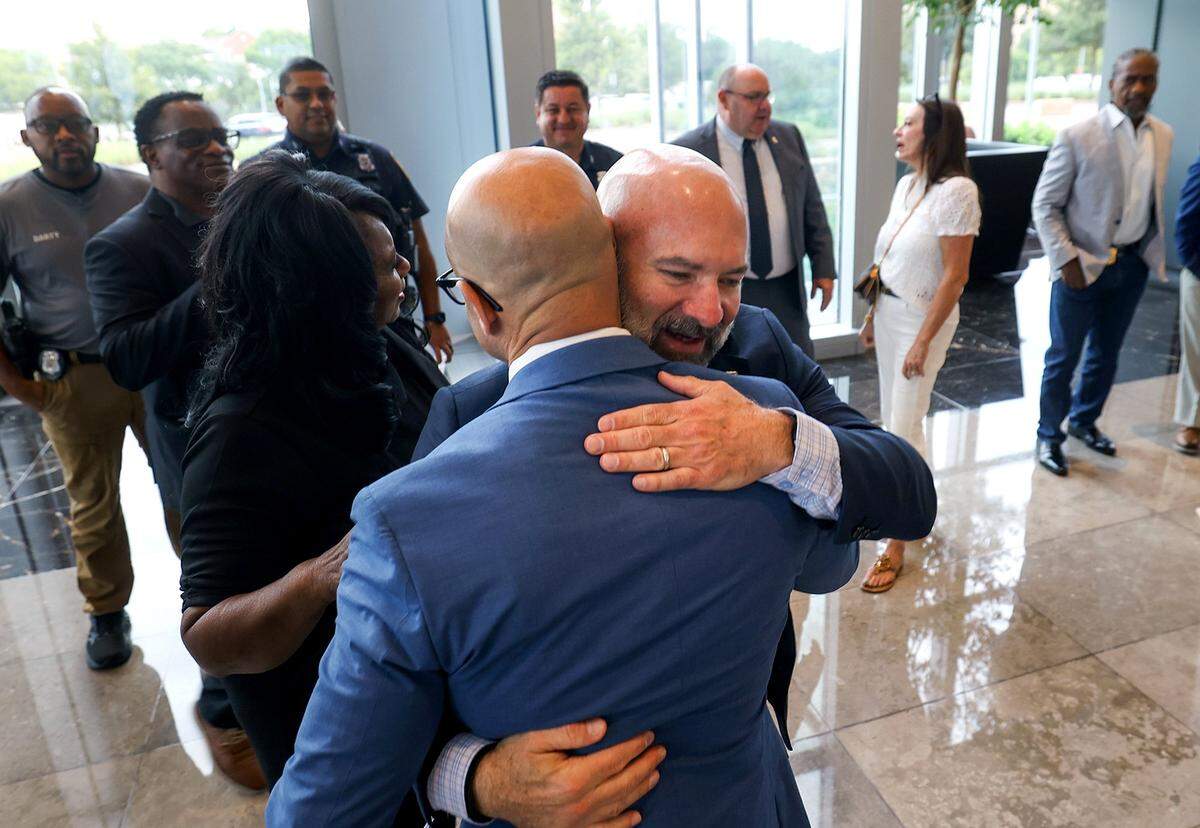
Alldredge told the Star-Telegram in a September interview that while the rise in homicides was alarming, the statistic didn’t accurately reflect the department’s “robust” violent crime strategy.
Across the board, crimes against persons — including assaults and sex offenses — decreased more than 10% from 2024, according to police data. And overall “Group A” offenses, which also include the categories of property crime and crimes against society like drug and gun offenses, decreased by more than 13%.
Alldredge said in September that there’s no one factor to point the finger at when discussing why homicides increase.
“For us, it’s probably just as puzzling as anyone else out there,” Alldredge said.
He also noted that, at the time, the number of homicides was trending lower than 2020-2022, when there were more than 100 killings per year.
Current Chief Eddie Garcia assumed office on Sept. 17.
Weeks later, a particularly violent weekend in October saw the deaths of four people in separate incidents across Fort Worth, including a shooting at a bar in the West 7th entertainment district that injured five people.
Violent deaths like that can shake a community. Jordan Williams, 25, lives in the entertainment district and said the area turns into “a completely different kind of town” over the weekend.
“It’s just a really tragic thing that happened,” Williams said. “You don’t think that you’re gonna go out and have a good night and not expect to come back in the morning.”
Garcia said during a news conference on Oct. 6, “What often gets forgotten is the overall crime stats of the city, that our violent crime continues to go down.”
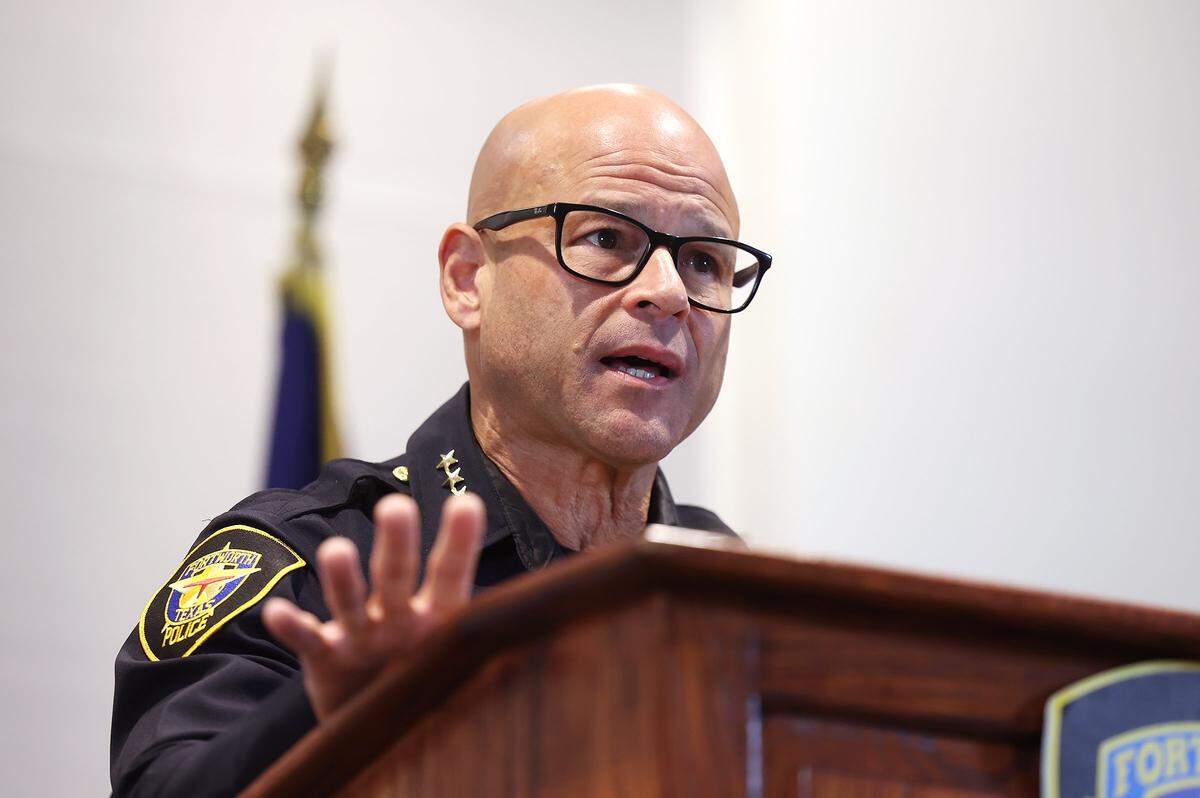
After that October spate of violence, the department “brought an all-hands-on-deck” approach for the remainder of the weekend to ensure officers had a presence in their communities, Garcia said. Additionally, police increased patrols in higher-crime areas of the city.
Garcia also said the department would bring in criminologists after that weekend to develop a new strategy for violent crime in the city.
The new strategy would ensure that “the men and women that sacrifice so much for the communities, that we put them in the right places for them to succeed,” Garcia said.
The overall decrease in crime isn’t unique to Fort Worth. After multiple post-pandemic years of rising violence, Arlington has also seen its crime numbers decrease.
The city saw two fewer homicides in 2025 than the year prior, part of a 12% decrease in overall crime. The only category with an increase was crimes against society – a trend Arlington police attributed to officers being more proactive in addressing those crimes when they see them happening, not necessarily a result of more crimes of that sort being committed.
The City of Fort Worth recorded 88 killings in 2023 and 101 in 2022.