Killer avoids looking at victim autopsy photo as he testifies in Fort Worth trial
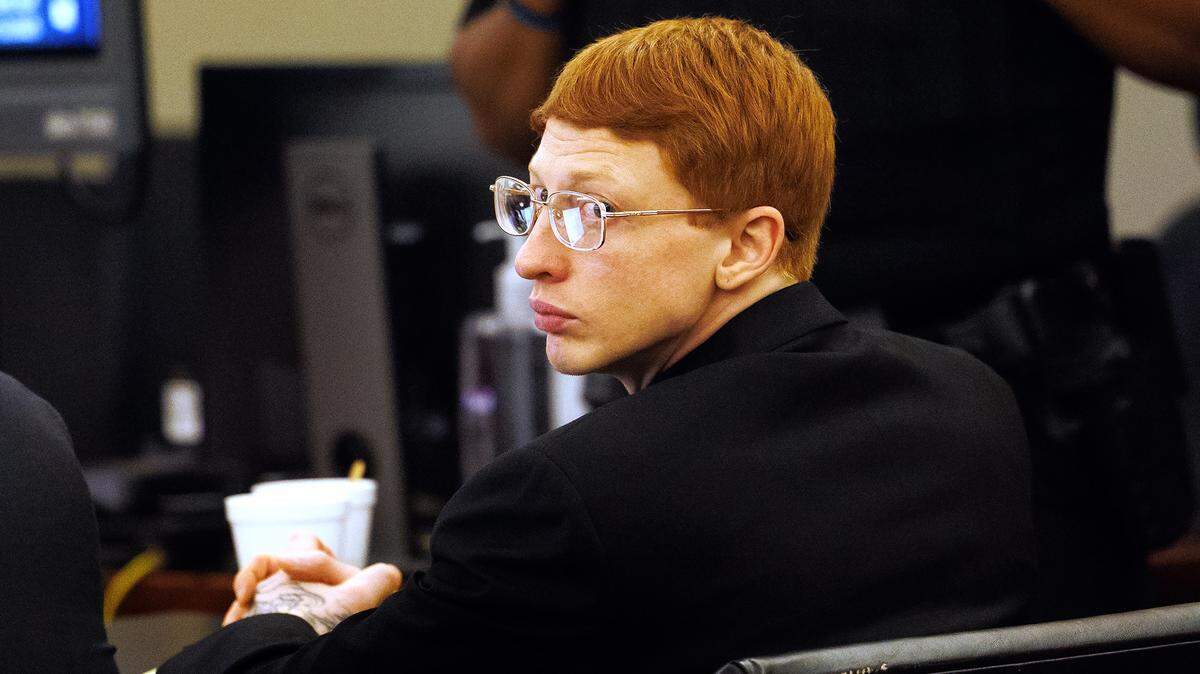
Before going to the witness stand during his capital murder trial in the killing of a woman with whom he had a casual sexual relationship, Valerian O’Steen walked this week from holdover quarters into the courtroom and blew a kiss to the gallery and his current girlfriend.
O’Steen bludgeoned Marissa Grimes, dug a shallow grave for her under his house in west Fort Worth and for 10 days lived above where police later sawed open the floor to expose Grimes’ decomposing 135-pound body, prosecutors have argued that the evidence shows.
The Tarrant County Criminal District Attorney’s Office is seeking a death sentence for O’Steen, in which he would be executed with pentobarbital, after a jury found him guilty of capital murder this week.
O’Steen may have used a bat or a stick to hit Grimes or used his hands to bash her head against the floor, prosecutor Allena Bangs suggested. The precise method of the killing is not identified in the indictment.

O’Steen has a radically different account of Grimes’ death.
The defendant testified that he woke after hearing a thud and found Grimes profoundly injured. She was present with an acquaintance, Jake Skelly, who O’Steen said was high on drugs and unable to explain the injury. Together Skelly and O’Steen buried Grimes, whom police would find covered by blankets, tarps and dirt, the defendant told the jury. In earlier testimony, Skelly denied he was inside the house at the time Grimes was injured.
The verbal exchanges between O’Steen and Bangs during his time on the stand were, at times, tense.
At one point, O’Steen was confused by a question, and the resulting back-and-forth was reminiscent of an Abbott and Costello repartee.
“What do you mean?” the defendant asked the prosecutor.
“What do you mean, ‘What do I mean?’” Bangs retorted.
Deeper in the cross-examination, the defendant said Bangs had jumped forward in the timeline.
“I think you’re getting ahead of yourself on the story,” O’Steen said.
“I’m not telling a story,” Bangs, who was not persuaded by O’Steen’s testimony that Skelly was present when Grimes was injured, said.
.jpg "Marissa Grimes 222 (pb).jpg")
The cross-examination’s most spirited moment came when Bangs approached the defendant with an autopsy photo. O’Steen averted his eyes from the exhibit, appearing to not want to look at the image of the victim.
After the defendant’s continued resistance, Judge Ryan Hill stepped in.
“Man, you’re on the stand. This is the evidence in the case. Let’s deal with it,” the judge said.
Bangs probed the source of the defendant’s discomfort.
“Is it difficult to look at what you’ve done?” she asked.
“I never did that,” O’Steen fired back.
The jury in the 371st District Court on Wednesday found O’Steen guilty of capital murder. The trial began in March with individual jury selection.
Jurors to decide between death penalty and life in prison
The jury on Thursday began to hear evidence in a second trial phase and in the coming weeks will consider two punishment options: life in prison without eligibility for parole, or the death penalty.
In the punishment phase, jurors will weigh whether the state proved beyond a reasonable doubt that it is probable O’Steen would commit future criminal acts of violence that would constitute a continuing threat to society. The panel also will weigh whether there was mitigating evidence that it might regard as reducing O’Steen’s moral blameworthiness and warrant a sentence of life in prison without parole.
Defense attorneys Bob Gill, Miles Brissette and Colin McLaughlin were appointed to represent O’Steen.
They argued that his interview with police detectives was not voluntary, and that investigators did not fully explore Skelly’s possible involvement or conduct thorough DNA analysis.
“This death was not caused intentionally,” Gill said in his closing, referencing a mental state that is an element of capital murder. “This is a case of murder at the most.”
Killer previously assaulted victim, a mother of 3
In the month before Grimes, who was 26 and the mother of three young children, was killed, she accused O’Steen of pointing a gun at her head. Fort Worth police arrested him on suspicion of two offenses. O’Steen was released the next day after a magistrate set his bond at $15,000. A GPS leg monitor was among his bond conditions.
The jury found that O’Steen was in the course of committing or attempting to commit obstruction or retaliation when he beat Grimes to death. O’Steen blamed Grimes for the burden of the leg monitor.
In the days before police found Grimes’ U-Haul vehicle abandoned on Lake Como Drive, her relatives reported that she was missing. The vehicle was about a mile from O’Steen’s house on Locke Avenue, according to the account of Fort Worth Police Department Homicide Unit Detective Jerry Cedillo that is included in an affidavit supporting O’Steen’s arrest warrant.
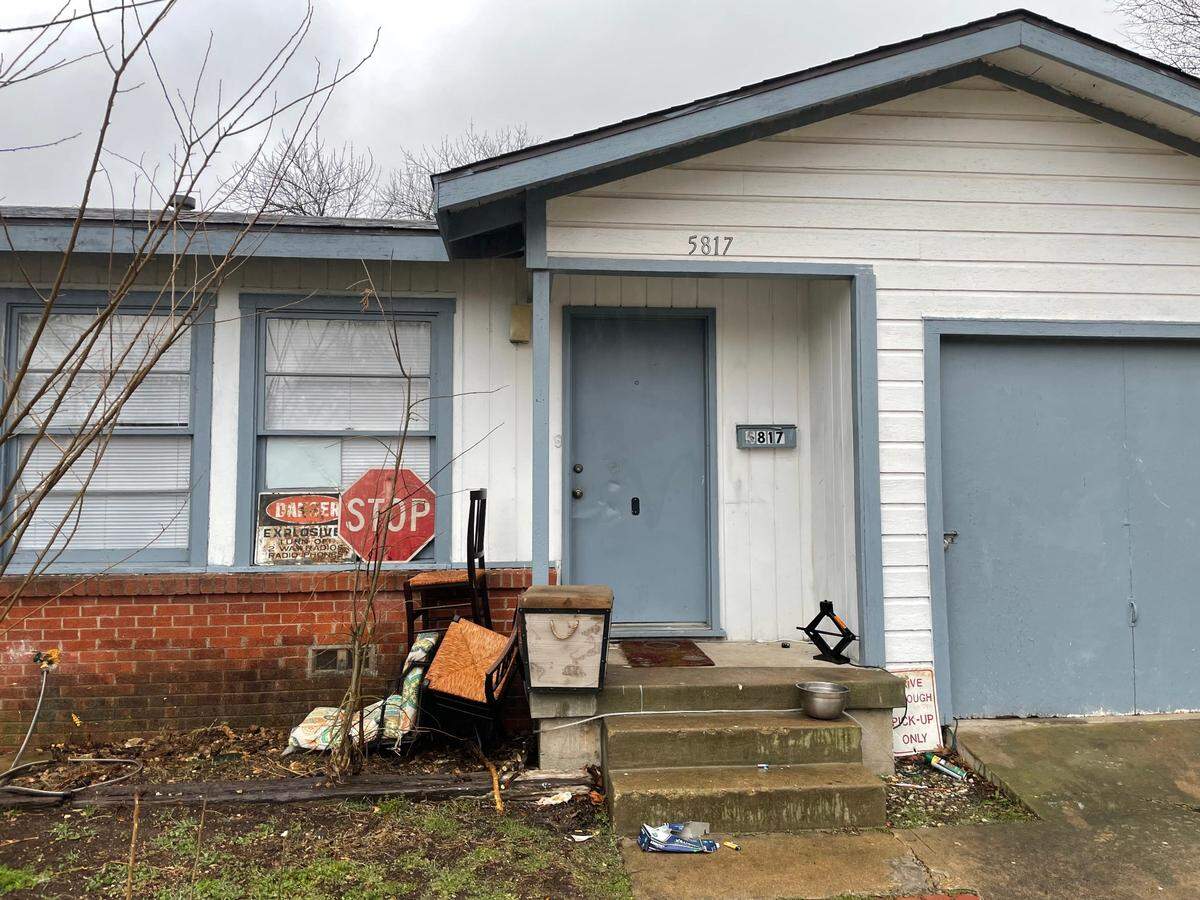
On Feb. 22, 2022, police executed a search warrant at O’Steen’s house and found a crawl space entry in a bedroom closet. A SWAT officer looked down into the space and saw a mound of dirt and smelled the odor of decomposition. The next day, police found Grimes’ body in the crawl space.
A Tarrant County Medical Examiner’s Office pathologist determined that Grimes’ death was a homicide caused by blunt force trauma to the head. She suffered a subdermal hemorrhage.
O’Steen, who is 27, is the second capital murder defendant for whom the state elected to seek the death penalty to go to trial in Tarrant County this year.
This story was originally published September 11, 2025 at 8:57 PM.