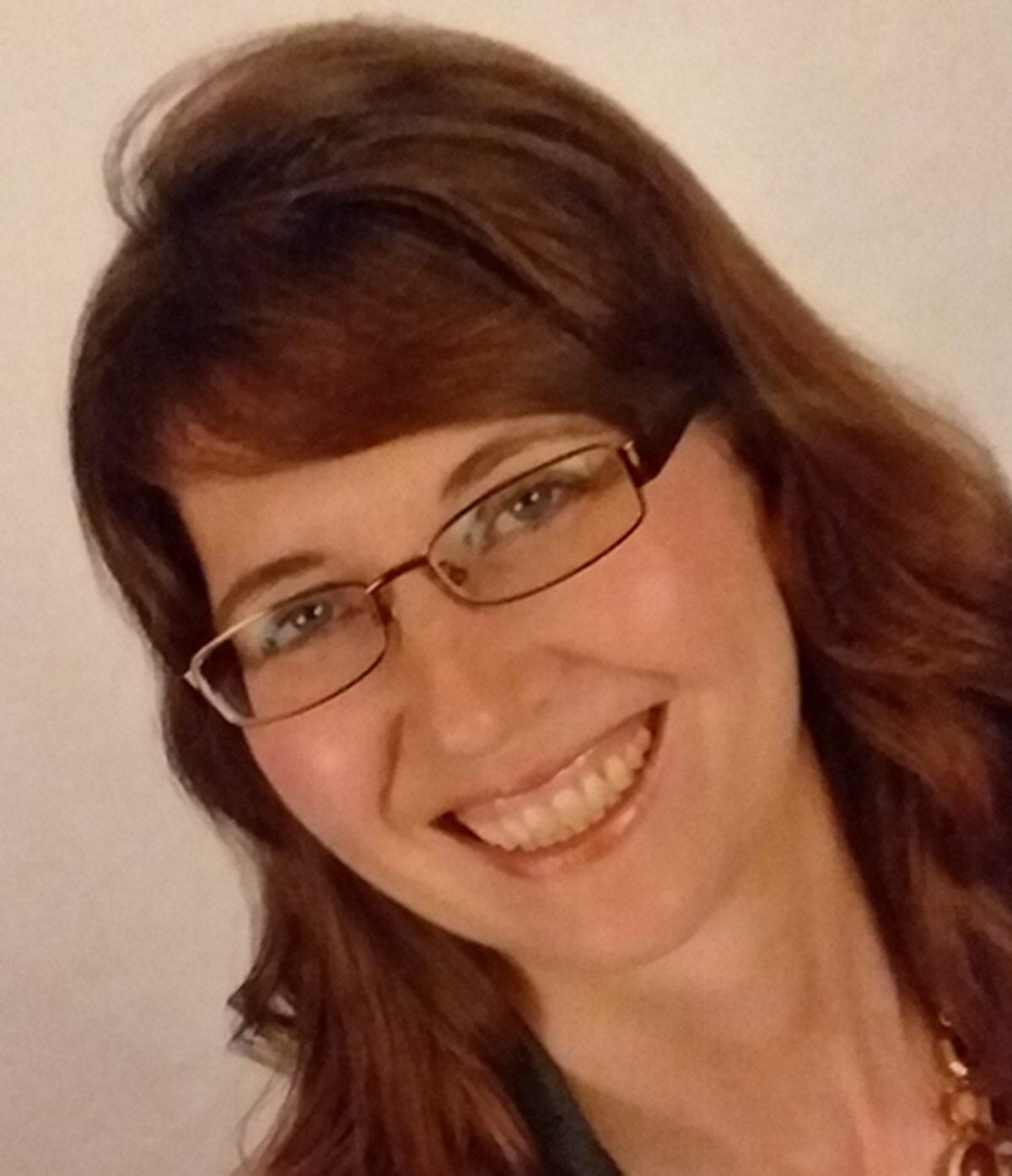
‘Time is running out’: Family of Christmas 1980 murder victim needs answers
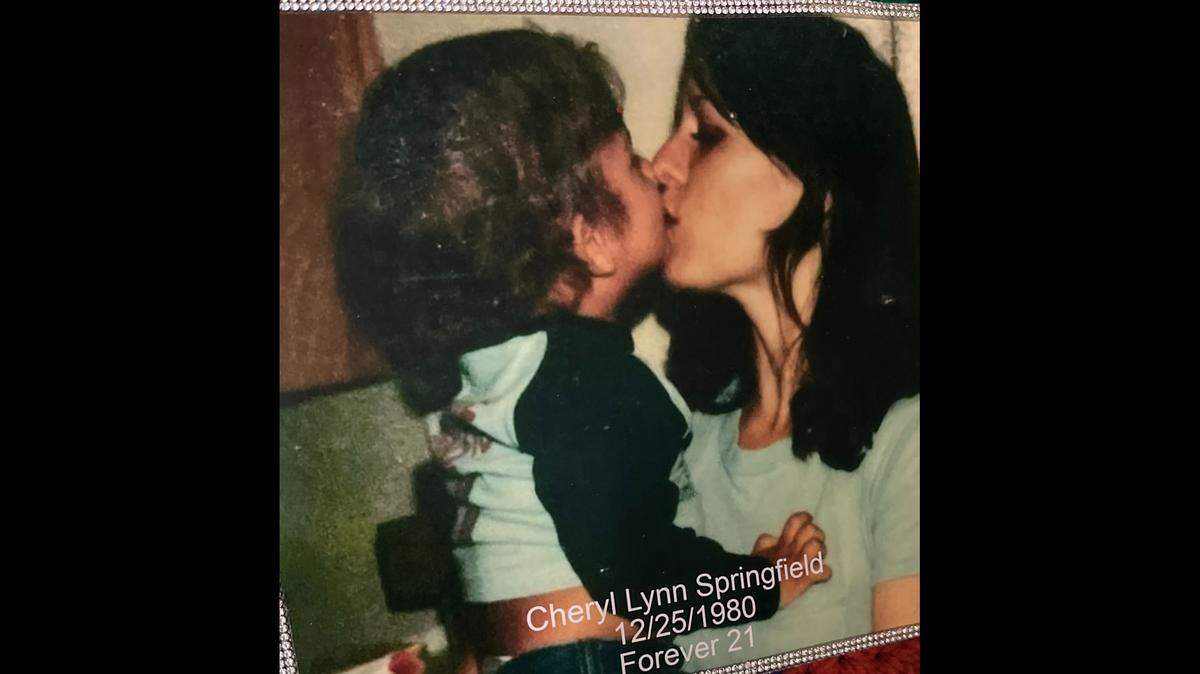
Jan Webster is part of a club she didn’t ask to join. She was inducted on Dec. 25, 1980, the day her younger sister was found strangled with an electrical cord near the Christmas tree in a south Fort Worth home.
Cheryl Lynn Springfield was 21 years old when she died. For the last 44 years, she has been report number 80433227 in the Fort Worth Police Department’s files.
At a Crowley funeral home, Webster promised her only sibling that she would find her murderer. Webster was 22 when she made that vow. Now she feels like she’s running out of time.
“I hope there’s some action on these cases, because a lot of us are not gonna be around that much longer,” Webster said. “And once we’re gone, as young as some of these people were when they died, there’s gonna be nobody else to remember them or to say their name or fight for their case.”
Springfield and Webster grew up on the south side of Fort Worth. The two of them were “little scrappers,” according to Webster, and it was often like a war zone at their house. In spite of their sisterly fights, Webster remembers her sibling as sweet, funny and kindhearted.
“We were just kids,” Webster said. “I mean, I don’t know what she would have grown up into or what would have happened. It’s hard for me ... I have trouble sometimes remembering things of her because it’s been so long. And that’s killing me.”
Springfield and her husband divorced a few months before Christmas 1980, according to the Star-Telegram’s archives. Springfield spent Christmas Eve with her mother, Pat Tunnell, in Crowley.
“We opened gifts and things like that,” Tunnell told the Star-Telegram in 2004. “We had never done that before on Christmas Eve. I don’t know why we did it that year.”
Tunnell drove her youngest daughter back home after the celebration. She watched Springfield unlock the front door and go inside.
Cheryl and her ex-husband, Scott Springfield, had a brief phone conversation shortly after midnight. The two finalized plans to get together early Christmas morning to watch their little boy open gifts.
What happened after that is still a mystery. Scott Springfield arrived at 3370 Whittier St. around 6:15 a.m. to find his ex-wife’s body by the Christmas tree and their son crying in the bedroom.
No suspects have ever been arrested. Now Cheryl Springfield’s murder is just one of nearly 1,000 unsolved homicides in Fort Worth.
For a long time, Webster said she called police at least once a month to see if there were any updates. Recently she’s backed off, “just to give them a break from so many phone calls and maybe a little more time to focus on the cases.”
“I want so badly to believe that they’re doing something on her case,” she said.
Roller coaster of grief for families in unsolved murders
Those who lose family members in unsolved murders experience a unique kind of grief, according to cold case advocate Melissa “Mo” Silva. Losing a loved one to an accident or old age is hard, but there are answers. In unsolved homicides, there are none.
“The grief cycle is dragged on decades for many cases,” she said. “Your mind creates infinite scenarios and replays them day after day, month after month, year after year.”
Silva was 4 years old when her mother was murdered in the San Francisco Bay Area in 1987. Nearly 30 years would pass before Deanna Butterfield’s killer was identified.
Even as a child, Silva said, she understood the murderer needed to be caught so he couldn’t take any more mommies from their children. The case went cold, so she decided to act on her own.
She hounded police, obtained a copy of the autopsy report and photos from the coroner’s office and did her own research online.
Silva acknowledges that people handle grief differently. Some just want to let their loved ones’ case go. Others are desperate for answers, but the process of getting information from law enforcement can be like riding a steep roller coaster.
“Somebody emailed me back five sentences after three years, this is impeccable. I’m at the top of that roller coaster, and it is just sitting steady,” she said. “And they are feeling the good emotions now, and they have a little energy to keep pushing through the cold case and asking questions, pestering people, plotting it over and over in their minds, and then they’re let down, and they drop fast, hard, and sometimes for years.”
In 2006, DNA collected from Butterfield’s body was sent to law enforcement’s national DNA database. It came up with a match — William Huff. But Butterfield had worked as a prostitute, and Huff said he was one of her customers. There wasn’t enough evidence to charge him with her murder.
Butterfield’s body had been found in Tilden Regional Park near Oakland, so the East Bay Regional Park Police Department was handling her case. Silva tried to get a district attorney’s office involved, but both of the nearby counties said it wasn’t in their jurisdiction.
Finally someone in Contra Costa County started looking into Butterfield’s case. Then he retired, and there was no one to take his place. Silva said she plummeted back down the roller coaster.
“That was rough, I feel the tears,” Silva says, her voice breaking. “So I thought, I’m going to just start again. Just going to call the main line, let them know, ‘Hey, I used to talk to this man. I need to talk to somebody about my mom’s murder.’”
“We don’t know who that would be,” the person on the other end of the line would say. “All right, find someone,” Silva would tell them.
The cold case unit that Silva was lobbying the Contra Costa County District Attorney’s Office to form finally became a reality. An investigator from the Sheriff’s Office, Paul Holes, was assigned to head it up. And one day in 2015, Silva got a call.
A detective from the park’s police department and Holes had just questioned a suspect. It was William Huff, the same man whose DNA had matched Butterfield’s in 2006.
“I think he killed your mom,” the detective told Silva.
DNA evidence also linked Huff to the 1993 murder of Laotian immigrant Mueylin Saechao. In 2018 he was sentenced to life without parole for both murders.
Now Silva says she spends her time helping others who are in the same position she was, “that club you never want to be in.” Law enforcement agencies often push cold cases aside to focus on recent homicides, she said. But in many cases those killers are still out there, waiting to prey on other victims like her mother’s murderer did.
Advanced DNA technology is giving investigators more tools to work with and solving cases once deemed impossible. Silva believes more cold cases could be solved if police would make them a priority.
“That doesn’t mean every case is going to magically get solved,” she said. “That’s not realistic, right? But a majority — that’s a realistic goal, and that’s one that we can decide to make happen.”
Advanced DNA testing offers hope
In 2018, Texas-based forensic laboratory Othram started making headlines with technology that pairs traditional DNA testing with genealogy.
Traditional testing only works if a suspect’s DNA is already in CODIS, the national law enforcement database. DNA from first-time perpetrators wouldn’t show a match in the system.
But thanks to the advent of consumer genetic testing, more than 20% of the general population has submitted DNA samples to private companies. When DNA collected from crime scenes is compared to these samples, investigators can start building a family tree of the perpetrator.
Kristen Mittelman, Othram’s chief development officer, says the testing allows analysts to say with confidence that the perpetrator is one of these two brothers or one of these three sisters, for example.
From there, it’s usually not difficult for law enforcement to find out which of these individuals had access to the type of gun used or the car seen at the crime scene, Mittelman said. Once investigators narrow down the options, they obtain a DNA warrant, collect the suspect’s DNA and compare it to what was found at the crime scene to see if it’s a match.
“We have now built a way to infer someone’s DNA identity by looking at hundreds and hundreds of thousands of markers in someone’s genome and figuring it out, uploading that profile, and figuring out all of the relatives this person has, and how far away from each relative they are,” Mittelman said.
Othram’s technology allows technicians to predict up front if a profile can be built from the DNA available. They are also able to work with minuscule amounts of DNA and DNA that has been severely degraded, according to Mittelman.
“Once it’s tested, you can’t get it back,” Mittelman said. “It’s gone — gone forever. So if you’re testing the DNA with a process that isn’t going to give you an answer, you’re often taking away someone’s last chance ... to be identified.”
In 2020, Fort Worth police used this technology to solve the murder of 17-year-old Carla Walker. The Western Hills High School cheerleader was kidnapped from her boyfriend’s car on Feb. 17, 1974. Her body was found two days later in a ditch south of Fort Worth.
DNA taken from Walker’s clothing was badly degraded, but the profile built at Othram led investigators to Glen Samuel McCurley. McCurley pleaded guilty to Walker’s murder in 2021 and was sentenced to life in prison. He died in 2023 from natural causes.
Othram only works with law enforcement agencies, according to Mittelman. If someone wants the lab to look into a specific case, they can reach out through Othram’s website, and a case manager will contact the proper law enforcement agency.
“Just say, you know, ‘This is my case, and it’s at this agency, and I’d really like to see if you guys can help,’” Mittelman said. “We would reach out.”
Investigators also use Othram’s technology to identify human remains and resolve missing persons cases.
“I think that’s what this technology brings to the world — hope,” Mittelman said. “Hope that regardless of the circumstance, everybody will get their name back. Every victim that’s out there nameless will get their name back. Everyone will know where their loved one is, and every criminal will get identified.”
The cost to run a case at Othram is around $7,500 to $12,000, according to Mittelman. The federal government may cover the cost of traditional DNA testing, but not the type Othram offers.
Othram crowdfunds some of the cases, and Mittelman said the lab also helps match philanthropists and donors to law enforcement agencies who need funding for specific cases.
Two U.S. senators, John Cornyn (R- Texas) and Peter Welch (D-Vermont), introduced the Carla Walker Act in December. If passed, it would make federal funds available for advanced DNA testing.
According to Mittelman, investigators are increasingly turning to this technology to solve recent crimes as well as cold cases. In some situations, perpetrators have been taken off the street before they could find more victims. It’s a powerful deterrent to crime, she said.
“No one is immune to this technology,” she said. “If you’ve committed a crime and you left DNA at a crime scene, it’s a matter of time before your DNA is tested and you’re caught.”
Thaw the Cold Cases
Webster believes advanced DNA technology can solve her sister’s murder.
The Fort Worth Police Department’s Cold Case Unit did not respond to requests for an interview, but said in a statement in January that Cheryl Springfield’s case is being digitized.
“We also have a genetic genealogy lab reviewing the data from previous STR testing to evaluate its suitability for whole genome sequencing analysis,” the statement reads. “We are hopeful that this new technology can move the case forward.”
Gray Hughes, a true crime podcaster, has offered to cover the cost of DNA testing on Springfield’s case.
“There’s got to be something at that crime scene,” Hughes told the Star-Telegram, speaking of DNA evidence that would lead to the perpetrator.
In the meantime, Webster is doing all she can to keep her sister’s memory alive. She wants people to know that Springfield was a much-loved mother, daughter, sister and friend. On April 19, Webster will carry Springfield’s picture in Thaw the Cold Cases’ third annual walk.
The group aims to raise awareness about the city’s nearly 1,000 unsolved homicides and keep the victims’ names before the public.
Founder Kym Caddell believes a lack of funding and manpower is keeping police from moving forward on these cases, at least one of which dates back to the 1960s.
“It’s got to be brought to light,” Caddell said. “It just has to or nothing will ever change.”
Dallas, with around 30% more residents than Fort Worth, has approximately 2,000 unsolved homicides going back to 1970, according to Police Department spokesperson Luis Mata.
The department already has a cold case unit, but Dallas County District Attorney John Creuzot announced in December that his office would also be forming a Cold Case Homicide Unit to address the backlog.
Fort Worth police say they are taking steps to address the city’s unsolved homicides. A second full-time detective was recently added to the Cold Case Unit, making a total of two full-time detectives and two part-time reserve officers.
“Additionally, the department is exploring ways and has begun the process of digitizing evidence as one of the many progressive options to enhance the investigation of cold cases,” police spokesperson Tracy Carter told the Star-Telegram in an email.
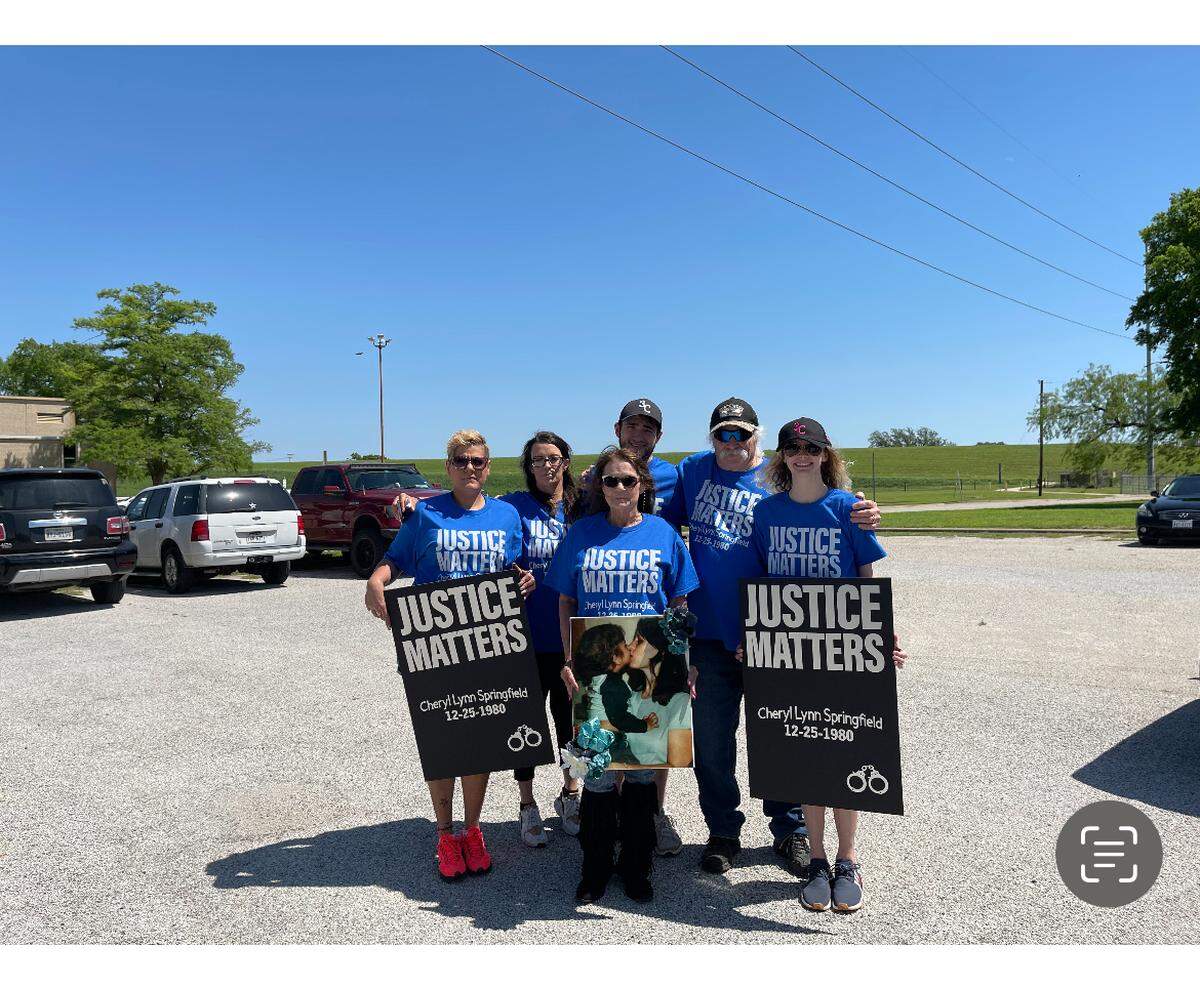
Webster keeps hoping for something definite on Springfield’s case. Christmas never gets easier for her, and now that her children are grown, she said her mind can go to some dark places that time of the year.
Springfield’s son, Scott Allen Springfield, grew up without his mother and died July 28, 2023, at the age of 45.
“We have the technology to solve some of these cases,” Webster said. “Let’s get it done. For some of us, time is running out.”
How you can help
Anyone with information about Springfield’s case is asked to contact the Fort Worth Police Department at 817-392-4339 or coldcase@fortworthpd.com.
Information on how to donate to the Fort Worth Police Department’s Cold Case Unit is found on the FWPD Cold Case Support Group website.
The Third Annual Cold Case Awareness Walk begins at 1 p.m. Saturday, April 19, at 600 Congress St.
“This will be a peaceful walk with the objective of keeping the names of unsolved cases in the public eye,” according to a Thaw the Cold Cases social media post.
This story was originally published April 11, 2025 at 1:08 PM.