Jury determines cannibal serial killer who burned bodies in Fort Worth dumpster should die
A man who sliced the throats of five people over four and a half years, cut three of the bodies into pieces and sexually abused in a motel bathtub the dismembered corpse of one of his victims should be executed in the state’s death chamber, a jury in Fort Worth determined on Wednesday.
Jason Thornburg, who said he ate a piece of the heart of his third victim, was, after 14 days of testimony in his capital murder trial in Criminal District Court No. 3 in Tarrant County, condemned to die by lethal injection.
Thornburg butchered three people over seven days in September 2021 at the Mid City Inn in Euless. The killings were fueled by his methamphetamine use, sexual sadism and desire to have intercourse with a sex worker for free, the Tarrant County Criminal District Attorney’s Office suggested to the jury.
“He is a psychopath. He is evil. He is the type of evil that we want to believe doesn’t exist in our community,” Assistant District Attorney Amy Allin said in the state’s punishment phase closing argument. The slayings revealed Thornburg’s depraved indifference to life, Allin said.
After hacking the victims’ bodies with a Milwaukee straight blade knife, Thornburg scrubbed with ammonia and a lavender solution his easy-to-clean tiled motel room floor and temporarily stored the bodies of David Lueras, Maricruz Mathis and Lauren Phillips in garbage bags under his bed. In two trips, he drove with the bags in plastic containers to west Fort Worth, unloaded the bins into a dumpster and lit the bodies on fire.
Later that morning, Thornburg drove to a Home Depot to return the four empty 20-gallon totes for a cash refund, and a store employee put the containers back on a shelf.
The jury two weeks ago found Thornburg guilty of the capital murder of multiple people during the same course of conduct.
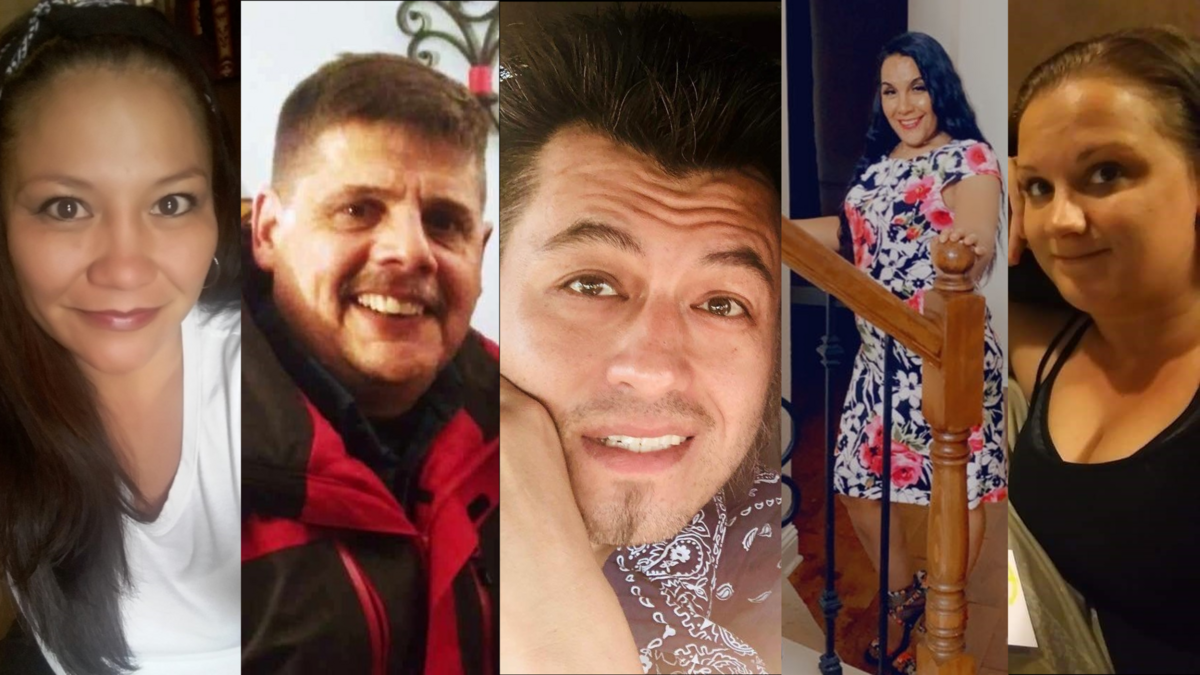
The panel then learned in the trial’s punishment phase that Thornburg admitted to Fort Worth police homicide detectives that he separately killed two other people, his roommate, Mark Jewell, in Fort Worth in May 2021, and a girlfriend, Tanya Begay, in Arizona in 2017.
Family members of the victims addressed Thornburg from the witness stand in statements after he was sentenced.
“Maricruz has a family that loved her and will forever remember her for the loving, kind person that she was,” Mathis’ sister Norma Harris said. “... The pain that you have caused by killing my sister doesn’t just go away. The pain stays in our hearts.”
She called Thornburg a danger to society and told him, “I hope that you receive forgiveness in heaven because I personally, I don’t think I can do it. ... The only thing that you do deserve is death.”
The defense argued in the trial’s guilt-innocence phase that the jury should find Thornburg not guilty by reason of insanity. Defense attorneys Bob Gill, Miles Brissette and Warren St. John called to the witness stand a series of psychologists and a psychiatrist who suggested that Thornburg was, and remains, psychotic. Severe mental disease or defect caused Thornburg not to comprehend that his conduct was wrong, they argued.
Thornburg, who is 44 and Native American, largely grew up in northern Arizona on the Navajo reservation in an octagon-shaped traditional shack in which there was no electricity or running water. It had a floor of dirt and concrete. He attended a community college and worked as an electrician.
Images of Thornburg’s brain and its electrical activity suggested he suffered from elements of fetal alcohol spectrum disorder as a result of his mother’s drinking and a moderate traumatic brain injury when he was assaulted in 2002, defense witnesses testified. His IQ is 89.
The jury deliberated on punishment for about four hours. Judge Doug Allen pronounced the sentence to a courtroom jammed with relatives of the victims.
Thornburg got away with murder before motel killings, prosecutors say
The case began when a firefighter involved in the effort to extinguish a dumpster fire probed body parts with a long pole meant for turning trash. The smell of burning flesh and the flames that destroyed evidence floated in the air.
To be sure, the path to identifying Thornburg as the suspect in the Bonnie Drive burning bodies case and securing his confession was filled with examples of dogged policework.
Fort Worth Police Department Homicide Unit Detective Kyle Sullivan culled a portion of a potential suspect vehicle list of about 7,000 registrations down to Thornburg’s Jeep Grand Cherokee. Detectives Matt Barron and Tom O’Brien patiently interviewed him.
Earlier, there were two significant law enforcement blunders that, handled differently, may have landed Thornburg in custody at least a year before September 2021 and could have deprived him of the opportunity to kill Lueras, Mathis and Phillips.
Sean Galegher, a former Fort Worth Police Department Domestic Violence Unit detective, did not take seriously a September 2020 aggravated assault case in which Thornburg sliced the neck of another roommate, Billy Hernandez, the state and defense agreed.
Galegher, now in the Narcotics Unit, acknowledged on the witness stand that his investigation involved only reading another officer’s report and making two telephone calls.
In the state’s punishment opening statement, prosecutor Emily Dixon told the jury that Hernandez, whom Thornburg met at a Fort Worth halfway house, was a bit, “of a mess as a person.” Hernandez, a witness for the state, drifted several times in his testimony from the question at hand.
Detective Galegher, who was called to testify by the defense, was, if not himself a mess, rather bumbling.
The report that Galegher reviewed indicated that the suspect was a person whose first name was Jason. The last name was unknown but began with a T. The detective did not determine his full name.
Did Galegher ever drive out to the Valentine Street offense location, Gill asked.
“I don’t believe I did,” Galegher testified.
Though not an excuse, Galegher testified that he was assigned hundreds of cases each year.
“I have no idea why after September 23rd there is no other information in the report,” Galegher testified.
The detective did not submit to the district attorney’s office a case to review for indictment. Less than an year later, Thornburg killed Jewell by cutting his throat in his sleep at the same house on Valentine Street and caused a natural gas explosion and fire to hide evidence, prosecutors said.
“I’m sorry for the way you were treated by law enforcement,” Allin told Hernandez before passing the witness to Gill.
Prosecutors also said that when he lived in Arizona, Thornburg got away with murder when the FBI bungled the investigation of the report by Begay’s mother that her daughter was missing. Thornburg regularly beat Begay during their relationship, and she went missing when Thornburg was under investigation for assaulting her with the glass of a coffee pot, Assistant District Attorney Kim D’Avignon, the state’s lead prosecutor, said.
“If the FBI would’ve arrested him back in ‘17, nothing in Fort Worth would’ve happened, would it?” defense attorney St. John asked of FBI Special Agent Jennifer Mulhollen.
The agent testified that the answer rested with whether Thornburg would have been held in custody.
“The FBI failed Tanya Begay,” D’Avignon said.
Begay’s cousin Jackie Reynolds said that Tanya was outgoing, funny and “a strong, beautiful Navajo woman.”
Thornburg said he cremated Begay “all the way down to the ashes” and her remains have not been found.
Jurors weighed death penalty vs. life sentence
The jury was instructed to consider two options, life in prison without parole or the death penalty. Jurors weighed whether the state proved beyond a reasonable doubt that it is probable that Thornburg poses to society a continuing threat of criminal violence and whether there was mitigating evidence that a juror might regard as reducing Thornburg’s moral blameworthiness that would warrant a sentence of life in prison without parole.
Rather than symbolism, Thornburg found in a New Testament verse literal direction from God to kill and eat people, lead defense attorney Gill argued.
The biblical reference and voices he claimed to hear were among several signs that Thornburg said he assessed as a call to sacrifice. Thornburg believed the human sacrifices were the pathway to God’s kingdom for himself and the victims, who were, in Thornburg’s psychotic delusion, willing participants, Gill said.
Prosecutors and the victims’ families said Thornburg used the Bible and religion as weapons to prey on the vulnerable, targeting people about whom he thought no one would care.
“Jason Thornburg, you have committed the ultimate blasphemy against God,” Lauren Phillips’ aunt Deborah Curry said. “You have said you do the work of God, but it’s Satan you work for.”
Reading a note from one of Begay’s sisters, Reynolds said, “Whatever you tried to accomplish with sacrifice didn’t work. In the end you are just a man, nothing powerful, nothing but a murderer.”
Thornburg did not testify at either trial phase, although he took the witness stand outside the presence of the jury in a hearing to determine whether a portion of what the state asserted was a noncustodial interview of Thornburg at the homicide unit’s office should be suppressed because the defendant referred to needing counsel. Judge Allen ruled that the entirety of the interview was admissible.
Thornburg is the third Tarrant County capital murder defendant to receive a death sentence this year.
Christopher Turner was last month found guilty of capital murder in the killing of the owner of a convenience store on a rural Tarrant County road during a 2020 robbery. Turner shot to death 62-year-old Anwar Ali in the bathroom of Ali’s store.
Paige Lawyer was in April found guilty of capital murder in two 2018 strangulation killings in east Fort Worth. Lawyer killed his girlfriend O’Tishae Womack, whose body was found on her kitchen floor with a plastic grocery bag covering her head. Lawyer raped and killed Womack’s 10-year-old daughter, Ka’Myria Womack, whom he left on a second-floor bed, covered by a blanket.
The decision to seek the death penalty in the Thornburg, Turner and Lawyer cases was made by former District Attorney Sharen Wilson, District Attorney Phil Sorrells’ predecessor.
“We believe we have played a role in beginning to end this nightmare for the families of his victims and, certainly, prevented more harm from this evil man,” Sorrells on Thursday wrote of Thornburg in a statement. “We respect the toll this takes on a jury from our community who did not ask to hear the horrific details they were exposed to. We are thankful for their time and dedication to this important process and their verdict.”
This story was originally published December 4, 2024 at 11:09 AM.