
Family of developmentally disabled woman sues after incarceration in Tarrant County Jail
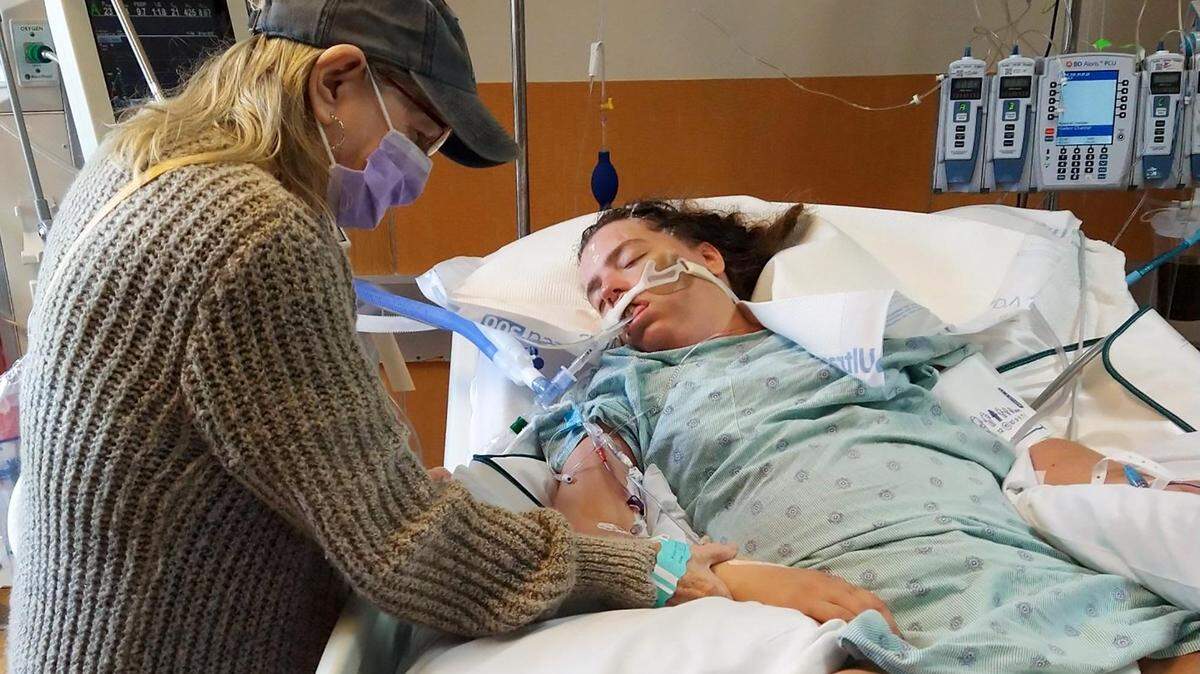
A woman with intellectual disabilities who was incarcerated in the Tarrant County Jail ended up being hospitalized after her family called 911 for medical help, according to a lawsuit filed against the county in federal court.
Kelly Masten, 38, has the mind of a 4-year-old or a 5-year-old child due to her disabilities, according to the lawsuit filed Wednesday. Her family is suing Tarrant County after an 11-day incarceration at the jail resulted in her being put into a medically induced coma in the ICU due to injuries she suffered while in jail, the lawsuit states.
The Tarrant County Sheriff’s Office, which oversees the jail, said in an email it could not comment on an open lawsuit.
On April 11, 2022, Masten was having a difficult day, according to the lawsuit. When she wanted to eat a chicken pot pie and found out there was none left, she became upset. Her grandmother was the only one home, and she tried to soothe Masten, according to the lawsuit. That didn’t work and only made her more agitated.
Eventually, Masten bit her grandmother, according to the lawsuit. The grandmother called 911, hoping to get medical help to calm Masten down.
Masten’s guardian, her sister Kristina Salinas, filed the lawsuit on her behalf. Salinas had recently moved to Missouri and had plans for Masten to join her after a few months, the suit says. In the meantime, Masten was in the care of her mother and grandmother. Masten has Lennox-Gastaut Syndrome, which causes almost daily seizures that can rob oxygen from her brain. according to the family.
Instead of authorities offering medical help, the lawsuit says, Fort Worth police officers arrived and placed Masten under arrest. Her family tried to explain her developmental disabilities, and Masten’s physical disabilities are visible, but officers didn’t listen, according to the suit. They told Masten’s grandmother that she would be taken to John Peter Smith Hospital in Fort Worth within a couple of hours.
That didn’t happen, according to the suit. Instead, Masten was incarcerated in a cell in general population that was not padded. A doctor from My Health My Resources of Tarrant County was called to examine Masten and recorded that her disabilities would be obvious to anybody, including deputies, corrections officers and anybody else with whom she came in contact, the suit states.
The doctor also said Masten was not fit for incarceration in the general public, but she was still kept there, according to the lawsuit.
On the morning of April 14, 2022, Masten was found on the floor in a cell, still in the general population, the lawsuit reads. She had a “wet substance” around her and blood on her face from a laceration on her lip. She was then taken to JPS, where doctors couldn’t access her medical records because she was booked with the wrong name and the wrong date of birth. Records provided to the hospital from the jail had redactions, including a word that Masten’s attorneys said they believe will eventually be found to say “seizures.”
Masten was discharged and sent back to the jail that same day, according to the lawsuit. She was given a prescription, but on April 15, a jailer informed a lieutenant that Masten had been having seizures in her unpadded cell. The lieutenant requested that Masten be rehoused by medical staff, but medical decided that she was OK where she was, the suit states.
A doctor ordered her to be rehoused by medical the next day but that didn’t happen, according to the lawsuit. On April 17, the appropriate authorities received the doctor’s order to rehouse her but said there wasn’t enough space and she remained in an unpadded cell. It wasn’t until April 18 that she was moved to a medical unit of the jail, still not in a padded cell. Nurses at the jail noted that if she started having a seizure while standing, she would fall to the ground. On April 19, the jail classified Masten as a fall risk. The next day, she fell out of a bunk in a concrete and metal cell.
An hour after that fall on April 20, Masten was taken by ambulance to the hospital, according to the suit. Her face was swollen and when paramedics arrived they found Masten on the ground with her legs wrapped around a metal post of a bunk because she’d fallen again. At the hospital, a doctor noted that bruising indicated multiple falls while in the jail. Her clothes smelled of urine and had food on them. Bruises were all over her legs, back, arms, hips, shoulders and face.
Family members on April 14 brought medications for Masten to the jail and informed authorities about her seizures but were turned away, according to the lawsuit. Salinas, Masten’s sister, posted her bond on April 20. While waiting for Masten to be released, she told a corporal at the jail reception that Masten didn’t need to be in a small concrete cell and told the corporal there about Masten’s developmental and physical disabilities.
The corporal at reception didn’t call to confirm Masten was safe and being prepared for release, according to the suit. They told Salinas that if she didn’t “calm down and listen” she would be escorted out of the building. The corporal said Masten was in a medical part of the jail and was being watched constantly.
The lawsuit says that is either untrue, or that the people observing her were watching her repeatedly fall and hurt herself.
Salinas was unable to pick up Masten that day, though, because she’d fallen earlier in the day and was waiting on an ambulance to take her to the hospital again, according to the lawsuit. In total, Masten was in the custody of the Tarrant County Sheriff’s office for more than 10 days.
When family members saw Masten, she barely recognized them, they said. She had a split lip, bruising all over her body and dark bruises around her eyes.
Seeing Masten like that made Salinas’ knees buckle and she screamed so loudly it brought security running to see what was going on, according to the lawsuit. Masten was taken into intensive care, where doctors put her in a medically induced coma and said they didn’t expect her to survive.
Masten did survive, according to the lawsuit, but her family still doesn’t know the full effects of her time incarcerated in the Tarrant County Jail.
The family is suing the county, alleging it violated Masten’s constitutional rights, and asking a jury to award them damages for pain and suffering, disfigurement, medical bills, attorneys fees and punitive damages.
This story was originally published April 11, 2024 at 8:58 PM.