Oral arguments in ex-cop Aaron Dean’s manslaughter conviction appeal focus on trial venue
Whether public assessments of the circumstances of a 2019 killing in Fort Worth offered by influential people in Tarrant County impacted a juror pool was the central element in dispute at oral argument on Tuesday in former police officer Aaron Dean’s appeal of his manslaughter conviction.
The year that elapsed between when many of the statements, which were reported in press accounts, were made and when the defense filed a motion to change the trial’s venue muted the statements’ ability to impact the pool, Assistant District Attorney Victoria Ford Oblon argued for the state in the Second Court of Appeals before Justices Elizabeth Kerr, Dabney Bassel and Brian Walker.
The panel, which had requested that the oral argument focus on the venue, will issue an opinion in the appeal.
Dean was last year convicted of manslaughter in the shooting death of Atatiana Jefferson as she held a handgun inside the house where she was living.
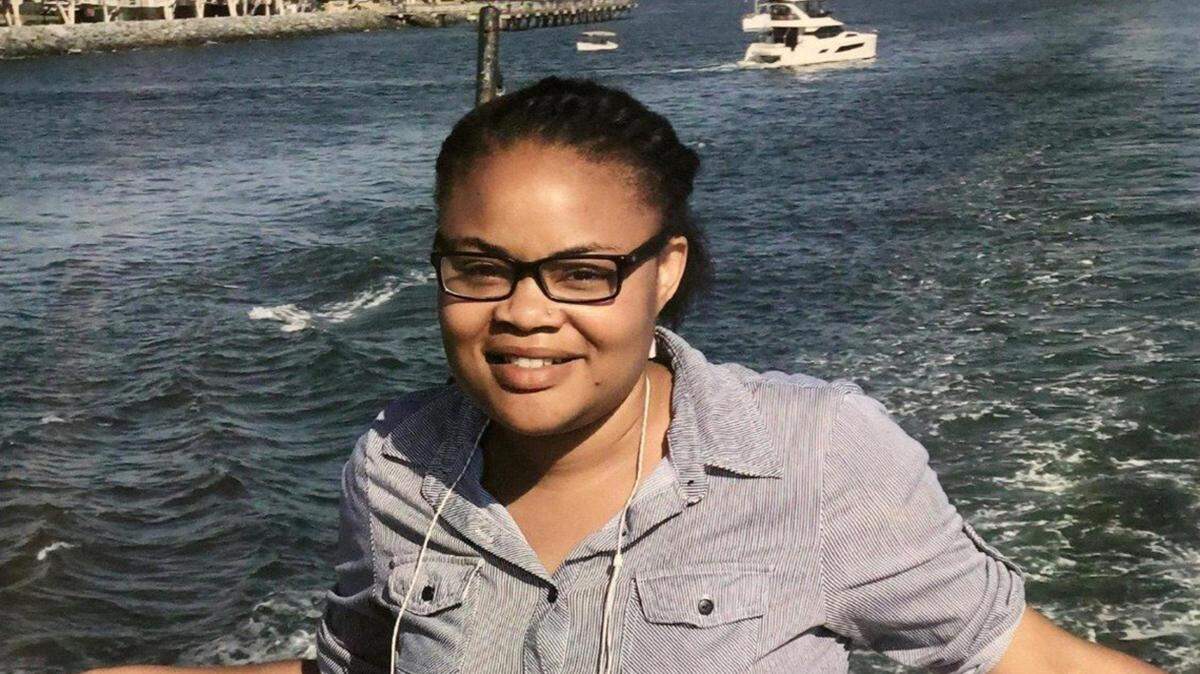
The observations and assessments cast the case as a racial matter, Dean defense attorney Bob Gill argued. Jefferson was Black; Dean is white.
“You know that this case ... has received an extraordinary amount of publicity. I don’t remember a time where I saw oral argument in a case make the front page of the Star-Telegram above the fold,” Gill said, referring to an earlier report in the newspaper. “Part of our argument is based on that extensive publicity, and part of our argument is based on the fact that all of that publicity was generated ... by a dangerous combination of individuals in Tarrant County, Texas. Elected officials. High-ranking social officials. Police officials. Many people who all contributed to the narrative in this case that led to Aaron Dean’s conviction.”
Eighty-two of the 191 people who reported for jury selection had never heard about Dean’s case prior to his trial. Sixty-five of the 109 people who had previously heard about the case said the publicity they viewed did not influence them to the point that they could not deliver a fair verdict, leaving 44 people who were excused after questions on pre-trial press reports.
Of those seated on the jury, five had indicated that they previously heard about the case.
Judge George Gallagher, who presides in the 396th District Court in Tarrant County, had the discretion to believe the prospective jurors offered truthful responses, the state argues. In response to a question from Justice Walker on the matter, Gill suggested that trial judges should evaluate such responses with skepticism.
Gallagher erred by not changing venue for the trial because there was sufficient evidence to support the existence of a dangerous combination of influential people, Gill argued.
The venue change was sought in a defense motion Gallagher denied on Dec. 5, one year before Tuesday’s oral argument.
Many of the statements offered by influential political and law enforcement officials were innocuous calls for justice to be served, Oblon suggested.
Fort Worth Police Chief Ed Kraus, Tarrant County Criminal District Attorney Sharen Wilson, Mayor Betsy Price and others dangerously combined against Dean beginning immediately after the killing in offering an opinion that Dean was guilty of murder and that there was no justification for the shooting, according to the defense appellate brief. Kraus, Wilson and Price have since retired.
Price assessed publicly the fact a handgun was found next to Jefferson was “irrelevant.” Price also said that the shooting was unjustified. The statements were untrue and may have misled people who later became jurors in the trial, Gill wrote.
Kraus, Wilson, Price and others “did not want to take any public stance that cast the decedent in a negative light so they cast [Dean] in a negative light instead,” Gill wrote.
In October 2019 Dean, through a window, shot Jefferson, 28. Dean was outside the house in the 1200 block of East Allen Avenue. Jefferson was inside the house.
A grand jury indicted Dean on murder.
The trial jury found Dean guilty of the lesser-included offense of manslaughter, a reckless killing. On Dec. 20 it assessed Dean’s punishment at 11 years, 10 months and 12 days in prison. Dean will be eligible for parole on Nov. 18, 2028, the date on which he will have served half of the term.
Jefferson’s neighbor described open front doors in a phone call with a police communications employee. Dean and another officer were dispatched to the house to investigate an open structure.
The officers walked into the back yard. Inside the house, Jefferson was playing video games in a bedroom in which her 8-year-old nephew was also present. Hearing a sound in the yard, Jefferson grabbed a handgun from her purse and moved toward the window.
The direction Jefferson pointed the gun at the time that Dean fired is in dispute. Her nephew, Zion Carr, testified at trial that she was holding the gun by her side. In the hours after the shooting, Zion, then 8, told a civilian forensic interviewer trained to question children who may have knowledge of crimes, that he and Jefferson were in the back bedroom. Jefferson told Zion “that she heard noises coming from outside and she took her handgun from her purse,” the child said in an interview, according to an affidavit supporting Dean’s arrest.
Zion said that, “Jefferson raised her handgun, pointed it toward the window, then Jefferson was shot and fell to the ground,” according to the affidavit.
At trial, prosecutors argued that Dean did not see the gun until he went inside the house after he shot Jefferson. Dean did not identify himself as a police officer and fired his gun within seconds of seeing a silhouette in a window, according to his body-worn camera video recording.
To resolve a lawsuit, the Fort Worth City Council last week voted to approve a $3.5 million settlement for Zion.
This story was originally published December 5, 2023 at 1:47 PM.