Mothers of victim and killer testify, call for justice in Lamar High School shooting trial
READ MORE
Lamar High School shooting
Our continued coverage of the school shooting at Arlington’s Lamar High School on March 20, 2023.
Expand All
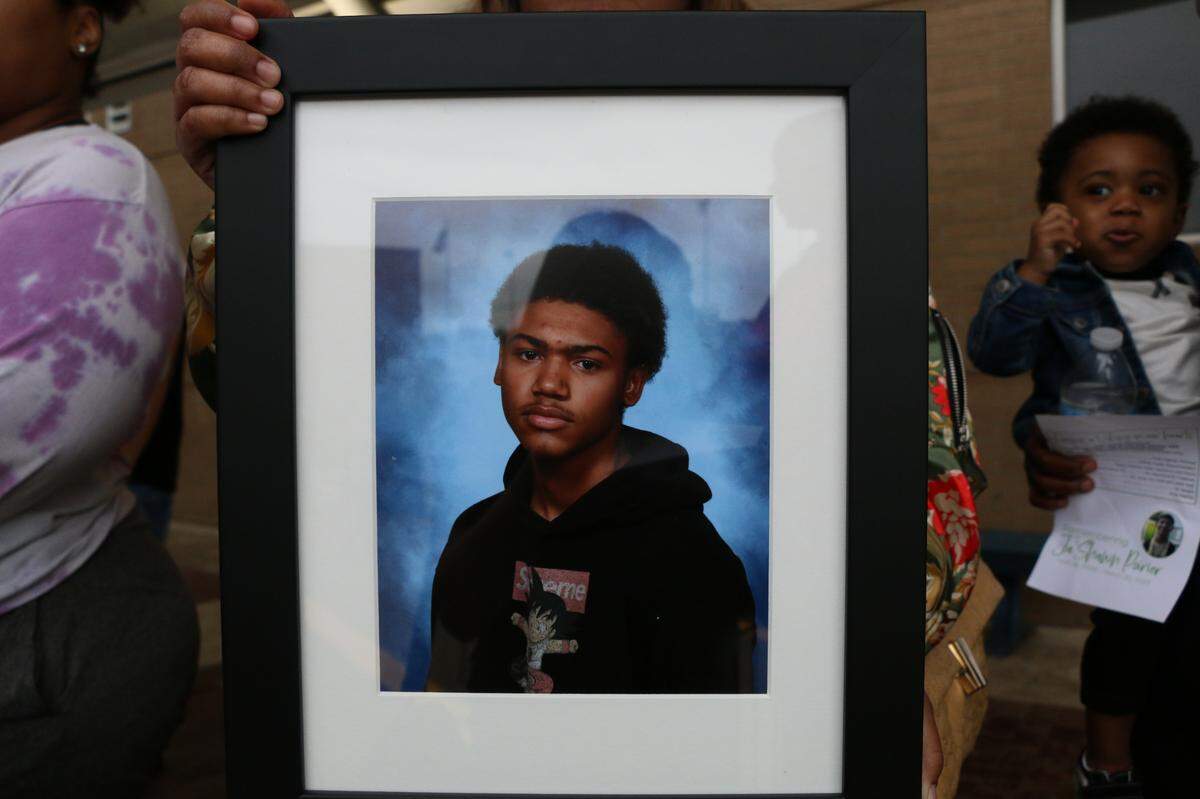
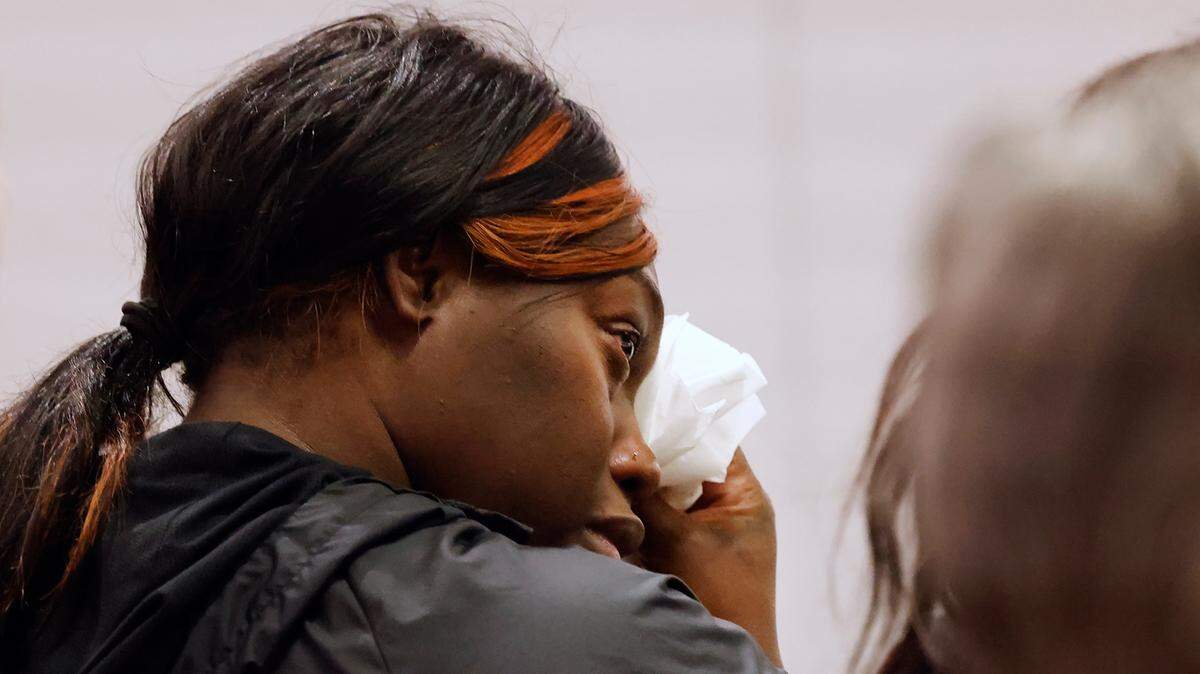
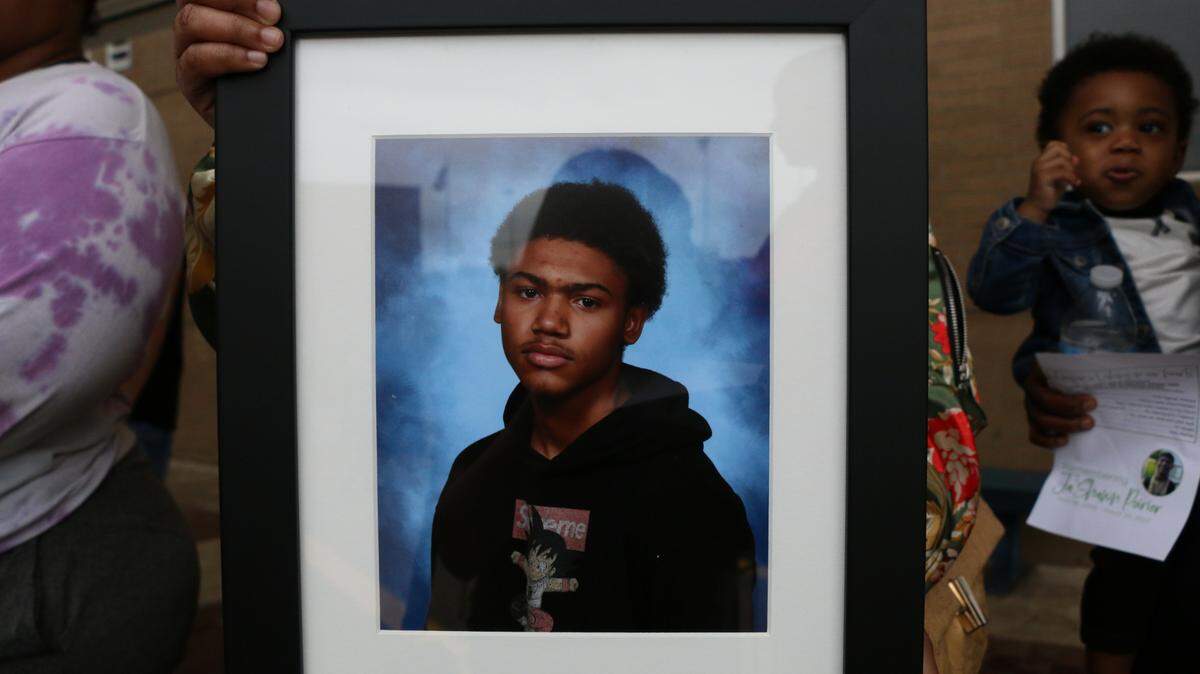
Rashone Jacob still hasn’t come to terms with the fact that her 16-year-old son, Ja’Shawn Poirier, is dead, she told the jury Wednesday morning in the trial to sentence his killer.
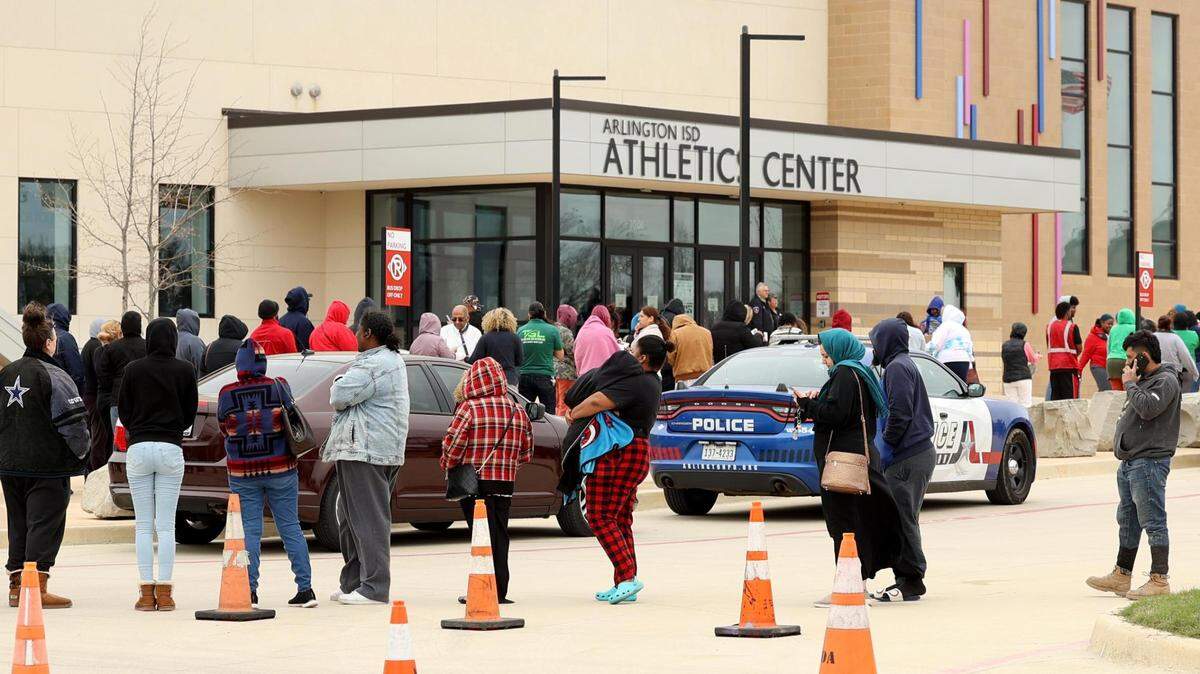
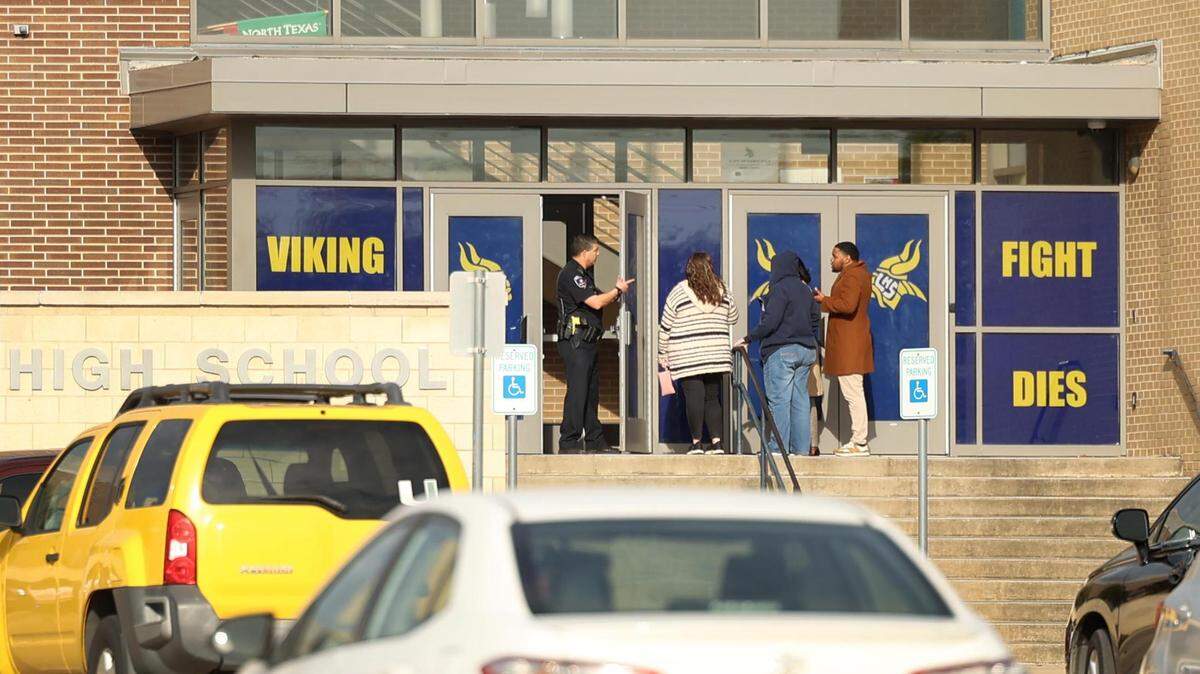
She still has all his things, packed now in her garage. When she returned from burying him next to her mother in Pontiac, Michigan, she was stunned by the number of people who turned up at a memorial service for him at Lamar High School in Arlington, the school where he was shot on March 20.
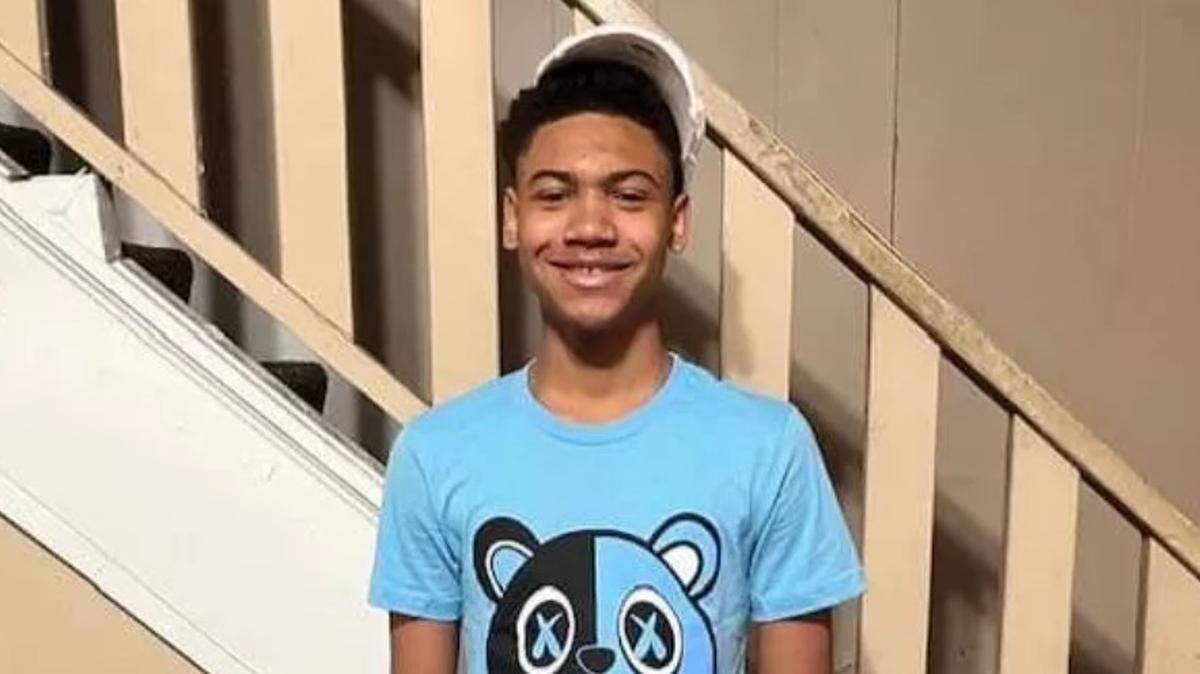
“My son was just a laid-back kid, who stayed to himself and loved to play sports and hang out with his family and friends,” Jacob told the jurors.
Jacob moved with her son and daughter to Arlington months before a 15-year-old student with a shotgun opened fire on a crowd outside the school, killing Poirier and wounding a female student. The shooter, who is not being named because he was convicted as a juvenile, has pleaded guilty to capital murder and attempted capital murder. The jury in Tarrant County Juvenile Court will decide his sentence from a range of no punishment to a maximum of 40 years.
Jacob’s son made good grades in Michigan and was doing the same in Arlington, she testified. He’d looked forward to playing football at Lamar High School, but because of when they arrived in Texas he was told he’d have to wait until the next school year, which would have been his senior year.
She was at work when she got a call from her cousin, telling her the school was trying to get in touch with her. That cousin told her that Poirier had been shot.
“All I can remember is just screaming, crying and calling my boss and telling her I have to leave,” Jacob said.
She tried to get to the school, but traffic was too heavy. Eventually, she ended up at the hospital where she was told her son was in surgery. She didn’t get to see him again before doctors told her Poirier had died.
Jacob said that while she has her daughter and cousins living in North Texas close to her, it’s felt like she has been processing the loss of her son by herself.
She wanted the jury to know that her son was the kind of person who made friends easily, despite being a quiet teenager who typically tried to keep to himself. He was loving and just wanted to spend as much time as he could with his family and friends and never did anything to hurt others, she said.
The rest of the family is still struggling with Poirier’s death, too, Jacob said. Her daughter was the one who dropped Poirier off at school that morning.
“It impacted her hard because she was the last person who saw him who dropped him off at school,” Jacob said. “They went skating that Sunday and then on Monday it happened.”
Shooter’s mother testifies
Prosecutors also called the shooter’s mother as a witness. She testified that she and her son texted each other 30 to 40 times a day, he talked about his friendships and he had parental support. A photograph of her phone showing a series of texts was shown to the jury as proof of their communication. Texts from March 9 talked about how the teen had been given in-school suspension after he racked up more than 100 unexcused absences throughout the academic year.
Defense attorney Lisa Herrick, in response, questioned the mother on why she didn’t know he’d been suspended before he told her, as well as why she didn’t know about a fight in October. The mother testified she knew about a fight he’d been in earlier in 2022, but was not made aware of the October altercation that resulted in a suspension.
The defense also asked the shooter’s mother why she withheld the actual number of children she has — having said three in previous testimony when in fact she has four children — and brought up that she has an older son who was recently released from prison after drug and vehicle theft convictions. The defense also asked about the home life the teenager had before moving in with his father in Texas in 2018, which the mother said was characterized by arguments, fights, violence and multiple visits to their home by police.
The defense from day one has conceded that the capital murder the teen has admitted to in court deserves punishment. In her testimony, his mother said she thinks he needs to face time behind bars, too.
“This is my child and even though I love him, accountability has to be given,” his mother told the jury.
Neither his mother nor his defense attorneys have yet made any recommendations to the jury of just how long they think the teenager should be incarcerated.
Frank Adler, co-counsel for the teen’s defense, told the jury that the defense would not be asking for the minimum sentence of no disposition, or zero punishment, but would be asking for less than the maximum of 40 years.
His mother told the jury she has called the juvenile detention center regularly to check on her son and only didn’t drive to visit him because it was seven hours from her home in Baton Rouge, Louisiana, to Fort Worth and she wasn’t certain he would see her.
His father has now been convicted of being a felon in possession of a firearm and sentenced to over six years in federal prison because authorities said the shotgun their son used in the shooting came from his home.
The teen’s mother also said she didn’t believe her son’s account about being sexually assaulted in a school bathroom in October. After his arrest, her son told police that he opened fire toward a crowd of students outside the school after he thought he recognized one of the classmates who had assaulted him. The mother told the jury in response to a question from the prosecution that she hadn’t noticed any changes in her son since the date he said he’d been sexually assaulted.
In response to a question from the defense, the teen’s mother said she hadn’t seen her son in person since before the alleged sexual assault.
Defense case
A juvenile capital murderer in Texas is held in a maximum security juvenile prison, or state school, that on the surface doesn’t sound a lot different from the prison an adult would be taken to.
That was part of the message defense attorneys hoped to get across to jurors as they began presenting their case Wednesday afternoon.
The prosecution, referred to in juvenile court as the petitioner, rested its case after the lunch recess, ending a day and a half of witness testimony including a surviving victim, police officers, investigators, a psychologist, juvenile corrections experts and the victim’s and shooter’s mothers.
The defense began presenting its case with experts in juvenile psychology and the juvenile justice system, hoping to persuade jurors that not only was the teenager’s brain not fully developed to control his actions and understand consequences, but also that he could be rehabilitated and that incarceration in a state juvenile facility would be just as much a punishment as if he were sent to a regular adult prison.
Daniel Krall, a senior psychologist with the Texas Juvenile Justice Department, testified that the juvenile jail that holds capital offenders has barbed-wire fences, high walls, locked doors and every hour of the day allotted for.
The primary differences the defense focused on were the requirements for juvenile inmates to attend school and counseling programs.
Krall told jurors that a juvenile guilty of a capital murder offense would receive group therapy, individual therapy, and psychiatric treatment as needed.
Each juvenile inmate also receives attention to individual needs, such as aggression replacement or substance abuse, Krall said. They also have opportunities to learn a vocational trade while incarcerated.
The capital offender program at Gainesville State School has a wait time as long as a year and an 85% success rate, though it has not treated any juvenile capital murderers, Krall said. Gainesville is in the process of expanding that program and every youth who qualified so far has been able to participate before being sent to adult prison or released.
The reincarceration rate for offenders who completed the program is 10%, Krall said. Most reoffenders were incarcerated again within the first year after their release.
Psychologist Stephen Thorne told jurors that teenagers make decisions with a “gas pedal” in their brain that says go, while adults who have developed healthily make decisions with a “brake pedal.”
He told the jury that means adolescents, because their brains have not fully developed, are more impulsive, blind to long-term consequences and may feel less remorse for harmful actions than would be normal in adults.
Defense attorneys for the teenager pushed the point that brain development can be slowed by social and environmental factors, such as experiencing domestic abuse, sexual assault, insufficient parental supervision and social isolation.
The arguments were a continuation of cases made on both sides of the trial, with the defense claiming that the killing was a result of an adolescent brain hampered by the sexual assault the teen reported, an unstable upbringing, distant or absentee parents and social ostracization.
In cross-examining Thorne, the prosecution questioned whether the murder, the fight the teenager had in October, a record of regular absences and tardies at school and the report of a sexual assault the state contends was fabricated are signs of psychopathy or antisocial personality disorder.
Thorne agreed that those could be seen as signs, but said they could just as easily be the result of being a young person with a rough upbringing.
The state’s case, as well as its responses to testimony of defense witnesses, seems to focus heavily on the idea that the teenager cannot be rehabilitated and needs to be sentenced to the 40-year maximum. The defense has pursued lines of questioning that suggest he can, and should, be given a lighter sentence because of the resources available to juvenile offenders to aid in rehabilitation.
Jury sees text messages
Prosecutors began the trial’s second day on Wednesday by introducing evidence they say shows the teen immediately began sending messages following the shooting in an attempt to create an alibi for himself.
The prosecution presented text messages police said were sent by the shooter before he was arrested. In those messages, he texted at least two people to say that he had too many tardies at school and had detention but he wasn’t going.
In another text message, the teen told a family member that somebody was shooting at the school.
“CALL THE POLICE THER SHOOTING AT MU SCHOOL,” the message said.
That message was sent at 6:58 a.m., two minutes after the teen has admitted he opened fire.
The family member sent several messages after that, asking if he made it home, asking him to call her and questioning why he wasn’t answering his phone.
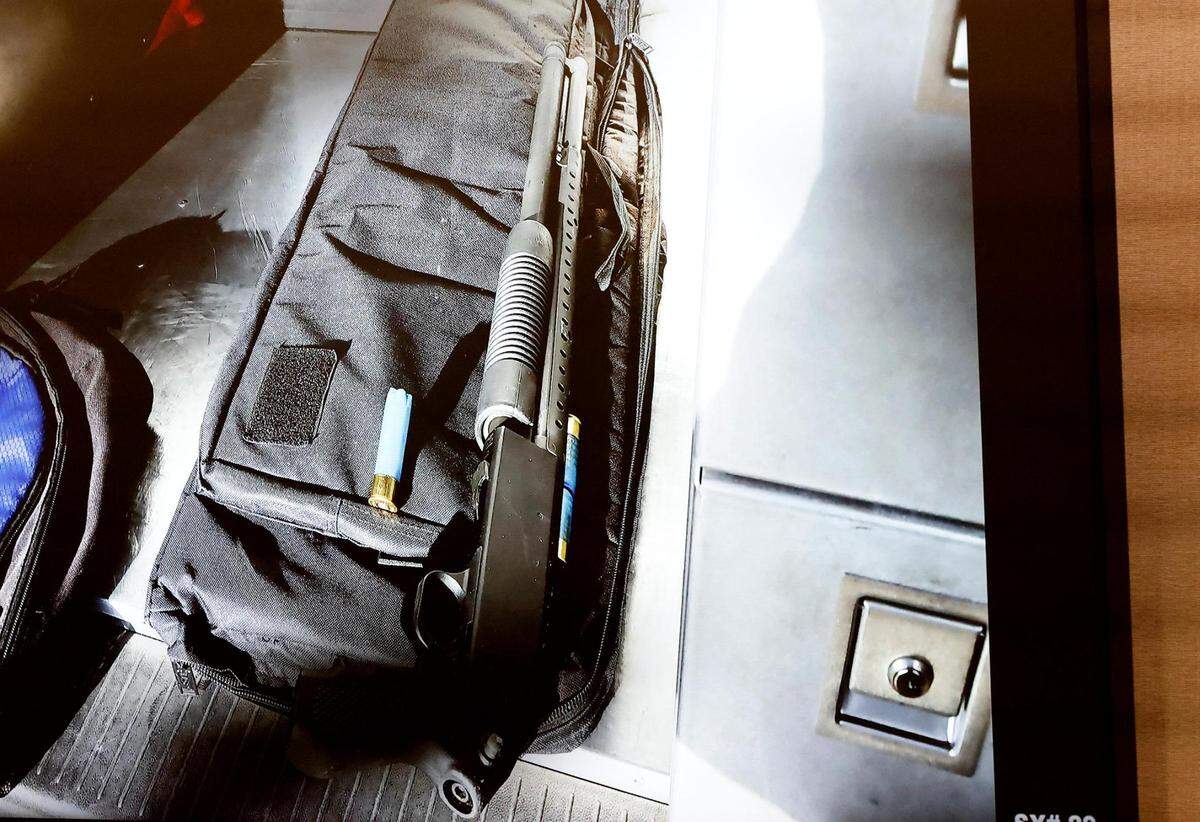
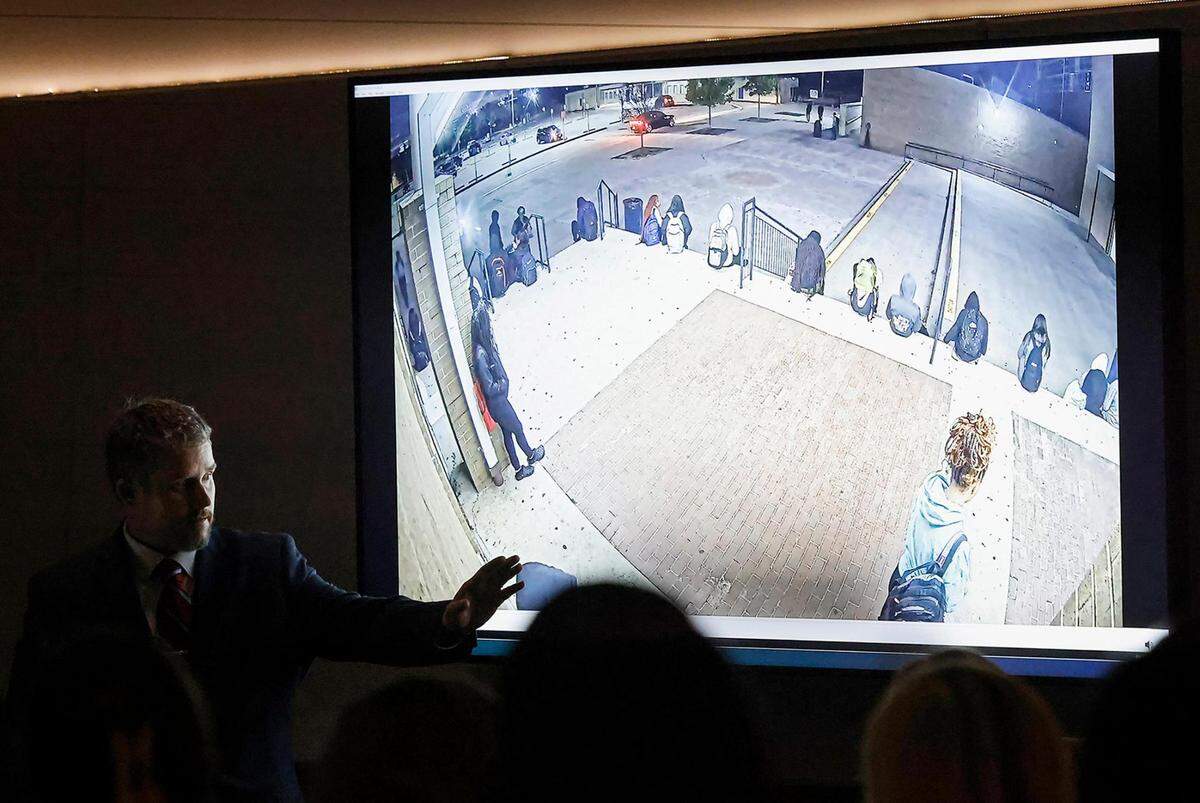
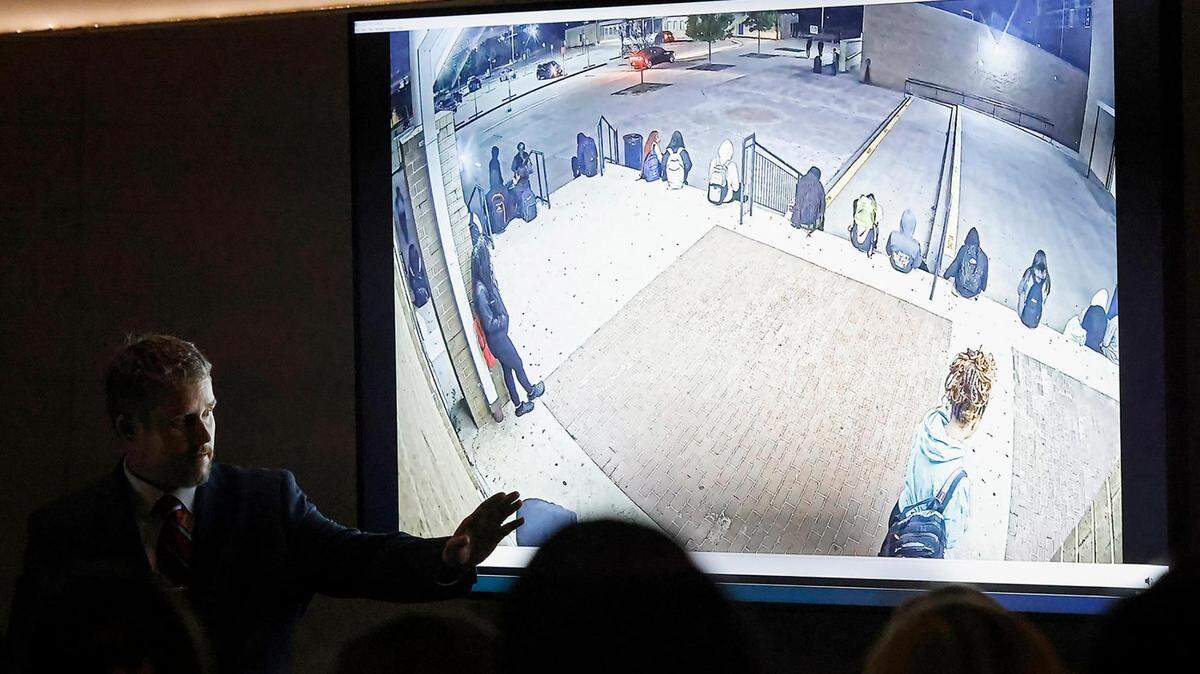
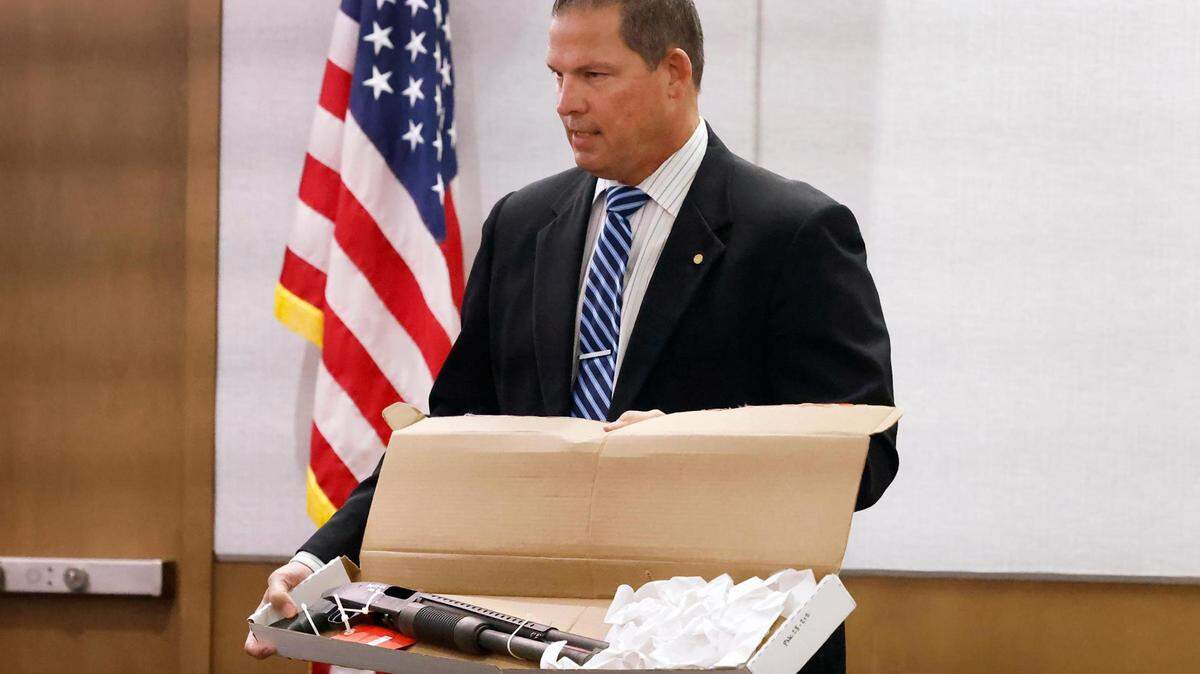
On Tuesday, jurors were told that the shooter was found and arrested shortly after firing a shotgun into a crowd of around 20 students waiting to enter the high school, and dropped a backpack that contained the shotgun he used as well as unused buckshot shells when he ran from police.
Attempted escape
Attorneys also presented evidence that the teen recently tried to escape from juvenile detention.
In a video, the teen can be seen standing and looking out the window in his cell door before a man with a flashlight identified as a detention officer walks up carrying a roll of toilet paper. The officer opens the door and the teen steps out and shoves the detention officer.
The teen then picks up the staff keys the detention officer dropped when he was shoved.
Another camera angle shows the teen running through a courtyard followed by the same detention officer before the teen strikes the officer with the keys. The detention officer then picks up a mop and begins striking at the teen with it, running him back into the building.
The teen continued running through the building in an attempt to evade detention officers.
Jarreau Grant, administrator of the Tarrant County Juvenile Service detention center, told the jury that there was no way the teen could have escaped the facility and that the actions of the corrections officer were under internal investigation, including the fact that the officer opened the door to the cell while he was alone and used a mop to strike at the teen.
Adler, the defense attorney, asked Grant if the only reason the incident was categorized as an attempted escape was because he was out of his cell when he shouldn’t have been, to which Grant said that was correct.
The trial will continue into Thursday with more defense witnesses.
This story was originally published September 20, 2023 at 1:04 PM.
.jpeg)