Arlington woman told 911 she wanted her life to be happy. Hours later, she was killed
On the day she died, all Sue Sudduth wanted was to find happiness in what remained of her life.
She told this to a 911 operator, who she spoke to for 28 minutes as she waited for police to arrive at her home on August Run in Arlington.
On April 11, 61-year-old Joseph Sudduth placed a 911 call to report that his wife was verbally abusing him. Sue Sudduth, 65, made a separate call to report the same thing.
“I want to report my husband, who is verbally abusing me and lying right now to 911,” Sue Sudduth says in the call, which the Star-Telegram received a copy of.
Police were sent to the house. The 911 operator asked if Sue Sudduth wanted to stay on the line until officers arrived, and she said yes.
For the next 20 minutes, Sue Sudduth talked to the operator about how her husband had physically and emotionally abused her. She said he had held a broken plate up to her face, strangled her and twisted her arm behind her back.
At one point, she told the operator she had tried to divorce her husband. In 2019, she asked him to give her $10,000 out of the 401k so she could get her own apartment. He refused.

“I want the final time in my life to be happy,” she says on the call. “And I don’t think I could ever be happy with someone who treats you like this.”
Arlington officers went to the house, but there was no evidence of physical assault or a crime at the time, Arlington police said. No charges were filed.
According to an arrest warrant affidavit from Arlington police, a few hours later, Joseph Sudduth killed his wife in their bedroom.
Rediscovering a mother
Angela Walter had never been inside her mother’s house.
The first time she stepped inside the brown-bricked, single-story home in Arlington, she found both hints of the woman she had not seen for 25 years and evidence of all that she did not know about Sue Sudduth.
She avoided the bedroom as she picked through the house on August Run. She knew it was there that her mother’s body had lain, wrapped in trash bags from head to toe. Sudduth’s husband had lived in the house with her body for two weeks.
When she found out about her mother’s death on April 26, Walter and her husband got on a plane from Washington to Texas as soon as COVID-19 restrictions allowed them to,
In October, she found herself in the home of a hoarder, and saw signs of her mother’s depression. Her mother used to be obsessively neat, and Walter’s jaw dropped as she walked through the house.
“That was so far beyond the person I knew,” she said.
Throughout the house, she made new discoveries about her mother. Sue Sudduth had loved history, based on the books about Native American, Western and Southwestern history stacked around the house. She had started drawing again, and floor-to-ceiling bookshelves showed she was a vivacious reader.
But she also found pieces of the mother she knew. A Texas Rangers purse reminded Walter of how much her mother loved baseball, and the games where they would sit on the bleachers, her mom in a Rangers T-shirt, eating the ice cream that came in the cup with the pull-off lid. In the kitchen, she found a stack of multi-colored index cards with meals written on them — the same kind she had once laid out for Walter to let her know what was for dinner.
Finally, all that remained was the bedroom. She drew a deep breath and pushed open the door.
Abuse and estrangement
Sue Sudduth’s husband of 30 years, Joseph Sudduth, was the reason Walter did not speak to her mother for over two decades.
Sudduth had Walter when she was very young and the two were close. Walter’s friends later said they were envious of how they shared everything with one another.
“There are great things I remember about her — and not great things,” Walter said. “There was an estrangement for a reason.”
When her mother married Joseph Sudduth in 1981, Walter immediately felt that something was off about him. As a 10-year-old, she hid in her room when the couple watched TV in the their room. The two fought, sometimes physically. When Walter was around 12, Joseph Sudduth turned his abuse on her, too, she said. He handcrafted an 18-inch wooden paddle — drilling 12 holes and varnishing it dark brown — and used it to hit her as punishment for breaking curfew or bad grades.
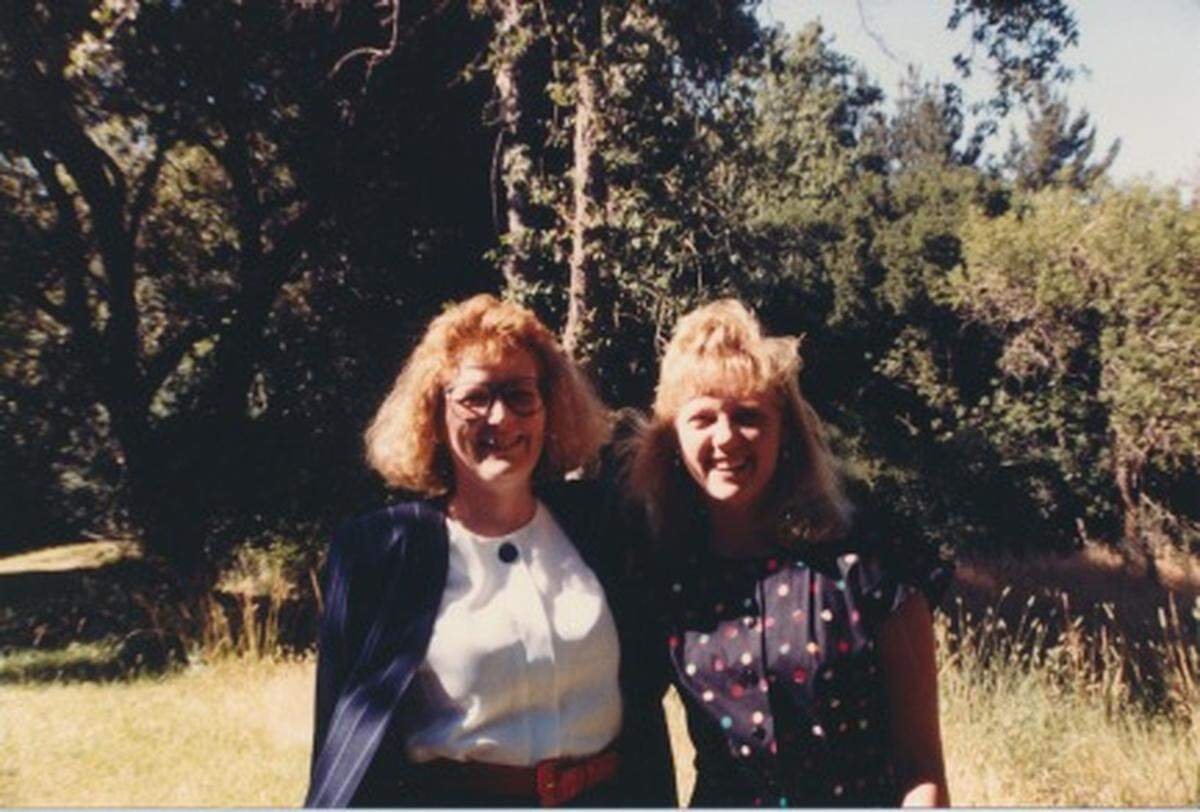
In 1984, the couple were in a severe motorcycle accident. Joseph Sudduth had his foot amputated, and Sue Sudduth broke her leg in 17 places. Things got worse after that.
“There’s this one incident that I can’t get out of my head,” Walter said. “He was holding her leg in this full cast and he’s saying, ‘Do you want me to break your leg again? Do you want me to?’ and she’s screaming, ‘No no,’ and I’m yelling, ‘Let my mom go!’”
Four years later, Walter and her mom planned to move away from Joseph Sudduth and get an apartment together. But Walter went to visit her dad in California and something changed. Her mother called Walter; she said that her husband said Walter was destroying their marriage and kicked her out of the house.
She was never able to go home again.
“(Domestic violence) broke a family apart for 20-something years,” Walter said. “It can hurt everybody. I made the choice to stay away, but it hurts to not have mom. It hurts more than just physically. It hurts all over.”
For years, Walter avoided her mother’s calls and kept the Sudduths out of her life.
“I thought I had to protect my family and myself,” she said. “There’s so much guilt. If there had been one call, if she had divorced him, everything would have changed.”
Instead, the biggest insight Walter had into her mother’s marriage with Joseph Sudduth came after her death, when she listened to a 28-minute 911 call.
‘He killed her, didn’t he?’
When she listens to the 911 call her mother made on April 11, Walter feels overwhelmed with sadness for her mother.
“It breaks my heart to know that in those last few hours, she wasn’t happy,” she said. “She didn’t have happiness. He denied her of it. I can’t get it out of my head. And my mom wasn’t an angel either, but she was human, you know?”
The last time Walter saw her mother was in a courtroom when her mother was charged with assaulting her in 1995. Her mother had never been perfect, but Walter thinks her mother took her frustrations of being abused by her husband out on her.
She wishes things had been different. Sometimes her mother would call her, but she did not pick up. Her son would get anonymous birthday gifts that Walter later learned were from her mother. Going through her mom’s house, Walter found old letters she sent her mom and her school report cards that her mom had kept all these years.
“If I had taken one phone call and listened and not been angry…” Walter said. “I was stubborn and angry. I feel really guilty about it, that maybe I could have helped her and my son could have known his grandmother.”
On April 26, Walter’s aunt called her and told her that her mother was dead. Walter asked if it was COVID-19. Her aunt said no.
“And I said, ‘He killed her, didn’t he?’” Walter said.
The confession
On April 22, one of Sue Sudduth’s friends who regularly brought her groceries pounded on the door on August Run. She had called and left messages for her friend for days and heard nothing. At the house, she noticed a blanket was draped over a window. She banged on the door and said she was going to call the police.
The next day, she called for a wellness check on the house. But Joseph Sudduth was already gone.
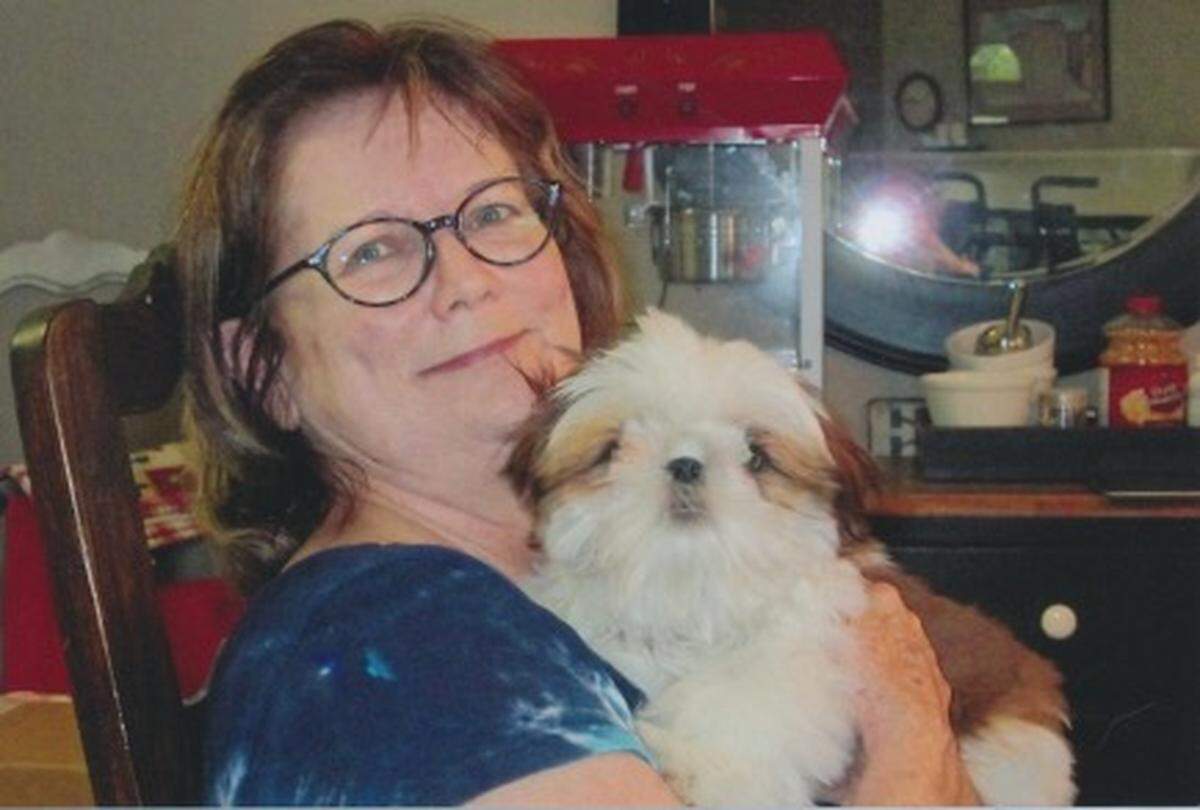
After hearing the pounding on the door and the threat of police, Joseph Sudduth drove to his mother’s house in Temple, according to the arrest affidavit written by Arlington police. He told his mom he wanted to die by suicide, and his brother picked him up to take him to the hospital. On the way there, he told his brother that he had killed his wife.
His brother called the police nearly at the same time that Sue Sudduth’s friend did.
Inside the house, police found Sue Sudduth’s body in the bedroom, wrapped in trash bags and sheets.
According to the affidavit, Sue Sudduth died from blunt force trauma and was strangled with an electric cord. Broken ceramic pieces from a lamp near her body were stained with blood. Police said blood spatter on the closet door indicates she was hit in the head with the lamp.
Joseph Sudduth eventually told police that his wife pushed him and he fell into the lamp. He said he “snapped” and wrapped the electric cord around her throat, according to the affidavit. He did not have any injuries, police said.
Walter said she does not believe Joseph Sudduth simply “snapped.” He sat in the house with his wife’s body for 12 days and had a history of violence, she said.
“I sometimes end up putting myself into her position and thinking of those last moments,” Walter said. “You’re watching this person you’ve been married to who is taking your life and they’re taking it with anger.”
Joseph Sudduth was arrested on April 24 and charged with murder. On Oct. 7, he was released on a $100,000 bond.
Because of COVID-19, the courts are moving slower than usual. For Walter, the delay adds an extra layer of frustration as she waits for her mother’s accused killer to be held accountable. She spoke with the Tarrant County DA’s office, but officials could not give her a definite timeline of when the case will move forward.
She hopes that someday soon she can face him and “let him know that he took away a person that meant something to people.”
Fighting domestic abuse
When she visited Texas to go through her mom’s things, Walter learned perhaps more about her mother than she anticipated. But while she saw the dark corners of her mom’s life — the hoarding, the abuse, the loneliness — she also caught glimpses of a witty, charming woman who had deep friendships and a thirst for knowledge. She learned about her mother’s love for her dog, Quincy, and time spent teaching children at the Amon Carter Museum in Fort Worth.
Sue Sudduth’s friends told Walter they went to happy hour at Cheddar’s every week. Walter went to the restaurant and ordered her mother’s signature drink — it was “sweet as can be” but she drank it, anyway.

Her mother’s friends said they couldn’t help but be angry with Sue Sudduth for not telling them what was happening at home.
“I think that’s kind of a grief thing, like ‘God why didn’t she just tell me?’” Walter said. “It’s not that you didn’t know her. It’s just who shares that kind of stuff? She had bruises but would say, ‘I fell, I tripped.”
This year, Tarrant County has had a record number of people killed by domestic violence. According to the District Attorney’s Office, 17 people were presumed to have been killed by their former or current partner from March through November — a 112% increase from last year.
Walter wants people to know they can get help, or they can offer help from domestic abuse.
“You think it could never happen to you, that you’re not going to die,” Walter said. “But people do. I wish there was a way to say reach out, tell somebody. You’re worth it. You and your family are worth getting out of it. Your life is worth something.”
Domestic violence resources
SafeHaven, a Tarrant County domestic violence center, offers immediate shelter and a 24-hour crisis hotline at 1-877-701-SAFE (7233).
One Safe Place, family justice center, is open at 1100 Hemphill St. to anyone who needs help and can also be contacted by phone at 817-916-4323 from 8 a.m. to 5 p.m. or through its website, onesafeplace.org.
Methodist Justice Ministry provides free legal representation to victims of domestic violence in Tarrant, Johnson and Parker Counties. The nonprofit provides financial support for rent, utilities, car repair, medical equipment, education and job training as well as counseling.
Methodist Justice Ministry can be reached at 817-339-2407 or via email at mjm@myfumc.org and is located at 750 W 5th St in Fort Worth.
Union Gospel Mission of Tarrant County provides services to people experiencing homelessness, including women who are victims of domestic abuse. The center can be reached through phone at 817-339-2553 or at 1321 E. Lancaster Ave. in Fort Worth.
The Women’s Center provides crisis intervention, legal services and counseling to survivors of sexual assault. The center is open at 1723 Hemphill St. from 9 a.m to 5 p.m., Monday through Friday. A 24-hour rape crisis hotline is open at all times at 817-927-2737. The center’s main office can be reached at 817-927-4040, and the center’s website is womenscentertc.org.
The national Domestic Violence Hotline is available 24/7 via phone at 1.800.799.SAFE(7233) or through online chat at hotline.org.
This story was originally published December 17, 2020 at 6:00 AM.