‘Difficult’ and ‘weird’ Fort Worth homicide case closed after boyfriend’s confession
Seven years ago, a woman knocked on Shaolin Taylor’s door and told her that her sister was dead.
Sarah McKinney’s body was found floating in the Trinity River in July 2013. Her death was shocking for more than one reason — McKinney had always been terrified of water, and Taylor could not believe her 18-year-old sister had willingly gone near the river. The death made no sense, and yet the family was told McKinney had likely died by suicide or it had been an accident. For seven years, the family has tried to come to terms with those possibilities.
But now, Taylor’s suspicions around McKinney’s death have been confirmed. McKinney’s former boyfriend confessed in July that he pushed McKinney off a bridge, according to a Fort Worth police arrest warrant. He was charged with McKinney’s murder on Sept. 2.
While Taylor is grateful that someone was arrested in her sister’s death, the relief is marred with frustration. She found out on Sept. 6 that McKinney’s then-boyfriend — Justin Azocar — was interviewed by police in 2013 and, while he told a story about McKinney’s death that seemed improbable, he was not arrested.
“It’s been years, he was able to just walk the streets,” Taylor said. “And we knew in our hearts that he did something.”
The detective on McKinney’s case, Kyle Sullivan, said the case was difficult from the beginning, and even though he suspected Azocar could be hiding something, there was not enough evidence back then to prove anything.
“If I’m suspicious but not 100% of accurate, where do I go?” Sullivan said. “I’m arresting the wrong person for a crime they didn’t commit.”
Who was Sarah McKinney?
McKinney was “the light in the room,” Taylor said. She was hilarious, spontaneous and positive.
“Everything she did was on a whim. She didn’t think before doing anything,” Taylor said. “She was like, ‘Let’s go here and do this and have fun.’ She made the best of every situation.”
The 18-year-old’s dream job was to be a dental assistant. For some strange reason, Taylor said, she loved teeth.
“So weird, but she did,” Taylor said, laughing. “She was always like, ‘Gotta make sure you brush your teeth and floss!’”
But McKinney also had a hard life. She grew up in the foster care system, and after she gave birth to her daughter at 16 years old, she had severe postpartum depression. She thought she might lose custody of her daughter at one point, and right before her death, she disappeared for about a month and a half. Taylor said her foster sister still kept in touch with her, but Taylor did not always know where McKinney was.
McKinney’s daughter was 2 years old when her mother was found dead in the Trinity River. Taylor was 19.
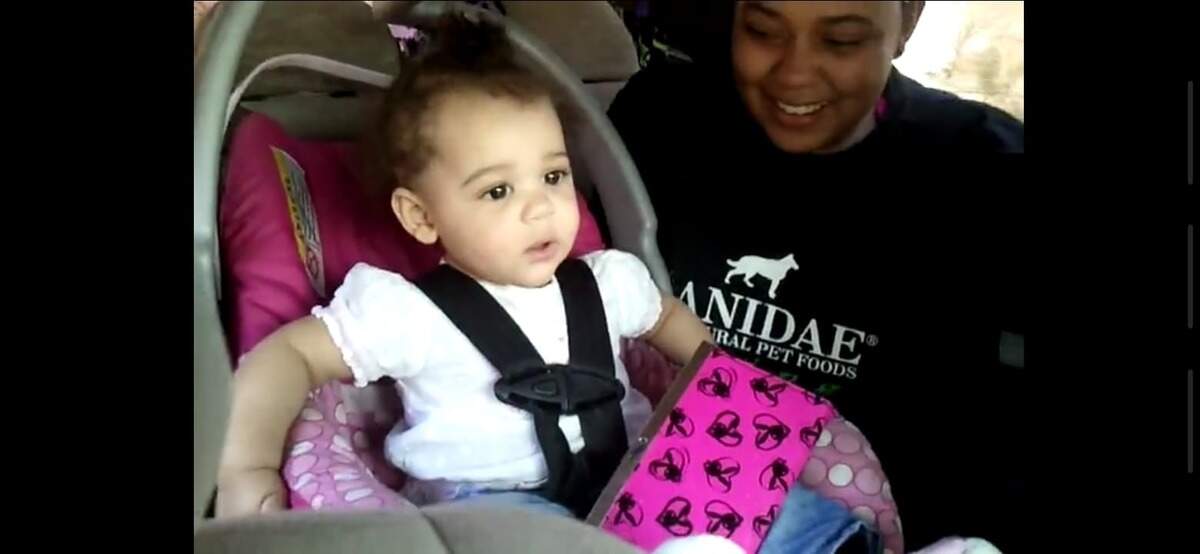
Taylor and her 20-year-old brother were immediately confused by McKinney’s death by drowning. Taylor said her sister had always been scared of water, and she could not swim.
“She would freak out bathing my niece if my brother would put her in the tub with too much water,” Taylor said. “To hear it was an accidental drowning and she jumped off or she slipped and fell, none of it made sense to us.”
Her brother, Matthew Taylor, thought he had the answer. He suspected McKinney’s boyfriend, Azocar, and he was convinced he had done something to his sister.
“And when my brother showed me that guy’s picture, seven years ago, he just told me, ‘I know he did it. He did something to her,’” Shaolin Taylor said. “We couldn’t prove it.”
The investigation
McKinney’s case was difficult to investigate from the moment her body was pulled from the river on July 30, 2013, Detective Sullivan said. Identifying her body took about a day, and it appeared that McKinney was homeless. She had no physical trauma to her body, and there was no clear explanation about why she would be by the river. A medical examiner ruled her death an accidental drowning, but made a note in his report that her death was suspicious.
Sullivan has investigated cases before where a person’s body was found in the river, and usually finds an explanation about why they were there. Some people went fishing, others were bathing in the river, as some people experiencing homelessness do often.
Looking back, Sullivan said the lack of explanation about why McKinney was by the river indicated it could be a homicide. But McKinney had no injuries, and there were no witnesses and no cameras.
Sullivan said Azocar’s name “wasn’t even on the tip of my tongue” until a little over a year later. A man being interviewed in an unrelated assault in September 2014 told a Fort Worth investigator that his friend, Azocar, had pushed McKinney off a bridge and killed her.
Sullivan pulled Azocar in for questioning later that day. Azocar told investigators that he had been dating McKinney, but the last time he saw her, she left for the store and never came back. He said a man named Cloud admitted to him that he killed McKinney. He said Cloud told him that he and McKinney were sitting on the railing of a pedestrian bridge, drinking, and Cloud asked McKinney if she “wanted to go swimming.” Even though McKinney said she could not swim, Cloud shoved her into the water.
Sullivan searched for Cloud in the police database, but could not find anyone with that name. He thought Azocar’s story was strange, so he asked him to take a polygraph test. The test, which consisted of three questions about McKinney’s death, was inconclusive. Sullivan noted that Azocar used drugs and had schizophrenia, so he wondered if Azocar was just confused.
“You want DNA, fingerprints, a confession — but these types of cases are hard even for investigators,” Sullivan said. “I struggled with making an arrest without physical evidence.”
Due to the lack of evidence that McKinney’s death was a homicide, Sullivan ruled McKinney’s death as accidental or a possible suicide and closed the case. The investigation had ended.
At least for police.
Shaolin Taylor and her brother heard the rumor about a person named Cloud — although they did not know that Azocar started it — and spent years searching for him. No one had heard of him.
“The only person it came back to was Justin,” Taylor said. “She was around him, he was the last person that she had any close contact with, and I of course knew he was bad news.”
Matthew Taylor spiraled after McKinney’s death, Shaolin Taylor said. He went down “a dark path” and is now in prison. She said he could never properly grieve without knowing what happened to their sister.
Taylor started to think maybe her sister had jumped off the bridge.
“After seven years, you try to believe it was an accident or maybe she did just give up,” she said.
Three confessions
But in 2020, Azocar confessed to police three separate times that he killed McKinney, according to Sullivan. One of those times, he was ignored.
The first confession was on July 11. He was drunk at a 7-Eleven gas station and called police to say he wanted to confess to killing McKinney, Sullivan said. Police assumed he was not in the right frame of mind and took him to a behavioral unit at John Peter Smith Hospital.
On July 27, almost exactly seven years after McKinney’s body was found, Azocar called police again and repeated that he killed his girlfriend in 2013. This time, an officer Googled the story and found a Star-Telegram article about McKinney’s death. He called Sullivan.
During an interview, Azocar told Sullivan how and why he pushed McKinney of the bridge in 2013, even describing the color of the handrail they sat on, Sullivan said. He said he and McKinney sat on a pedestrian bridge near Panther Island Pavilion, and that they started arguing because she thought he was cheating on her. He pushed her, but said he did not mean to shove her hard enough for her to fall off the bridge, according to an arrest warrant. He said he didn’t know if she could swim or not — although when he told the story about Cloud in 2014, he said everyone knew she could not swim.
Azocar told Sullivan that he made up the Cloud story because “in a way he was trying to admit that he did it,” according to the arrest warrant, which was issued on about four weeks later on Aug. 24.
Moving forward
Shaolin Taylor found out about Azocar’s arrest from her brother’s girlfriend on Sept. 6. She said the family’s phone numbers have changed over the years, so police might not have been able to get in touch with them. Sullivan said he tried to get in touch with the family but was not able to.
When Taylor found out about Azocar’s arrest, she found herself “screaming all over again.”
Matthew Taylor took the news hard as well. He and Shaolin Taylor both remembered when Azocar went to Matthew and told him “that he was sorry for our loss.” The memory is hard to stomach now.
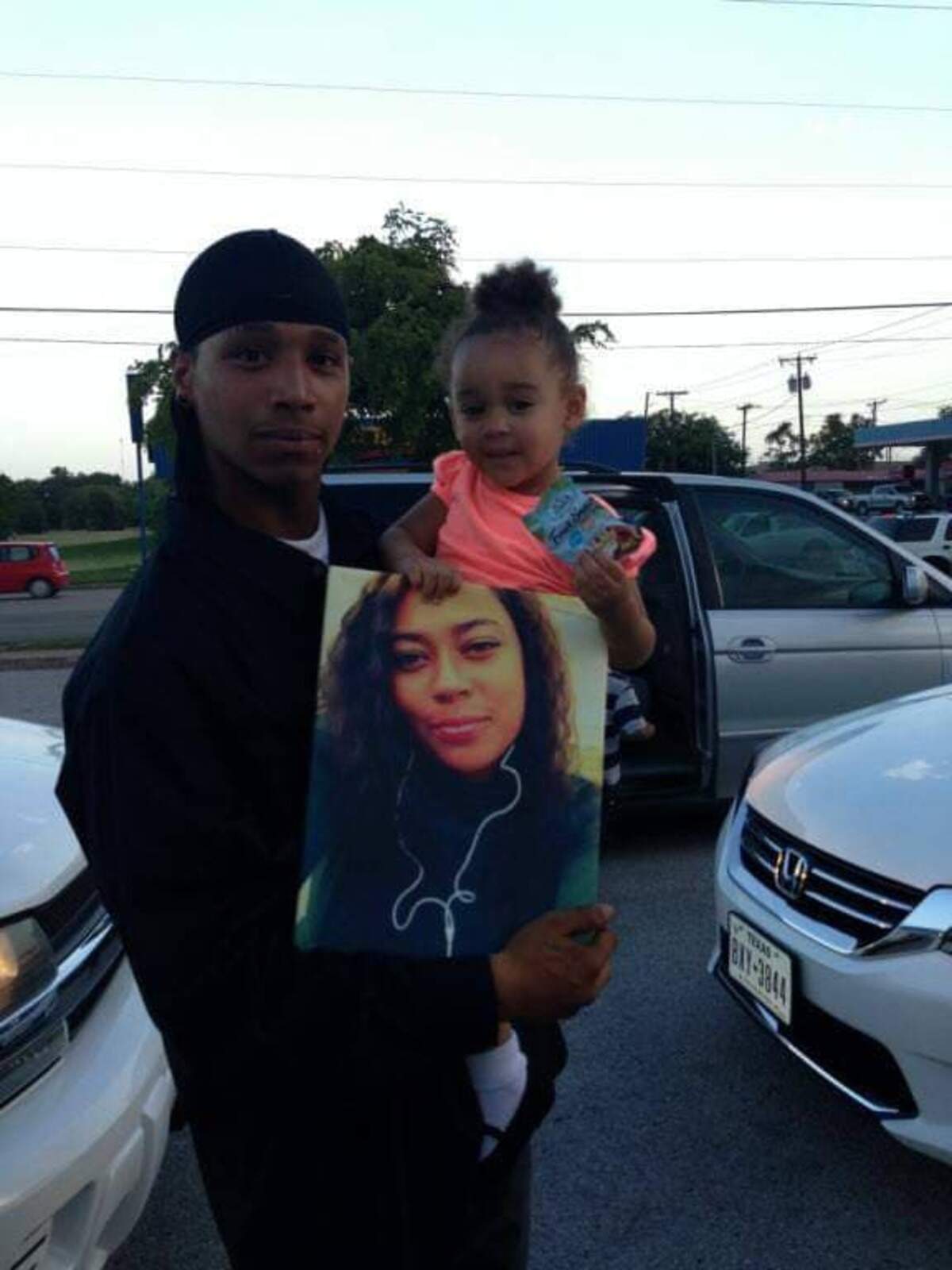
“I don’t know why they didn’t arrest him. My mom is trying to stay positive, like maybe they didn’t believe the friend” who told police Azocar was guilty in 2014, Shaolin Taylor said. “There’s so much that they could have done. It shouldn’t have took seven years. And for him to admit it just at random seven years later for a second time, for them to make the arrest. What evidence do you have now that you didn’t have seven years ago to make the arrest now?”
Sullivan said although he has no new physical evidence in McKinney’s death, he believes Azocar killed McKinney because “he tried to make three or four different outcries.” Sullivan might not have been able to make an arrest in the case at all if Azocar had not confessed, he said.
“It was a weird case. I don’t know how it’s going to come about with the District Attorney’s Office,” he said. “I’ve never had something like this before.”
McKinney’s daughter is 9 years old now, and she is the spitting image of her mother, Taylor said. She was adopted by their aunt and has “the same sassiness, the same charisma” of her mom.
If McKinney were still alive, Taylor said she has no doubt she would have become a dental assistant due to how determined and smart she was.
Taylor and her family moved away from Fort Worth and to Hope, Arkansas, about a year after her sister’s death. She’s pregnant with her first daughter and third child.
She hopes her brother will be able to finally let go and be at peace about his sister’s death.
“I told him yesterday that this is his way of getting a new beginning, now that the truth is finally out,” she said. “I feel justice, but there is still anger behind it.”

This story was originally published September 10, 2020 at 5:00 AM.