Family struggles with closure after Fort Worth police find girl’s killer 36 years later
Before his sister disappeared, Lee Fuller remembers the summer of 1983 feeling like a vacation.
He and his sister, 11, were two kids from England. The Texas heat, the motel swimming pool and the long days without school felt more like a holiday in Spain than a stay at an Arlington motel off I-30.
Lee Fuller, his sister, Julie, and his mother, Janet Fuller, joined their father that summer at the Kensington Motor Lodge and Apartments. Colin Fuller, a U.S.-born electrician, had already been in the states for a few weeks to start a new job.
On June 27, 1983, Lee Fuller was watching TV in their room, “doing something useless.”
Julie was searching for something to do, as usual. She was not one to sit around, Lee said. She offered to take the trash out to the dumpster and left the room.
She never came back.
“As first we thought she was in one of the other apartments,” Lee said. “We were walking up and down looking for her. I remember walking around saying, ‘I’m going to kill her.’ I was annoyed we couldn’t find her.”
As hours passed, the annoyance turned to worry. The children’s mother called the police. The next day, their father talked to officers.
Lee Fuller was watching “Three’s Company” on TV when he heard his father scream “like a wounded animal.”
Construction workers had found Julie’s body along the bank of the Trinity River in northeast Fort Worth. She had been raped and strangled.
That day 36 years ago fundamentally changed Lee. He grew up quickly, leaving behind the idle worries of a 13-year-old boy and becoming the man whose sister was murdered.
Lee and his family moved back to England and his parents split up. Lee was angry at his dad for a long time, blaming him in a way for Julie’s death because it was his father who took them to Texas in the first place.
“If this wouldn’t have happened, we still would have been in Texas,” he said. “It would have been a different life.”
Over the years, Lee talked with various Fort Worth detectives about his sister’s murder, which had become a frustrating cold case. There were no firm suspects and few substantial leads.
The most evidence the police found at the scene of Julie’s death was DNA the killer left behind. That turned out to be enough.
In 2018, the Fort Worth Police Department partnered with Parabon Nanolabs, a Virginia-based company that tracks DNA that is not in law enforcement’s databases through genealogical mapping. In February 2018, the company analyzed DNA samples to create a snapshot of what Julie’s killer looked like.
In December, the company found a match to that DNA, Fort Worth homicide Detective Tom O’Brien said.
After decades, Lee Fuller finally had the name of the man who police say took his sister from him — James Francis McNichols.
Julie Fuller’s killer
James McNichols lived in various motels in DFW through the ‘80s and ‘90s, O’Brien said. Several reports verified his life here — a DWI, a few assaults; nothing that would have landed him in jail.
His family had left and moved out of the state. McNichols had a few girlfriends, but O’Brien was not able to reach any of them
“He was just living place to place, going from motel to motel,” O’Brien, who started investigating Julie’s death in 2013, said.
From what O’Brien can surmise, McNichols kidnapped, raped and murdered Julie merely because he had the opportunity to do so.
O’Brien found evidence that McNichols probably sexually assaulted other children, but they did not report it.
“I think he just preyed on people he knew wouldn’t say anything,” O’Brien said. “The difference here is, he knows this girl is going to say something. And that’s where the death comes in.”
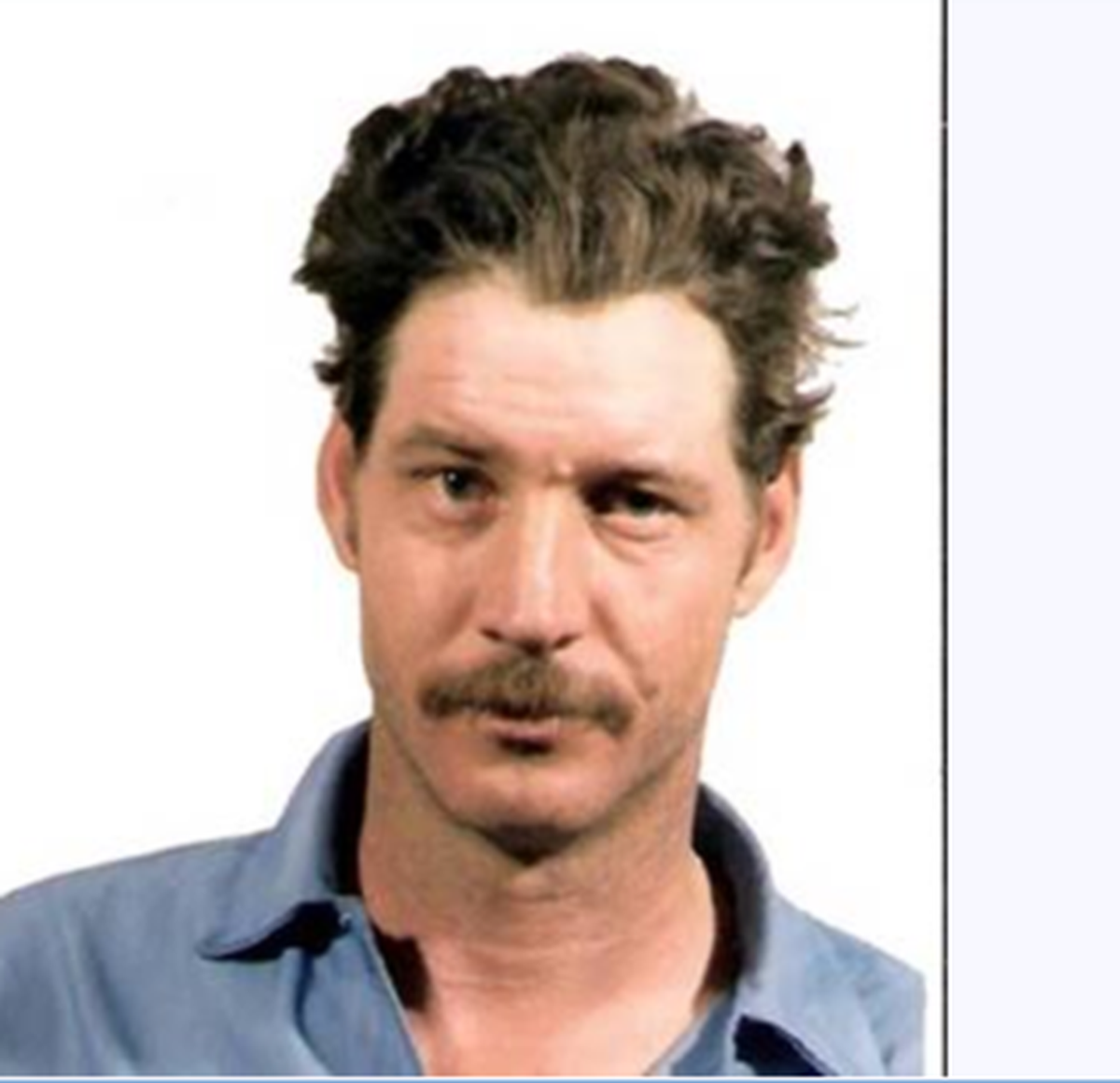
After leaving DFW, McNichols was arrested for assault in Aurora, Colorado, in the early ‘90s, O’Brien said. He was charged with domestic abuse in 1994 and 1995 and lived in Tulsa sometime in the late ‘90s and early 2000s, according to public records.
McNichols has not been tied to any other serious crimes. When his DNA was entered into the FBI’s DNA index system, the database would have alerted law enforcement if his DNA was connected to any crimes besides Julie’s murder.
However, there will be no murder trial for McNichols — he died of a heart attack in 2004.
Answers, and more questions
McNichols’ death gives Julie’s family a “cleaner closure” and may be for the best, Lee Fuller said — the stress of a trial may have killed his parents.
“I’m glad he’s dead. That was probably the best result versus having to go through another saga,” Lee said. “What would the justice be really, if he was still alive? I would want him dead.”
As for his parents, they’re still processing the news. Janet Fuller did not think she would be alive to find out who killed her daughter.
When Lee Fuller told his father over the phone about McNichols, Colin Fuller made the same animal-like noise that he made the day he found out his daughter was dead.
Lee said he is overwhelmingly grateful to the Fort Worth Police Department for not giving up on his sister’s case. He’s worked with three or four detectives over the years, and each was patient and dogged.
The answer to the life-long mystery also brought more questions. Lee wonders if he saw McNichols that day around the motel.
“You’re trying to rack your brain if that face is familiar. It probably isn’t, but it feels like it should be,” he said.
On a surface-level, he has accepted the news, but he’s still trying to come to terms with it emotionally. Even knowing the face of the man who murdered his sister, the damage is still done. Lee Fuller now knows who it was that changed his life forever, but that knowledge does not bring Julie back.
Lee said he often thinks about how, in the summer of 1983, Julie taught him how to swim in the motel pool even though she was two years younger.
“She was more capable than I was,” Lee said. “I think she would have done a lot more than I have done. That’s something I am always aware of.”