
Voices for the Voiceless
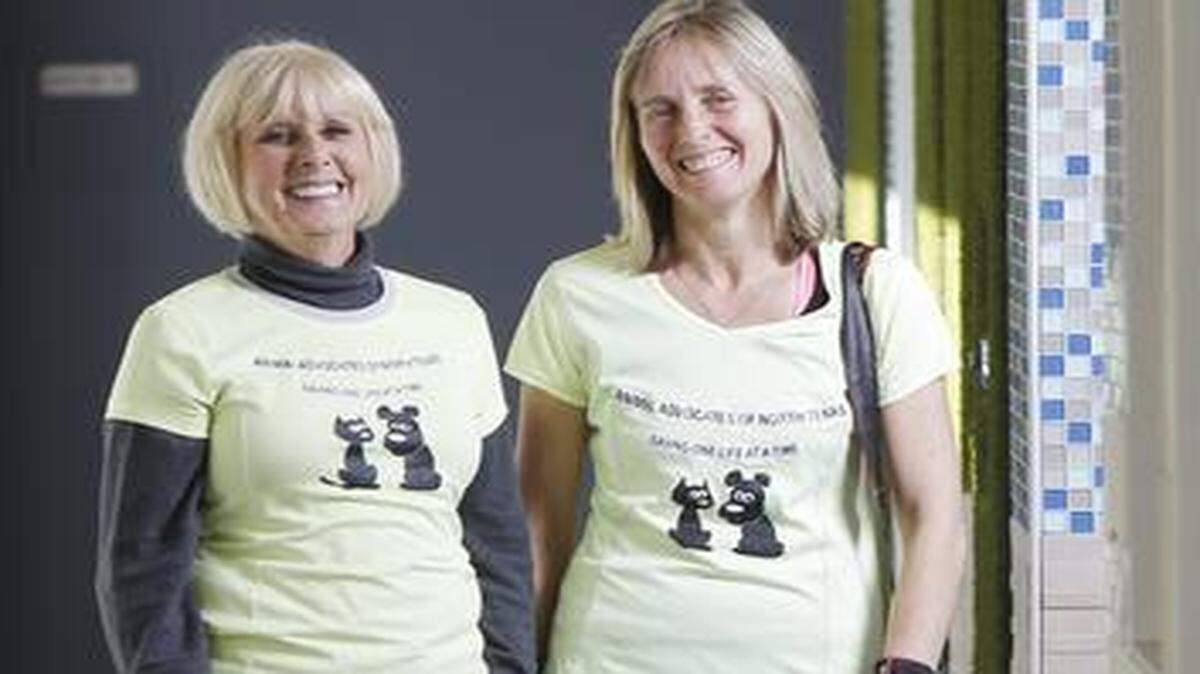
For folks like Chris Ryder, it boils down to four words. Animals matter. A lot.
Like many volunteers at animal shelters across the country, Ryder puts in countless hours caring for lost, homeless, sick and scared pets, offering comfort and trying to render aid in myriad ways. It’s exhausting, emotionally taxing work and, she’s quick to tell you, totally worth it.
Recently, on a day much like many others, Ryder logged a few hours at the Regional Animal Adoption Center, getting acquainted with various new residents of the facility and tending to some of their needs. Midway through a conversation about the importance of finding more foster families for strays and surrendered animals occupying cages here, she got a whiff of news that a litter of puppies had arrived in the next room, stopped mid-sentence and rushed for the door. Moments later, she and others were clustered around a kennel, cooing and admiring the gentle work of a new mom, calmly nursing her six pups and licking them clean.
For the pups, there’s a potentially promising future, Ryder says. Once weaned, they should be adopted out fairly easily. The mother, however, faces more hurdles to a happy life. A grown German Shepherd, she will be considerably harder to place.
And that’s where Ryder and her friend, Fiona Green, step in.
As longtime volunteers with the old Keller animal shelter, Ryder and Green founded the nonprofit, Animal Advocates of North Texas (AANT; www.a-a-n-t.org) in 2008, and they work incessantly to help dogs like this avoid the death sentence that an arrival in an animal shelter often means.
“[Animals] can’t speak for themselves,” says Ryder. “So many horrendous things are done to [them], every day. We have to be their voice.”
Together as AANT, Ryder and Green raise funds, liaise with a network of shelters and rescue groups, supervise foster care, vet sick and injured animals, create personal portfolios for potential pets, coordinate adoption events and assist individuals who need to rehome their animals. They’ve recruited some 20 volunteers to their group, plus several corporate sponsors. Last year, the nonprofit rehomed 107 dogs and cats, and in its six years of existence, they say only one animal has been returned to them.
From Petting to Advocating
Forging a friendship when they were both volunteers at the city’s old animal shelter, Ryder and Green shared a sense of distress that neither budget nor veterinary care existed to assist injured or sick animals that landed in the shelter. They frequently paid for medical care out of their own pockets, began contacting veterinarians they hoped might donate time and medicine to the cause and realized they had a desperate need for funds to improve conditions.
As a department that falls under the jurisdiction of the police department, the city’s animal shelter deals with calls of abuse and/or public safety, and animal control officers spend their time collecting animals, and accepting surrenders — there’s little time left to worry about improving the conditions of the animals or promoting them for adoption.
“The old shelter was hidden behind the police station, like an afterthought,” Green explains. “Cramped and dark with no natural light, it was far from inviting to potential adopters. There were 12 very basic dog runs, and the cat room was a converted janitor’s closet.”
To raise money, Ryder and Green formed AANT and began networking with Keller’s city council, the mayor, the police chief and animal control officers to raise awareness of the shelter’s needs. Ultimately, they crusaded for a new facility, which exists today as the Regional Animal Adoption Center and intakes stray and surrendered animals from Keller, Colleyville, Southlake, Westlake and Roanoke.
Keller police chief Mark Hafner says Ryder and Green worked behind the scene for years and calls them “a big part of [the new shelter] happening quicker than it would have.” He credits them with guiding the city’s upgrade from a shelter to an adoption center and helping decision-makers understand the merits of improving conditions for the animals, providing more space and creating an area to show animals to the public.
Capt. Michael Wilson of the Keller Police Department offers similar words of praise: “From 2010 to 2013, they were very instrumental in helping us place animals with adopters, fosters and rescue groups. That was a great benefit for us because we were restricted with size at our old facility. Through our relationship with them, we actually went into a formal relationship with the Humane Society of North Texas [HSNT], who handles all of our Adoption Center’s operations.”
Ryder and Green were invited to sit in with city officials and architects as plans were developed for the new facility, and Wilson says, “Chris and Fiona were vital” to the process. “Their passion and work in the community aided us in pushing forward with the new, true adoption center,” he adds.
Delighted with the improvements, Green says, “The new shelter is great because the animals are now housed in a modern, bright building which is easily accessed from Rufe Snow Drive. The dogs have a large yard where they can run freely, and the increased number of kennels means there is less pressure to place animals quickly due to space issues. Since HSNT now handles adoptions, there is always a member of staff on hand when members of the public come to visit. The fact that the city now has a separate quarantine area for strays is also a huge plus.”
Fostering and Facebook
Through the years, Ryder and Green have also waged a campaign to decrease euthanasia rates and increase adoptions, and it’s been a two-pronged effort of finding foster families for adoptable pets and “marketing them” via social media. Whereas the old Keller shelter averaged a 47 percent adoption rate, Ryder points out, the new Regional Animal Adoption Center’s rate, with these programs in place, has surged to 90 percent.
Very few facilities are no-kill, including Keller’s, but Green says creating a foster program “changed the outcome for many animals that might not have made it out of there because we were able to get them into foster care.” In other words, using fosters frees up space in a non-lethal manner for the other animals who arrive daily.
Fostering also allows pets to be socialized with people and with other animals in a home environment where their temperaments and needs can be more accurately evaluated, and, of course, the animals are far less stressed than when caged at a facility.
No one is safe from Ryder and Green’s marketing and recruitment efforts, they note. Many of their neighbors and friends have become fosters.
“People run the other way when we come,” Ryder says with a laugh.
Adds Green: “When you get into rescue, conversation always gets around to animals.”
As a professional photographer, Green maintains AANT’s Facebook page, promoting the shelter animals, photographing them and describing their characteristics and dispositions. Dogs and cats are given names, not numbers, and she crafts a lively and accurate biography for each.
“Everyone does Facebook,” Green says. “It’s made a huge difference, making it personal. It removes the fear factor of going into a shelter. [Potential adopters] can see a dog or cat in the comfort of their own home and go in and arrange to see THAT animal. It avoids the trauma of seeing all the homeless animals.”
From Passion to Vocation
For Ryder, who spent 35 years as an interior designer, AANT became a full-time vocation three years ago. “I love what I did, but this is my passion,” she says. “I feel fulfilled.”
While Ryder has been a lifelong animal lover who recalls more than a few childhood visits to the local ER for tetanus shots after handling stray animals, Green was inexperienced with pets until adulthood, when she took in two tabbies, unleashing her inner cat person. In 2008, Green published Mewsings: Exploring the Feline Mystique, a portfolio of feline photographic portraits and observations on the feline personality.
Practicing what they preach, both women have menageries of their own. Ryder owns four dogs and a cat and fosters dogs. Green owns four cats and fosters cats.
And they continue their quest for fresh recruits.
“If we had more fosters, we wouldn’t have to turn anybody away,” Ryder says. “...That is the thing we need more than anything else.”
Every day, Ryder says, there’s a new sob story, and, potentially, another success story. Like that of Baxter the beagle.
Emaciated, hairless and suffering from a skin infection, Baxter was considered unadoptable, a candidate for euthanasia. Animal Advocates of North Texas put him in a foster home, secured medical care and brought him back to life.
“These are the kinds of stories we like. These are the reasons we do what we do,” she says. “...We wouldn’t keep doing it if we didn’t remain hopeful.”
Nominate a Hero Next Door
Have an interesting colleague, neighbor or friend who devotes countless hours to doing good works in the community, who personifies words like “courage” and “endurance” or who quietly specializes in making Keller a better place for others? Nominate them for our regular feature “Hero Next Door.” Send nominations to sengelland@star-telegram.com with “Hero Next Door” in the subject line. Write a short description (200 words or fewer) about why they should be featured, and include a photo if you have one. Be sure to include the nominee’s email, address and/or phone number as well as your own contact information.
This story was originally published December 31, 2014 at 6:00 AM with the headline "Voices for the Voiceless."