
Rose disease threatens DFW landscapes
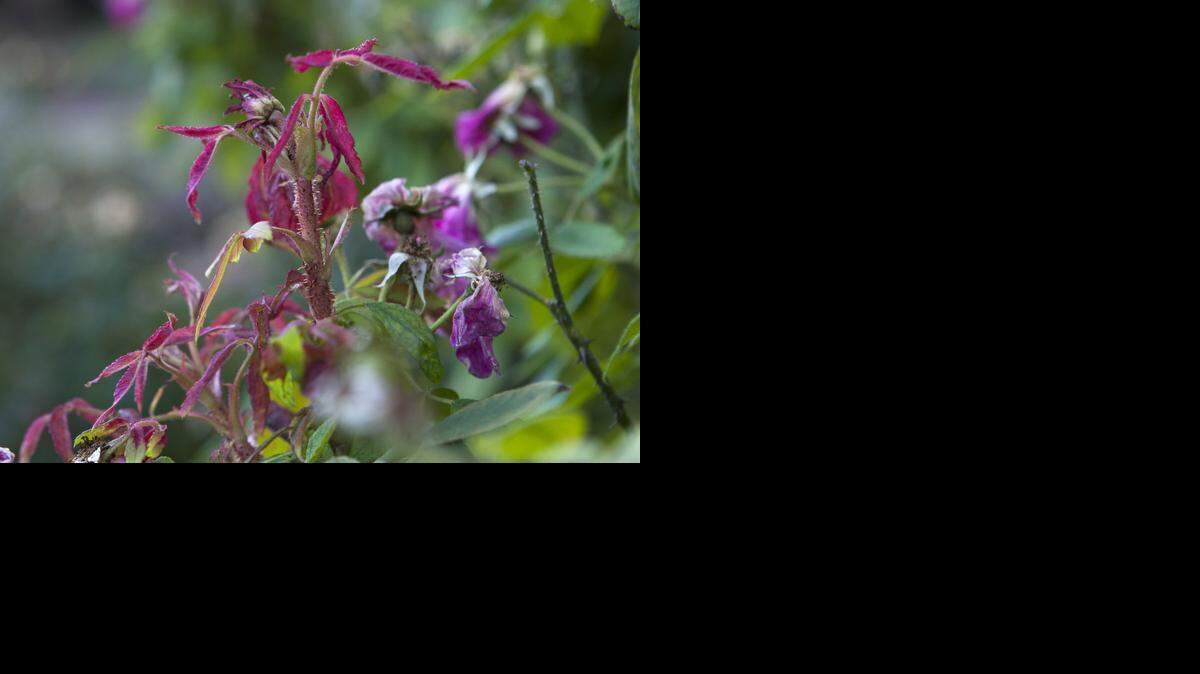
Southlake has a $500,000 thorn in its side.
The city estimates it will cost that much to remove and replace about 5,400 rose bushes along medians and public parks because of an outbreak of rose rosette disease, which mutilates and then kills the flowers within a few years.
Rose rosette is spread by microscopic mites carried by the wind. When Southlake resident and gardener Diana Pospisil identified the disease in her roses she noticed that the city’s flowers were infected as well. Once infected, the plant’s leaves and twigs become a bright, red color and may be distorted. Infected plants can also grow so many thorns that sometimes the stem is not visible.
Experts say the only way to get rid of the disease is to dig up each infected plant, down to its roots.
Steve Chaney, home horticulturist for the Texas A&M Agrilife Extension in Tarrant County, said the disease became more prevalent in North Texas in early 2012. He said that Tarrant County is seeing more cases of the disease than in Dallas and Denton counties, especially in Northeast Tarrant cities like Southlake, Grapevine and Colleyville.
The disease was first reported in East Texas in 1990, according to A&M Agrilife.
“We have a lot of research to go along with it,” said Chaney. “Hopefully at some point we’ll come along with something to treat it.”
Pospisil, a member of the Perennial Garden Society Southlake chapter, said she has tried so-called “cures” online, but eventually removed 13 of her rose bushes. She said she has about 40 left.
“It’s such a great plant, but once they’re infected, boy you have to take them out,” Pospisil said.
Candice Edmondson, Southlake‘s community services deputy director, said the city will replace its roses with drought-tolerant plants, shrubs and dwarf crape myrtles.
The city began removing infected roses earlier this year on the Southlake Boulevard median and at several parks and plans to finish the removal and replacement by the end of 2016. Bicentennial Park still houses several of the infected roses.
The removal and replacement process is what will cost $500,000, said Community Services Director Chris Tribble.
This year the city budgeted $50,000 to begin replacing some of the infected roses.
“We’re at a mode where we are trimming and treating and hoping that the roses will survive as long as they can,” Tribble said. “When we get to the point where they die, that’s where the $500,000 comes in.”
Botanical roses infected
Chaney said with the incoming winter season should slow the disease’s spread. He added that he does expect its presence to increase if infected roses are not removed.
Chaney suggests that gardeners avoid using only roses for landscaping.
“Where we see the biggest damage is a large conglomeration of roses planted,” he said. “Roses are an integral part of the landscape, but just be aware that it’s out there and if you’re going to plant them, plant them more singularly.”
Planting roses more singularly is not an option for Steve Huddleston, senior horticulturist at the Fort Worth Botanical Garden, which is home to the nationally recognized Oval Rose Garden. Workers have been replacing infected roses in that garden since 2012.
“We’re treating our roses like annuals,” Huddleston said. “As soon as they get the disease we dig them up, discard them and replace.”
Huddleston said the garden has about 1,500 rose bushes, but staff has not kept count of how many of them needed to be replaced. He said 2013 was a bad year for the roses and they had to replace about 60 percent of the bushes.
Still popular with gardeners
Steve McCoy, a horticulturist at Fort Worth-based Archie’s Gardenland, estimates he’s spoken with 20 to 30 customers this year whose gardens have rose rosette disease compared to five customers in 2013. While there are more customers experiencing it, he added that’s still a small figure compared to the amount of people with roses.
“People are still buying them like crazy,” McCoy said. “We have some variety of roses that will sell out in a few weeks; it has not slowed down.”
Ed Tavender, nursery manager at Fossil Creek Tree Farm and Nursery in north Fort Worth, said he has spoken to one customer this year who had identifiable rose rosette. He said he stresses to customers the importance of preventative care.
Edmondson said she is hopeful that roses will return in a robust way to Southlake’s public spaces.
“Our hope is that a treatment will be developed that can protect roses from this disease,” Edmondson said.
Dustin L. Dangli, 817-390-7770
Twitter: @dustindangli
This story was originally published December 6, 2014 at 5:54 PM with the headline "Rose disease threatens DFW landscapes."