
In Colleyville, Glade Road proposition comes with questions
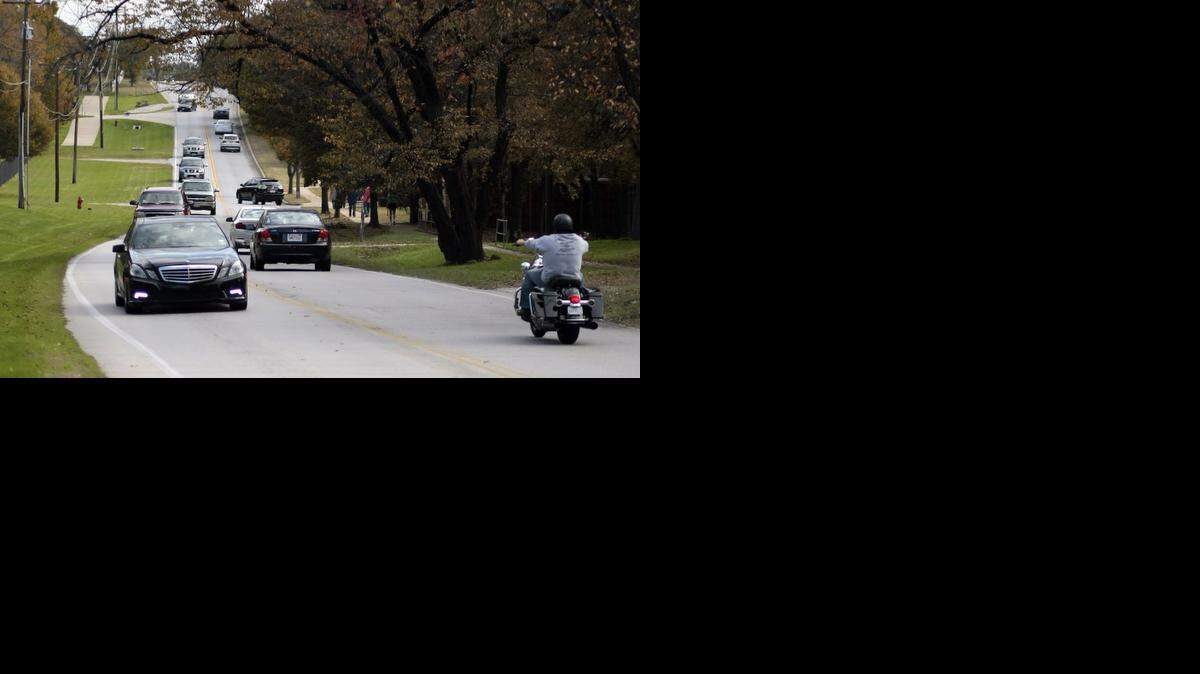
A proposition going before Colleyville voters in May would limit the scope of work that could be done on Glade Road.
But exactly what that means to the popular and polarizing east-west route remains a little fuzzy.
City Attorney Matthew Boyle, in a memo to council members, said the proposition’s wording and vagueness would make it difficult for Colleyville to spend tax dollars on any future project on the road.
As examples of problematic wording, Boyle cited the use of the words “potential” and “possible” in the memo. Using definitions from Black’s Law Dictionary, he noted that “potential” means “existing in possibility” while “possible” means “capable of existing, happening, being, becoming or coming to pass.”
“Based on those definitions, there is no way to rule out the potential loss of mature trees or the flooding of homes as a result of widening Glade Road or the filling of bar ditches,” the memo states.
It goes on to state, “Given the lack of clarity within the Proposition as to the threshold for possible loss of mature trees and/or flooding and the obligation as to polling, the Proposition is beyond a certain interpretation. In the absence of a clear and definite interpretation, the merits of the undertaking a multimillion-dollar project with city tax dollars are questionable.”
The proposition will go before Colleyville voters in the May 9 election. Early voting begins April 27.
Glade Road is one of the main east-west roadways through the city and is popular with commuters who use it to get from Precinct Line Road in North Richland Hills to Texas 121 in Euless. As growth has continued in Northeast Tarrant County, the road has become more congested, and safety concerns have been raised.
But many residents who live along the road and who want to keep its “rural feel” created the Protect Glade Road group and started a petition to get their resolution on the ballot. After enough signatures were gathered and confirmed, the resolution was added to the ballot.
Interpretation challenged
If passed, the proposition would prohibit the addition of medians and widening of the road, as well as filling in bar ditches that border both sides of Glade Road. Left-turn lanes and roundabouts could only be added if deemed necessary by the polling of area residents.
In his memo, Boyle writes that “based on the inherent vagueness of the requirement for the polling of area residents, there is no way to know with certainty the means by which to adhere to the Proposition.”
Boyle said the city could perform surface treatments and maintenance on Glade Road, but nothing that has a chance to violate the resolution’s provisions of filling in bar ditches or the loss of mature trees. He said roundabouts would be prohibited under the resolution because they include medians and widen the roadway.
That would be a far cry from what was originally planned.
In 2014, contractors developed a concept plan to improve the roadway that included widening it, and adding sidewalks, left-turn lanes and medians.
Boyle said previous plans to remove the three-way stop at Glade Road and Bluebonnet Drive and reduce the size of the hill at the intersection could violate the boundaries of the proposition.
But Councilman Chris Putnam said the interpretation is one man’s opinion. He said if the resolution passes he will continue to move forward making improvements to intersections like Bluebonnet Drive and Bransford Road.
“His opinion, notwithstanding, we can say what we want to do on Glade,” Putnam said. “There's nothing that stops anybody from interpreting it differently.”
‘Tie the city’s hands’
Putnam also said Boyle’s interpretation is influenced by City Council members.
“That is an opinion that is basically influenced in large part by how the majority of City Council wants to interpret that petition,” Putnam said.
Boyle countered by saying Putnam’s “statement is baseless and erroneous” in an email to the Star-Telegram. “Our opinion was based on a clear reading and interpretation of the Proposition and was not subject to influence by any person or party.”
Councilman Jody Short said the memo supports his understanding of the proposal.
“It will tie the city’s hands,” Short said. “Our ability to do improvements will be severely limited, and I think that’s bad for all the residents of Colleyville.”
While improvements to Glade Road never went beyond the concept phase, the options of maintenance or reconstruction could run from $5 million to $20 million. The city planned to pay for the work using its tax increment financing district and perimeter and impact fees.
Boyle said if the resolution is passed, the city could not repeal or amend it for five years.
The city will discuss the memo during the pre-council session at the next council meeting April 21.
Dustin L. Dangli, 817-390-7770
Twitter: @dustindangli
This story was originally published April 13, 2015 at 5:02 PM with the headline "In Colleyville, Glade Road proposition comes with questions."