
Data center, now on hold, sought up to 2 billion gallons from Tarrant-owned lake
Plans for a data center in Henderson County are apparently on hold for now after the developer did not provide justification for a request to pull a maximum of nearly 2 billion gallons of water a year from Cedar Creek Lake.
However, the leader of a group opposing the data center said she’d seen evidence in recent days indicating the project could still be moving forward.
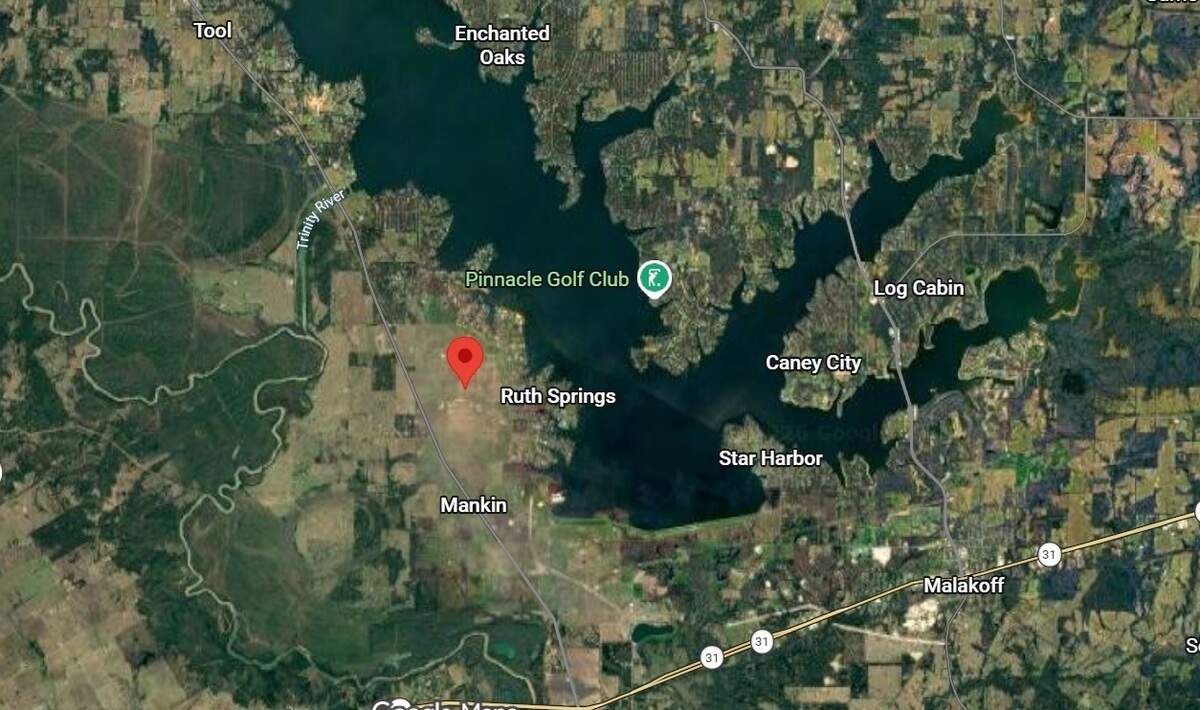
Last year, Diode Ventures approached the West Cedar Creek Municipal Utility District about drawing water from Cedar Creek Lake for use in a cooling system and a power generation system for a proposed data center near Tool, Texas, about 90 miles southeast of Fort Worth.
When talks with the West Cedar Creek MUD stalled, Diode went directly to the Fort Worth-based Tarrant Regional Water District (TRWD). The Tarrant district owns Cedar Creek Lake as one of four water sources for its municipal customers, including the cities of Fort Worth, Arlington and Mansfield.
According to emails and documents obtained by Dallas attorney Ashley Cook under the state’s public-information law, it was expected to take 12 years to fully build out the data center complex. In its first year, the facility would use an estimated 1.5 million gallons per day of lake water.
By year five, that would increase to 5 million gallons per day, or 1.825 billion gallons a year — and it could increase to as much as 20 million gallons per day in the future, based on notes included in records from the TRWD.
Data center developments have stoked anger across the state in recent years as residents worry about resource consumption as well as noise and others issues related to having large-scale tech facilities near residential areas. Johnson County commissioners took a hard stance in May, saying data centers weren’t welcome after hearing from worried constituents.
The proliferation of proposed data centers in Hood County even motivated some residents to try and incorporate as a city to keep the data centers away from their homes. That attempt was ultimately unsuccessful. And on July 9, five members of the Fort Worth City Council requested a moratorium on new centers.
Kenneth Malin, the West Cedar Creek MUD’s general manager, did not respond to a message requesting comment on the district’s discussions with Diode. In an emailed statement, a TRWD spokesperson said the agency had received inquiries about providing water to a data center, but there wasn’t “sufficient information” to complete a technical evaluation.
“At this time, TRWD has not entered into any new contracts, specifically to serve data center projects,” the statement read.
The frequently asked questions section on TRWD’s website states that data center applicants must justify their anticipated water usage and submit conservation plans before TRWD will consider supplying water.
Cook shared with the Star-Telegram emails she’d obtained that were sent between a TRWD representative and an engineer working on Diode’s behalf in March.
In the exchanges, the TRWD representative acknowledged the 5 million gallons per day Diode was asking for constituted “a large volume of water.” The representative then asked for an explanation for why that much water was needed.
For comparison, the city of Fort Worth as a whole consumed an average of 216 million gallons of water per day in 2025. According to a report published last year by the Texas Real Estate Research Center at Texas A&M University, per capita water consumption in the Dallas-Fort Worth area was around 200 gallons per day.
“Frankly, the current public sentiment is that data centers are wasteful when it comes to water. Prove that is not the case,” the TRWD representative wrote in one email to Diode’s engineer.
As of July 2, Diode had not provided the requested information to TRWD, and a Diode spokesperson would not comment directly when asked about the Cedar Creek Lake project’s status.
In an emailed statement, the spokesperson said, “In Henderson County, as in any site, we conduct extensive due diligence to evaluate land, local power, cooling, environmental and infrastructure considerations while seeking long-term community benefits such as jobs, tax revenue and infrastructure improvements.”
Cook, who lives in Dallas but has a weekend home on Cedar Creek Lake not far from the proposed data center site, founded an organization called Save Cedar Creek Lake to stop the development.

She told the Star-Telegram she’d seen an engineering company’s trucks out surveying property Diode owns within the past two weeks. Based on that, Cook believes the developer still wants to proceed with the data center, despite public resistance and water access hurdles.
“No one in the county wants this,” Cook said.
One of her primary worries is that the data center will strain water resources for cities like Fort Worth that depend on Cedar Creek Lake. As of July 6, the lake is 84% full, according to Texas Water Development Board data.
Cook has additional concerns about the noise, vibrations and emissions from a natural gas power plant that would generate electricity for the data center, enabling it to operate off the grid. According to emails Cook obtained through a records request, a Diode project development manager said the data center’s power plant would generate between 80 and 150 megawatts of electricity. By some estimates, 1 megawatt of electricity is enough to power about 250 homes.
In May, Henderson County Commissioner Wendy Spivey brought forth a resolution opposing the development of any data center that would consume a high volume of water or “that fails to incorporate adequate safeguards to protect county resources and residents.”
The commissioners court adopted the resolution, though it’s largely ceremonial because, as it says, state law limits counties’ power to halt data center developments. Because of that, the resolution called on the Legislature to give counties more oversight.
Spivey told the Star-Telegram that that resolution was not aimed at Diode in particular but at any developer who wanted to build a data center in Henderson County.
In an email, Spivey said her primary concern about the Diode development was its location near a residential area. A data center does not mesh with the character of the community, she said.
“I strongly support private property rights, but I also believe neighboring property owners have legitimate interests when a major industrial project is proposed adjacent to homes, farms, and ranches,” she wrote. “Finding the appropriate balance between those interests is important.”
Spivey said her constituents had, like Cook, raised concerns about the data center’s water use and electricity demand. They also worried about increased traffic associated with the development as well as noise and light pollution, impacts on emergency response capabilities and impacts to property values and quality of life.
Spivey said she’d been told the West Cedar Creek MUD wouldn’t enter into an agreement with Diode until April 2027 at the earliest, if at all, and she said it was her understanding that Diode had not completed its application with the TRWD.
Construction on the data center has not yet begun, Spivey added, saying cattle are still grazing on the property Diode owns.
Diode’s website does not list the Henderson County data center under the company’s current projects. Elsewhere in Texas, Diode is developing a 900-acre technology park in Red Oak, south of Dallas, according to the company’s website. The project page doesn’t explicitly refer to this as a data center, but it says it “positions Diode Ventures as a leader in data center development in the growing digital market in Texas.”
Previously, the Kansas-based developer built the Golden Plains Technology Park near Kansas City, which includes a hyperscale data center. These types of complexes are described as “massive,” with the capacity to house thousands of servers. Diode sold that property to Meta, the company behind Facebook, Instagram and WhatsApp, among other applications.
This story was originally published July 10, 2026 at 10:13 AM.