
Oil spill’s environmental threat near Lake Arlington assessed by Texas biologist
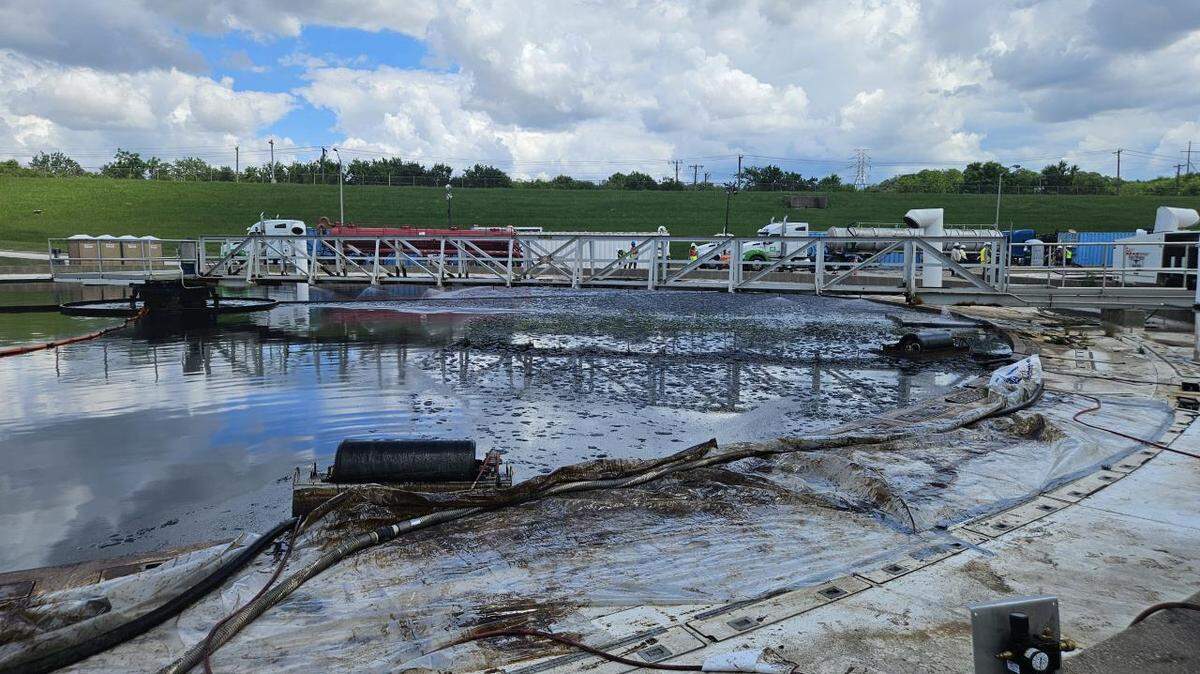
The large oil spill that contaminated a Fort Worth water treatment plant near Lake Arlington last spring has not caused environmental damage to waterways or wildlife, a state biologist says.
The site remains closed to visitors as cleanup efforts continue, though a few birdwatchers were recently allowed in under a special agreement with the city of Fort Worth
In May, a damaged 16-inch pipe discharged 6,800 barrels of crude oil north of Lake Arlington near West Division Street. A portion of the more than 285,000 gallons of spilled oil entered a Fort Worth sewer line and ended up at the city’s Village Creek Water Treatment Plant, which sends treated effluent into the Trinity River.
An Environmental Protection Agency report named Dallas-based Energy Transfer as being responsible for the pipeline.
At the time of the incident, EPA investigators found crude oil in the treatment plant’s aeration basins, its final clarifier tanks and its fats, oils and greases handling facility.
A subsequent report from the Railroad Commission of Texas, which regulates the oil and gas industry, said all the oil was recovered and none of it impacted inland or offshore waterways. The spill site is near stretches of the West Fork of the Trinity River and Village Creek, as well as Lake Arlington.
In a call with the Star-Telegram, Adam Whisenant, a Texas Parks and Wildlife Department biologist, confirmed there was no negative impact to nearby waterways. He said he visited the site in September and saw no immediate threat to fish or wildlife amid the ongoing cleanup.
The Fort Worth water department used drying beds adjacent to the Village Creek water treatment plant to dry activated sludge that was contaminated by the oil. Water department spokesperson Mary Gugliuzza said that material dried and the last of it was hauled to landfills on Dec. 19.
Meanwhile, the drying beds remain closed to bird watchers who had long accessed the area. According to an August Star-Telegram report, birders have identified more species at the Village Creek Drying Beds than at any other spot in Tarrant County.
Colby Ayers, an avid birder from Euless, told the Star-Telegram in August that he visited the drying beds daily before the oil spill forced the city of Fort Worth to close off the area.
However, Gugliuzza said four Audubon Society members were allowed on site Dec. 27 as part of the society’s annual Christmas Bird Count. The Audubon birders signed releases, Gugliozza said, and stayed in designated areas during the three-hour count.
Gugliuzza said there was no timeline for reopening the site to visitors on a broader scale, but that the water department would work with the city attorney’s office in early 2026 to establish new policies for “very limited access.”