Arlington oil spill 4,000 barrels more than company first reported, EPA says

Authorities cleaned up 6,800 barrels of crude oil from a broken pipeline just north of Lake Arlington in May, according to a spokesperson for the Environmental Protection Agency.
That’s 4,200 more barrels than the estimate the company responsible previously reported to the agency. The EPA’s report was published on May 14.
Energy Transfer, the company that owns the pipeline that leaked, originally reported to the EPA that 2,600 barrels had been cleaned up from the site. The company did not immediately respond to a request for comment.
The EPA’s statement was in response to an inquiry about a report from the Texas Railroad Commission stating the spill was 6,600 barrels, which was obtained by a Star-Telegram reader through an open records request. The RRC verified the report, which was signed by an environmental specialist with Energy Transfer on May 27.
RRC spokesperson Bryce Dubee said the oil was “all recovered from the sewer line.”
One barrel of oil holds 42 gallons, so the damaged pipeline released over 285,000 gallons, some of which entered the Fort Worth sewer system and contaminated the Village Creek Water Treatment Plant. The water department is using the nearby Village Creek Drying Beds to clean up affected water and materials.
The report states that no crude oil was unrecovered and that the spill did not affect inland or coastal water.
“Oil entered a sewer line that transported the oil to the Village Creek Waste Water Treatment plant,” the report states. “The oil was collected using skimmers and vac trucks at the treatment plant.”
The cause of the spill is attributed to a “pipeline failure” in the report.
Local birdwatchers want the drying beds back
Area birdwatchers brought the spill to the Star-Telegram’s attention in early July. Some, like Euless resident Colby Ayers, have been going to the Village Creek Drying Beds for years to observe the migrating birds that call the site home for some part of the year.
He and fellow birders have not been able to access the site for the last two months. The city closed it off to the public in the aftermath of the spill.
Ayers has been birding at the drying beds for the last two decades, and has made daily visits for the last six years.
“I used to come out here with my father,” he said. “I’ve got so many memories tied to this place, so when the city does this, I take it personally.”
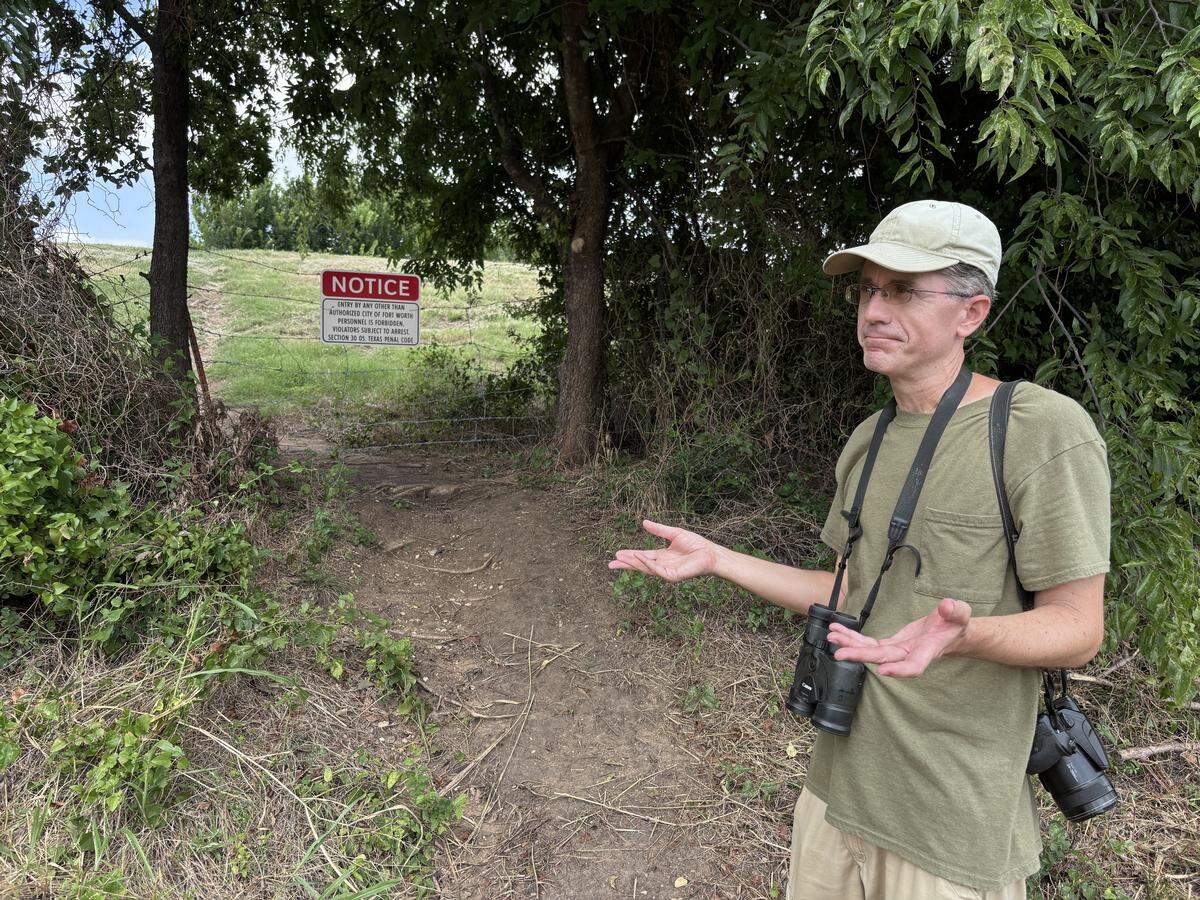
The Fort Worth water department has said it will “investigate whether there is an opportunity for limited and temporary access to wildlife groups,” but no agreement resembling the permission the public had before the closure appears on the horizon.
Water department spokesperson Mary Gugliuzza said there are “no plans to reopen the drying beds anytime in the near future.”
Ayers and other birders used to access the drying beds at an entrance at the south side of the property or via breaches in the old, dilapidated wire fencing on the east side of the beds after parking in the River Legacy Parks.
The city not only tolerated this access, it facilitated it, Ayers said during a recent visit to the now repaired fencing.
More avian species have been spotted at the Village Creek Drying Beds than anywhere else in Tarrant County, according to eBird, an online database maintained by Cornell University. Over 320 species have been identified through nearly 13,000 entries on the site. The drying beds rank 36th in the state for number of species identified and 15th for number of checklists entered into the database.
Ayers and other birders told the Star-Telegram they want the city to restore their access to the drying beds.
The city has said that the cleanup operations do not present a danger to the public or to wildlife.
“But if it’s so safe, why are we locking it down like Alcatraz? That’s what I want to know,” Ayers said.
Thomas Creel, also of Euless, likewise pointed to “decades of positive cooperation between the City and the public” in an email sent to the Star-Telegram.
“I believe public land should serve the public interest, and I am solely seeking a solution that restores responsible access to this largely unused City-owned property,” he said.
This story was originally published August 8, 2025 at 3:22 PM.