Oil spill cleanup could cost Fort Worth $5 million. Who will foot the bill?
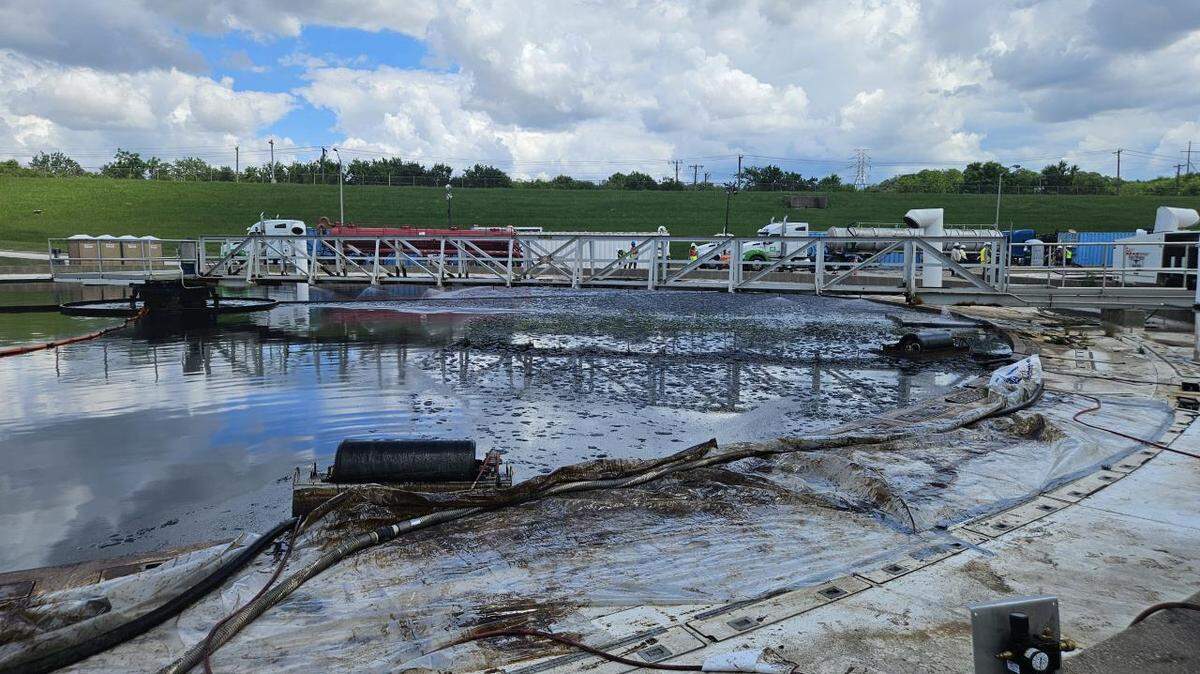
The cost of cleaning up the east Fort Worth water treatment plant that was contaminated by an oil spill in May could reach around $5 million or more, according to a water department memo available on the city’s public records portal.
The city cited a public health emergency exemption in the Local Government Code to bypass the normal bidding process for contracts and fast track approval of more than $4.8 million for 10 companies in response to the spill’s effects on the city sewer system. The memo was signed by water department Director Christopher Harder and other officials on May 14.
But the total cost could be significantly higher than that, as one contract has already been signed for $1 million more than the approved amount for the vendor. Regulatory, staffing, disposal and other costs could add to the amount as well.
A damaged oil pipeline owned and operated by Dallas-based Energy Transfer leaked 2,600 barrels — more than 109,000 gallons — of crude oil north of Lake Arlington in the first week of May, according to a report from the Environmental Protection Agency.
The oil entered a damaged sewer line that crosses under the damaged oil pipeline, according to the water department memo, which states that “the crude oil was flowing directly into the sewer system.”
Representatives for Energy Transfer and the Fort Worth water department did not respond to emails asking how the pipes were damaged and which entity would ultimately foot the bill. The water department memo states that the company “agreed to assist” with the cleanup efforts.
Asked if ratepayers would end up paying for the services, or if Energy Transfer would reimburse the city for the work, water department spokesperson Mary Gugliuzza said, “Further coordination with Energy Transfer will occur.”
After initial publication, an Energy Transfer representative said via email that the issue at the water treatment plant has been “fully resolved” and the company’s pipeline is back in service.
“We coordinated closely with the Fort Worth Water Department on all cleanup and repair efforts related to our pipeline and their efforts to repair a nearby wastewater pipeline that had been previously damaged (unrelated to this incident),” the company said. It did not immediately respond to a follow-up email reiterating the Star-Telegram’s question about reimbursing the city.
The EPA report states that it was notified of the spill on May 6. The water department memo says that staff at the Village Creek Wastewater Treatment Plant in east Fort Worth noticed “a petroleum odor and discovered petroleum in the plant” on May 5.
The plant has been using the nearby Village Creek Drying Beds, where sewage was dried and removed before the construction of the plant, to dry out the waste activated sludge that was contaminated by the oil. The sludge is a biomass used to treat wastewater.
Contract signed for $1M more than approved amount
The waste management company Republic Services signed a $400,000 contract with the city for portable tanks known as frac tanks, as well as pumping, hauling and skimming, the memo states. That amount correlates with the amount approved in the memo.
The contract signed with environmental contractor EnviroServe, however, was for much more than its approved amount. The memo approved $500,000 for EnviroServe, but the contract signed by city officials this month was made out for $1.5 million.
The contract available online had yet to be signed by a representative of the company. EnviroServe did not immediately respond to a request for comment.
Gugliuzza said the city is still compiling costs and does not have all the invoices for services rendered.
When asked about who would pay the bill for the cleanup in general — the city or Energy Transfer — Gugliuzza said, “both Fort Worth and Energy Transfer incurred costs. We are still compiling our costs because we have not yet received invoices from all the vendors involved.”
The Star-Telegram also reached out to Republic Services for comment, but did not receive an immediate response.
What emergency services are necessary for oil spill cleanup?
The water department memo identified two areas requiring emergency response: the water treatment plant and the location of the spill.
Services at the plant included pumping and skimming oil out of tanks and other installations at the plant, treating the enzymes, reseeding activated sludge, replacing and/or cleaning filters and hauling waste activated sludge to the nearby drying beds. This last service has closed the drying beds to the public, which has garnered the ire of birdwatchers who say it is one of the most important sites for the activity in the state.
At the site of the spill, contractors were needed to plug and bypass the damaged sewer line, remove debris, and rehabilitate and replace the damaged portion of the line.
“Final costs associated with these agreements will be based on actual usage, duration, and repair work and could increase,” the memo states, adding that the city “anticipates significant operational costs” in addition to the approved services.
These additional costs can include increased chemical and power usage for water treatment processes, staff overtime and additional costs to remove water from facilities for construction or other types of work.
There could also be regulatory costs, “as the oil discharge significantly inhibited the effectiveness of the regular treatment processes,” the memo states. This could result in a permit violation from the EPA or the Texas Commission on Environmental Quality.
How long will the oil spill cleanup take?
A description of the scope of the services approved included with the contracts says the duration of the cleanup will be determined based on the “extent of contamination and response timeframes.”
The goal of the work is “mitigating environmental impact and restoring operational integrity,” the document states. It lists services such as crude oil removal, mobilization and site assessment, material handling and transport, equipment, supplies and others.
“Disposal costs for oil and oily water will be handled per separate agreements,” the document states.
Gugliuzza said cleanup at the plant was “substantially complete” by May 23 and all vendors were gone by May 28. The cleanup now consists of the contaminated waste activated sludge in the drying beds, which will be removed once it dries out.
As for the birders who frequent the drying beds, no reopening of the area appears to be in sight.
“We will investigate whether there is an opportunity for limited and temporary access to wildlife groups, which will involve the City’s law and risk management staff,” Gugliuzza said.
This story was originally published July 17, 2025 at 2:53 PM.