
Parents of 15 girls who died in Texas flood sue Camp Mystic in four lawsuits
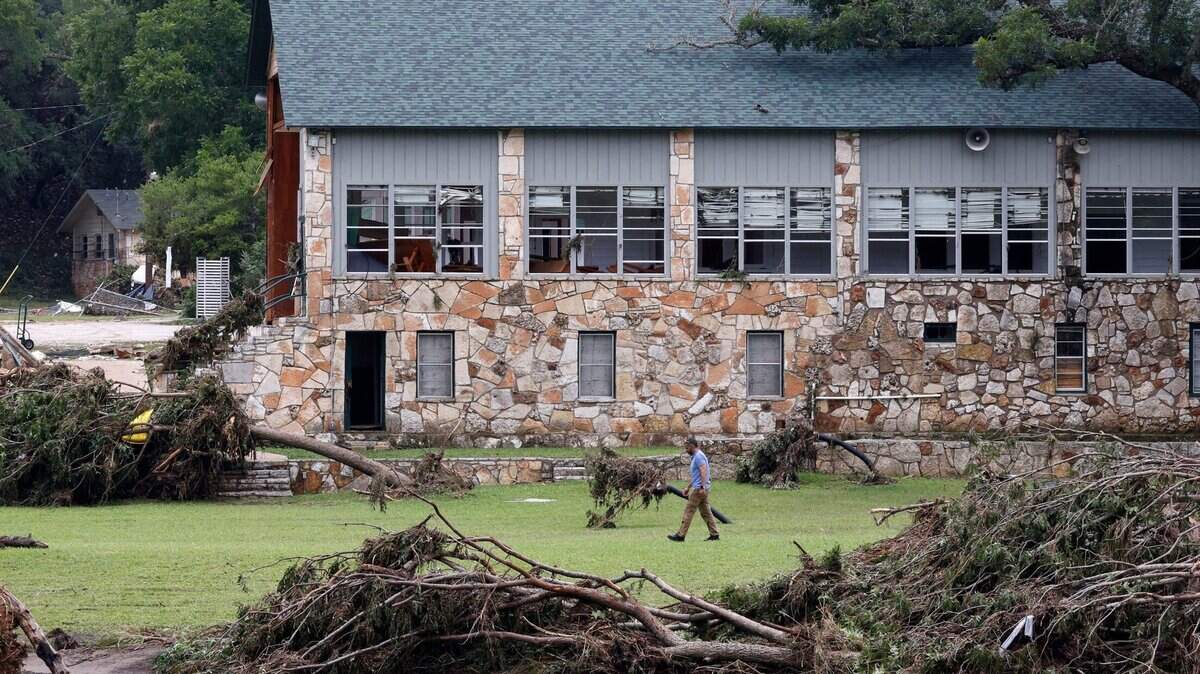
“This tragedy was entirely preventable,” families of campers killed in the July 4 flash flood say in one of four separate lawsuits filed against Camp Mystic on Monday in Travis County court.
The lawsuits accuse Camp Mystic officials of failing to evacuate as floodwaters rose in Central Texas, ignoring repeated state safety warnings, and housing children in low-lying cabins that were known to be at risk. The camp is located along the Guadalupe River in Kerr County.
The 15 families who are suing the Christian girls’ summer camp lost daughters who were campers and counselors, including several from the Dallas area. One lawsuit was filed by Warren and Patricia Bellows, parents of Anna Margaret Bellows; Blake and Caitlin Bonner, parents of Lila Bonner; Matthew and Wendie Childress, parents of Chloe Childress; Ryan and Elizabeth Dewitt, parents of Molly Dewitt; John and Andrea Ferruzzo, parents of Katherine Ferruzzo; Ben and Natalie Landry, parents of Lainey Landry; and Lindsey McCrory, mother of Blakely McCrory.
Timothy Peck and Melissa Peck, the parents of Eloise “Lulu” Peck, filed a separate lawsuit against the camp. Lulu was 8 years old when she died.
The third lawsuit filed on Monday was by Douglas Getten and Jennifer Getten, the parents of 9-year-old Ellen Getten. Each of the first three lawsuits seeks more than $1 million in damages.
A fourth, multifamily lawsuit doesn’t specify a damage amount. That suit was filed on behalf of the families of Lucy Dillon, Hadley Hanna, Virginia Hollis, Janie Hunt, Kellyann Lytal and Virginia “Wynne” Naylor.
The July 4 flood took the lives of 25 young children, two teenage counselors and the camp’s owner, Dick Eastland.
Lawsuits allege camp ‘put profit over safety’
The lawsuits allege that the young girls died because Camp Mystic “put profit over safety.”
“The Camp chose to house young girls in cabins sitting in flood-prone areas, despite the risk, to avoid the cost of relocating the cabins. The Camp chose not to make plans to safely evacuate its campers and counselors from those cabins, despite state rules requiring evacuation plans, and not to spend time and money on safety training and tools,” one lawsuit states. “Instead, the Camp chose to assure its campers and counselors that these cabins are built on ‘high, safe locations.’ And the Camp chose to order its campers and counselors, as a matter of policy, to stay in these flood-plain cabins regardless of life-threatening floods.“
The families say the camp ignored warnings about the risky location of its cabins, the rising dangers that morning as the hours passed, and warnings from its own counselors to evacuate the cabins.
“And 27 young girls lost their lives,” the lawsuit states. “Today, campers Margaret, Lila, Molly, Lainey, and Blakely should be third-graders, and counselors Chloe and Katherine should be freshmen at the University of Texas.”
“From the Camp’s initial false notices that girls were ‘unaccounted for’ to its recent announcements about reopening for business as usual while a camper is still missing, the Camp has caused further trauma to these distraught families. And through it all, the Camp refuses to accept any responsibility for its actions and failures to act, defiantly blaming this tragedy on ‘an act of God’ that no responsible steps could have avoided,” the lawsuit states.
The section of the Guadalupe River where the camp is located has long been prone to deadly flash flooding. The area, often called “Flash Flood Alley,” was recently described by the Kerr County judge as “the most dangerous river valley in the United States,” according to the lawsuit.
The lawsuit states that camp officials announced plans to reopen next summer even though the body of one camper, 8-year-old Cile Steward, remains missing.
“Defendants used the deceased girls as a recruiting tool, touting a ‘memorial’ they would build in their honor – without ever asking the parents of the girls,” the lawsuit reads. “Defendants’ rush to reopen their for-profit campsite, while parents still grieve their lost daughters, is only the latest example of the Camp putting profits over all else. The Camp is ready to move on, but these girls and their parents first deserve transparency and justice.”
Camp Mystic officials said in a statement Tuesday that “we continue to pray for the grieving families and ask for God’s healing and comfort.”
The camp’s legal counsel, Jeff Ray, released a statement saying, “We empathize with the families of the campers and counselors and all families in the Hill Country who lost loved ones in the horrific and unprecedented flood of July 4. We intend to demonstrate and prove that this sudden surge of floodwaters far exceeded any previous flood in the area by several magnitudes, that it was unexpected and that no adequate warning systems existed in the area. We disagree with several accusations and misinformation in the legal filings regarding the actions of Camp Mystic and Dick Eastland, who lost his life as well. We will thoroughly respond to these accusations in due course.”
Attorney breaks down the lawsuits
Texas personal injury attorney Tray Gober, who is not involved in the lawsuits, offered analysis of how negligence is determined in a case like this, and why the suits could redefine safety standards at children’s overnight camps.
“A lot of times what these families are looking for isn’t necessarily just a payday,” Gober said. “They want to know that something like this can’t happen to somebody else’s family in the future.”
Gober said to establish gross negligence, the families will need to demonstrate that there was a conscious indifference to an extreme degree of risk of harm.
The families could seek money damages for wrongful death and survival claims, and non-monetary remedies, such as securing commitments, promises, or an injunction preventing the camp from operating within the floodplain, he said.
“Some people think that this is just an absolute slam dunk of a case, and in reality, it’s a very difficult case on both sides,” he said.
“Justice can take a long time, but the advantage of them having these lawsuits is they’re going to learn much more about what happened, and probably make things like this for camps, these types of injuries less likely to occur in the future,” Gober said.
“There’ll be a lot of closure that comes out of this, not just for the families, but for the public,” he said.