
A data center next to a botanical garden? This Fort Worth business owner says no
A developer’s plan to put a data center in rural southeast Fort Worth is being met with opposition from a longtime resident and business owner, as well as an academic researcher who fears further loss of affordable housing.
The developer countered by saying the company was Fort Worth-based and staffed by Fort Worth residents, and it will strive to be a good neighbor.
Since January, Black Mountain, an energy consortium, has successfully petitioned the city to rezone more than 300 acres for light industrial use near the Forest Hill and Everman borders. Black Mountain’s plans for the site include a large-scale business park, which will house at least one data center. The development will span multiple tracts of land, the majority of which lie between Lon Stephenson Road to the north, East Enon Avenue to the south, Forest Hill Drive to the west and Anglin Drive to the east.
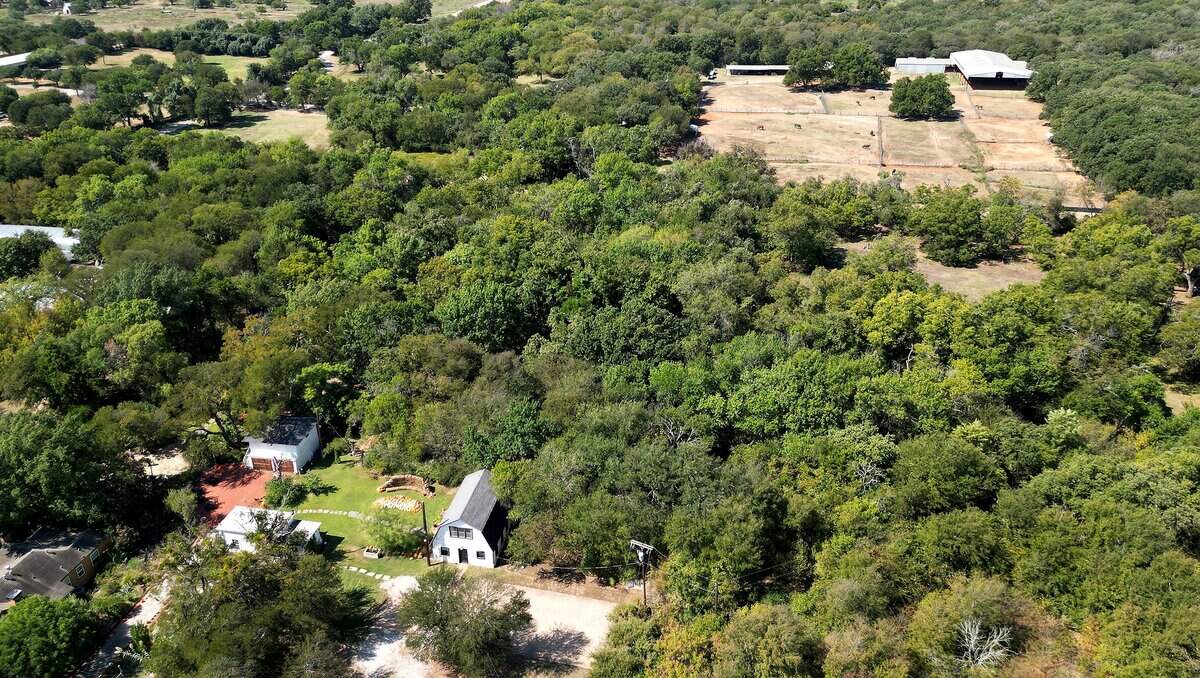
Now, Black Mountain is asking the Fort Worth City Council to approve rezoning of an additional 119 acres for inclusion in the development, with one tract adjacent to a mobile home community on the west side of Forest Hill Drive. The other tract under consideration abuts Anglin Drive, next to Weston Gardens, a nursery and garden center with a botanical garden and event venue. The City Council hearing is scheduled for Sept. 30.
Data center not compatible with surroundings, gardens owner says
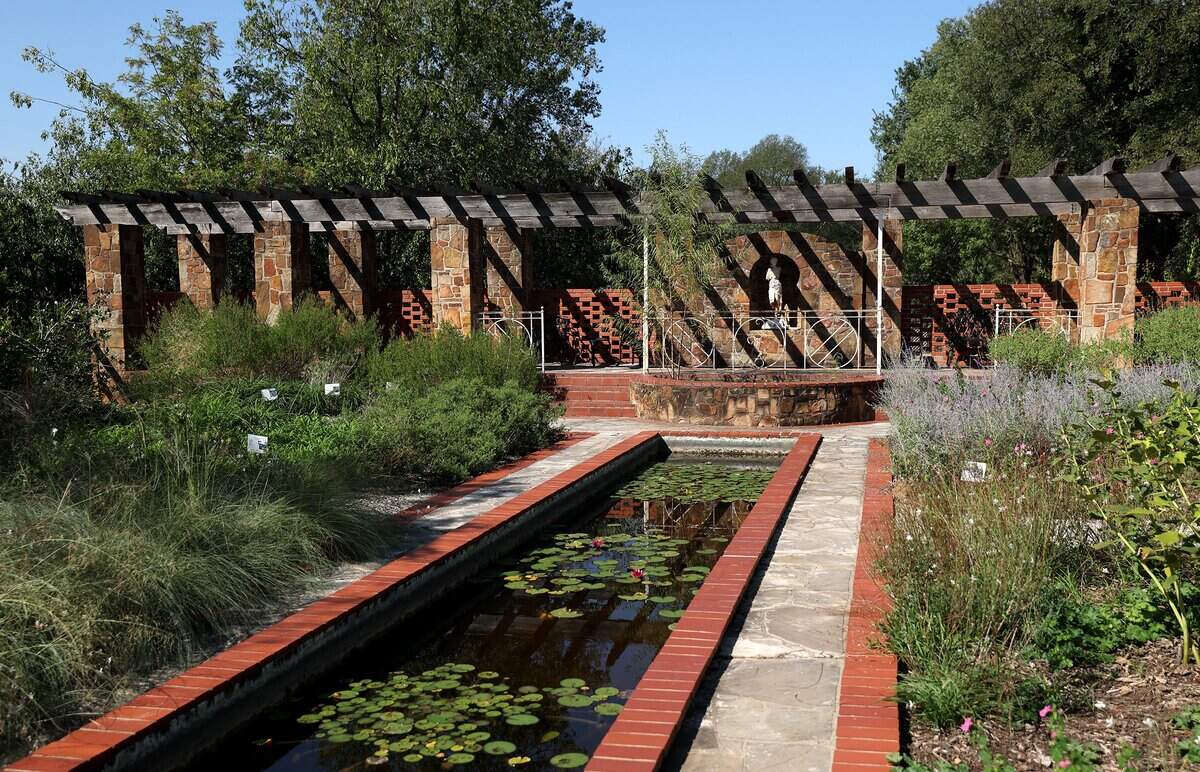
Weston Gardens owner Sue Weston views the proposed development as a threat to the beauty and tranquility she’s cultivated over nearly 40 years. When she spoke to the Fort Worth Zoning Commission on Sept. 10, Weston raised concerns about noise, light and air pollution from the data center, which would sit next to her property.
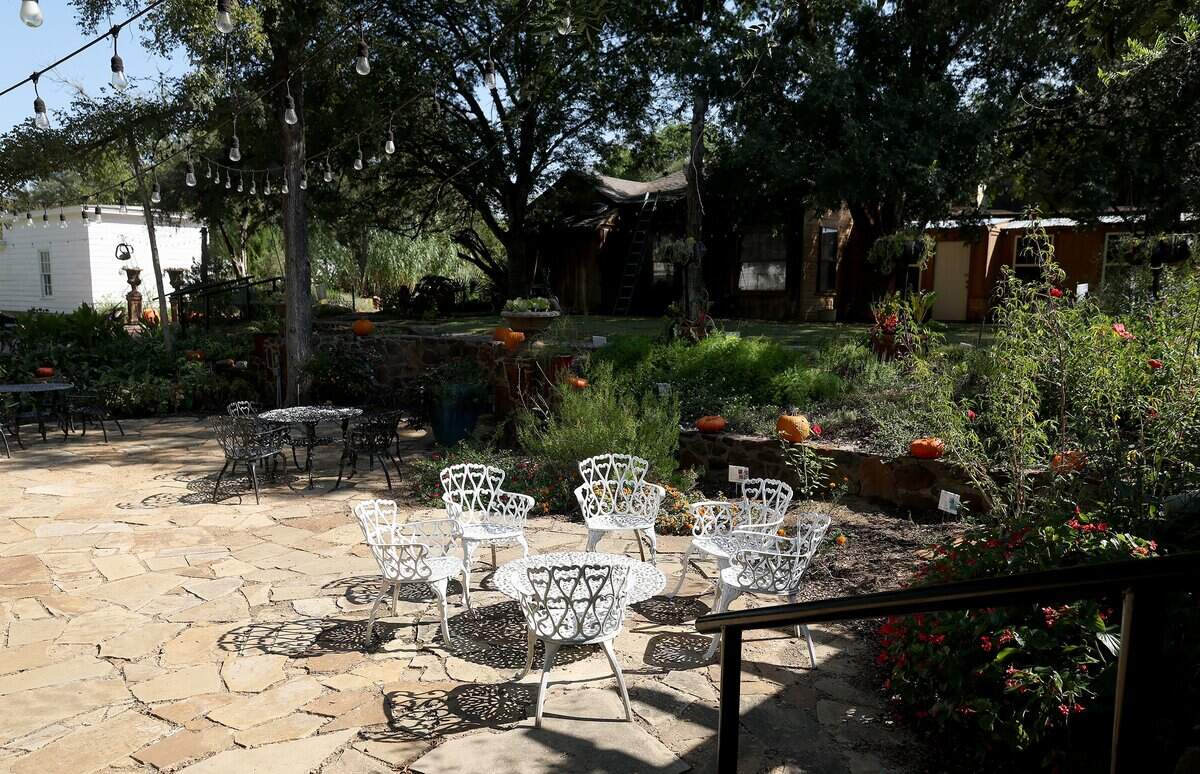
“Our gardens are all about community,” Weston told the commissioners. The property, which features lush greenery and old-growth trees set among babbling brooks and water features, is open to the public, and the gardens have served as a popular spot for weddings over the decades in addition to an annual Mother’s Day tea that Weston said attracts hundreds each year.
Weston believes the sense of escape the gardens provide from the nearby city will be forever tarnished if the Black Mountain development, with buildings as tall as 70 feet, is allowed to encroach upon the property.
Data center developer says impact will be minimal
Bob Riley, a consultant with Richardson-based Halff who is working on behalf of Black Mountain, told the Zoning Commission on Sept. 10 that the developer would conform to city noise ordinances, which limit sound produced in commercial areas to 80 decibels in the daytime and 70 decibels at night. According to a Yale University study, city traffic produces about 85 decibels. The noise from a vacuum cleaner is about 75 decibels.
The closest the data center would be to Weston Gardens is 370 feet, said Riley, due to a wooded floodway and floodplain between the Black Mountain property and Weston’s. Riley said that would muffle sound produced by the data center. He added that the developer would be required to erect a vegetation barrier to further reduce noise pollution.
Allison Donahue, a Black Mountain spokesperson, told the Star-Telegram the company believes the development will be a positive addition to the community. Because of the nature of data center activity, traffic will be minimal, Donahue said, and the facility would bring high-paying jobs and more tax revenue to the area.
“Data center development will not negatively impact the environment,” said Donahue. “We will abide by all city requirements placed on the project. “
When asked if Black Mountain would have operational oversight once the data center was built, Donahue said, “It is premature to comment on future hypotheticals.”
At the zoning hearing, Riley said more than 300 notices were sent to property owners asking for their input on the project. Only three residents attended a July meeting to discuss Black Mountain’s plans.
Weston believes the lack of outcry is due to the fact that Black Mountain has signed option contracts with her neighbors to purchase their properties once rezoning is approved.
A petition that Weston created to stop the development had more than 900 signatures as of Sept. 24. Some who signed wrote about their personal connection to Weston Gardens.
“The gardens are a hidden gem in the middle of our congested Metroplex,” wrote one. “It’s so serene and I pray it stays that way. I have spent many Mother’s Day and other days walking through and enjoying [its] beauty.”
Data center development’s impact on affordable housing
One person who has spoken in opposition to the development is Jenifer Reiner, a former urban planner and current researcher and doctoral candidate at The University of Texas at Arlington.
Reiner’s focus is on affordable housing, and she’s concerned because Black Mountain is developing land that was previously zoned for manufactured homes.
“I had pride in my city,” said Reiner, “that we had actually zoned land for more manufactured home sites, only to find out two or three years later that it’s been acquired and is being rezoned for a data center. And that promised site was for like 530 manufactured home sites. It’s a significant number of affordable housing.”
Reiner said the cost per square foot of a manufactured home is about half what it is for a conventional home, making them attractive options for people on limited budgets who want single-family dwellings.
“We’re facing — some like to call it the housing supply crisis — but in my mind it’s more of a housing option crisis,” said Reiner. “We continue to build large-scale, multifamily complexes and a lot of single-family detached. Not that any of those options are bad; I just feel like, in order for us to reach out to everybody who wants to be in a dwelling unit that’s their own, we need to provide more options.”
Despite buying up land around the Colinas del Bosque North and Colinas South mobile home communities, Black Mountain, through Riley, has said none of the residents will be displaced. In fact, Riley said Black Mountain would allow a portion of one of the parks to encroach on its property.
Reiner believes that, but only in the short term. Longer term, she worries Black Mountain, or another developer, will absorb those communities to expand the industrial park and construct additional data centers.
“I think the need and the demand for data centers is what threatens the community,” Reiner said.
Donahue, however, said people living near the proposed data center site don’t want more manufactured homes coming in.
“We received significant feedback from the local community that they did not want more mobile homes and found strong support for our project,” said Donahue.
Indeed, Weston said having another manufactured home community nearby wasn’t ideal, but she said she would rather see that than the data center.
What is Fort Worth’s perspective on the data center?
In May, the Fort Worth Zoning Commission unanimously recommended rezoning approximately 172 acres for the Black Mountain development. At that hearing, Riley highlighted additional jobs and tax revenue as two reasons to support building the data center.
Commissioner Tammy Pierce, who represents the section of Fort Worth where the development will go, thanked Black Mountain, via Riley, for bringing more money and employment opportunities to the area before recommending changing the site’s zoning to allow for the data center.
At the Sept. 10 zoning hearing for the additional 119 acres, Commissioner Matt McCoy suggested Black Mountain provide a site plan as an additional safeguard before final zoning approval is given, a suggestion Pierce agreed with.
With that caveat, the Commission recommended approving Black Mountain’s request. At the Sept. 30 hearing, the Fort Worth City Council can either approve that recommendation or deny it.
A spokesperson for Council member Chris Nettles, who represents Weston and her neighbors, said he was still reviewing the case and declined to comment for the time being.