A Fort Worth woman’s aunt helped create Black Barbie. Now, she’s telling the story for Netflix
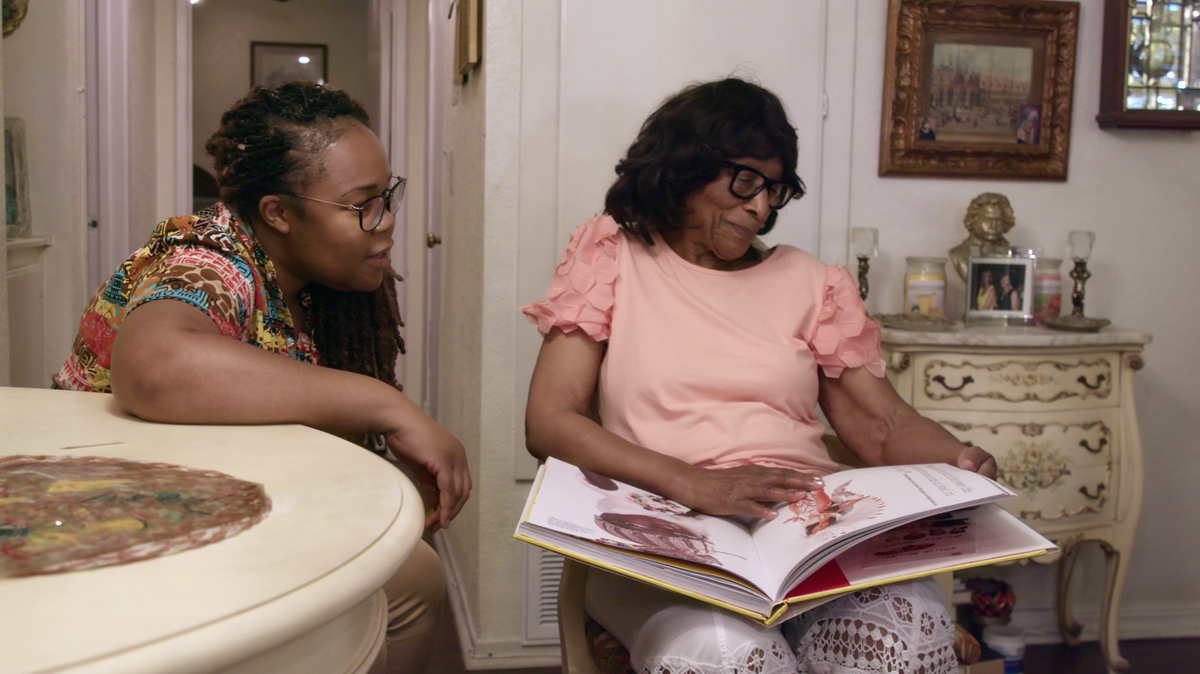
Lagueria Davis grew up in Fort Worth in the 1980s and reflects on the city today as a “small town, small world experience,” even though Fort Worth is one of the largest cities in Texas.
Her parents grew up in the area, and her grandparents and great-grandparents at times lived within walking distance of her home. She attended Springdale Elementary School, Riverside Middle School and Amon Carter Riverside High School, just like her parents did. Teachers and childhood friends of her parents would recognize her even if she had no clue who they were. When she brought friends home, her parents would know her friends’ parents.
Her parents, LaVera McBride and Spencer Davis III, were blue collar workers who, she said, modeled Southern hospitality, thoughtfulness and a good work ethic. Davis watched her mother work full time, along with other jobs. Davis went along as her mother cleaned offices, showing Davis the value of resourcefulness and determination.
Davis, now 46, was a quiet and creative child. She loved to write, draw, watch movies and read books by authors such as R.L Stine. Teachers would marvel at how she got her work done early and then drew or wrote stories about her family, growing up with her cousins and living in the South.
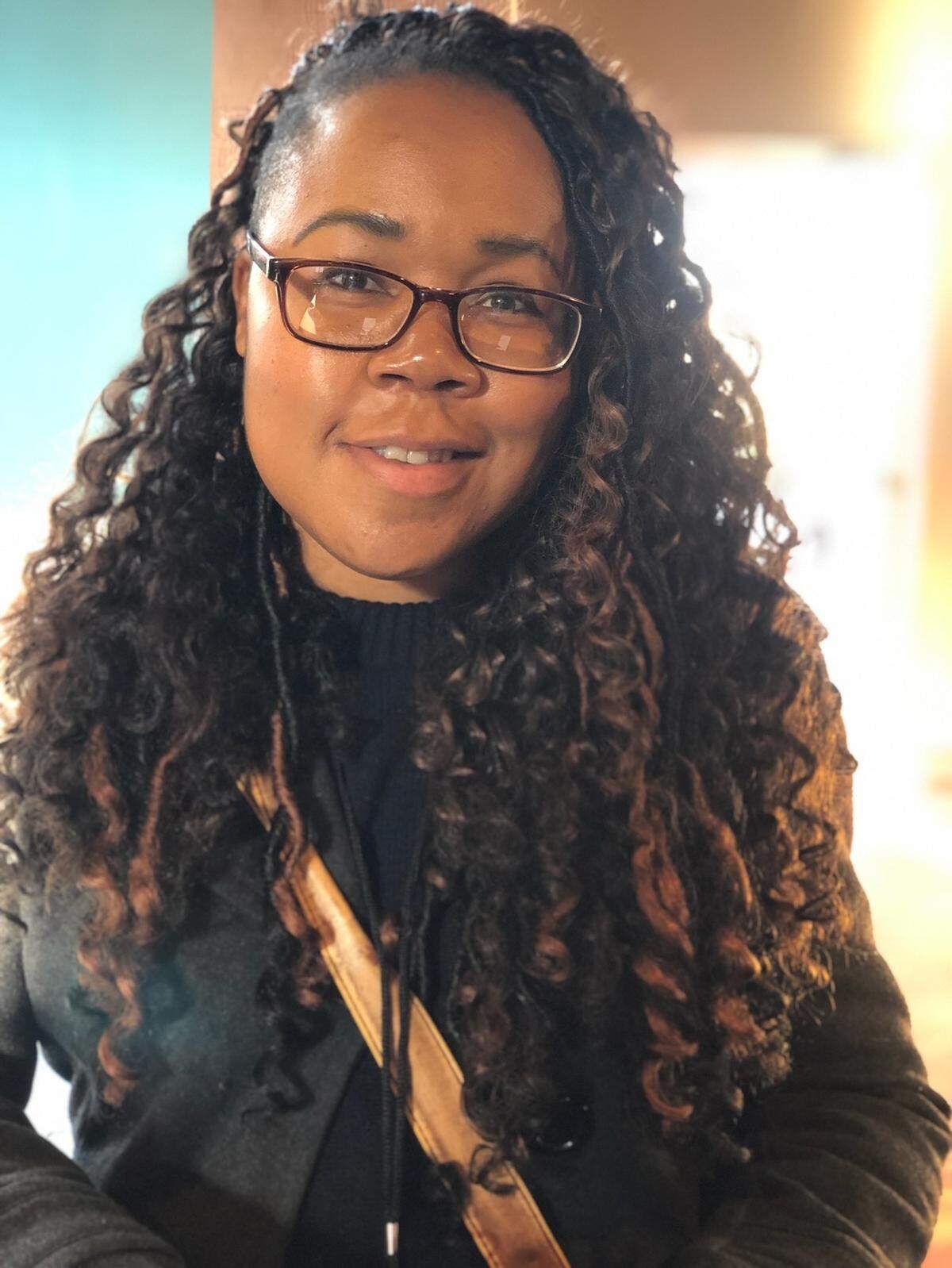
She had a love of the arts but didn’t think it could turn into a career. It took a push from a friend in college for her to reconsider that attitude. She has since made a few films in Oklahoma and moved to Los Angeles to pursue a career of writing and directing films. A conversation with her aunt led her to create her biggest film yet.
Davis is the director of Netflix’s “Black Barbie,” which was released on Netflix this year on Juneteenth. It is her second feature film and first documentary.
“I talk about young Lagueria in the film, and it’s just a thing that writing has been something I felt like I’ve always been called to do,” Davis said.
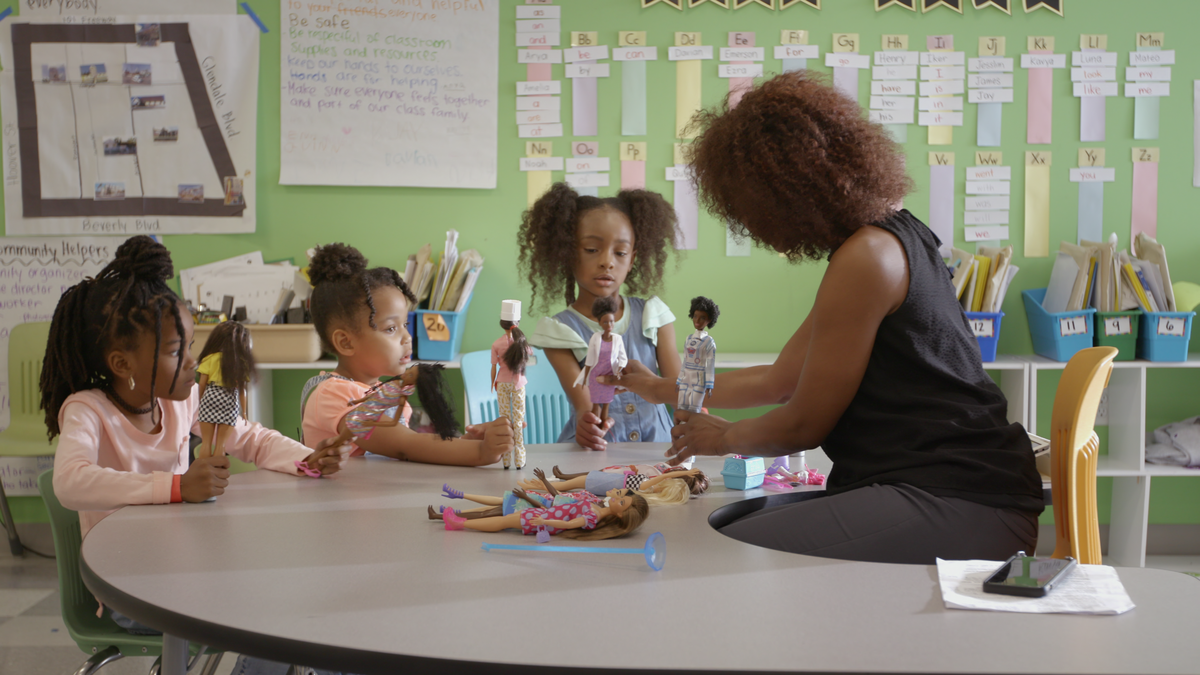
The film traces the origin of the Black Barbie doll with the help of Davis’ aunt, Beulah Mae Mitchell, who played an influential role in designing the first Black Barbie doll.
Dolls and Black Barbie
In the 1940s, psychologists Kenneth and Mamie Clark designed and conducted “doll test” experiments, which studied the psychological effects of segregation on African-American children. Dolls such as the Barbie doll have been scrutinized for not only their representation and unrealistic body image but for their effects on Black children, especially Black girls, related to their self-esteem, self-perception and internalized racism.
Clark’s study was later cited in the 1954 landmark case Brown v. Board of Education to show the lasting effects segregation caused with a sense of inferiority in Black children.
Mitchell, Davis’ aunt, began working at Mattel, the manufacturer of the Barbie doll, in 1955 and spent 45 years as a toy spinner and receptionist. She developed a close relationship with Ruth and Elliot Handler, the co-founders of Mattel.
Mitchell herself was an avid doll collector, and the documentary chronicles how, after a few years at Mattel, she and other workers suggested the development of a Black Barbie doll. Ruth Handler took the suggestions into consideration, and in 1968 Christie, Barbie’s best friend and a Black doll, arrived on shelves. The first official Black Barbie was released in 1980 by designer Kitty Black Perkins.
There are now many different Black Barbie dolls, from those focusing on careers, such as Black Barbie pilot, to Barbie dolls honoring famous Black women, such as the Misty Copeland Barbie, named for the first African American woman to be appointed as a principal dancer in the American Ballet Theatre.
The world of filmmaking and dolls
Davis also had an interest in electronics growing up. She tinkered with VCRs, radios, and televisions, tearing them apart and putting them back together. When she visited Boeing, where her uncle worked as an engineer, that took shape as a realistic career choice for her, rather than pursuing a fine arts degree.
She attended the University of Oklahoma and double majored in electrical engineering and computer science. After three years and three summer internships, she realized a lack of creativity, rigid discipline, cubicles, and offices with lots of fluorescent lighting meant that corporate America was not for her.
A friend who was an architecture major switched to film and media studies, and Davis soon followed. She graduated from the School of Visual Arts as a media art major in 2007.
In 2011, she moved to Los Angeles to pursue a career writing and directing films. Mitchell, her aunt, already lived in the area. As Davis got to know Mitchell better and learned her history with the Black Barbie, she was struck by this thought: “I remember just thinking, like, of course, Black Barbie has a story.”
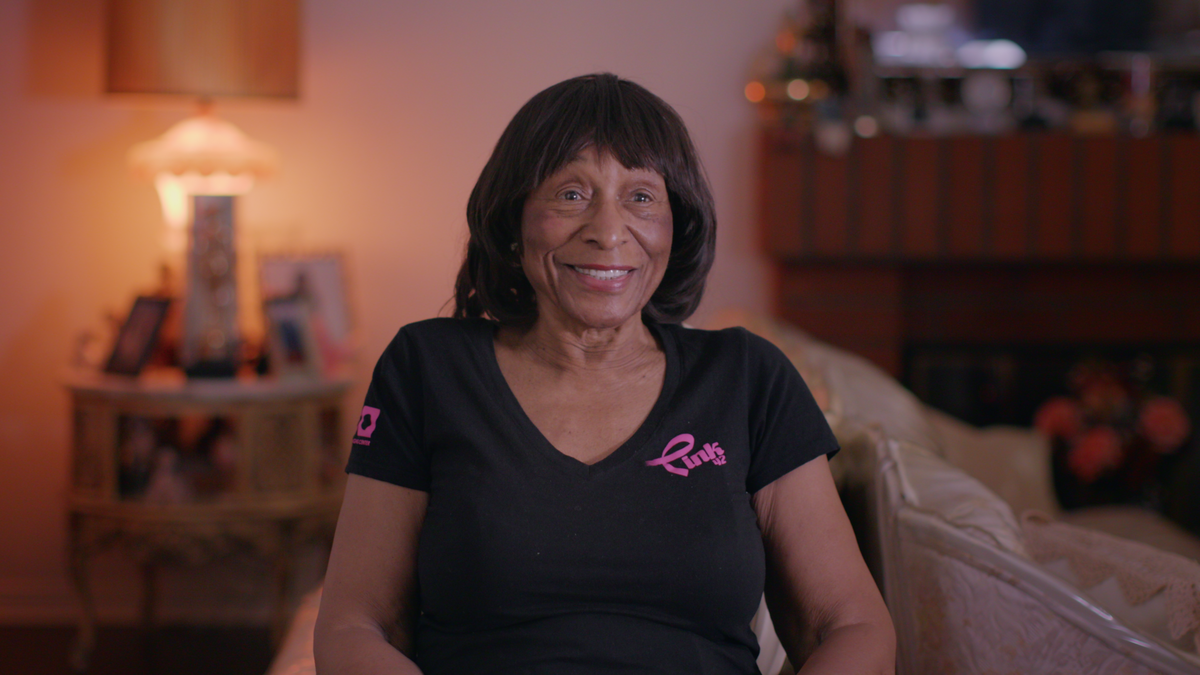
“I sometimes will say that she was introducing me to her world of dolls, and I was introducing her to my world of film making,” Davis said. “And so we were learning from each other and coming together.”
Davis and her aunt have experiences from different eras, but the themes of feeling represented and what it means for Black women and girls spanned generations.
A conversation leads to a Netflix documentary
It was a 13-year process from Davis’ talk with her aunt to the premiere of Black Barbie on Netflix. She spent years applying for funding, shelving the documentary, then starting again. She received grants from the Bay Area Video Coalition (BVAC) in 2019 and the Awesome Foundation. After a one-week “fund Black Barbie” social media push in 2020, the project was fully funded. It was also supported through LinLay Productions, which is comprised of Grace Lay and actress Sumalee Montano.
The documentary premiered at South by Southwest, an annual conference and festival for music, film and television in Austin, in March of 2023. Shonda Rhimes’ global media company Shondaland and Netflix acquired the film in the same year.
What Davis learned from her parents about work ethic and determination drove her to break into the film industry.
Davis still has family members who live in Fort Worth, including her parents, siblings, and cousins. She plans to come back to have an educational screening of “Black Barbie” for the general public in Fort Worth within the next few months.
Through her filmmaking journey, Davis has developed a direct approach when pitching stories about the Black experience, which some people in power may not want to hear. That approach did not come naturally when she was younger, and she is grateful for how far she has come.
Looking back, what she learned from her parents, a love for the arts, and pursuing the art of storytelling led her where she always wanted to go: to be able tell the stories of Black people, especially Black women.
“Black Barbie is here, she’s a valued member of the Barbie-verse, she has a story. Check it out. Put your eyeballs on it,” Davis said. “People want this content, people want to hear stories by Black women, about Black women, for Black women.”
This story was originally published November 26, 2024 at 5:00 AM.