
We worry about natural disasters here in North Texas. Should earthquakes be on the list?
In Texas we worry about weather disasters plenty, but not about earthquakes.
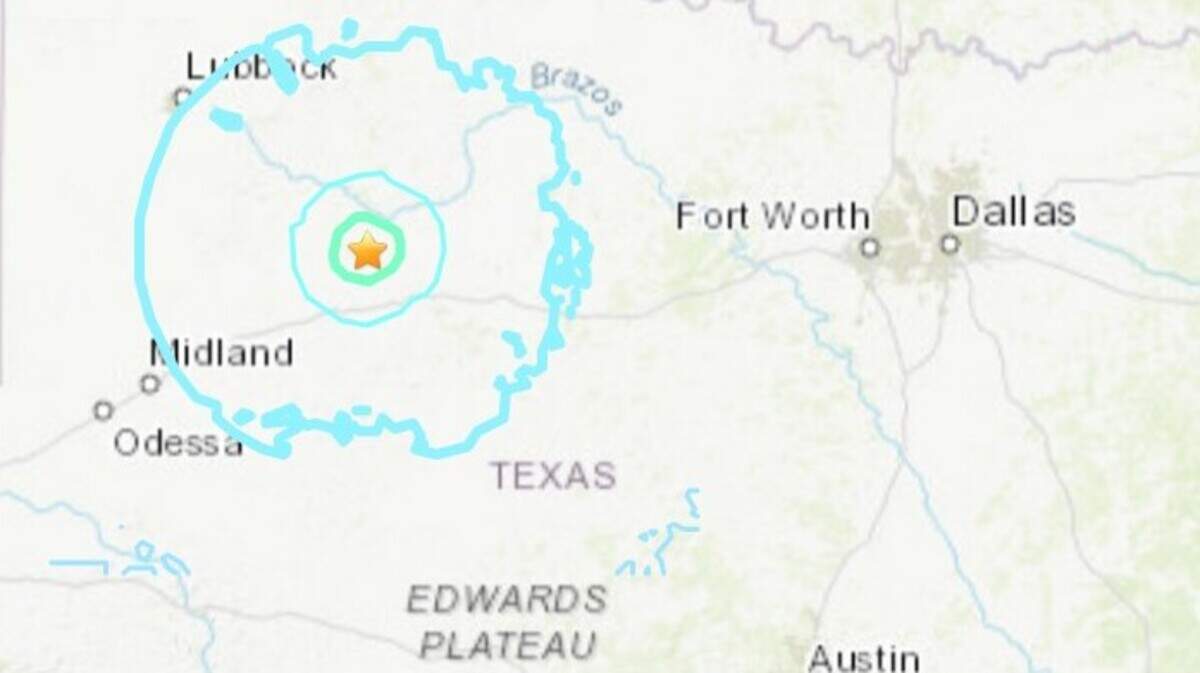
Monday night, North Texas experienced a few quakes to shake them up. Snyder, about 203 miles west of Fort Worth, experienced shocks of 4.9, 4.4, and 3.1 between 10:38 p.m. and midnight. However, the quakes were not large enough to cause damage or for everyone to wake up and notice.
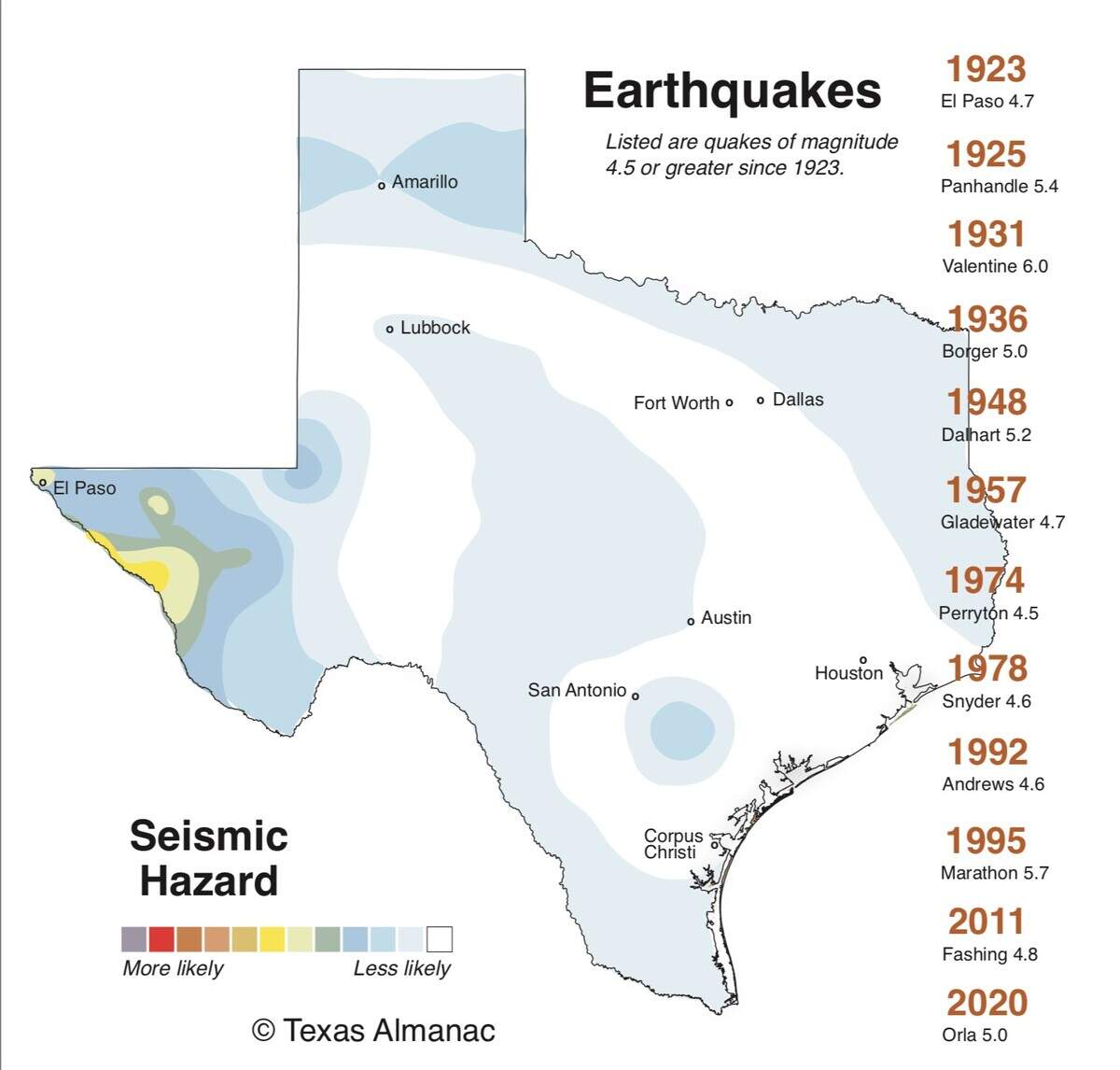
Earthquakes rarely happen here, but when they do, it’s not normally a concern. The last major one to hit Texas was recorded at a 5.8 magnitude in Valentine during 1931. This town is 500 miles southwest of Fort Worth in West Texas, the region with the most earth tremor concern.
But even West Texas, compared to the rest of the country, is not very concerned about a natural earthquake. Geologists are keeping an eye on induced (or human-caused) seismic activity due to fracking, mining, and building dams.
According to the U.S. Geological Survey, about 3,500 quakes have been recorded since 1900 here in the Lone Star State, and only six of them had a reported magnitude of 5.0 or over. However, Texas has seen an increase in the number of quakes since 2020, which they believe is due to human oil mining activity.
So, though the chances of a disaster convulsion are not likely, here is what you should know about earthquakes in North Texas.
When has an earthquake hit Fort Worth?
According to Britannica, “Richter scale (ML), quantitative measure of an earthquake’s magnitude (size), devised in 1935 by American seismologists Charles F. Richter and Beno Gutenberg. The earthquake’s magnitude is determined using the logarithm of the amplitude (height) of the largest seismic wave calibrated to a scale by a seismograph.”
Just in 2017, Texas rolled out seismograph stations across North Texas. Fort Worth has two permanent and 13 portable stations, including Professor Michael Young’s at Southern Methodist University. With his motoring equipment, there are now 31 stations in North Texas.
According to USGS, the largest earthquake recorded in the Dallas-Fort Worth area was a magnitude of 4.0. The largest was in North Texas, recorded at a magnitude of 4.9 near Amarillo in 1925.
According to the Richter scale, the largest possible earthquake could reach a magnitude of 8.0. In North Texas, we commonly fall into any category under 5.0 The full scale and its expected damage are as follows.
Less than 1 to 2.9: “mirco,” more than 100,000 per year. It is not usually felt by people but is still recorded on a seismograph.
3 to 3.9: “minor,” 12,000 to 100,000. Felt by many people but no damage.
4 to 4.9: “light,” 2,000 to 12,000. Felt by all, minor breakage of objects.
5 to 5.9: “moderate,” 200 to 2,000. some damage to weak structures.
6 to 6.9: “strong,” 20 to 200. Moderate damage in populated areas.
7 to 7.9: “major,” 3 to 20. Major damage and loss of life over large areas.
8 and up: “great,” fewer than 3. Major damage to large areas and major loss of life.