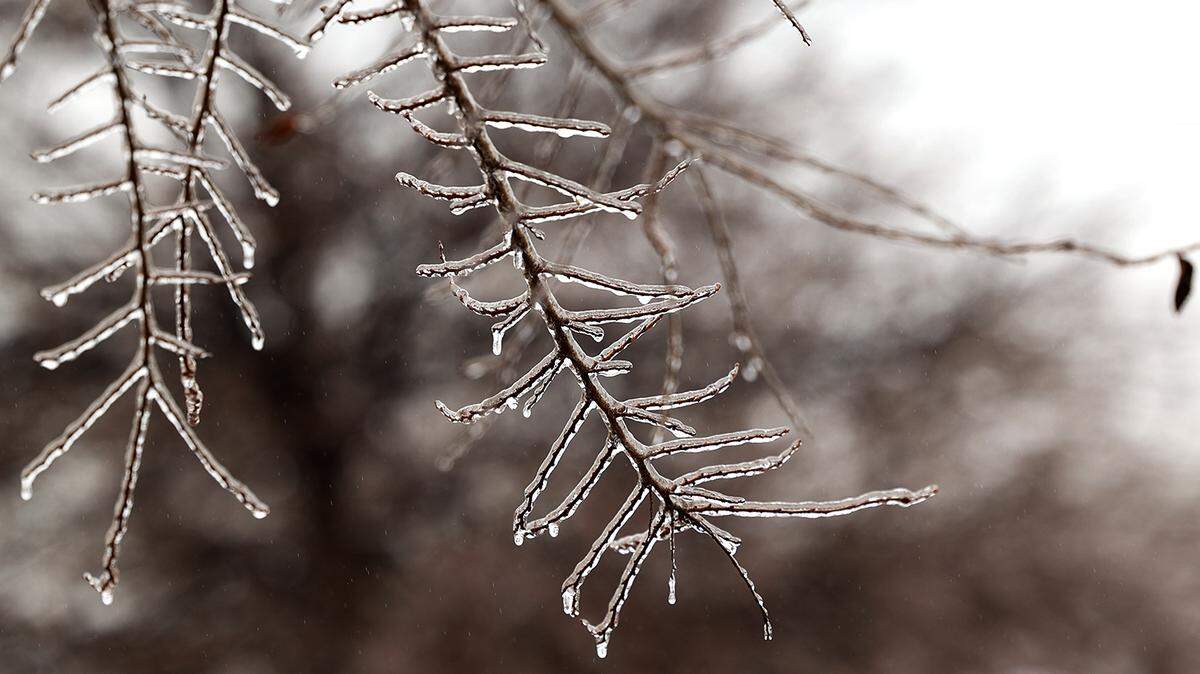
Ice coats the branches of a tree on Magnolia Street in Fort Worth on Thursday, February 2, 2023. Temperature began rising above freezing on Thursday, helping to clear roads from ice.
Amanda McCoy
amccoy@star-telegram.com
Fort Worth
Nearly 40 years ago, North Texas spent almost 300 consecutive hours below freezing temperatures.
From the morning of Dec. 18, 1983, until the afternoon of the 30th, North Texans were gripped by an arctic blast. The record setting streak of 295 hours or 12.3 days below freezing, make it the coldest December on record for the Metroplex, according to the National Weather Service.
Now four decades later, can North Texas expect a similar polar plunge this month?
“I can tell you probably with a pretty definitive no, that is not expected,” said Steve Fano, lead meteorologist at the NWS Fort Worth office.
In fact, the Metroplex is likely in store for the complete opposite of an arctic blast this winter thanks to El Niño.
El Niño is a natural climate phenomenon characterized by warmer-than-average sea surface temperatures in the central and eastern Pacific Ocean near the equator, which occurs every 2 to 7 years on average.
During El Niño years, Texas typically has a warmer and wetter-than-normal winter, Fano said.
This rings true for the Metroplex as the NWS outlook for December and first few months of 2024, show above normal temperatures and precipitation, Fano said. By spring, temperatures will revert back to near normal and precipitation will stay slightly above normal.
That doesn’t mean North Texas is off the hook completely from colder temperatures this winter, but as far as a repeat of the 1983 arctic blast? It doesn’t seem to be in the cards.
“It’s safe to say that as far as having an extended period of cold weather, it’s very unlikely for the rest of 2023 into early 2024,” Fano said.
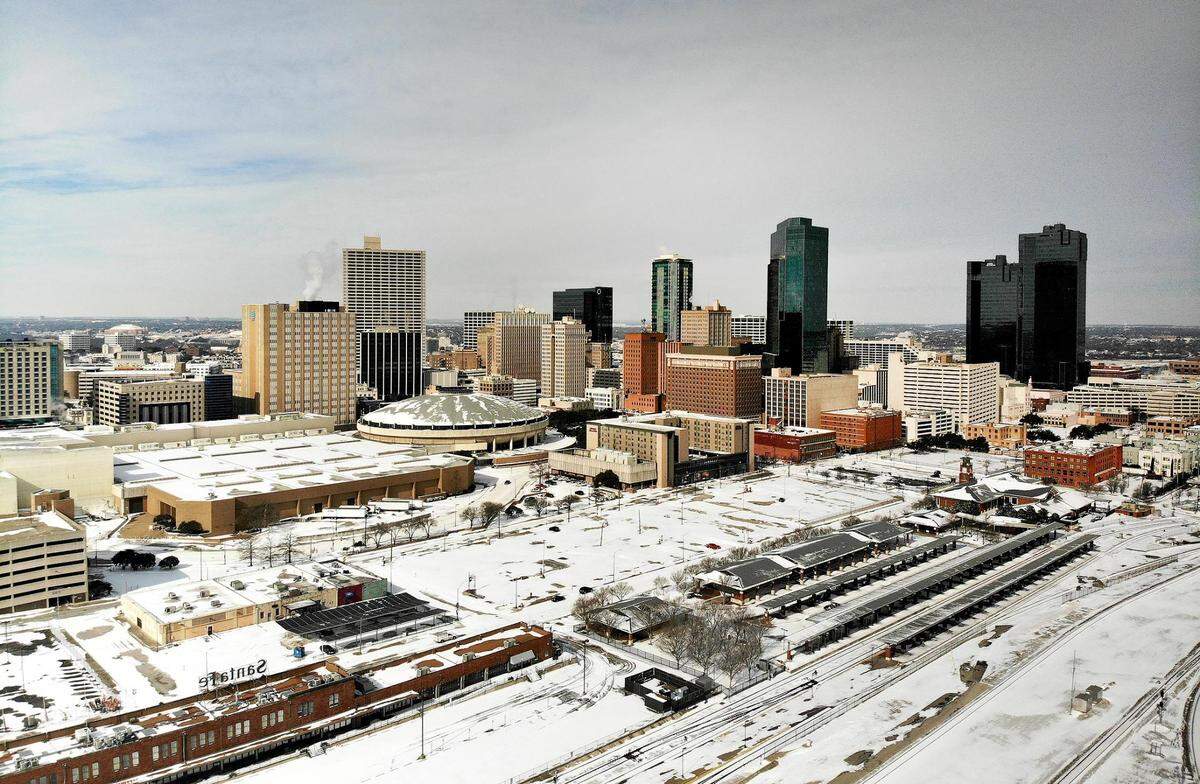
Fort Worth remains under a layer of snow on Tuesday, February 16, 2021. A winter storm is expected to move into the DFW area Tuesday evening, bringing more ice and snow. Amanda McCoy amccoy@star-telegram.com
What caused the arctic blast of December 1983?
A string of surface cold fronts and upper level systems is to blame for the December 1983 arctic blast.
On Dec. 10, 1983, severe thunderstorms developed in front of a dryline and cold front, producing a dozen tornadoes in east and southeast Texas, according to the NWS. A cold front a few days later on Dec. 15, brought a snow storm to north and east Texas, where over eight inches of snow was recorded.
Another, and the most significant, cold front arrived on Dec. 18 bringing arctic air to the Metroplex. Three more fronts would follow on the 21st, 24th and 28th.
It was during the Dec. 18-30 stretch, where the NWS climate site at Dallas Fort Worth International Airport recorded 295 consecutive hours or 12.3 days of below freezing temperatures.
How cold was it in North Texas during the December 1983 arctic blast?
Cold, really cold and scary cold.
The NWS climate site at DFW International Airport recorded the following temperatures for the Dec. 18-30, 1983, stretch:
Dec. 18- High 36, low 18
Dec. 19- High 20, low 16
Dec. 20- High 31, low 18
Dec. 21- High 29, low 10
Dec. 22- High 15, low 5
Dec. 23- High 19, low 11
Dec. 24- High 13, low 7
Dec. 25- High 18, low 6
Dec. 26- High 29, low 16
Dec. 27- High 31, low 25
Dec. 28- High 31, low 18
Dec. 29- High 28, low 10
Dec. 30- High 35, low 7
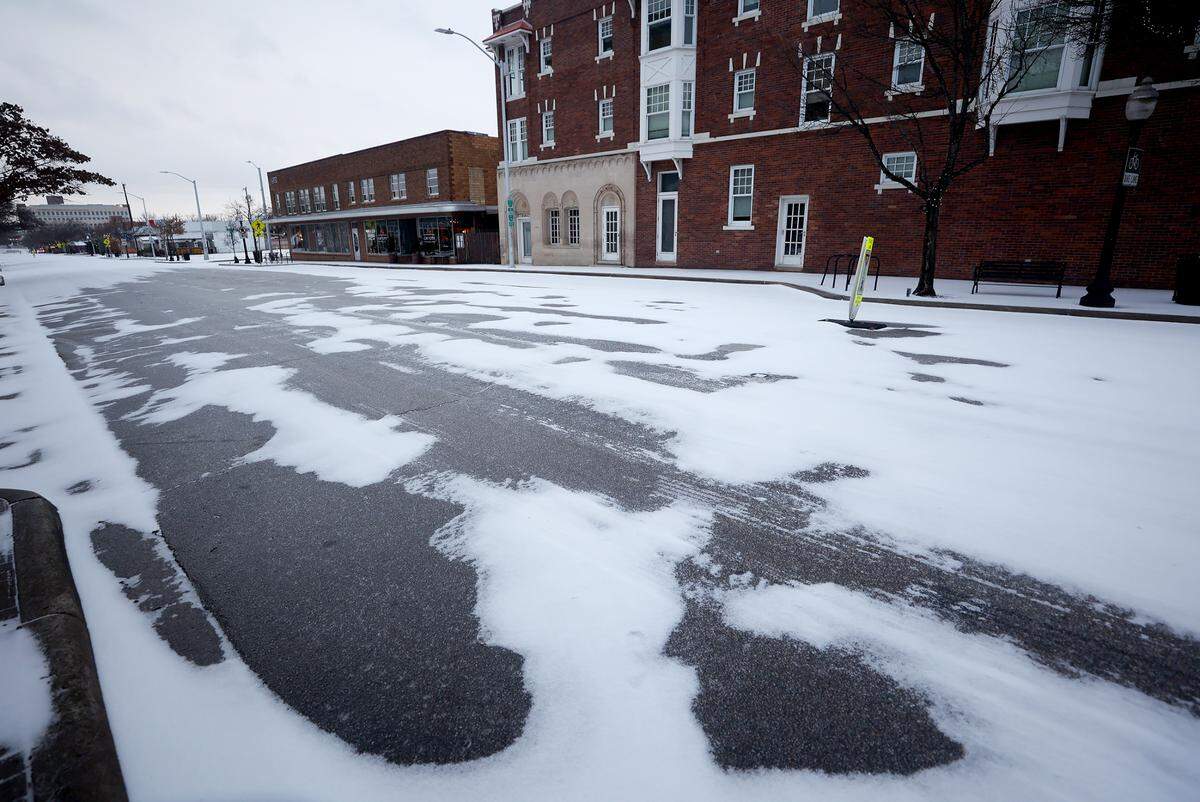
Patches of black ice on Magnolia Avenue in Fort Worth on Thursday, February 3, 2022. Amanda McCoy amccoy@star-telegram.com
Is 295 consecutive hours below freezing the most ever for North Texas?
Yes, the December 1983 stretch of 295 consecutive hours below freezing takes the cake.
The closest any year has come to surpassing 1983’s most consecutive hours below freezing, came in 2021. From Feb. 13-19, 2021, the NWS recorded 139 consecutive hours of below freezing temperatures.
February 2021 was an especially deadly time for winter weather in Fort Worth. On Feb. 11, 2021, a major 133-car pileup on I-35W resulted in the death of six people.
According to NWS data, the most consecutive hours below freezing in North Texas include:
295 hours: 7 a.m. Dec. 18 - 2 p.m. Dec. 30, 1983
178 hours: 1 a.m. Jan. 23 - 11 a.m. Jan. 30, 1948
170 hours: 9 a.m. Feb. 1 - 11 a.m. Feb. 8, 1905
158 hours: Midnight Jan. 27 - 2 p.m. Feb. 2, 1951
139 hours: 5 p.m. Feb. 13 - noon Feb. 19, 2021
139 hours: 5 p.m. Jan. 3 - noon Jan. 9, 1942
138 hours: 5 p.m. Jan. 17 - 11 a.m. Jan. 23, 1978
136 hours: 6 p.m. Jan. 30 - 10 a.m. Feb. 5, 1996
How many days below freezing has North Texas seen thus far?
Believe it or not, North Texas has only recorded one day at or below freezing.
On Nov. 27, the temperatures dipped to 32 degrees, making it the first day at or below freezing for the 2023-2024 winter season.
Brayden Garcia is a service journalism reporter at the Fort Worth Star-Telegram. He is part of a team of local journalists who answer reader questions and write about life in North Texas. Brayden mainly writes about weather and all things Taylor Sheridan-related.