A Fort Worth family claimed a federal law was racist. The Supreme Court ruled against them
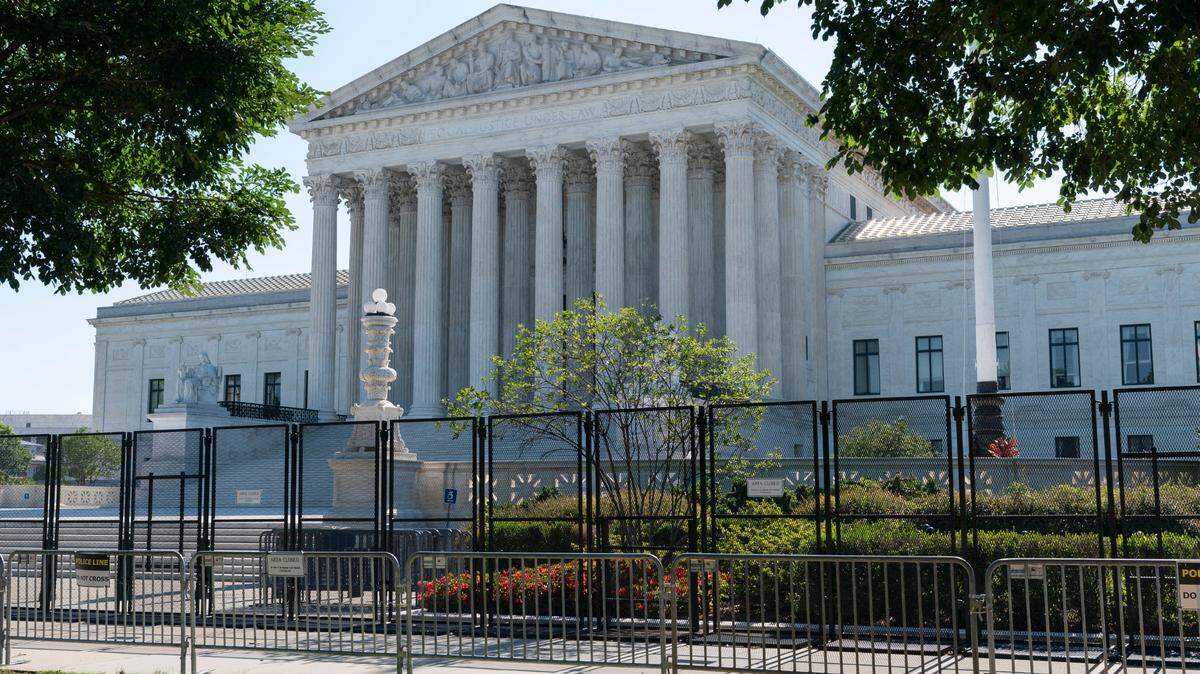
The U.S. Supreme Court upheld federal protections for Native American children on Thursday in a case that originated in Fort Worth.
In 2017, a Fort Worth couple filed a lawsuit regarding their adoption of a Native American child. In November, the Supreme Court heard arguments in the case that garnered national attention, especially among Native American nations and child welfare groups, due to its far-reaching implications.
The 7-2 vote in Haaland v. Brackeen upholds much of the Indian Child Welfare Act, or ICWA, which gives priority in adoptions of Native American children to Native families. The law was created in 1978 to protect Native American families and children from disproportionate separation rates. Native American tribes are sovereign nations, and ICWA serves to coordinate child welfare cases between those sovereign nations and state welfare agencies. Justice Samuel Alito and Justice Clarence Thomas dissented.
The Protect ICWA Campaign — made up of the National Indian Child Welfare Association, the National Congress of American Indians, Native American Rights Fund, and the Association on American Indian Affairs — released a statement after the ruling say it was “overcome with joy” about the ruling, although it noted the group is still reviewing the 133-page opinion.
“One thing is certain: ICWA is crucial for the safety and well-being of Native children and families and the future of Native peoples and Tribal Nations. The positive impact of today’s decision will be felt across generations,” the group said.
Ruling
The case began when Chad and Jennifer Brackeen, a white family in Fort Worth, applied to adopt a child they had fostered for 16 months who is a member of the Navajo and Cherokee nations. The Brackeens were eventually able to adopt the child, but pursued the lawsuit against the Indian Child Welfare Act. The Brackeens are in the process of trying to adopt the child’s biological sister; the Navajo Nation opposes the adoption.
The case expanded to include the state of Texas, Indiana and Minnesota as plaintiffs, as well as families in Indiana and Minnesota involved in their own ICWA cases. They argued ICWA exceeds federal authority, infringes state sovereignty and discriminates on the basis of race.
The Supreme Court decision dismissed each challenge to the law based either on lack of merit or for lack of standing.
The opinion left no question about the government’s power to enact ICWA; the justices wrote that Congress has had that power since the Indian Commerce Clause and is backed by the Constitution.
The U.S. Constitution requires the federal government to curb its own powers and states’ powers in order to protect Native American sovereignty, the opinion says. ICWA is an example of this; the law secures “the right of Indian parents to raise their families as they please; the right of Indian children to grow in their culture; and the right of Indian communities to resist fading into the twilight of history.”
The opinion also cited more than 200 years of legal precedent that backs the federal government’s authority to enforce ICWA.
In a concurring opinion, Justice Neil McGill Gorsuch laid out a history lesson behind the implementation of ICWA and the mass separation of Native American children from which it stems. The opinion emphasizes that “the dissolution of the Indian family has had devastating effects on children and parents alike.”
“Often, Native American Tribes have come to this Court seeking justice only to leave with bowed heads and empty hands,” the opinion says. “But that is not because this Court has no justice to offer them. Our Constitution reserves for the Tribes a place — an enduring place — in the structure of American life. It promises them sovereignty for as long as they wish to keep it.”
Notably, Thursday’s opinion does not resolve the race or “equal protection” question raised by the Brackeens and other families. The opinion only notes that none of the plaintiffs are able to bring the argument in the first place. In order for a plaintiff to argue they were discriminated against under the equal protection act, they would have to show they suffered an injury due to unlawful conduct.
Case background
Texas joined the case in the Texas Northern U.S. District Court in 2017. Indiana and Minnesota joined the suit in support of families in each state involved in their own ICWA cases. Each family, who are all non-Native American, argued ICWA placed burdens on them during the adoption process and discriminated against them based on race.
In a video posted by the Texas Attorney General’s Office in 2019, Ken Paxton argued on behalf of the Brackeens. In the video, Chad Brackeen said the couple started fostering in 2014 due to a profound calling from God. The Brackeens, who had two biological children at the time, fostered their first child in 2015, according to a post on Jennifer Brackeen’s blog.
“We understand that culture is important and the historic tragedy of Native families being separated,” Chad Brackeen said in the video. “But at some point, the repeated breaking of attachments has to outweigh those benefits.”
ICWA was passed as part of a series of regulations to protect Native American families from forced separation. Since the 1800s, Native children have been removed from their tribes through boarding schools and state welfare programs. The ICWA regulations, such as requiring state agencies to involve the child’s tribe and the child’s parents in case proceedings, aim to keep Native American children within their communities when possible.
According to legal precedent, Native American is a political status, not a race.
ICWA also has the backing of the majority of the country; 26 states, the District of Columbia and 77 members of Congress have offered support for ICWA in court filings. Throughout the case’s history, 486 Tribal Nations, 59 Native organizations, 31 child welfare organizations, have also supported ICWA. In a brief filed in support of ICWA, 11 child welfare groups said ICWA’s standards have “exemplified evidence-based best practices in child welfare.”
“These supporters recognize that ICWA is firmly in the best interests of Native children,” The National Congress of Indian Americans said in a statement in November. “In keeping them connected to their extended family and cultural identity, the positive outcomes are far-reaching and include higher self-esteem and academic achievement.
The defendants in the case are the United States, Cherokee Nation, Morongo Band of Mission Indians, Oneida Nation, Quinault Indian Nation and the Navajo Nation, the United States Department of Health and Human Services, the Bureau of Indian Affairs and the United States Department of the Interior.